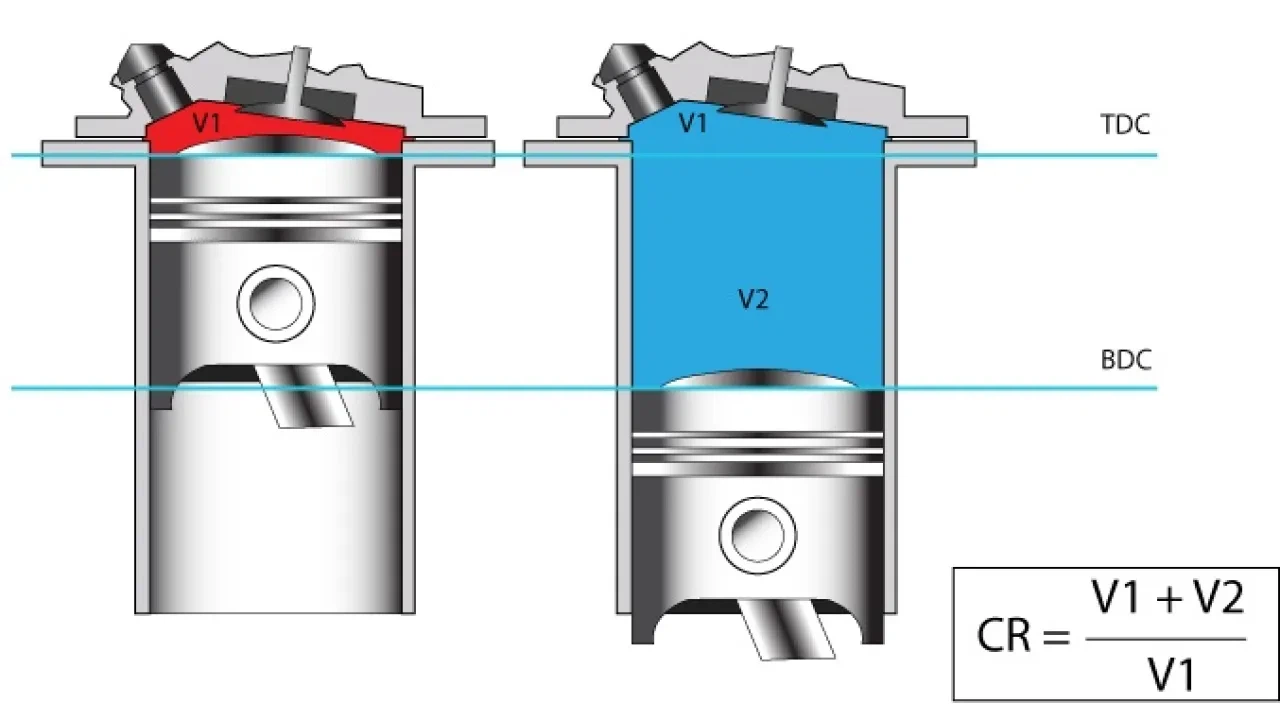
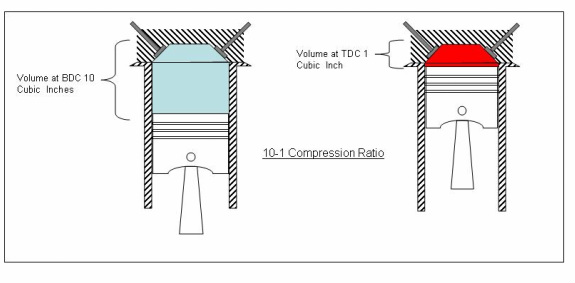
Engine compression ratio equals the cylinder volume at bottom dead center divided by top dead center.
I’ve worked on engines for years and studied engine design closely, so I’ll walk you through what is engine compression ratio, why it matters, and how it changes real-world performance. This guide uses simple language, clear examples, and hands-on tips so you can understand compression ratio fast and use that knowledge when choosing, tuning, or diagnosing an engine.
What is engine compression ratio? A clear definition
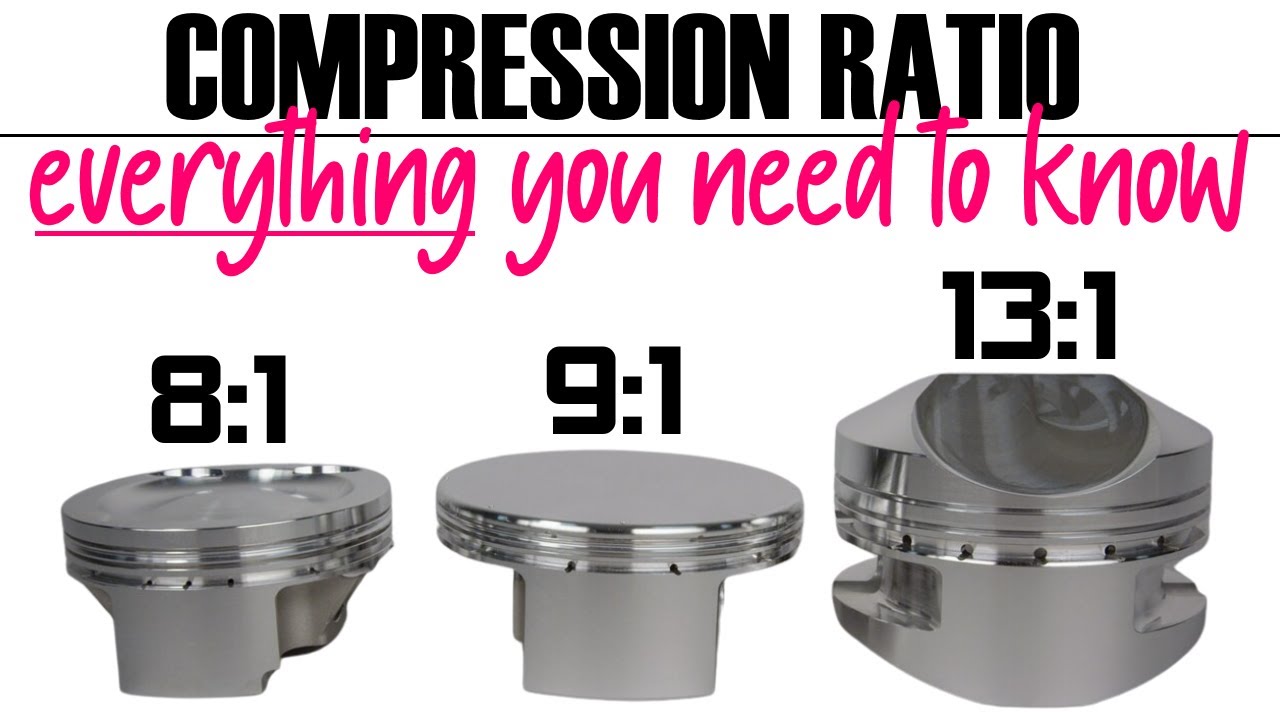
What is engine compression ratio? It is the ratio between the maximum and minimum volumes in a cylinder. In plain terms, it compares the volume when the piston is at the bottom of its stroke (BDC) to the volume when it is at the top (TDC).
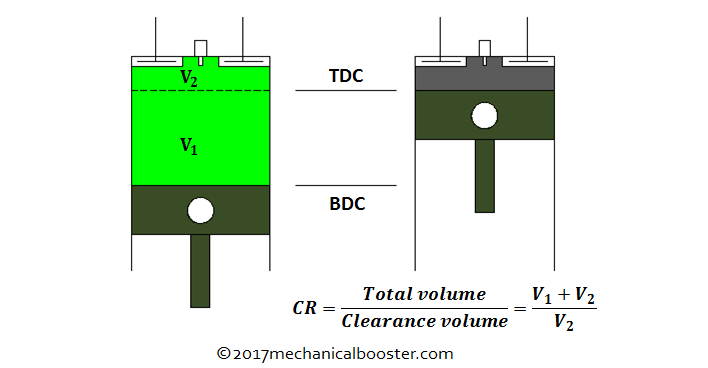
The formula is simple: Compression ratio = (Swept volume + Clearance volume) / Clearance volume. Swept volume is the displacement for one cylinder; clearance volume is the small space above the piston when it is at TDC.
Why this matters: higher compression squeezes the air-fuel mix tighter before ignition, which affects power, efficiency, and fuel needs. If you want to know what is engine compression ratio for a specific motor, the engine tags or service manual usually list it.

How compression ratio is calculated — step by step
To find what is engine compression ratio for an engine, follow three simple steps.
- Measure or get the swept volume (displacement) for one cylinder.
- Measure or estimate the clearance volume at TDC.
- Plug into the formula: (swept + clearance) ÷ clearance = compression ratio.
Example: a cylinder with 500 cc swept volume and 50 cc clearance volume gives (500 + 50) ÷ 50 = 11. So that engine has an 11:1 compression ratio. You can measure clearance volume precisely with a burette and a head gasket thickness calculation for accuracy.

Why compression ratio matters for performance and efficiency
Understanding what is engine compression ratio helps explain why some cars feel lively and why some use less fuel.
- Power: Higher compression ratio typically gives more thermal efficiency and better power for the same displacement.
- Fuel economy: Engines with higher compression often burn fuel more completely, improving miles per gallon.
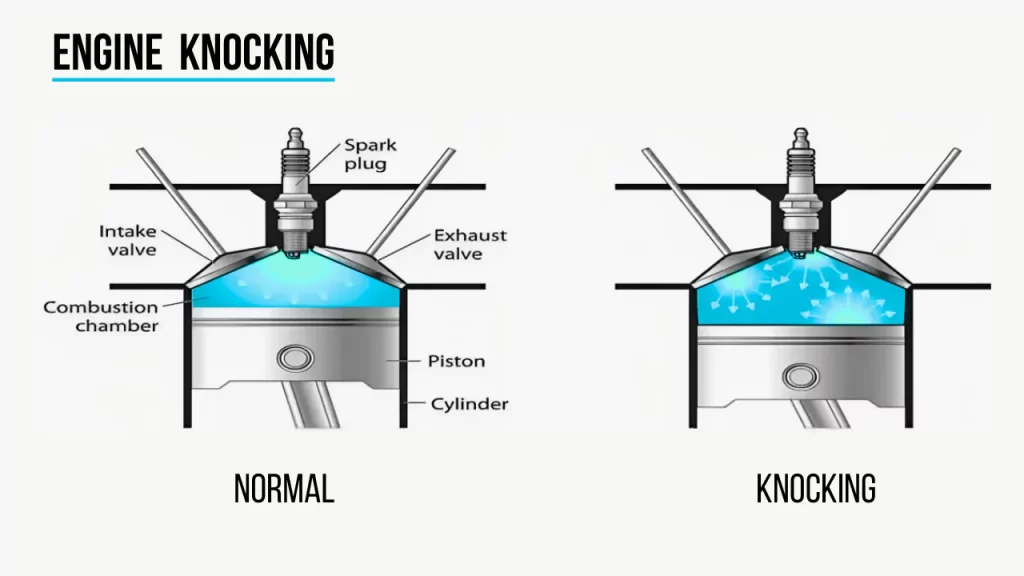
- Knock sensitivity: Higher compression increases the risk of pre-ignition or knock, which requires higher-octane fuel or knock control strategies.
A balanced design picks a compression ratio that matches the intended fuel, emissions goals, and output. Modern engines often use turbocharging, direct injection, and knock sensors to get higher effective compression without detonation.

Types and related concepts you should know
When learning what is engine compression ratio, it helps to know a few close concepts.
- Static compression ratio: The simple geometrical ratio we calculate from volumes.
- Effective or dynamic compression: The real pressure rise after accounting for valve timing and cam overlap.
- Geometric vs. effective: Two engines with the same static ratio can behave differently due to cam timing and forced induction.
These distinctions explain why two cars with the same compression ratio may feel and perform differently. Understanding both static and dynamic measures gives a fuller picture of engine behavior.
How compression ratio affects fuel type and emissions
If you ask what is engine compression ratio in relation to fuel, here’s the practical link.
- Higher compression usually needs higher-octane fuel to avoid knock.
- Lower compression works fine with regular gas but delivers lower thermal efficiency.
- Emissions: lean burn and high compression can reduce CO2 per mile, but NOx emissions may rise and require control systems.
Manufacturers pick ratios to balance fuel availability, emissions law, and performance goals. Retrofitting compression without addressing ignition and fueling can cause damage.
Common examples and real-world numbers
To make what is engine compression ratio concrete, here are typical ranges you’ll see.
- Economy cars: 9:1 to 11:1
- Modern naturally aspirated performance engines: 10:1 to 13:1
- Turbocharged engines (static number): often lower static ratio, 8:1 to 10:1, with high effective compression under boost
- Diesel engines: 14:1 to 22:1, because they use compression ignition
These ranges help you spot what an engine is tuned for: efficiency, fuel type, or maximum power.

Measuring and testing compression in the garage
If you want to verify what is engine compression ratio or simply check engine health, you can measure compression and do tests.
- Compression test: Use a compression gauge on each cylinder to compare pressure under cranking. Significant variation indicates wear or valve issues.
- Leak-down test: Pressurize the cylinder at TDC and measure leakage to diagnose rings, valves, or head gasket problems.
- Calculating actual ratio: Use exact bore, stroke, combustion chamber volume, and head gasket specs to compute static compression ratio precisely.
My rule: measure before buying a used car; test again after head work or before increasing compression.
Tuning, upgrades, and safe changes to compression
When people ask what is engine compression ratio and whether to raise it, here’s practical advice.
- Small increases: Milling the head or swapping pistons raises compression and can boost power, but also increases knock risk.
- Forced induction: If you add a turbo, you may need to lower static compression or strengthen internals.
- Fuel and engine management: Upgrades usually require better fuel, improved timing maps, and often a tune to avoid damage.
From my shop experience, incremental changes plus proper tuning are safer than big jumps. Always check piston-to-valve clearance and compression ratio calculations before modifying.

My experience: mistakes, tips, and lessons learned
I’ve rebuilt and tuned many engines. Here are honest tips about what is engine compression ratio from hands-on work.
- Don’t guess clearance volume. I once over-compressed an engine because gasket thickness was wrong; the result was detonation and a ruined piston.
- Use a torque-angle method and correct head gasket specs when assembling. Small math errors change compression more than you expect.
- If switching to higher octane fuel is not an option, keep compression moderate and rely on tuning and cooling improvements.
These lessons come from real repairs and show why careful measurement and conservative steps work best.
Quick answers to common user questions (PAA-style)
What is engine compression ratio and how does it relate to horsepower? Higher compression can improve horsepower by increasing thermal efficiency, but gains need proper fuel and timing control.
Does a higher compression ratio always mean better fuel economy? Often yes, but only if the engine runs without knock and is tuned correctly for the fuel used.
Can you measure compression ratio at home? You can measure compression pressure with a gauge; to calculate the exact static compression ratio you need cylinder and chamber volume data and can use a simple formula.
Frequently Asked Questions of what is engine compression ratio
What is the ideal compression ratio for fuel economy?
Ideal compression ratio depends on engine design, but higher ratios within safe limits tend to improve thermal efficiency; modern engines balance this with emissions and knock control.
How does compression ratio affect engine knock?
Higher compression raises the temperature and pressure of the air-fuel mix before ignition, which makes knock more likely unless higher-octane fuel or knock mitigation is used.
Can I increase compression ratio by shaving the cylinder head?
Yes, milling the head reduces clearance volume and raises compression, but it can create knock issues, reduce valve clearance, and require retuning.
Why do diesel engines have much higher compression ratios?
Diesels use compression ignition: the air is compressed until it becomes hot enough to ignite diesel fuel, so they require high compression ratios for reliable ignition.
Will higher compression void my engine warranty?
Modifying compression often involves internal changes and tuning; such modifications typically void factory warranties, so check terms before altering an engine.
Conclusion
Understanding what is engine compression ratio gives you a clear tool to judge engine behavior, performance, and fuel needs. Measure carefully, plan changes with proper tuning, and match compression to fuel and engine goals for the best results. Try checking your vehicle’s manual, perform a basic compression test, or consult a tuner before making changes — and feel free to leave a comment or ask for help if you want advice for a specific engine.