
Understanding How Oil Pressure Affects Engine Operation helps drivers prevent expensive engine repairs. Engine oil does more than reduce friction. It also carries heat away, cleans internal parts, and creates a protective barrier between metal surfaces.
In my experience studying automotive systems, many engine failures begin with ignored oil pressure problems. A vehicle may still run normally at first, but poor oil pressure can slowly damage bearings, camshafts, and other critical components.
For most drivers in the United States, regular oil service and paying attention to warning signs are simple ways to protect daily transportation. A healthy lubrication system allows an engine to run smoothly during cold starts, highway driving, and heavy loads.
What Is Engine Oil Pressure and Why Does It Matter?
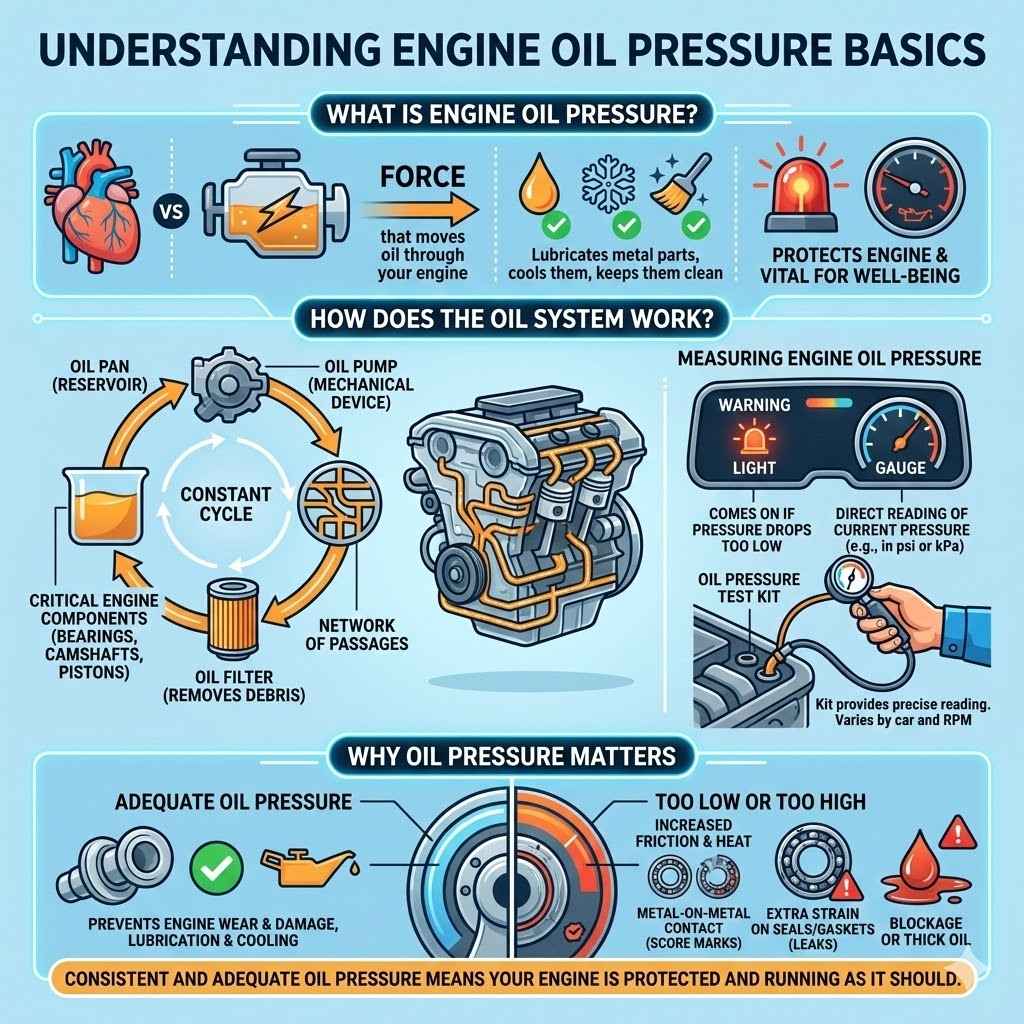
Engine oil pressure is the force that pushes oil through the engine lubrication system. The oil pump creates this pressure and sends oil through small passages to reach bearings, pistons, camshafts, and other moving parts.
How Oil Pressure Affects Engine Operation depends on keeping the right balance. The engine needs enough pressure to deliver oil, but too much pressure can reduce proper flow and create stress inside the system.
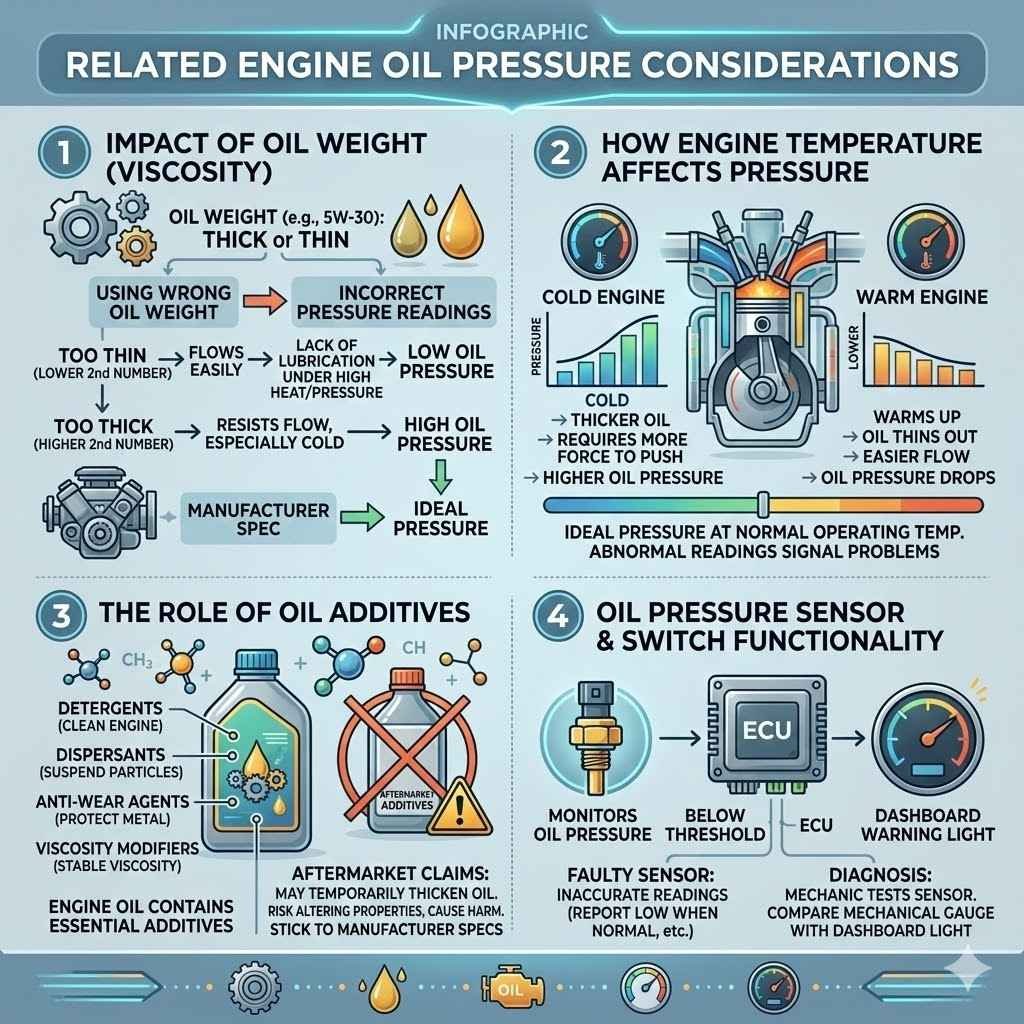
Oil pressure changes based on engine speed, oil temperature, oil thickness, and engine condition. A cold engine usually shows higher pressure because thick oil moves more slowly.

- ✦ Lubrication
Oil pressure creates a steady supply of oil between metal surfaces to reduce friction and wear.
- ✦ Cooling
Engine oil absorbs heat from internal parts and helps control operating temperature.
- ✦ Cleaning
Oil flow carries dirt and tiny particles toward the oil filter.
How the Oil Pump Creates Pressure
The oil pump pulls oil from the oil pan and pushes it through passages inside the engine. This movement creates the pressure needed to reach areas that cannot receive oil by gravity alone.
A properly working oil pump keeps oil moving during different driving conditions, including idle traffic, highway speeds, and heavy acceleration.
- ✦ Oil pickup tube
Collects oil from the oil pan and sends it into the pump.
- ✦ Pressure relief valve
Controls excessive pressure and helps maintain safe operating levels.
How Oil Pressure Affects Engine Operation During Driving
How Oil Pressure Affects Engine Operation becomes clear when the vehicle is under different loads. During acceleration, engine parts move faster and need more lubrication support.
When oil pressure stays within the correct range, bearings, pistons, and valve components can move smoothly. This reduces friction and helps maintain engine efficiency.
Low or unstable oil pressure can interrupt this protection. Over time, metal parts may contact each other and create heat, noise, and permanent damage.

- ✦ Cold starts
The engine depends on quick oil pressure buildup after startup to protect parts from early wear.
- ✦ High-speed driving
Higher engine speed requires consistent oil delivery to handle increased movement and heat.
- ✦ Heavy loads
Towing and carrying heavy loads increase the need for reliable oil pressure.
The Connection Between Oil Pressure and Engine Wear
Engine wear increases when oil pressure cannot maintain a protective oil film. This film keeps moving surfaces separated and reduces direct metal contact.
A small oil pressure issue may not create immediate failure, but continued operation can shorten engine life.
- ✦ Bearing protection
Correct oil pressure protects crankshaft and connecting rod bearings.
Effects of Low Engine Oil Pressure
Low oil pressure is one of the most serious lubrication problems an engine can face. When pressure drops, important parts may not receive enough oil to stay protected.
Drivers may notice warning lights, unusual engine sounds, or poor performance. However, some low pressure issues develop quietly before major symptoms appear.
How Oil Pressure Affects Engine Operation is especially important when dealing with low pressure because even short periods of poor lubrication can increase wear.
- ✦ Engine knocking sounds
Insufficient lubrication can allow internal parts to create louder mechanical noise.
- ✦ Faster component wear
Bearings and other parts may wear faster without proper oil protection.
- ✦ Possible engine failure
Severe oil pressure loss can lead to major internal damage.
Common Causes of Low Oil Pressure
Low oil pressure can happen because of low oil levels, worn engine parts, a failing oil pump, or incorrect oil viscosity.
Finding the exact cause matters because adding more oil will not fix every pressure problem.
- ✦ Low oil level
Not enough oil in the engine reduces the supply available for circulation.
- ✦ Worn bearings
Large internal clearances can allow oil pressure to escape.
Effects of High Engine Oil Pressure
Many drivers worry only about low oil pressure, but high oil pressure can also affect engine operation. Excess pressure may indicate a blocked passage, thick oil, or a faulty pressure control valve.
High oil pressure does not always mean better protection. The engine needs proper oil movement, not just a high pressure reading.
When pressure becomes too high, seals and filters may experience extra stress. This can create leaks or reduce system reliability.

- ✦ Seal stress
Excess pressure can push against engine seals and create leaks.
- ✦ Poor oil circulation
High pressure may reduce the balanced flow needed for cooling.
Why Correct Oil Viscosity Matters
Oil viscosity describes how easily oil flows at different temperatures. Using the wrong oil grade can change pressure levels inside the engine.
Vehicle manufacturers choose oil grades based on engine design, climate, and operating needs.
- ✦ Follow manufacturer recommendations
The owner’s manual provides the correct oil specification for the engine.
How to Check and Maintain Healthy Oil Pressure
Regular maintenance is the best way to support proper oil pressure. Oil changes, filter replacements, and inspections help keep the lubrication system working correctly.
If the oil pressure warning light appears, drivers should take it seriously. Continuing to drive may increase the risk of engine damage.
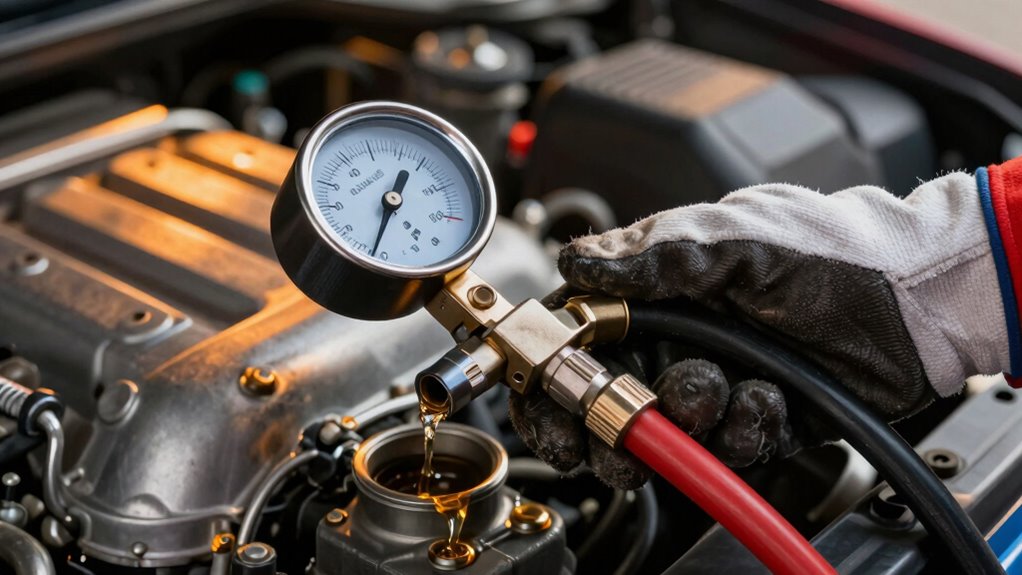
A mechanic can test oil pressure using a mechanical gauge to confirm whether the problem comes from the sensor or the engine itself.
- ✦ Change oil on schedule
Fresh oil helps maintain proper flow and protection.
- ✦ Use the correct filter
A quality filter supports clean oil circulation.
- ✦ Inspect warning signs early
Early diagnosis can prevent expensive repairs.
Signs Your Engine May Have an Oil Pressure Problem
Common warning signs include an oil pressure warning light, ticking noises, overheating, and unusual engine behavior.
These signs do not always confirm an oil pressure failure, but they should be checked quickly.
- ✦ Dashboard warning light
A warning light may indicate pressure is below the safe range.
