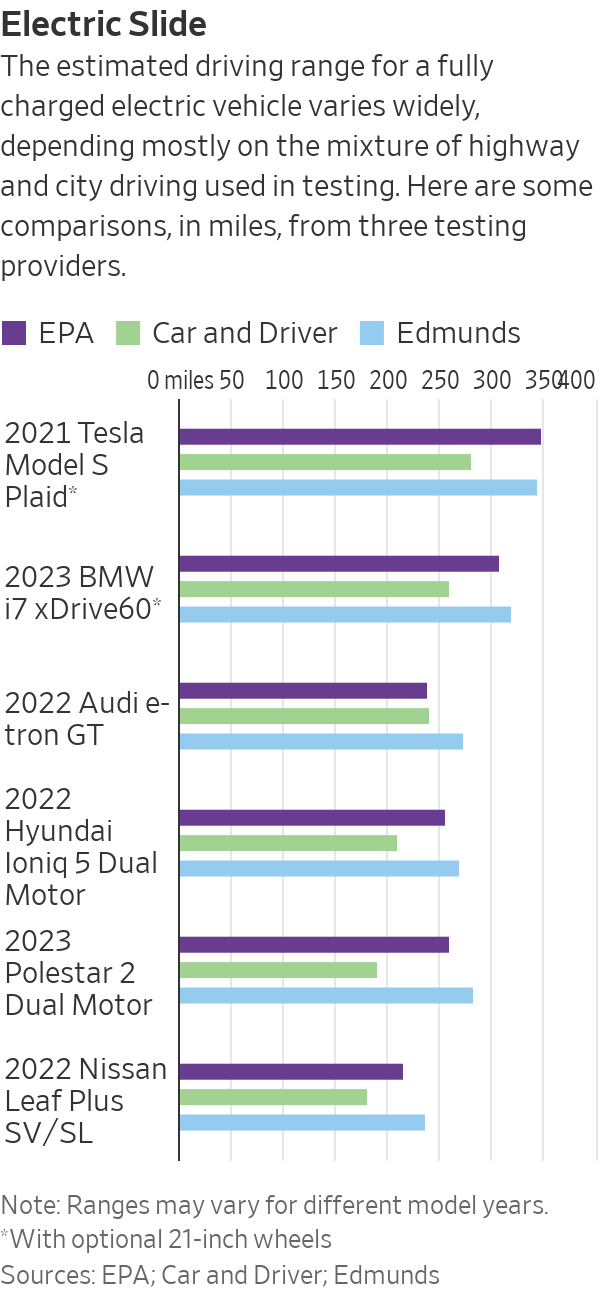
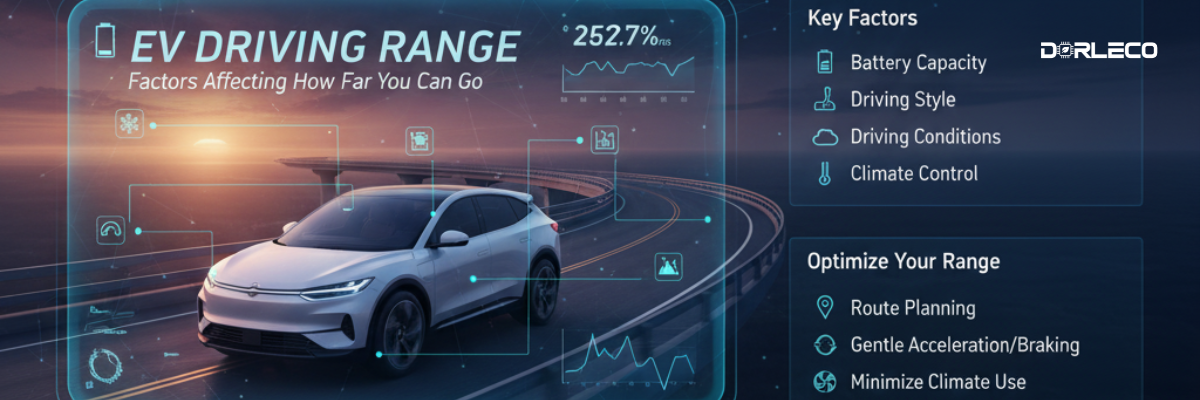
Understanding what affects electric vehicle driving range helps drivers make better choices before buying and using an EV. Range is not controlled by the battery alone. Many conditions change how much energy an electric vehicle uses during a trip.
From my experience studying vehicle technology, the biggest range surprises usually come from daily conditions. A vehicle that performs well in mild weather and city traffic may use more energy during highway trips, cold winters, or heavy loads.
Battery Capacity and Battery Health
The battery pack is one of the most important factors affecting electric vehicle driving range. A larger battery stores more energy, allowing an EV to travel farther before charging.
Battery health also matters. Over time, batteries can lose some capacity because of age, charging patterns, and temperature exposure. A healthy battery helps maintain predictable range.
- ✦ Battery size
Vehicles with larger battery packs usually provide longer driving range because they store more electrical energy.
- ✦ Battery condition
A battery with reduced capacity may provide fewer miles even when fully charged.
Why Battery Temperature Matters
EV batteries work best within a certain temperature range. Very hot or cold conditions can reduce efficiency because the vehicle may use energy to cool or warm the battery.
- ✦ Thermal management
Battery heating and cooling systems protect performance but can use extra energy.
Weather Conditions and Temperature
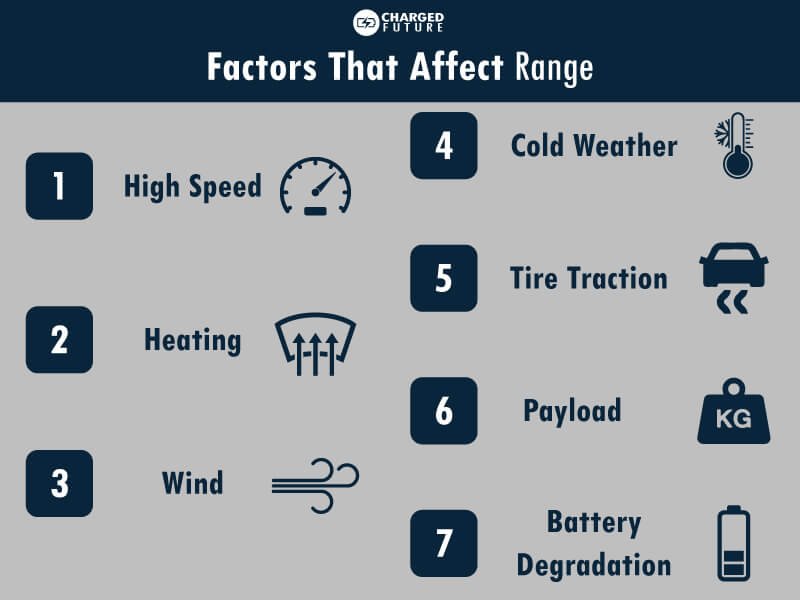
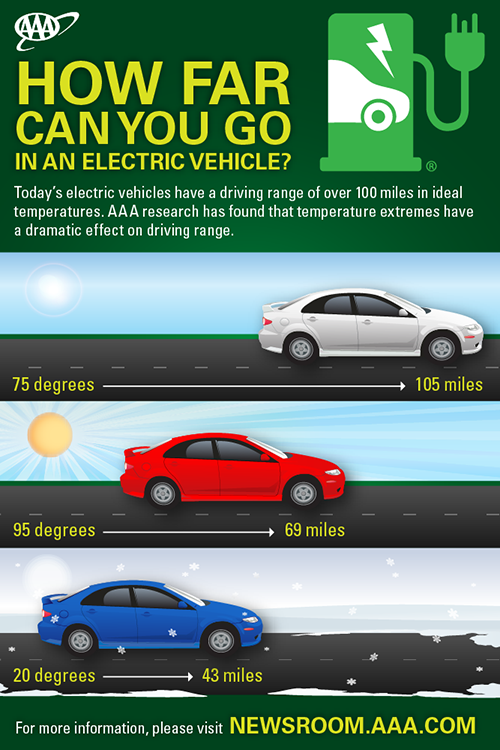
Weather is one of the biggest answers to the question, what affects electric vehicle driving range. Cold temperatures can reduce range because batteries store and release energy less efficiently.
In the United States, winter conditions in northern states can create noticeable range changes. Drivers may need more charging stops during very cold months.
- ✦ Cold weather
Heating the cabin and warming battery systems can increase energy use.
- ✦ Hot weather
Air conditioning and battery cooling can reduce available driving range.
Driving Speed and Driving Style
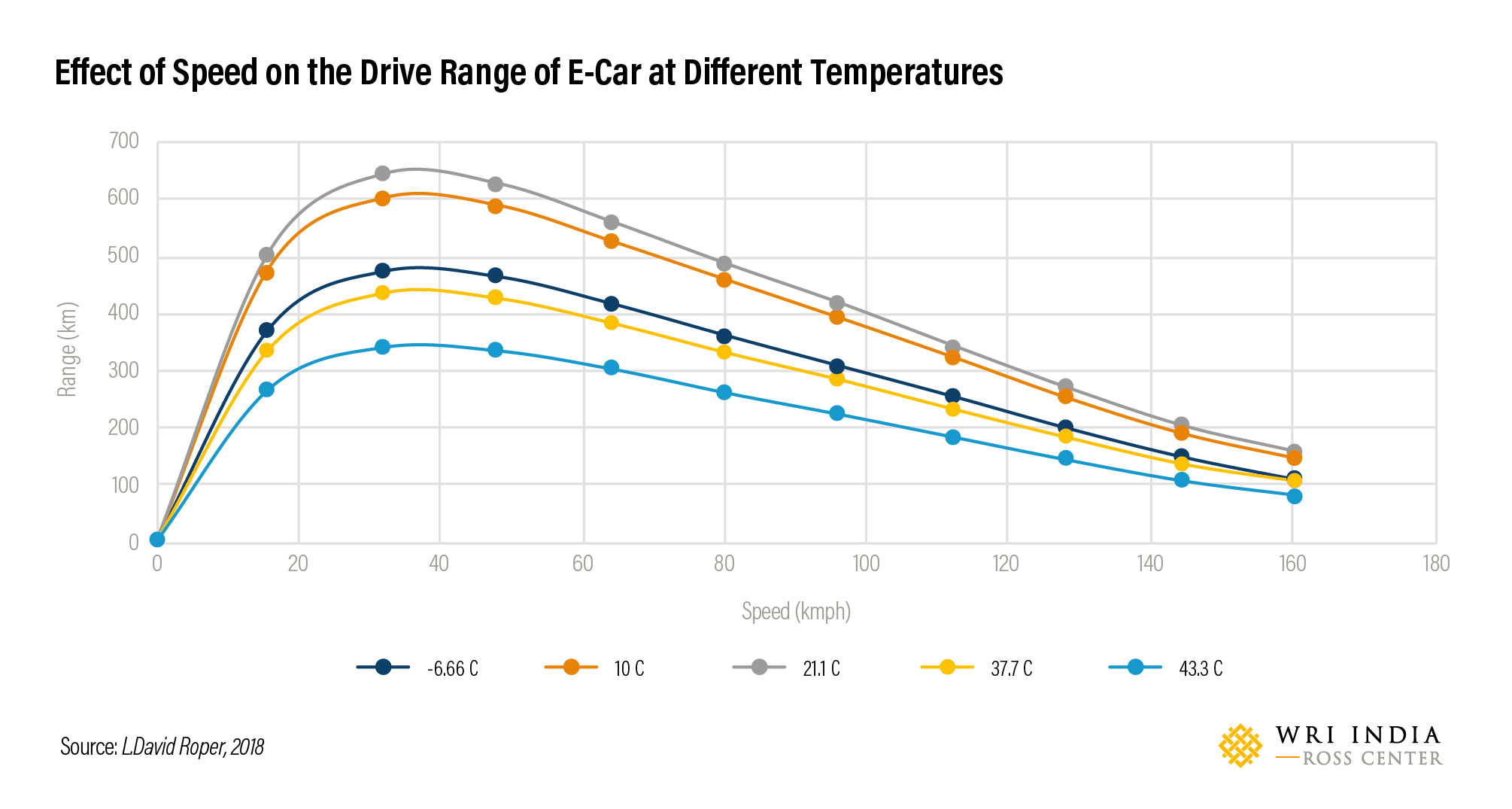
Driving habits strongly influence EV energy use. Smooth acceleration and steady speeds usually improve efficiency, while aggressive driving can reduce range.
Highway driving often uses more energy than city driving because air resistance increases at higher speeds.

- ✦ Fast acceleration
Rapid acceleration requires more power from the battery and can lower efficiency.
- ✦ Highway speed
Higher speeds create more aerodynamic drag and increase energy consumption.
Regenerative Braking Benefits
Many EVs recover some energy during braking. Using regenerative braking effectively can improve efficiency, especially in city traffic with frequent stops.
- ✦ Energy recovery
Regenerative braking sends some motion energy back into the battery.
Vehicle Design, Weight, and Aerodynamics
Vehicle design plays a major role in what affects electric vehicle driving range. Heavy vehicles require more energy to move, while aerodynamic designs reduce energy loss.
SUVs and trucks often have lower efficiency than smaller EVs because they have more weight and larger shapes that create more air resistance.

- ✦ Vehicle weight
Extra passengers and cargo increase the energy needed for movement.
- ✦ Aerodynamic shape
A smoother design helps an EV move through air with less energy.
Tires, Road Conditions, and Maintenance
Small maintenance details can change EV range. Tire pressure, tire type, and road surface all affect rolling resistance and energy use.
Keeping an EV properly maintained helps drivers achieve more consistent real-world range.
- ✦ Tire pressure
Low tire pressure increases resistance and may reduce efficiency.
- ✦ Road conditions
Hills, rough roads, and traffic conditions can increase energy consumption.
Charging Habits and Energy Management
Charging habits influence battery performance over time. Following manufacturer recommendations can help protect battery health and maintain range.
Drivers can also improve efficiency by planning routes, using available charging stations, and reducing unnecessary energy use.
- ✦ Route planning
Planning ahead helps drivers avoid unexpected low battery situations.
- ✦ Energy saving features
Eco modes and efficient climate settings can help extend range.