
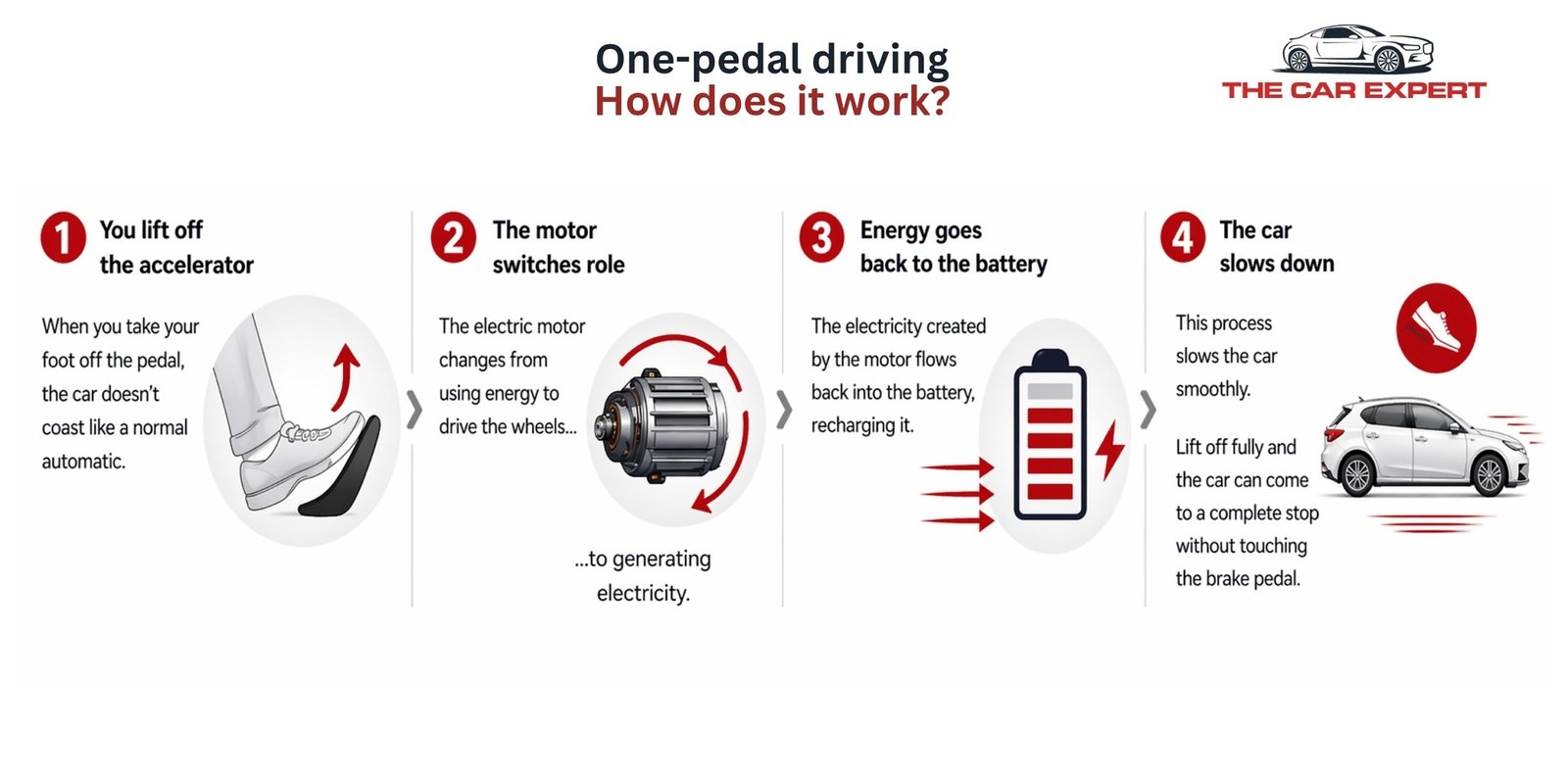
What Is One Pedal Driving is a common question for people buying their first electric vehicle. Unlike traditional gas cars, many EVs can slow down when the driver lifts their foot from the accelerator. This happens because the electric motor changes into a generator and creates regenerative braking.
After working with electric vehicle technology topics, I have found that many new EV owners need time to adjust to this driving style. Once drivers understand the system, one pedal driving often feels natural, especially during daily city trips, traffic jams, and stop-and-go commuting in the USA.
How Does One Pedal Driving Work?
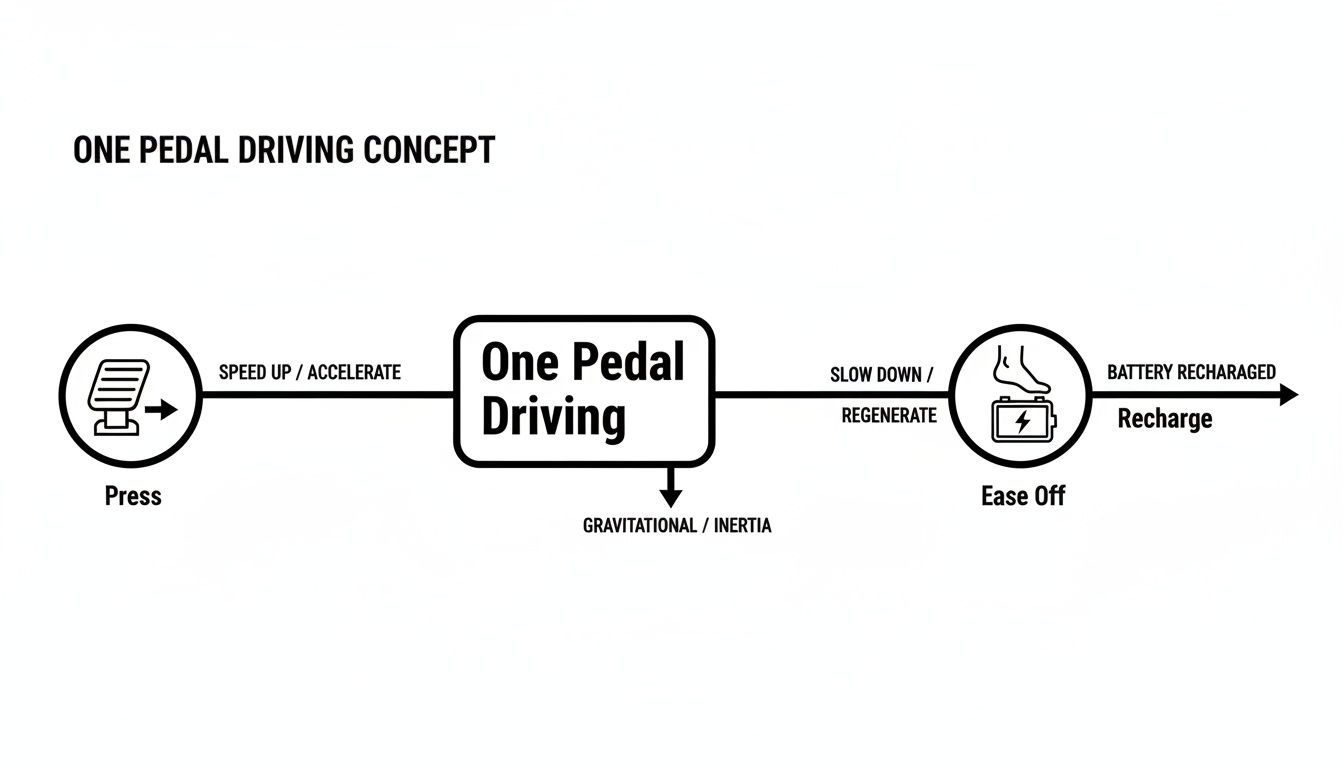
One pedal driving works by changing how an electric vehicle responds when the driver releases the accelerator pedal. In a normal gasoline car, lifting the pedal reduces engine power, but the vehicle usually keeps moving forward. In an EV, the motor can create resistance and slow the vehicle down.
This process uses regenerative braking. Instead of wasting motion energy as heat through brake pads, the electric motor captures some energy and converts it into electricity. That electricity returns to the battery pack for later use.

- ✦ Press the accelerator
The electric motor receives power from the battery and moves the vehicle forward.
- ✦ Release the accelerator
The motor reduces power and starts regenerative braking to slow the vehicle.
- ✦ Energy returns to the battery
The system stores recovered energy and improves overall vehicle efficiency.
The Role of Regenerative Braking
Regenerative braking is the key technology behind one pedal driving. When the vehicle slows down, the electric motor works in reverse and acts like a small generator.
The amount of braking depends on the vehicle model and driver settings. Some EVs allow drivers to adjust how strong the braking feels.
- ✦ Energy recovery
The vehicle captures some kinetic energy that would normally disappear as heat.
Why Do Electric Vehicles Use One Pedal Driving?
Electric vehicles use one pedal driving because electric motors can control power flow much faster than traditional engines. This makes it possible to combine acceleration and slowing into one smooth system.
For many US drivers, this feature makes daily commuting easier. Heavy traffic, parking areas, and city streets often require frequent speed changes, and one pedal driving reduces the need to move between pedals constantly.

- ✦ Simpler driving experience
Drivers can control most speed changes with the accelerator pedal.
- ✦ Less brake wear
Regenerative braking reduces the use of traditional friction brakes.
- ✦ Better energy efficiency
Recovered energy can slightly improve driving efficiency.
One Pedal Driving in Everyday Conditions
One pedal driving works especially well in urban areas. Drivers can slow down before traffic lights, adjust speed in neighborhoods, and follow traffic flow with fewer brake pedal presses.
However, drivers should still understand that the brake pedal remains important for emergency stops and stronger braking situations.
Benefits of One Pedal Driving for EV Owners
One pedal driving offers several advantages beyond convenience. It changes the way drivers interact with an electric vehicle and can create a smoother driving experience.
Many EV owners appreciate the reduced effort during daily trips. After learning the correct pedal control, the system can feel natural and comfortable.
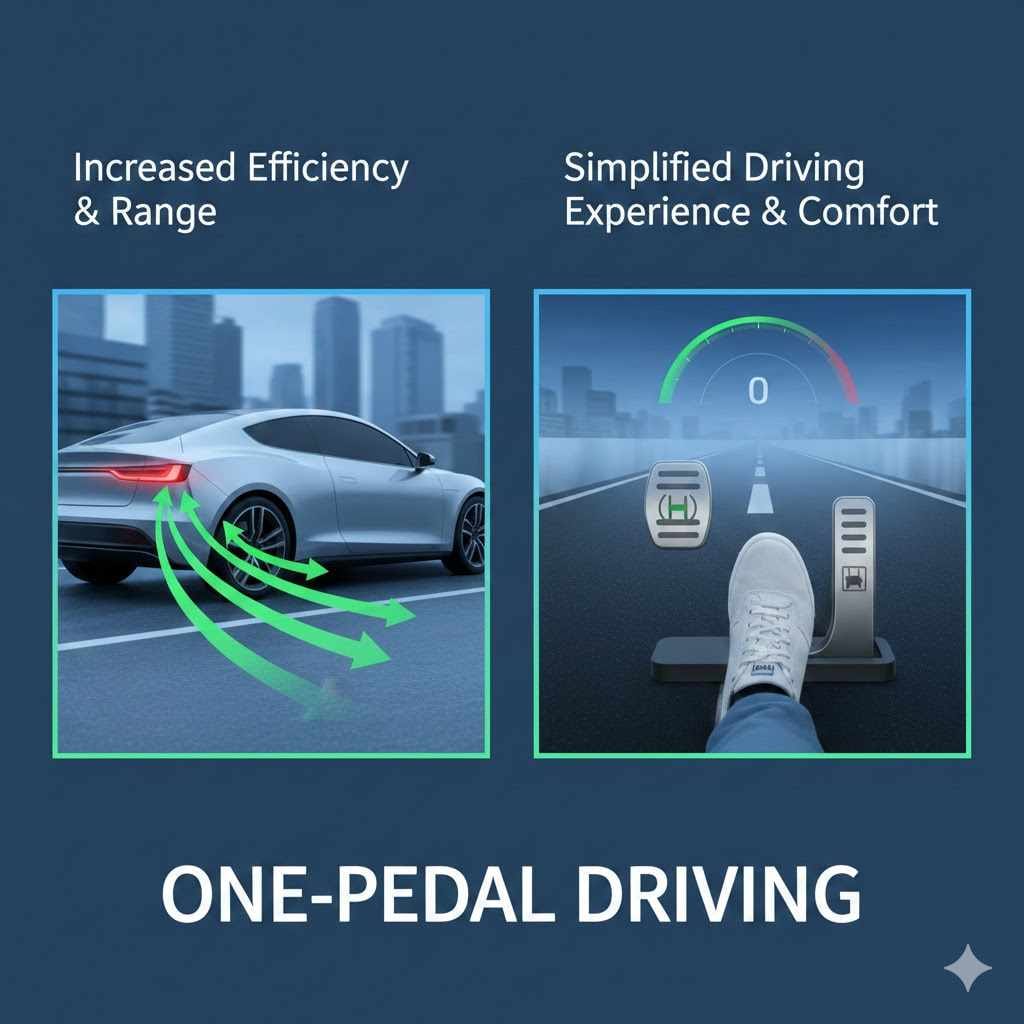
- ✦ Reduced brake usage
Regenerative braking handles many slowdowns, which can reduce brake pad wear.
- ✦ Smoother control
Drivers can make small speed changes without frequent pedal switching.
- ✦ Improved efficiency
Energy recovery may help maximize battery usage during certain driving conditions.
A More Relaxed Driving Style
Many new EV drivers describe one pedal driving as a more connected experience. Instead of switching between gas and brake pedals, drivers focus on controlling pressure on one pedal.
The learning period is usually short, but smooth movements are important. Quick pedal releases can create stronger braking than some drivers expect.
What Are the Limitations of One Pedal Driving?
Although one pedal driving is useful, it is not perfect for every situation. Drivers need to understand its limits before relying on it completely.
Weather, road conditions, and driving speed can affect how regenerative braking feels. Snow, ice, or slippery roads may require more careful control.

- ✦ Learning curve
New EV drivers may need time to adjust to the braking feel.
- ✦ Not a replacement for brakes
The brake pedal remains necessary for sudden stops and emergency situations.
- ✦ Different vehicle settings
Every EV brand offers different levels of regenerative braking strength.
Driving in Cold Weather
Cold temperatures can reduce battery performance and may change regenerative braking behavior. Some vehicles limit energy recovery until the battery reaches a suitable temperature.
Drivers should always follow vehicle instructions and adjust their driving style when conditions change.
How to Use One Pedal Driving Safely
Learning how to use one pedal driving takes practice. New drivers should begin in a quiet area before using the feature in heavy traffic.
The goal is smooth control. Drivers should avoid suddenly lifting the accelerator and should learn how their specific EV responds.
- ✦ Start slowly
Practice in low-traffic areas to understand braking strength.
- ✦ Watch traffic ahead
Look farther ahead so you can adjust speed smoothly.
- ✦ Know when to brake
Use the brake pedal when stronger stopping power is needed.
Is One Pedal Driving Hard to Learn?
Most drivers adapt quickly because the concept is simple. The main change is learning how much pressure to apply on the accelerator.
After several drives, many EV owners find the system becomes an automatic part of their driving routine.
