
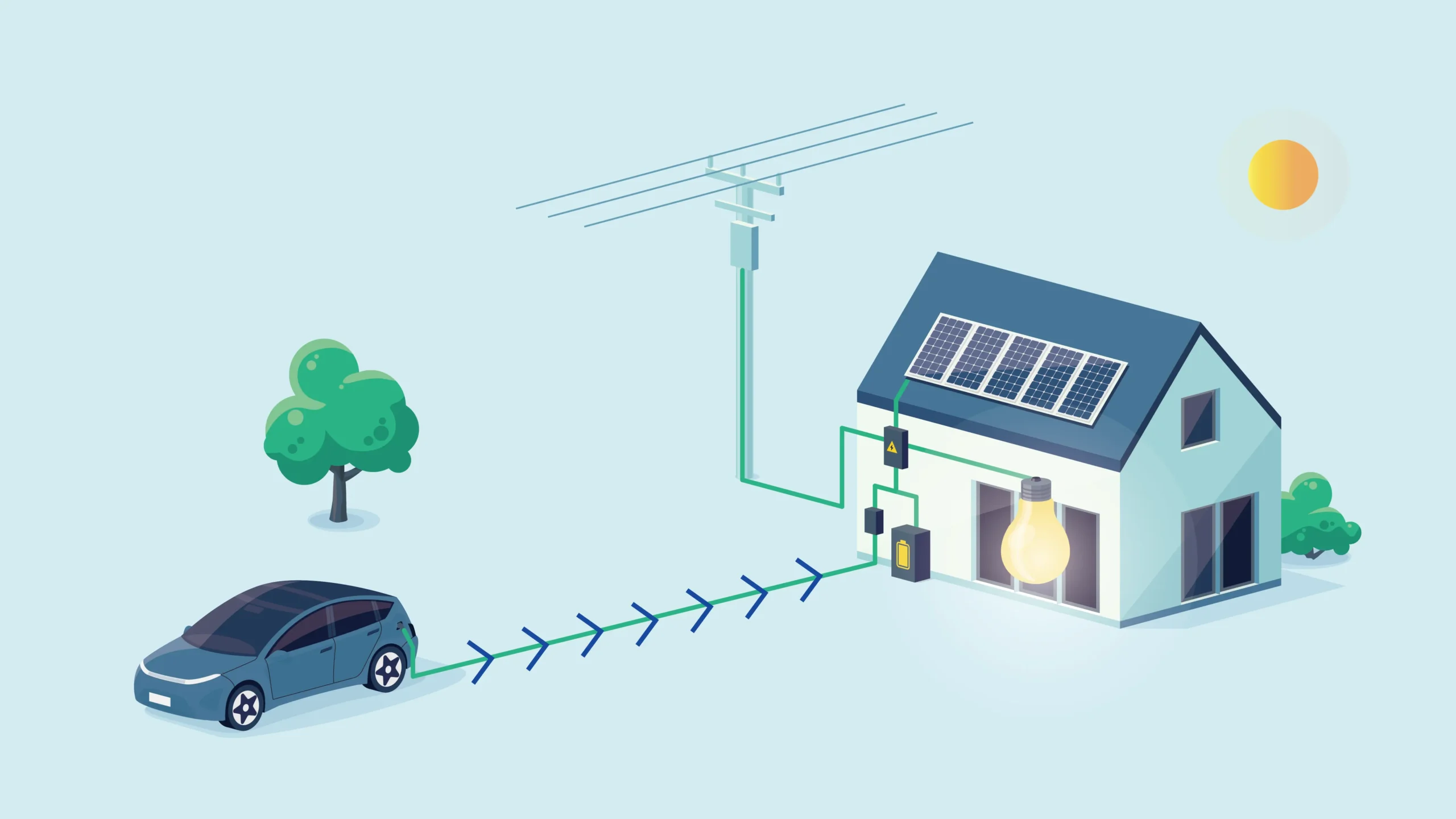
Many American drivers already use their electric vehicles as daily transportation. Vehicle to home charging adds another role by allowing an EV battery to support household electricity needs. Instead of only receiving power from the grid, a compatible EV can send energy back to a home when needed.
From my experience studying EV charging systems, the biggest shift with V2H is that drivers start viewing an EV as more than a car. It becomes a mobile energy storage system that can help during outages, reduce grid dependence, and support smarter energy use.

What Is Vehicle to Home Charging?
Vehicle to home charging, also called V2H, is a bidirectional charging technology that allows electricity to flow from an electric vehicle battery into a residential electrical system. Traditional EV chargers only move electricity from the grid into the vehicle. V2H chargers can move energy in both directions.
A V2H system allows homeowners to use their EV battery as temporary home energy storage. This can be useful during storms, grid failures, or times when electricity prices are higher.
- ✦ Two-way energy flow
A V2H charger can send electricity from the EV battery back to the home instead of only charging the vehicle.
- ✦ Home backup support
A compatible EV can provide electricity for important household devices during some power interruptions.
How V2H Differs From Regular EV Charging
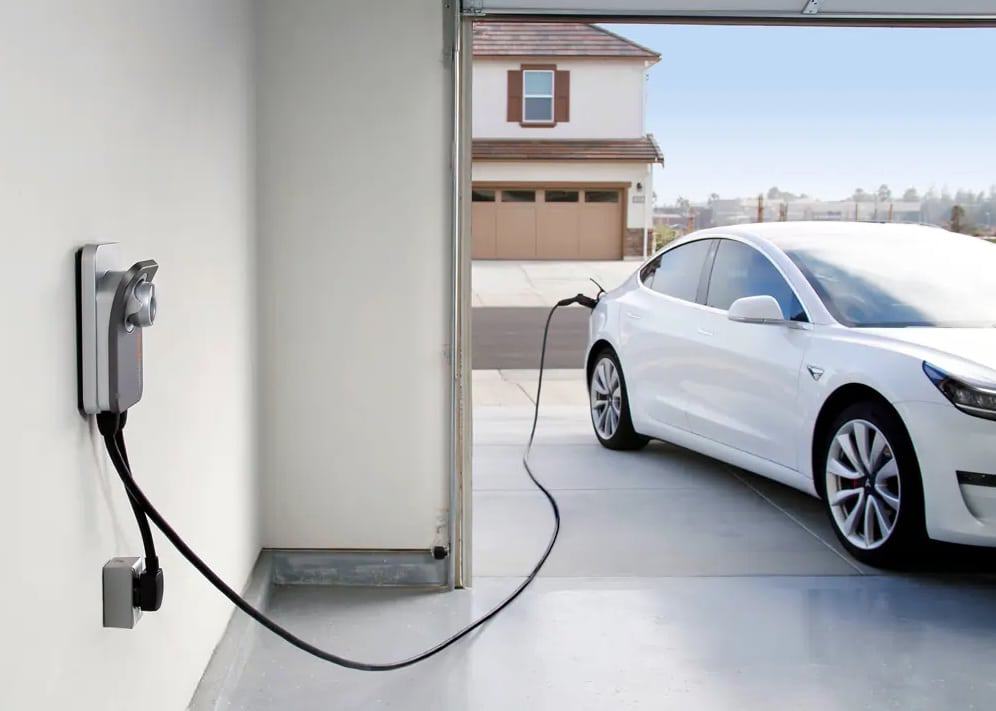
Regular EV charging works in one direction. Electricity moves from the utility grid to the vehicle battery. Vehicle to home charging creates a two-way connection between the EV, charger, and home electrical system.
This difference requires special hardware, software controls, and safety systems that standard home chargers do not provide.
- ✦ Standard charging
Moves electricity from the grid into the EV battery.
- ✦ V2H charging
Allows electricity to move from the EV battery back into the home.
How Does Vehicle to Home Charging Work?
Vehicle to home charging works through a compatible EV, a bidirectional charger, and a connection to the home’s electrical panel. The system manages when energy should enter the vehicle and when energy should leave the battery.
When a power outage occurs, the V2H system can disconnect the home from the grid and safely provide electricity from the EV battery. This prevents electricity from flowing back into utility lines, which protects repair workers.

- ✦ EV battery
Stores electrical energy that can later support household power needs.
- ✦ Bidirectional charger
Converts and controls electricity flow between the EV and the home.
- ✦ Home energy system
Distributes available EV power to selected household circuits.
The Role of Bidirectional Chargers
A bidirectional charger is the key component that makes V2H possible. It manages the conversion between the type of electricity stored in the EV battery and the electricity used by household appliances.
Without this equipment, an EV battery cannot directly power a home because vehicle batteries and household electrical systems operate differently.
- ✦ Power conversion
The charger converts electricity into a form the home can safely use.
Benefits of Vehicle to Home Charging for Homeowners
The main advantage of vehicle to home charging is flexibility. Instead of keeping energy stored only for driving, homeowners can use part of their EV battery capacity for household needs.
For many U.S. households, where storms and extreme weather can cause outages, V2H provides another option for backup energy. It works similarly to a home battery system but uses an EV that many people already own.

- ✦ Backup power during outages
A V2H system can help keep essential devices running when grid electricity is unavailable.
- ✦ Better energy management
Homeowners can store energy in the EV and use it when electricity demand or prices are higher.
- ✦ More value from EV ownership
An electric vehicle can provide transportation and energy storage benefits.
Using an EV as a Home Battery
A home battery system is designed to store electricity for later use. A V2H-compatible EV can perform a similar role because its battery often has significant storage capacity.
However, the vehicle still needs enough charge for driving. Smart V2H systems allow users to set minimum battery levels so the car remains ready for travel.
- ✦ Flexible energy storage
The EV battery can support home energy needs when transportation needs are already covered.
What Electric Vehicles Support Vehicle to Home Charging?
Not every electric vehicle supports vehicle to home charging. The EV must have bidirectional power capability and work with compatible charging equipment.
As EV technology develops, more manufacturers are adding bidirectional charging features. Drivers should check vehicle specifications before investing in V2H equipment.

- ✦ Compatible vehicle
The EV must support sending electricity out through its charging connection.
- ✦ Compatible charger
The home charging equipment must support two-way energy movement.
- ✦ Home electrical compatibility
The home’s electrical system may need upgrades or professional installation.
Why Compatibility Matters
Buying a V2H charger without checking EV compatibility can lead to problems. The vehicle, charger, and home system must communicate correctly.
Professional installation helps ensure the system follows safety standards and works as expected.
Vehicle to Home Charging vs Home Battery Storage
Vehicle to home charging and home battery systems solve similar problems, but they have different designs. A home battery stays installed at the property, while an EV battery can travel with the vehicle.
The best option depends on lifestyle, budget, energy goals, and how often the vehicle is available at home.
- ✦ V2H system
Uses an electric vehicle battery that can provide both transportation and backup energy.
- ✦ Home battery
Provides dedicated energy storage but does not move with the homeowner.
Which Option Fits Different Needs?
Drivers who already own a compatible EV may find V2H attractive because the battery serves multiple purposes. Homeowners who need permanent backup power may prefer a dedicated battery system.
Some households may combine both technologies for greater energy flexibility.
Limitations and Challenges of Vehicle to Home Charging
Although vehicle to home charging offers useful benefits, it also has some challenges. The technology requires compatible vehicles, special chargers, and professional installation.
Battery use is another consideration. Using an EV battery for home power may add extra charging cycles over time, although modern EV batteries are designed for long-term use.
- ✦ Higher installation cost
Bidirectional charging equipment usually costs more than standard EV chargers.
- ✦ Limited vehicle availability
Only certain EV models currently support V2H features.
- ✦ Battery planning
Owners must balance home energy use with driving needs.
Future Growth of V2H Technology
The growth of electric vehicles is creating new opportunities for smart energy systems. As more manufacturers develop bidirectional charging, V2H may become a common feature for EV owners.
Future improvements may make installation easier and reduce costs for households.
