When people ask, What Is Unsprung Weight, they are usually trying to understand why some cars feel smoother, sharper, or more controlled than others. The answer starts with the parts that move directly with the wheels. These parts react to every bump, pothole, and road change.
In automotive engineering, unsprung weight plays a major role in suspension performance. During vehicle testing and suspension tuning, engineers focus on reducing unnecessary weight near the wheels because it helps the tires stay connected to the road. For everyday drivers in the United States, this can mean better comfort on rough roads, improved steering feel, and more predictable handling.

What Is Unsprung Weight in a Vehicle?
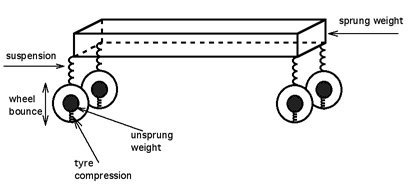
Unsprung weight refers to the mass of vehicle components that are not supported by the suspension springs. These parts move up and down when the vehicle travels over uneven roads.
The opposite of unsprung weight is sprung weight. Sprung weight includes the parts supported by the suspension, such as the vehicle body, engine, passengers, and interior components. The suspension system separates these two areas to control movement.

- ✦ Unsprung components
These include tires, wheels, wheel hubs, brake rotors, brake calipers, and many suspension parts connected below the springs.
- ✦ Sprung components
These include the vehicle frame, body, passengers, and other parts carried by the suspension system.
- ✦ Why the difference matters
The amount of unsprung weight affects how quickly the suspension reacts to changes in the road surface.
How Unsprung Weight Moves on the Road
When a tire hits a bump, the wheel and other unsprung parts must move quickly to follow the road. More weight makes this movement harder because the suspension must control more mass.
A lighter unsprung setup allows the suspension to respond faster. This helps maintain tire contact, which is important for traction, steering control, and braking.
Which Vehicle Parts Add Unsprung Weight?
Many parts around the wheel assembly contribute to unsprung weight. Some components are easy to identify, while others are hidden inside the suspension system.
For most passenger cars, the biggest contributors are the wheels and tires. This is why lightweight wheels are popular among performance drivers and racing teams.

- ✦ Tires
Tires are one of the largest unsprung components because they directly contact the road and move with every suspension action.
- ✦ Wheels
Heavy steel wheels or large aftermarket wheels can increase unsprung weight and slow suspension response.
- ✦ Brake components
Brake rotors, calipers, and related hardware located near the wheels add additional unsprung mass.
- ✦ Suspension parts
Control arms, knuckles, and other moving suspension pieces can contribute to unsprung weight.
Why Wheel Weight Has a Big Effect
Wheel weight has a special impact because it also affects rotational mass. A heavier wheel requires more energy to accelerate, slow down, and change direction.
This is why performance vehicles often use lightweight alloy wheels. They reduce both rotational weight and unsprung weight at the same time.
How Unsprung Weight Affects Vehicle Handling
Unsprung weight directly affects how a vehicle handles corners, bumps, and sudden changes in road conditions. A lighter setup allows the suspension to react with less effort.
Drivers often notice the difference as improved steering response and better stability. The car feels more connected because the tires can maintain better contact with the road.

- ✦ Improved grip
Lower unsprung weight helps tires stay planted, especially when driving over uneven surfaces.
- ✦ Better steering response
A lighter wheel assembly can change direction faster and provide a more direct steering feel.
- ✦ More controlled cornering
Reduced unsprung mass helps the suspension manage body movement during turns.
How Unsprung Weight Affects Ride Comfort
Unsprung weight also changes how comfortable a vehicle feels. When unsprung parts become too heavy, the suspension may struggle to absorb bumps smoothly.
This can create a harsher ride because the wheels transfer more movement into the vehicle body. A lighter suspension setup usually provides a more refined driving experience.

- ✦ Road bump response
Lower unsprung weight allows wheels to move over bumps faster without pushing the vehicle upward.
- ✦ Reduced vibration
A well-balanced suspension with controlled unsprung mass can reduce unwanted vibration.
Daily Driving Example
A driver on American roads may notice unsprung weight differences when traveling over potholes, expansion joints, or rough pavement. A vehicle with heavy wheel assemblies may feel less settled after hitting these surfaces.
A properly tuned suspension with lower unsprung weight can recover faster and maintain a smoother ride.
Benefits of Reducing Unsprung Weight
Reducing unsprung weight is a common goal in motorsports and performance vehicle design. However, it also benefits normal road cars when done correctly.
The goal is not simply to remove weight. Engineers must keep parts strong enough to handle braking forces, impacts, and long-term use.
- ✦ Better acceleration
Lighter wheels require less energy to rotate, helping the vehicle respond more quickly.
- ✦ Improved braking
Lower rotating mass can help braking systems slow the vehicle more efficiently.
- ✦ Enhanced fuel efficiency
Reducing unnecessary weight may help lower energy demands during driving.
- ✦ Improved suspension performance
The suspension can control lighter moving parts more effectively.
Common Ways Drivers Reduce Unsprung Weight
Many enthusiasts start with lightweight wheels because they provide noticeable results. Other changes may include lighter brake components or upgraded suspension parts.
Every modification requires careful planning because safety and durability are more important than weight savings alone.
Unsprung Weight vs Sprung Weight: Understanding the Difference
The difference between sprung and unsprung weight explains how a vehicle suspension manages movement. Sprung weight moves with the body, while unsprung weight follows the road surface.
A good suspension system balances both types of weight. Too much unsprung weight can reduce comfort and grip, while the correct balance improves overall vehicle behavior.
- ✦ Sprung weight movement
The vehicle body moves more slowly and is controlled by springs and dampers.
- ✦ Unsprung weight movement
The wheels and related parts move rapidly to follow changes in the road.