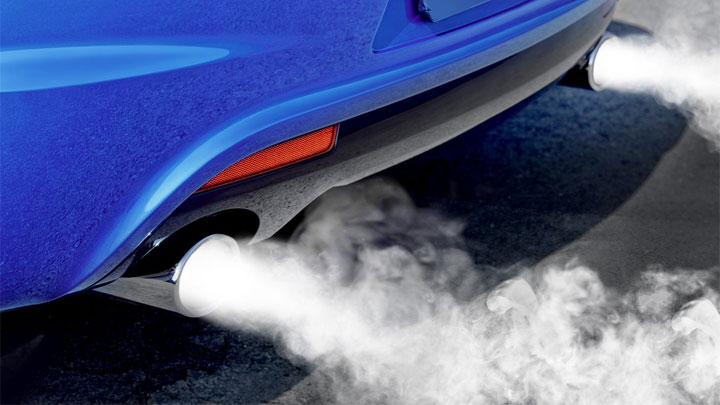
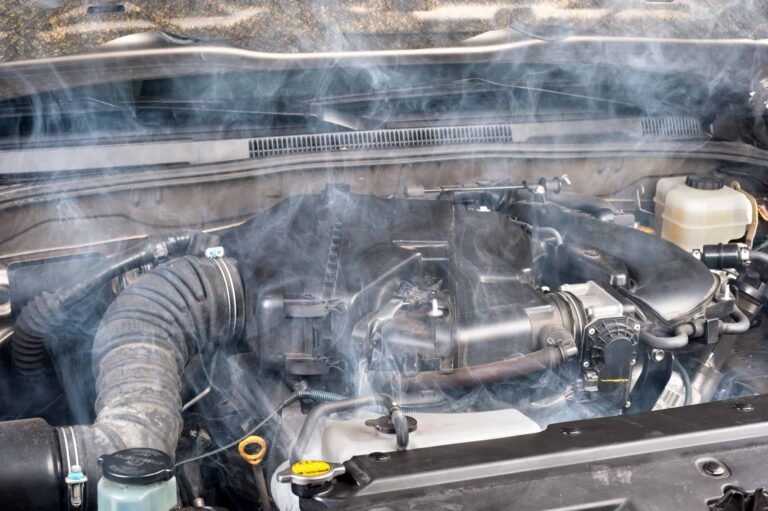
White smoke from an exhaust can mean normal water vapor or a serious engine problem. Thin white vapor that disappears as the engine warms up is usually harmless condensation. Thick white smoke that continues after warm-up often points to coolant entering the engine or, in diesel vehicles, incomplete fuel combustion. Check the coolant level and engine temperature before deciding what to do.
If your car, pickup truck, or SUV starts leaving a white cloud behind it as you pull out of your driveway or join a U.S. highway, do not ignore the change. The exhaust can tell you a lot about your engine. However, not every white cloud means something is broken. Cold mornings, short trips, and moisture inside the exhaust system can all create normal white vapor.
The real concern starts when the smoke stays thick after the engine reaches normal operating temperature. A leaking head gasket, cracked cylinder head, or damaged engine block can allow coolant into the combustion chamber. Diesel engines can also produce white smoke when fuel fails to burn properly. This guide explains how to tell these problems apart, what you can safely check at home, and when your vehicle needs professional help.
Source: cartreatments.com
When Is White Smoke From an Exhaust Normal?
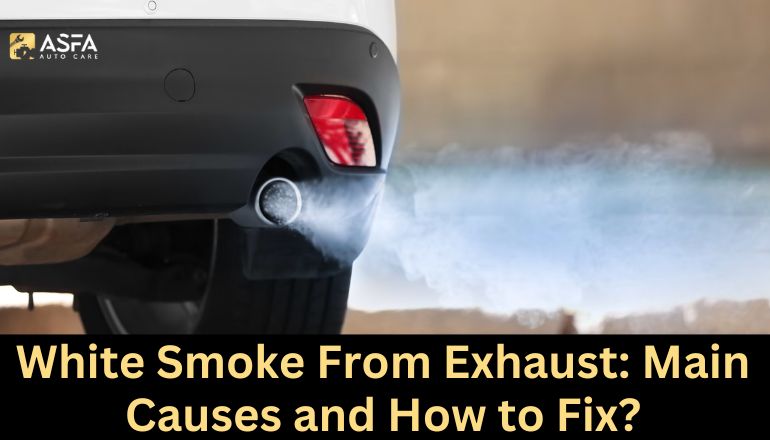
White exhaust vapor is often normal when you first start a cold engine. Moisture builds up inside the exhaust system while the vehicle sits. When you start the engine, hot exhaust gases heat this moisture and turn it into vapor. The vapor then meets cooler outside air and forms a visible white cloud.
This process is called condensation. It is much like seeing your breath on a cold winter morning. The vapor may look like smoke, but it does not mean the engine is burning coolant or oil.
You may notice this more during cold weather in states such as Minnesota, Michigan, Wisconsin, and New York. However, it can also happen in other parts of the United States when outside air is cool or humid. Vehicles that make many short trips may show more visible vapor because the exhaust system does not stay hot long enough to dry out fully.
Normal condensation should become less visible as the exhaust warms up. The engine should run smoothly, the temperature should remain normal, and the coolant level should stay stable. You should not see a steady, thick cloud after the engine reaches its normal operating temperature.
Source: asfaautocare.com.au
Thin white vapor
A light cloud that fades quickly is usually water vapor from normal exhaust condensation.
Cold engine
Vapor is often more noticeable just after starting a vehicle that has been parked overnight.
Normal engine behavior
The engine runs smoothly, has normal power, and does not show signs of overheating.
Stable coolant level
The coolant stays near the correct level when checked with the engine completely cold.
How Long Should Normal White Vapor Last?
There is no fixed time that applies to every vehicle. Outside temperature, humidity, exhaust design, engine size, and driving conditions all affect how long vapor remains visible. It may disappear quickly on a mild day but remain visible longer in cold weather.
Watch what happens as the engine warms up rather than relying on a strict number of minutes. If the cloud fades and does not return during normal driving, condensation is a likely explanation. If thick white smoke remains or becomes worse, arrange an inspection.
White Vapor Versus Real Exhaust Smoke
Normal vapor is usually light and spreads out quickly in the air. Problem-related white smoke often looks denser and stays visible behind the vehicle. It may also come with coolant loss, a rough idle, or a change in engine performance.
Appearance alone cannot confirm the cause. Coolant vapor, unburned diesel fuel, and normal condensation can look similar. Use the timing, engine behavior, fluid levels, and warning lights together.
What Causes Persistent White Smoke From an Exhaust?
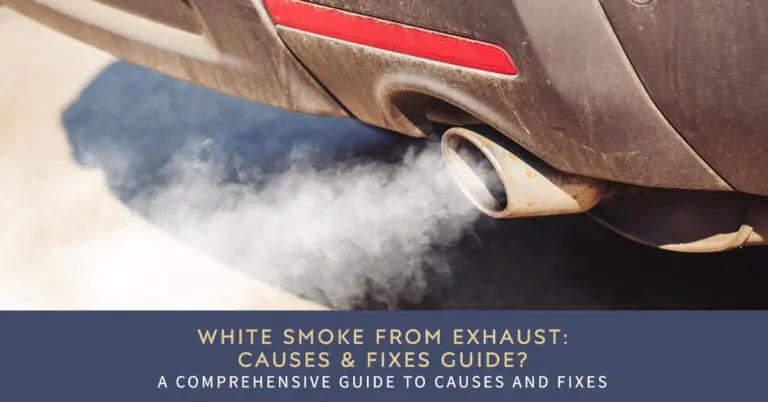
Persistent white exhaust smoke usually means something is entering the combustion process that should not be there. In a gasoline engine, coolant entering a cylinder is a major concern. In a diesel engine, unburned fuel can also create white or white-gray exhaust.
The best diagnosis depends on the vehicle and its symptoms. A head gasket problem should not be assumed just because the exhaust looks white. A mechanic needs to confirm whether coolant, fuel, or another issue is responsible.
Source: automadesimply.com
Failed head gasket
A damaged gasket can allow coolant to enter one or more engine cylinders.
Cracked cylinder head
A crack can create a path for coolant to enter the combustion chamber.
Cracked engine block
Internal damage can allow coolant to reach places where it should not be.
Diesel fuel system fault
Poor fuel delivery or incomplete combustion can produce white exhaust.
1. Blown or Damaged Head Gasket
A head gasket sits between the engine block and cylinder head. It seals the combustion chambers and helps keep engine oil and coolant in their proper passages. When this seal fails, coolant can enter a cylinder and mix with the burning air-fuel mixture.
The coolant turns into vapor during combustion and leaves through the exhaust pipe. This can create thick white smoke that continues even after the engine warms up.
A failed head gasket may also cause overheating, coolant loss, rough idling, poor engine performance, or a sweet odor from the exhaust. Some engines develop more than one symptom, while others show only a few early warning signs.
Do not assume that a head gasket has failed based on a single symptom. A cooling system pressure test and combustion-gas test can help confirm the problem.
Possible warning signs
Persistent white smoke, unexplained coolant loss, overheating, engine misfires, and possible coolant contamination in the oil.
Usual repair
Replace the failed gasket and inspect the cylinder head and engine block for damage or distortion.
2. Cracked Cylinder Head
The cylinder head sits above the engine block and contains important passages for coolant and oil. It also houses valves and other engine parts. A crack can allow coolant to enter a combustion chamber or another internal passage.
Severe overheating is one possible cause of cylinder head damage. Freezing can also cause problems if the cooling system has an unsuitable antifreeze mixture. Once a crack develops, coolant may leak into the engine and create persistent white exhaust smoke.
A cracked cylinder head can produce symptoms similar to a failed head gasket. The engine may lose coolant, run roughly, or overheat. A mechanic may need to remove the cylinder head and inspect it with suitable testing equipment before choosing a repair.
Common clues
White smoke after warm-up, coolant loss without a clear external leak, overheating, and poor engine performance.
Repair options
Depending on the material, location, and damage, the head may be repairable or may need replacement.
3. Cracked Engine Block
An engine block contains the cylinders and many of the passages that carry coolant and oil. A crack in the wrong area can allow coolant to enter a cylinder. The coolant then leaves through the exhaust as white vapor.
Engine overheating, severe mechanical stress, and freezing can contribute to block damage. A cracked block is a serious problem because it can affect the main structure of the engine.
This fault may require specialized repair or engine replacement. A professional inspection is necessary to determine whether the damage can be repaired safely and economically.
Main symptoms
Persistent white smoke, unexplained coolant loss, overheating, and possible contamination of engine oil.
Best next step
Arrange a professional cooling system and engine inspection before running the vehicle again.
4. Faulty Diesel Fuel Injection
White exhaust smoke does not always mean coolant is entering the engine. Diesel vehicles can produce white or light gray smoke when fuel does not burn completely. This can happen when the combustion chamber is too cold or when the fuel system does not deliver fuel correctly.
Faulty injectors, incorrect injection timing, poor fuel quality, air in the fuel system, and restricted fuel filters are possible causes. A diesel engine may also produce extra white smoke during a cold start before it reaches normal operating temperature.
If the smoke continues after warm-up, pay attention to hard starting, rough idle, reduced power, and unusual fuel use. These symptoms can help a mechanic narrow down the cause. Diesel fuel system testing is often needed to identify the faulty part.
Possible symptoms
White or gray exhaust, difficult starting, rough running, reduced power, and increased fuel consumption.
Possible repairs
Fuel filter service, injector testing, fuel system repairs, or correction of injection timing, depending on the diagnosis.
5. External Coolant Leaks and Other Fluid Problems
A leaking radiator, hose, water pump, or coolant reservoir can lower the coolant level. However, an external coolant leak does not automatically create white smoke from the tailpipe. It becomes a different problem when coolant enters the engine or reaches a hot surface outside the exhaust outlet.
For example, coolant that leaks onto a hot exhaust manifold may create steam from under the hood. This is not the same as white exhaust coming from the tailpipe. The location of the vapor matters.
Some engine designs also have internal coolant passages near the intake system. Damage to the relevant seals or components may allow coolant to enter the engine. A mechanic should inspect the exact engine design before identifying the failed part.
Vapor from under the hood
Look for an external fluid leak or overheating rather than assuming the tailpipe is the source.
Vapor from the tailpipe
Persistent white exhaust requires checks for internal coolant leakage or incomplete diesel combustion.
How to Identify the Cause by the Smoke and Other Symptoms
The timing and behavior of the smoke can help you narrow down the problem. Notice whether it appears only at startup, continues at idle, or becomes heavier during acceleration. Also check whether the engine runs normally or shows signs of overheating.
Do not use smell as your only diagnostic tool. A sweet odor may suggest coolant, while a raw fuel odor may point toward incomplete diesel combustion. Never place your face near an exhaust pipe or breathe exhaust gases to identify an odor.
Source: autochimps.com
Smoke only during cold startup
Light vapor that fades as the exhaust warms up usually points to normal condensation.
Smoke after the engine warms up
Thick, ongoing white smoke raises concern about internal coolant leakage or a diesel combustion problem.
Smoke during acceleration
Persistent white smoke under load may indicate a coolant leak or a fuel delivery problem, depending on the engine type.
Smoke with rough running
Misfires, hard starting, and loss of power suggest that the engine needs further testing.
White Smoke When Starting the Car
A small white cloud during a cold start is often harmless. Water collects in the exhaust while the vehicle is parked. The first hot exhaust gases turn that water into visible vapor.
However, a cloud that stays thick after the engine warms up needs attention. If the coolant level also drops, an internal leak becomes a stronger possibility. Diesel owners should also consider cold combustion and fuel system problems.
White Smoke While Idling
Smoke that continues while the vehicle sits at idle may indicate a problem that remains active even when the engine is not under heavy load. A coolant leak into a cylinder can produce this pattern.
On a diesel engine, poor injector performance or incomplete combustion may also cause white smoke at idle. Rough running and hard starting provide useful clues. Avoid repeated idling if the smoke is heavy or the temperature is rising.
White Smoke During Acceleration
A thick white cloud during acceleration deserves attention, especially when it continues after warm-up. Engine load changes combustion conditions and may make an existing problem more noticeable.
A gasoline engine with a coolant leak may produce more visible vapor under certain operating conditions. A diesel engine may produce white smoke when fuel delivery or combustion is incorrect. A proper diagnosis should include the engine type and any stored trouble codes.
White Smoke With Coolant Loss
A coolant level that keeps falling is one of the most useful warning signs. If you cannot find an external leak but see persistent white exhaust, coolant may be escaping into the engine.
A sweet exhaust odor can support this suspicion, but it does not prove a head gasket failure. Other internal leaks may produce similar symptoms. Have the cooling system tested instead of repeatedly adding coolant and continuing to drive.
How to Check White Exhaust Smoke Safely at Home
You can perform a few basic checks before taking your vehicle to a repair shop. These checks will not confirm a failed head gasket, but they can help you describe the problem and give a mechanic useful information.
Start with safety. Park the vehicle on level ground, switch off the engine, and allow it to cool completely. Never remove a radiator cap or pressurized coolant reservoir cap while the engine is hot. Hot coolant can escape under pressure and cause serious burns.
Keep your hands away from belts, fans, and other moving parts. Electric cooling fans may start unexpectedly. If the engine has overheated or is producing heavy white smoke, do not restart it just to complete these checks.
Source: vehiclefreak.com
Tools you may need
A flashlight, clean cloth, gloves, a notebook or phone camera, and the owner’s manual. Do not open hot cooling system parts.
A safe inspection area
Use a flat outdoor area away from traffic and enclosed spaces. Never run an engine in a closed garage.
Step 1: Observe When the Smoke Appears
Start by recording when the smoke happens. Does it appear only after the car sits overnight? Does it continue after a normal drive? Does it become heavier when you accelerate?
A short video from a safe distance can help a mechanic understand the pattern. Record whether the smoke comes from the tailpipe or from under the hood. Do not stand behind a running vehicle to inspect its exhaust closely.
Step 2: Check the Coolant Level
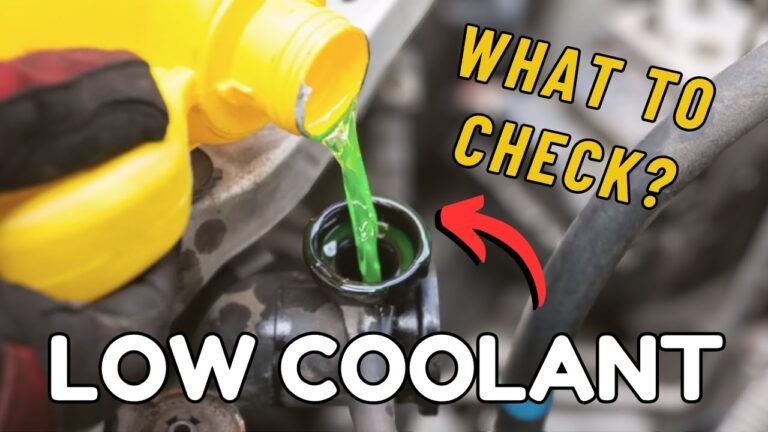
Wait until the engine is completely cold. Find the coolant reservoir and check its level against the MIN and MAX marks. The correct level should match the vehicle manufacturer’s instructions.
If the level is below the minimum mark, look for obvious leaks around accessible hoses, the reservoir, and the radiator. Check the ground for fresh drips as well. Never touch hot components or open a pressurized cooling system.
Compare the level again after the vehicle has cooled on another day. A repeated drop is more concerning than a single reading. Use only the coolant type specified in the owner’s manual.
Coolant level remains stable
This makes a major coolant loss less obvious, but it does not rule out a small internal leak.
Coolant level keeps falling
Arrange a cooling system inspection, especially if persistent white exhaust is also present.
Step 3: Inspect the Engine Oil
With the engine switched off and cool, check the oil dipstick according to the owner’s manual. Look for unusual changes in oil color, texture, or level.
Coolant mixing with engine oil may create a cloudy, tan, or milky appearance. The oil level may also rise if another fluid enters the crankcase. These signs deserve professional attention.
A light beige film under the oil filler cap is not proof of a failed head gasket. Short trips and normal moisture can create some residue. Check the dipstick and other symptoms before drawing a conclusion.
Step 4: Look for External Coolant Leaks
Use a flashlight to inspect visible cooling system parts. Look for wet areas, dried coolant residue, damaged hoses, loose connections, or signs of leakage around the reservoir and radiator.
Check the passenger compartment as well. A sweet smell inside the cabin, wet carpet, or unusual window fogging may point toward a heater core leak. Do not touch unknown fluids with bare hands.
Remember that an external coolant leak and internal coolant leakage are different problems. Finding one does not automatically explain white smoke from the tailpipe.
Step 5: Record Other Warning Signs
Write down any temperature warning, check engine light, rough idle, loss of power, hard starting, or unusual noise. Note how often you need to add coolant and whether the problem changes after a longer drive.
These details help a technician choose the right tests. Avoid repeatedly revving the engine or taking a long test drive to make the smoke appear. That can make an existing engine problem worse.
How a Mechanic Diagnoses Persistent White Smoke
A professional diagnosis should identify what is entering the combustion process before any major parts are replaced. White smoke is a symptom, not a complete diagnosis. The technician will usually consider the vehicle’s engine type, service history, fluid levels, and operating conditions.
Several tests can help separate a head gasket problem from a cracked cylinder head, fuel injection fault, or normal condensation. The correct combination depends on the vehicle and the symptoms.
Source: vehiclescene.com
Cooling system pressure test
Checks whether the cooling system loses pressure and helps locate external or internal leaks.
Combustion gas test
Checks for combustion gases in the cooling system, which can support a diagnosis of an internal engine leak.
Compression test
Measures cylinder compression to identify certain sealing or mechanical problems.
Leak-down test
Uses compressed air to help identify where a cylinder is losing pressure.
Cooling System Pressure Testing
A technician can use a pressure tester to apply controlled pressure to the cooling system. The technician then checks whether the pressure drops and looks for signs of coolant leakage.
This test can help find leaks around hoses, the radiator, water pump, reservoir, and other cooling system parts. It may also help identify an internal leak when there is no obvious external source.
Pressure testing must follow the correct procedure and pressure limits for the vehicle. It should not be treated as a reason to open a hot cooling system.
Combustion Gas Testing
A combustion gas test checks whether exhaust gases are entering the cooling system. A technician uses a suitable test fluid and equipment to look for evidence of combustion gases in the coolant area.
A positive result can support a head gasket, cylinder head, or engine block problem. However, the result must be considered with other findings. It does not always identify the exact damaged component by itself.
Compression and Leak-Down Testing
A compression test measures how well each cylinder builds pressure during engine operation. A cylinder with unusually low compression may have a valve, piston, ring, or sealing problem.
A leak-down test provides more information by introducing compressed air into a cylinder and checking where that air escapes. Air entering the cooling system can point toward an internal leak.
These tests are useful, but no single result should replace a full diagnosis. A small leak may not always create a clear difference in compression readings.
Diesel Engine Diagnostic Tests
When a diesel vehicle produces white smoke, a mechanic may need to inspect its injectors, fuel filter, fuel quality, injection timing, and fuel supply. Air entering the fuel system can also affect combustion.
The technician may scan the vehicle for stored fault codes and use manufacturer-specific equipment to test the fuel system. Glow plug operation and cylinder compression may also need attention on engines that struggle to start when cold.
These checks matter because replacing a head gasket will not fix white smoke caused by an injector or fuel delivery fault.
How to Fix White Smoke From an Exhaust
The correct repair depends on the actual cause. A vehicle with normal condensation needs no repair. A vehicle with an internal coolant leak or diesel fuel system fault needs a different solution.
Do not buy parts based only on the color of the exhaust. A confirmed diagnosis can prevent unnecessary repairs and help protect the engine from further damage.
Replace a failed head gasket
The mechanic removes the cylinder head, inspects the sealing surfaces, and replaces the damaged gasket after checking for related damage.
Repair or replace a damaged cylinder head
The appropriate repair depends on the crack, material, condition, and manufacturer’s repair limits.
Repair a cracked engine block
A specialist must determine whether the block can be repaired or whether engine replacement is more suitable.
Repair diesel fuel system faults
The repair may involve injectors, fuel filters, fuel lines, injection timing, or another confirmed fuel system problem.
Fix external coolant leaks
Replace damaged hoses, seals, radiator parts, water pumps, or reservoir components as required.
Repairing a Failed Head Gasket
A head gasket replacement involves more than fitting a new gasket. The mechanic must inspect the cylinder head and block surfaces for damage, cracks, and distortion.
The cylinder head may need professional measurement or machining if it is outside the manufacturer’s specifications. The repair should also address the original cause of overheating if that caused the failure.
After assembly, the cooling system should be filled and checked correctly. The technician should verify that the engine reaches normal temperature and that the original symptoms have stopped.
Repairing Diesel Fuel Problems
If testing identifies a faulty diesel injector, the technician may clean, repair, or replace it, depending on the design and condition. A restricted filter or air leak in the fuel system also needs attention.
Incorrect injection timing or other control problems require the correct adjustment or repair. Always use the fuel grade and maintenance parts specified for the engine.
Why Head Gasket Sealer Is Not a Guaranteed Fix
Some products claim to seal head gasket leaks without removing the cylinder head. These products may seem attractive because they promise a quick and simple repair.
However, they cannot reliably repair every gasket failure, cracked cylinder head, or damaged engine block. Some sealing products may also cause problems in cooling system passages or components.
Ask a qualified mechanic before using a sealing product. It should not replace proper diagnosis, especially when the engine overheats or loses coolant repeatedly.
When Should You Stop Driving?
Stop driving when thick white exhaust continues after warm-up, especially if the engine is losing coolant or showing signs of overheating. Continuing to run an engine with coolant entering a cylinder can cause severe internal damage.
If the temperature gauge rises above its normal range or an overheating warning appears, pull over as soon as it is safe. Turn off the engine and allow it to cool. Do not remove the radiator cap or pressurized coolant reservoir cap while the system is hot.
A vehicle that has suffered a serious internal coolant leak may also develop severe misfires or other mechanical damage. In some cases, coolant can collect inside a cylinder and create a risk of major damage when the engine is restarted. A tow is safer than attempting to drive to a repair shop.
Thick white smoke that does not stop
Arrange a tow if the smoke remains heavy after warm-up or becomes worse while driving.
Engine overheating
Stop in a safe place, switch off the engine, and do not continue driving.
Rapid coolant loss
A falling coolant level can lead to overheating and serious engine damage.
Rough running or major power loss
These symptoms may indicate a serious combustion or mechanical problem.
Coolant mixed with engine oil
Avoid running the engine until a technician has inspected the problem.
When Is It Reasonable to Continue Driving?
A light white cloud that appears only during a cold start and disappears as the exhaust warms up is usually normal. If the engine runs smoothly, the temperature stays normal, and the coolant level remains stable, there may be no reason to stop driving.
Continue to monitor the vehicle rather than assuming every visible vapor cloud is harmless. If the smoke changes, lasts longer than usual, or appears with a warning light or fluid loss, arrange an inspection.
Frequently Asked Questions
Q
Is white smoke from an exhaust always a sign of a blown head gasket?
No. Thin white vapor during a cold start is often normal condensation. Persistent white smoke can indicate coolant entering the engine through a failed head gasket, cracked cylinder head, or damaged engine block. Diesel engines may also produce white smoke because of incomplete fuel combustion. Testing is needed to identify the exact cause.
Q
Can I drive my car if white smoke is coming from the exhaust?
It depends on the symptoms. A light cloud that disappears as the engine warms up is usually harmless. However, thick white smoke that continues after warm-up, falling coolant levels, overheating, or rough running are reasons to stop driving. Turn off the engine and arrange professional help if these warning signs appear.
Q
Why does my car produce white smoke only when I start it?
The most common reason is condensation inside the exhaust system. Moisture collects while the vehicle is parked and becomes visible vapor when hot exhaust gases pass through the system. If the vapor disappears as the engine warms up and the coolant level remains stable, it is usually normal. Persistent smoke needs further investigation.
Q
Why does white smoke come from my exhaust when I accelerate?
Persistent white smoke during acceleration may indicate coolant entering the combustion chamber or incomplete fuel combustion in a diesel engine. Engine load can make an existing problem more noticeable. Check for coolant loss, overheating, hard starting, and reduced power. Avoid repeated acceleration tests if the smoke is heavy.
Q
Why does a diesel engine produce white smoke?
A diesel engine can produce white smoke when fuel does not burn completely. Possible causes include a cold combustion chamber, faulty injectors, incorrect injection timing, poor fuel quality, air in the fuel system, and restricted fuel filters. Coolant entering the combustion chamber can also produce white smoke. A diesel technician can test the fuel and cooling systems to separate these problems.
Q
Does white smoke mean my engine is burning coolant?
Not always. Normal condensation also creates visible white vapor. However, thick white smoke that continues after the engine warms up, especially with a falling coolant level, can mean coolant is entering the combustion chamber. A cooling system pressure test and combustion gas test can help confirm an internal leak.
Q
Can low coolant cause white smoke from the exhaust?
Low coolant by itself does not normally create white exhaust smoke. The important question is why the coolant level is low. If coolant is entering a cylinder through a damaged gasket or cracked engine part, it can turn into vapor and leave through the exhaust. An external leak may lower coolant without producing tailpipe smoke.
Q
What does a sweet smell from white exhaust smoke mean?
A sweet odor may suggest that coolant is entering the combustion process. Coolant contains chemicals that can produce a noticeable sweet smell when heated. This is a warning sign when it occurs with persistent white smoke or coolant loss. Do not deliberately inhale exhaust fumes. Have the vehicle inspected.
✦ Wrapping Up
Conclusion
White exhaust vapor does not always mean your engine has a problem. A thin cloud during a cold start is often normal condensation that disappears as the exhaust warms up. Thick white smoke that continues after warm-up is different and deserves attention.
A failed head gasket, cracked cylinder head, or damaged engine block can allow coolant into the combustion chamber. Diesel engines may also produce white smoke because of injector, fuel quality, or combustion problems. The timing of the smoke, coolant level, engine temperature, and running condition all help narrow down the cause.
Start with safe checks when the engine is completely cold. Look for coolant loss, unusual oil changes, and visible leaks. If the smoke is heavy, the engine overheats, or the vehicle runs poorly, stop driving and arrange a professional diagnosis. Finding the real cause early can help prevent much more expensive engine damage.
💡 Key Takeaway
Check the coolant level only when the engine is completely cold, record when the white smoke appears, and watch for overheating or rough running. If thick white smoke continues after warm-up or coolant keeps disappearing, stop driving and have the vehicle inspected.
About john Adword
John Adword has tested and reviewed car seat covers and interior accessories for 5 years, evaluating fit, material performance, and long-term wear across a range of vehicles and climates. His testing approach follows the same methodology used across car Reviewer Plus's product reviews — hands-on installation, real-world use, and comparison against manufacturer claims — with an ongoing focus on tracking new seat cover materials and cooling technology as they come to market.