What Is Downforce on a Car is one of the most common questions among drivers who want to understand vehicle performance. In simple terms, downforce uses moving air to press a car closer to the road. This extra force helps tires maintain contact with the surface, especially during high-speed cornering.
From Formula 1 cars to modern sports cars sold in the United States, engineers use aerodynamic design to create the right balance between speed and stability. After studying vehicle dynamics, one lesson becomes clear: power alone does not make a car fast. A car also needs control, and downforce plays a major role in that control.

How Downforce Works on a Car
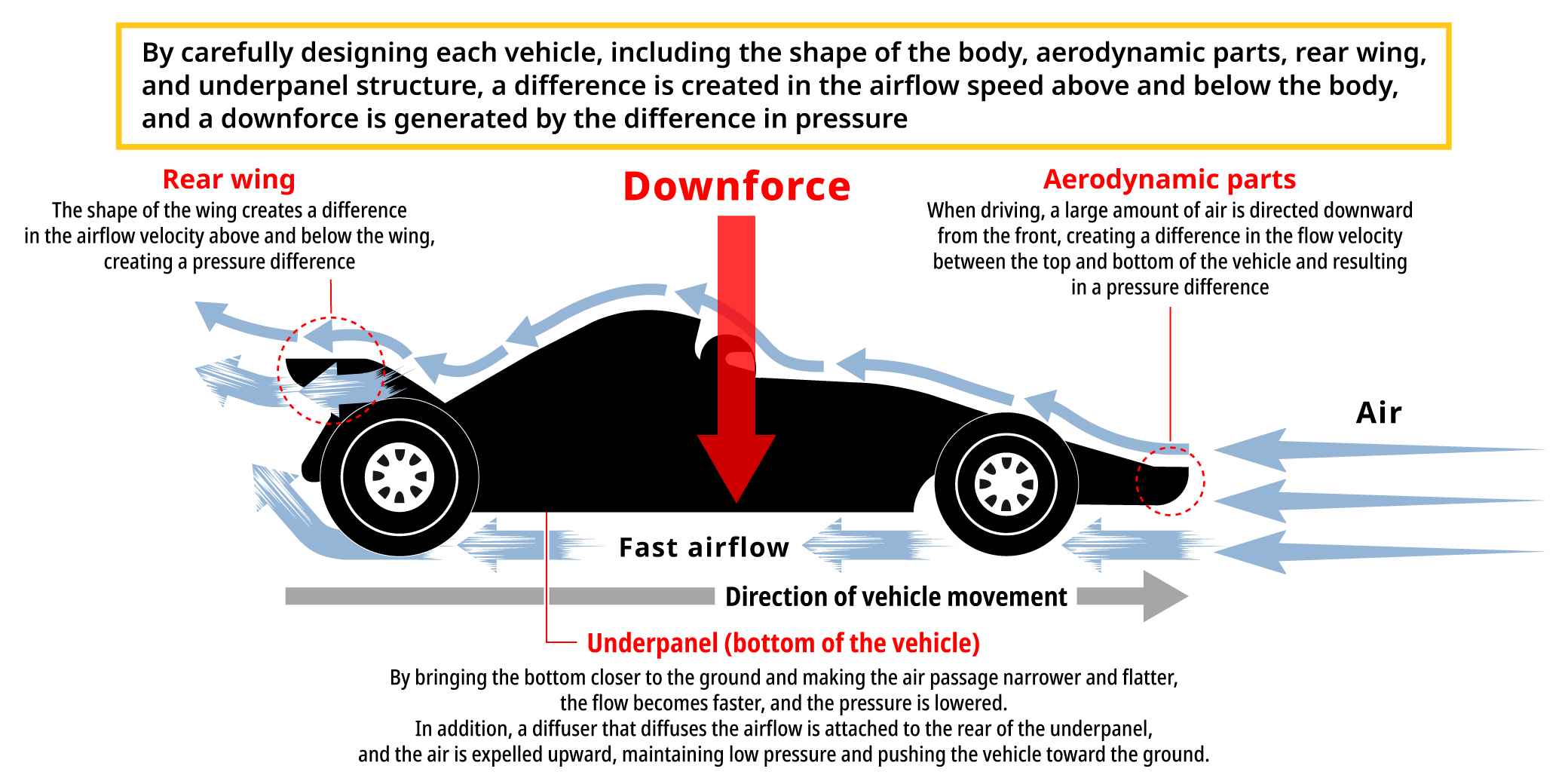
Downforce works by changing how air moves around and under a vehicle. When a car travels at speed, airflow creates different pressure areas around the body. Engineers design certain parts of the vehicle to create lower pressure underneath and higher pressure above, which pushes the car toward the pavement.
The amount of downforce depends on vehicle speed, aerodynamic shape, wing angle, and airflow management. At low speeds, downforce has little effect because there is not enough air movement. At highway speeds and on race tracks, aerodynamic forces become much more noticeable.
- ✦ Air pressure difference
Downforce is created when airflow produces different pressure levels around the vehicle surfaces.
- ✦ Increased tire grip
More downward force helps tires create stronger contact with the road.
- ✦ Speed dependency
Aerodynamic downforce increases as vehicle speed increases.
The Role of Airflow Management
Modern vehicles use carefully shaped body panels to guide air smoothly. A poorly designed car can create unwanted lift, which reduces stability at higher speeds.
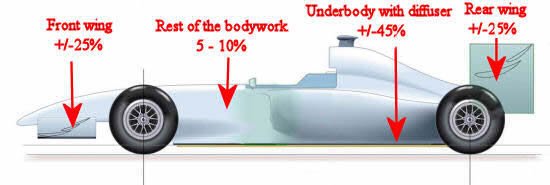
Performance vehicles use aerodynamic testing to control airflow around the front bumper, side skirts, roof, rear wing, and diffuser.
- ✦ Controlled airflow
Designers guide air movement to create useful aerodynamic forces instead of turbulence.
Main Parts That Create Downforce
A car does not create downforce with only one component. Several aerodynamic parts work together to control air pressure and improve stability. Race cars use extreme versions of these designs, while some road cars use smaller systems for daily driving.
The goal is not always maximum downforce. Engineers must balance grip, efficiency, comfort, and noise because everyday drivers do not need the same setup as a race car.

- ✦ Front splitter
A front splitter reduces airflow under the front of the car and helps create downward pressure.
- ✦ Rear wing
A rear wing uses air movement to push the back of the car downward and improve stability.
- ✦ Diffuser
A diffuser manages air leaving the underside of the vehicle to increase aerodynamic efficiency.
How Spoilers Differ From Wings
Many people use the terms spoiler and wing as if they mean the same thing, but they work differently. A wing creates a direct aerodynamic force, while a spoiler mainly changes or reduces unwanted airflow.
On many passenger cars, a spoiler helps reduce rear lift. On performance cars, a large wing can create significant downforce.
- ✦ Wing function
A wing generates downforce by using an aerodynamic profile similar to an airplane wing in reverse.
Why Downforce Matters for Vehicle Handling
The main benefit of downforce is improved handling. When tires have more force pushing them into the road, they can generate more grip during acceleration, braking, and cornering.
Drivers notice this most on race tracks, where cars travel through corners at extreme speeds. However, some road cars also use active aerodynamic systems to improve stability during fast driving.

- ✦ Better cornering ability
Downforce allows a vehicle to maintain higher corner speeds by increasing available tire grip.
- ✦ Improved stability
Aerodynamic pressure helps keep the vehicle balanced during quick direction changes.
- ✦ Enhanced braking control
Extra tire load can help tires maintain traction during hard braking.
Downforce and Tire Performance
Tires are the only parts of a car that touch the road, so every performance improvement depends on tire grip. Downforce increases the load on tires without adding extra weight to the vehicle.
This allows high-performance cars to use their tires more effectively during demanding driving conditions.
- ✦ More mechanical grip
Downforce increases the force between tires and pavement without changing tire size.
Downforce vs Drag: The Performance Trade-Off
While downforce improves grip, it usually creates more aerodynamic drag. Drag is the resistance that slows a vehicle as it moves through air. Engineers must find the right balance between these two forces.
A race car built for tight corners may use high downforce settings. A car designed for top speed may reduce downforce to lower drag and improve straight-line performance.

- ✦ High downforce setup
Provides more grip but may reduce maximum speed and efficiency.
- ✦ Low drag setup
Improves speed and fuel economy but may reduce cornering stability.
Finding the Aerodynamic Balance
Automotive engineers use wind tunnels and computer simulations to test different designs. The ideal setup depends on how the vehicle will be used.
A daily commuter, a sports car, and a race vehicle all require different aerodynamic choices.
Ground Effect and Its Connection to Downforce
Ground effect is a special type of aerodynamic design that creates downforce by controlling airflow beneath the vehicle. Instead of relying only on external wings, ground effect uses the car floor to create a low-pressure area.
Modern race cars use advanced underbody designs because they can create large amounts of downforce with less drag than traditional wings.

- ✦ Underbody airflow
Special tunnels and shapes under the car speed up air movement and increase downward force.
- ✦ Lower drag advantage
Ground effect can create strong grip without adding very large external wings.
Ground Effect in Modern Cars
Some high-performance vehicles now use active systems that adjust aerodynamic parts while driving. These systems can change between efficiency and maximum grip modes.
This technology shows how automotive design continues to combine computer control with traditional engineering principles.
Do Everyday Cars Need Downforce?
Most everyday cars in the United States are not designed to create large amounts of downforce. Their aerodynamic goals focus more on fuel economy, comfort, and reducing wind noise.
However, many modern performance cars include aerodynamic features that improve stability. These features can help drivers feel more confident during highway driving and spirited cornering.
- ✦ Passenger vehicles
Focus mainly on efficiency and stability rather than maximum aerodynamic grip.
- ✦ Sports cars
Use stronger aerodynamic designs to improve handling at higher speeds.