If you drive on a U.S. highway at 60 to 75 mph, you may notice a rising humming, rushing, or whistling sound inside the cabin. This sound is not only caused by speed. It comes from the way air moves around the vehicle and interacts with parts like mirrors, windows, doors, and body panels.
Understanding How Wind Noise Is Generated Inside a Car helps drivers identify why some vehicles feel quiet while others become tiring during long trips. Automotive engineers study airflow patterns, pressure changes, and sound transfer paths to create a more comfortable driving experience.
From my experience studying vehicle design and noise control, the smallest details often create the biggest differences. A tiny door seal gap or mirror shape change can turn smooth airflow into unwanted cabin noise.

The Basic Science Behind Car Wind Noise
How Wind Noise Is Generated Inside a Car starts with airflow. When a vehicle moves forward, it pushes through the air and creates areas of high and low pressure around the body. These pressure changes can create sound waves that enter the cabin.
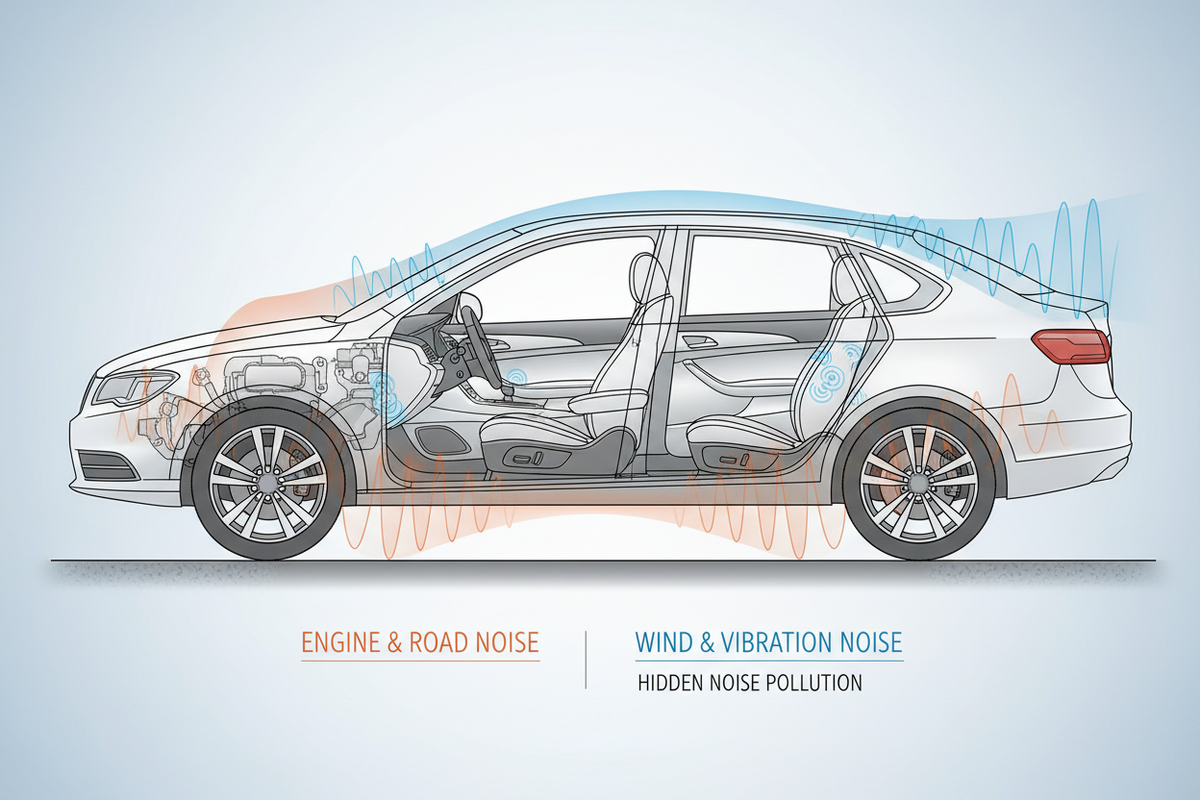
Smooth airflow creates less noise. However, when air separates from the vehicle surface and becomes turbulent, it produces irregular pressure changes. These changes travel through the body structure, windows, and seals into the passenger area.

- ✦ Airflow separation
Airflow separation happens when air stops following the vehicle surface and creates swirling turbulent zones.
- ✦ Pressure differences
Different pressure areas around the car create forces that can produce vibration and sound.
- ✦ Sound transmission
Noise enters the cabin through gaps, glass areas, and vibrating body panels.
Why Higher Speeds Increase Wind Noise
Wind noise grows quickly as vehicle speed increases because airflow becomes more aggressive around the body. A quiet car at city speeds can become much louder on a highway.
At higher speeds, even small design flaws become noticeable. This is why luxury vehicles invest heavily in aerodynamic testing and cabin insulation.
- ✦ Highway driving effect
Most drivers notice wind noise more during highway trips because air pressure and turbulence increase.
Main Areas Where Wind Noise Is Created on a Vehicle
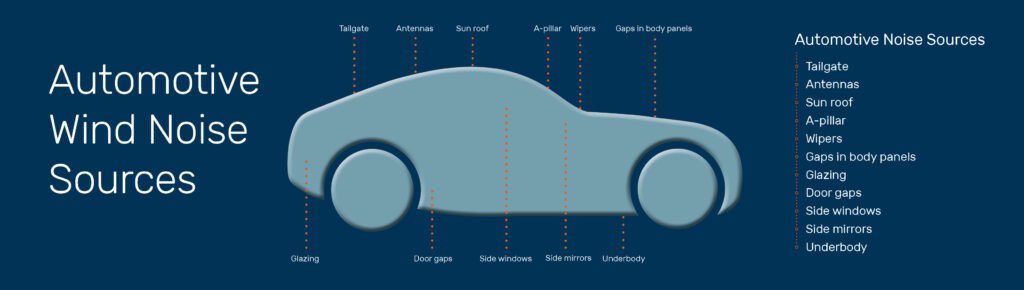
A car does not create wind noise from one single location. Multiple parts disturb airflow and create different types of sounds. Engineers analyze each area to find the source.
How Wind Noise Is Generated Inside a Car often depends on small exterior details that drivers may never notice. Mirror shapes, roof edges, and door openings all influence cabin sound.

- ✦ Side mirrors
Side mirrors create strong turbulence because they interrupt smooth airflow near the front doors.
- ✦ Windows and seals
Small gaps around windows allow air leaks that create whistles and rushing sounds.
- ✦ Roof and pillars
Roof edges and pillars can create airflow separation that sends noise toward the cabin.
- ✦ Door frames
Weak or damaged seals allow outside air pressure changes to enter the passenger area.
How Side Mirrors Create Wind Noise
Side mirrors are one of the biggest sources of aerodynamic noise because they sit directly in the airflow path. The mirror housing creates turbulence that moves along the side of the vehicle.
Modern cars use shaped mirror designs to guide airflow and reduce the amount of disturbed air reaching the windows.
- ✦ Mirror design
Rounded and carefully shaped mirrors reduce sharp airflow changes.
How Door Seals and Windows Allow Wind Noise Inside
Door seals act as a barrier between outside airflow and the cabin. When seals become worn, compressed, or damaged, small openings can allow air movement and create noticeable noise.
A common sign of seal problems is a whistling sound near the door or window area. The noise may become stronger as speed increases.
- ✦ Aging rubber seals
Old seals can lose flexibility and fail to block airflow completely.
- ✦ Window alignment issues
Improper window positioning can leave tiny gaps where air enters.
- ✦ Loose components
Trim pieces and mirrors can create extra turbulence when they move or separate.
Why Small Gaps Create Loud Sounds
Small openings can act like air channels. Fast-moving air passing through these spaces creates pressure changes that the human ear detects as whistles or rushing sounds.
This is similar to blowing air across a small opening in a musical instrument. The airflow creates vibration and produces sound.
- ✦ Air leak effect
A small leak can create a large sound because air moves at high speed through a narrow space.
The Role of Vehicle Aerodynamics in Wind Noise Control
Vehicle aerodynamics plays a major role in controlling cabin noise. Designers shape vehicles so air flows smoothly over the body instead of breaking into turbulent patterns.
How Wind Noise Is Generated Inside a Car is closely connected to aerodynamic efficiency. The same airflow improvements that reduce drag often help create a quieter ride.

- ✦ Smooth body shapes
Rounded vehicle designs help air move with fewer disturbances.
- ✦ Underbody airflow control
Managing air under the vehicle reduces turbulence and unwanted sound.
- ✦ Rear airflow management
Careful rear design reduces air separation and noise.
Wind Tunnel Testing for Noise Reduction
Automakers use wind tunnels and advanced testing equipment to study airflow around vehicles. These tests help engineers locate noisy areas before production.
Sensors and microphones measure where sound starts and how it reaches the cabin.
- ✦ Acoustic testing
Engineers measure sound levels to improve vehicle comfort.
How Modern Cars Reduce Wind Noise
Modern vehicles use many technologies to reduce wind noise. Manufacturers combine aerodynamic design, better sealing systems, and sound absorbing materials to create quieter cabins.
Electric vehicles have increased the focus on wind noise because they lack traditional engine sounds that once covered some outside noises.
- ✦ Improved insulation
Sound absorbing materials reduce noise transmission through doors and panels.
- ✦ Better glass design
Acoustic glass helps block high-frequency wind sounds.
- ✦ Active noise control
Some vehicles use technology that creates opposite sound waves to reduce noise.
Why Quiet Cabins Feel More Comfortable
A quieter cabin reduces driver fatigue and makes conversations easier. This matters for American drivers who often spend long hours commuting or traveling between cities.
Noise control is not only about luxury. It improves the overall driving experience.
- ✦ Driver comfort
Lower noise levels create a more relaxing environment behind the wheel.