If you drive at night in the United States, you know how important clear visibility can be. Dark highways, rural roads, rain, and busy traffic all create challenges for drivers. Modern lighting systems are designed to solve these problems without forcing drivers to choose between brightness and safety.
How Matrix LED Headlights Work is based on a simple idea: use many small LEDs instead of one large light source. These LEDs can be controlled separately by a vehicle computer. In my experience studying automotive technology, this approach represents one of the biggest changes in vehicle lighting because the headlight can now react to the road in real time.

What Are Matrix LED Headlights?
Matrix LED headlights are advanced vehicle lighting systems that use multiple LED units arranged in groups. Each LED section can be controlled separately instead of turning the entire headlight on or off.
Unlike traditional headlights, Matrix LED systems can change the shape, direction, and intensity of the beam. This allows the vehicle to provide strong road lighting while reducing glare for other drivers.

- ✦ Multiple LED Segments
The headlight contains many small LED elements that work together as a programmable lighting grid.
- ✦ Smart Beam Control
The system adjusts light output based on road conditions, traffic, and vehicle movement.
How Matrix LED Differs From Regular LED Headlights
Regular LED headlights provide efficient and bright lighting, but they usually operate as one main light source. Matrix LED headlights add another layer of control by managing many separate light zones.
This difference allows Matrix LED headlights to create advanced functions such as selective dimming, automatic high beams, and dynamic corner lighting.
- ✦ Traditional LED
Provides efficient lighting but has limited control over individual beam areas.
- ✦ Matrix LED
Uses software-controlled LED sections to shape the beam with greater precision.
How Matrix LED Headlights Work Step by Step
Understanding How Matrix LED Headlights Work starts with the connection between hardware and software. The system combines LED modules, cameras, sensors, and a control unit.
When the vehicle detects other cars, road signs, or changing conditions, the computer decides which LED sections should remain bright and which areas should be reduced.

- ✦ Camera Detection
A front-facing camera identifies vehicles, road users, and environmental changes.
- ✦ Electronic Processing
The control unit analyzes camera data and creates a suitable lighting pattern.
- ✦ LED Adjustment
Individual LED sections change brightness or switch off to shape the beam.
The Role of Vehicle Cameras and Sensors
The camera system is a key part of how Matrix LED Headlights Work. It continuously watches the road ahead and sends information to the lighting controller.
Some systems also use navigation data, steering angle information, and vehicle speed to improve lighting decisions.
How Matrix LED Headlights Prevent Glare
One of the biggest advantages of Matrix LED headlights is their ability to reduce glare for other road users. Instead of turning high beams off completely, the system can remove only the light area where another vehicle is detected.
For example, when driving on a dark highway, the headlights may keep the road fully illuminated while creating a darker section around an approaching vehicle. This improves visibility without distracting other drivers.

- ✦ Selective Dimming
The system turns down specific LED zones while keeping the rest of the road bright.
- ✦ Continuous Adjustment
The beam can change many times during a drive as traffic conditions change.
Adaptive High Beam Function
Adaptive high beams are one common feature created by Matrix LED technology. They provide more high-beam coverage without causing unnecessary glare.
This feature is especially useful on rural roads where drivers need maximum visibility but may frequently meet other vehicles.
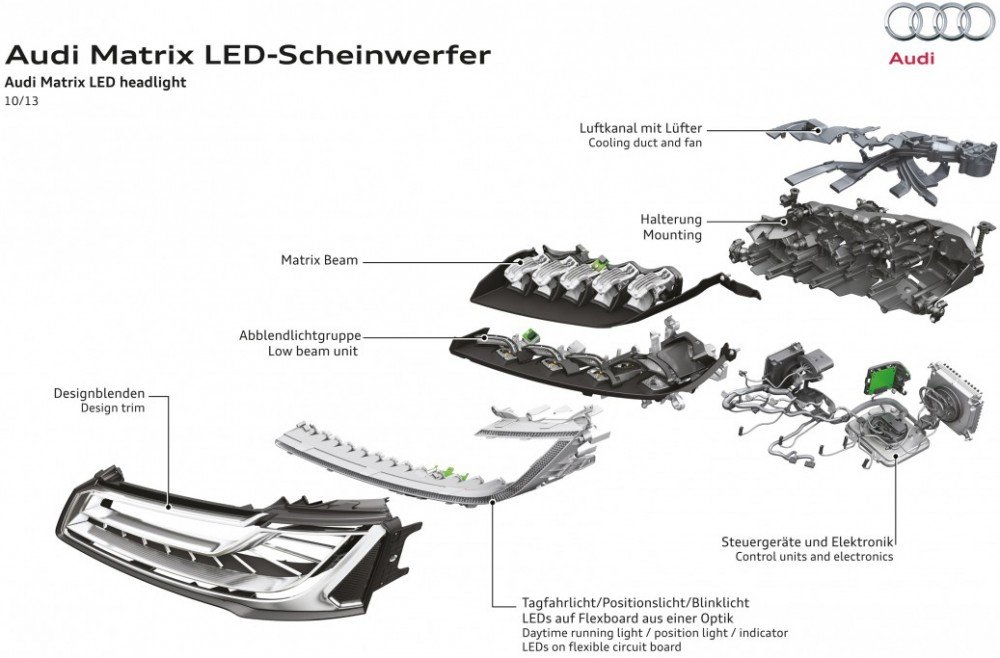
Key Components Inside a Matrix LED Headlight System
A Matrix LED headlight is more than a collection of LEDs. It is a complete electronic system where hardware and software work together.
Each component has a specific role in creating accurate and responsive lighting. Learning these parts makes it easier to understand How Matrix LED Headlights Work.

- ✦ LED Modules
Small light sources create separate zones that can be controlled individually.
- ✦ Control Unit
A computer processes information and manages the lighting pattern.
- ✦ Optical System
Lenses and reflectors direct LED light onto the road.
Benefits of Matrix LED Headlights for Drivers
Matrix LED headlights offer several benefits for everyday drivers. They improve road visibility while making nighttime driving more comfortable.
In the United States, where many drivers travel long distances and use highways at night, better lighting can make a noticeable difference.

- ✦ Better Night Visibility
The system provides a wider and more focused beam compared with basic headlights.
- ✦ Improved Driver Comfort
Automatic adjustments reduce the need for manual high-beam changes.
- ✦ Advanced Safety Features
Dynamic lighting helps drivers see curves, obstacles, and road edges more clearly.
Limitations of Matrix LED Technology
Although Matrix LED headlights are advanced, they are not perfect. Their performance depends on clean sensors, proper calibration, and software support.
Repair costs can also be higher because these systems contain complex electronic parts compared with traditional headlights.
- ✦ Higher Repair Cost
Advanced components may require specialized service if damaged.
The Future of Matrix LED Headlight Technology
Automotive lighting continues to move toward smarter systems. Future Matrix LED headlights may combine artificial intelligence, advanced sensors, and vehicle-to-road communication.
Digital lighting systems are also becoming more interactive. Some vehicles can project information, improve lane visibility, and adapt to complex driving environments.
- ✦ Digital Projection
Future headlights may display helpful information directly onto the road.
- ✦ AI-Based Decisions
Artificial intelligence may improve how vehicles understand traffic and surroundings.