How Laser Headlights Work starts with a simple idea: use laser technology to create a powerful light source for vehicles. Unlike a basic bulb, a laser headlight system uses tiny laser diodes, mirrors, lenses, and special materials to produce controlled illumination.
From a vehicle technology perspective, laser headlights represent a major step in automotive lighting. They are designed for drivers who need better visibility on dark roads, highways, and rural areas across the United States. Premium vehicles use these systems with advanced sensors to improve lighting performance while reducing glare for other drivers.

What Are Laser Headlights?
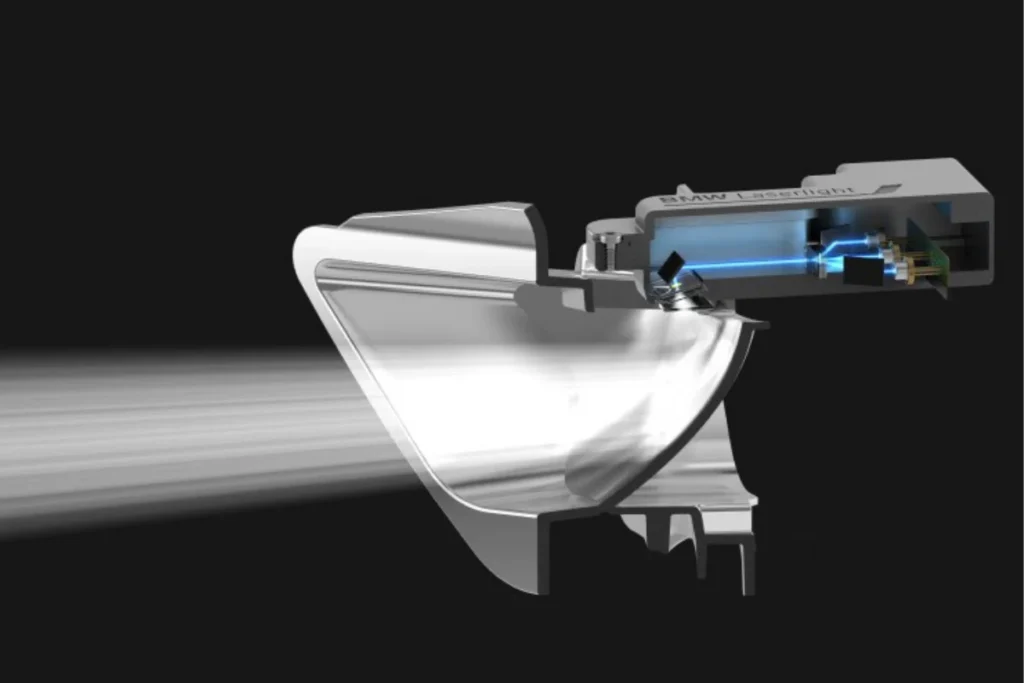
Laser headlights are advanced automotive lighting systems that use laser diodes as their primary light source. The laser itself does not shine directly onto the road because a raw laser beam is too intense and narrow for safe driving use.
Instead, How Laser Headlights Work involves converting laser energy into a bright white light. A phosphor converter changes the blue laser light into a usable beam, and optical parts shape that light for the road ahead.

- ✦ Laser diodes
Small semiconductor devices create concentrated laser light with high energy efficiency.
- ✦ Phosphor converter
A special material transforms laser light into a safe white light suitable for driving.
- ✦ Optical system
Lenses and reflectors control the direction and spread of the light beam.
Why Automakers Developed Laser Lighting
Car makers wanted headlights that could provide more reach while using less space. Laser technology allows engineers to create compact lighting units with strong performance.
This design helps modern vehicles combine advanced safety features with sleek styling. It also supports adaptive lighting systems that change beam patterns based on road conditions.
How Laser Headlights Work Step by Step
Understanding How Laser Headlights Work requires looking at the complete lighting process. The system begins when electrical power activates laser diodes inside the headlight housing.
The laser energy travels through optical components before reaching a phosphor material. The converted light then passes through projection lenses that create the final road beam.

- ✦ Step 1: Electrical energy activates laser diodes
The vehicle control system sends power to laser diodes that generate concentrated light.
- ✦ Step 2: Light conversion happens
A phosphor layer changes the laser output into bright white illumination.
- ✦ Step 3: Optics shape the beam
Precision lenses direct light onto the road without creating unsafe glare.
The Main Components Inside Laser Headlights
A laser headlight system contains several precision parts working together. Each component plays a role in creating a bright, controlled, and safe beam.
The technology behind How Laser Headlights Work is not only about the laser source. It depends on electronics, cooling systems, sensors, and optical engineering.

- ✦ Laser modules
Generate the initial light energy used by the headlight system.
- ✦ Cooling system
Controls heat because laser components need stable operating temperatures.
- ✦ Control electronics
Manage brightness, beam direction, and communication with vehicle systems.
Smart Sensors and Adaptive Control
Many modern laser headlights work with cameras and sensors. These systems can detect other vehicles, road curves, and driving conditions.
The headlights can adjust the beam to improve visibility while helping reduce glare for oncoming traffic.
Laser Headlights vs LED Headlights
LED headlights became popular because they offer long life, low power use, and reliable performance. Laser headlights build on this idea by offering stronger light output from a smaller package.
When comparing laser and LED systems, the right choice depends on vehicle design, cost, and driving needs. Laser headlights are usually found in premium vehicles because their technology costs more.

- ✦ Light range
Laser systems can provide very long-distance illumination in suitable designs.
- ✦ Size advantage
Laser components allow manufacturers to create smaller headlight assemblies.
- ✦ Cost difference
LED headlights remain more common because they are less expensive to produce.
Benefits of Laser Headlights for Drivers
Laser headlights offer several benefits for drivers who spend time on dark roads. Their focused beam can improve forward visibility and help drivers identify obstacles sooner.
For American drivers who travel long highways, country roads, or areas with limited street lighting, improved headlight performance can make nighttime driving more comfortable.
- ✦ Improved visibility
A strong and focused beam helps illuminate areas farther ahead.
- ✦ Energy efficiency
Laser systems can produce high light output with efficient energy use.
- ✦ Design flexibility
Compact laser modules give designers more freedom with vehicle styling.
Limitations and Challenges of Laser Headlights
Although How Laser Headlights Work shows impressive technology, these systems also have limitations. High production costs make them less common than LED headlights.
Laser headlights require advanced engineering, cooling solutions, and safety controls. Repairs can also be more expensive because the components are specialized.
- ✦ Higher vehicle cost
Laser lighting is usually available on expensive vehicle models.
- ✦ Complex repairs
Specialized parts and service knowledge may be required.
- ✦ Limited availability
Many mainstream vehicles still use LED lighting systems.