
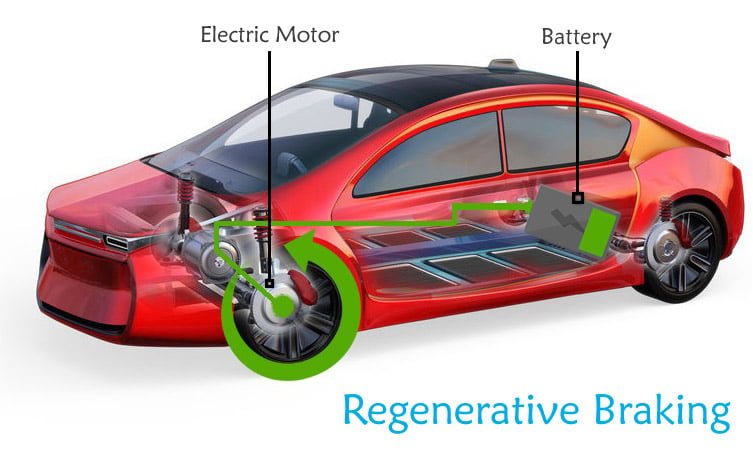
If you drive an electric vehicle in the United States, you may notice that the car feels different when you release the accelerator pedal. Instead of simply coasting, many EVs slow down while sending energy back into the battery. This feature is called regenerative braking.
What Is Regenerative Braking in Electric Vehicles is a common question among new EV owners because this technology changes how drivers think about braking and energy use. From daily commuting in city traffic to long highway trips, regenerative braking plays an important role in improving electric vehicle efficiency.

What Is Regenerative Braking in Electric Vehicles?
Regenerative braking is a system that allows an electric vehicle to recover some energy that would normally be lost during braking. In traditional gasoline cars, braking creates heat through friction, and that energy disappears into the air.
In an EV, the electric motor can work in reverse during deceleration. Instead of using power from the battery to move the wheels, it acts like a generator and creates electricity that flows back into the battery pack.
What Is Regenerative Braking in Electric Vehicles can be explained simply: it is a way for an EV to recycle part of its movement energy and use it again later.
- ✦ Energy recovery
The system captures some kinetic energy from the moving vehicle and converts it into electrical energy.
- ✦ Battery support
Recovered electricity helps recharge the EV battery and improve overall efficiency.
- ✦ Reduced brake use
Because the motor helps slow the vehicle, drivers may use traditional brakes less often.
Why Electric Vehicles Use Regenerative Braking
Electric vehicles focus on efficiency because battery energy directly affects driving range. Every small improvement helps drivers travel farther before charging.
Regenerative braking allows EV makers to recover energy during normal driving situations such as stopping at traffic lights, slowing in traffic, or going downhill.
How Does Regenerative Braking Work?
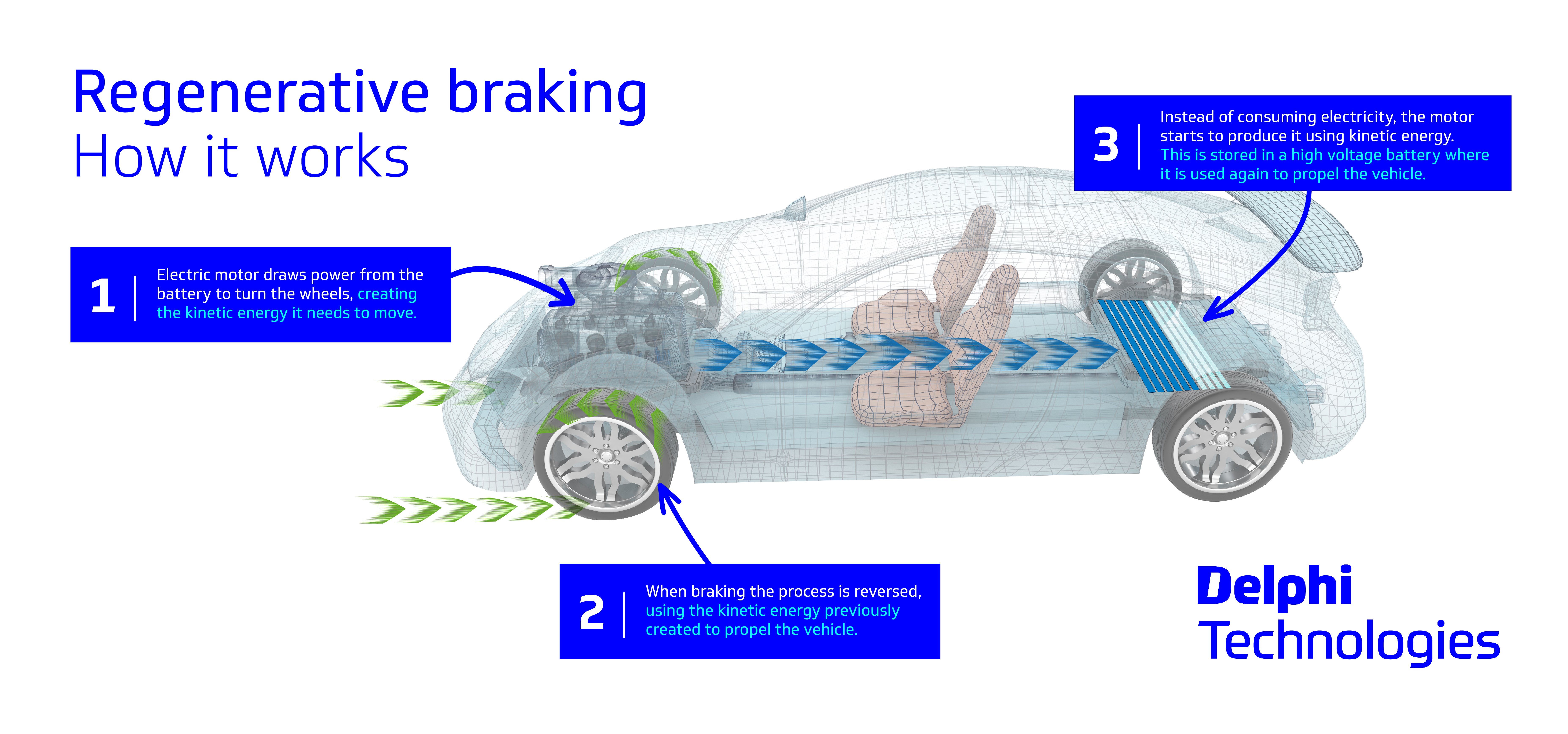
To understand how regenerative braking works, it helps to look at the relationship between the electric motor and battery. During normal driving, the battery sends electricity to the motor, which turns the wheels.
When the driver releases the accelerator or presses the brake pedal, the system changes the motor’s role. The spinning wheels turn the motor, and the motor generates electricity instead of consuming it.
Modern EVs use software controls to decide how much regenerative braking force to apply. Drivers may also choose different regeneration levels depending on their preference.
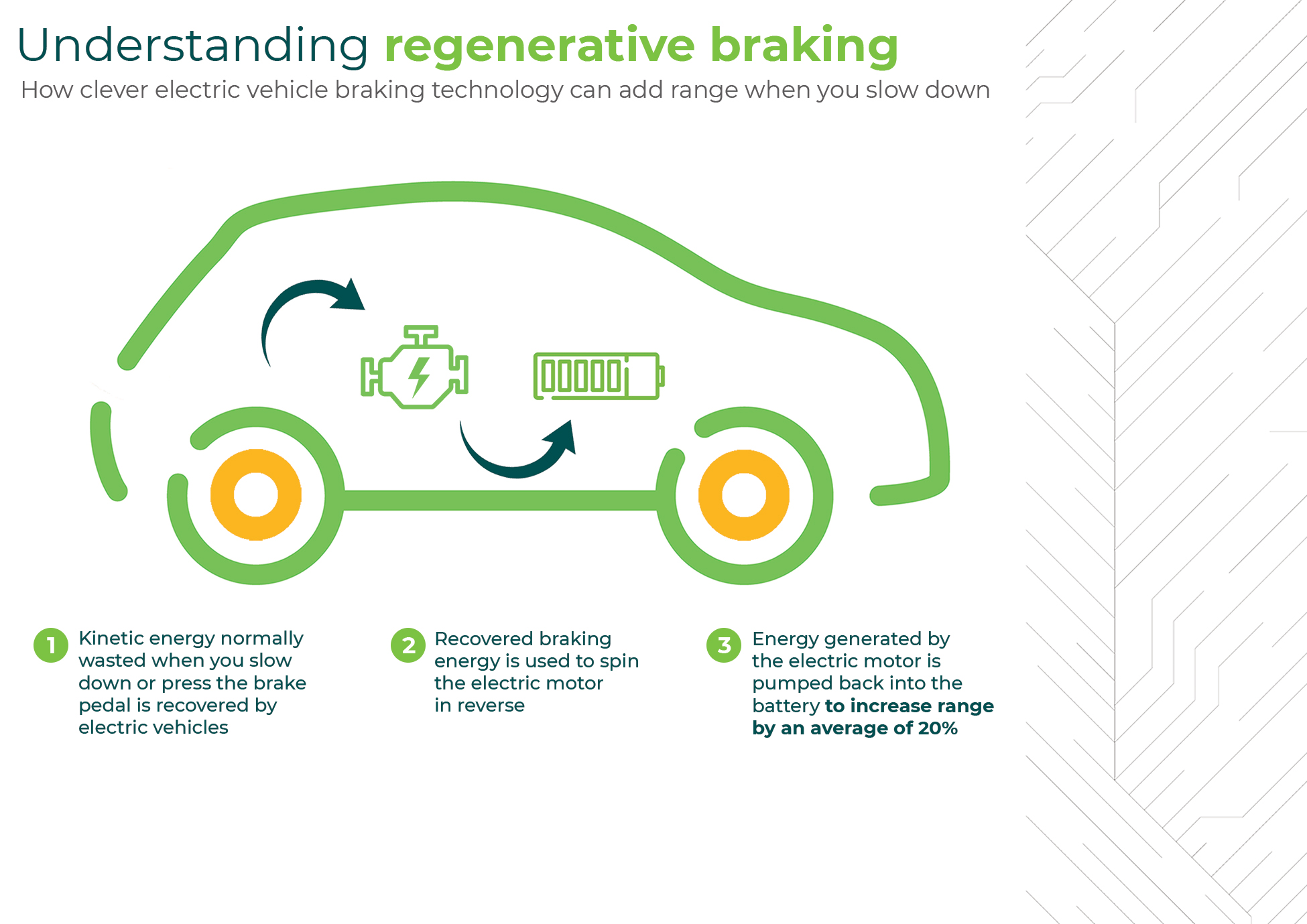
- ✦ Step one: Vehicle movement
The moving vehicle contains kinetic energy created while driving.
- ✦ Step two: Motor reversal
The electric motor works as a generator when the vehicle slows down.
- ✦ Step three: Energy storage
The recovered electricity returns to the battery for future use.
The Role of the Electric Motor
The electric motor is the key component behind regenerative braking. Unlike a gasoline engine, an EV motor can both create motion and generate electricity.
This two-way operation makes EV power systems more efficient and allows vehicles to recover energy that older vehicles waste.
Benefits of Regenerative Braking in Electric Vehicles
Regenerative braking provides several advantages for EV owners. It improves energy efficiency, reduces wear on brake components, and creates a smoother driving experience.
For many US drivers who spend time in stop-and-go traffic, regenerative braking can make daily driving more efficient. It is especially useful in urban areas where vehicles frequently accelerate and slow down.
- ✦ Improves driving range
Recovered energy can slightly increase the distance an EV travels before needing a charge.
- ✦ Extends brake life
Using the motor to slow down reduces dependence on traditional brake pads.
- ✦ Improves efficiency
The vehicle wastes less energy compared with conventional braking systems.
Real-World Driving Example
Imagine driving through a busy city with frequent traffic lights. Each time you slow down, regenerative braking captures a small amount of energy instead of losing it as heat.
Over many miles, these small energy savings add up and help improve the overall efficiency of the electric vehicle.
Regenerative Braking vs Traditional Braking Systems
Traditional vehicles rely mainly on friction brakes. Brake pads press against rotors, creating friction that slows the vehicle but also creates heat and wear.
Regenerative braking in electric vehicles uses electrical resistance from the motor to slow the vehicle while recovering energy. However, EVs still include traditional brakes for emergency stops and stronger braking situations.
The two systems work together to provide both efficiency and safety.

- ✦ Traditional braking
Uses friction to stop the vehicle and loses braking energy as heat.
- ✦ Regenerative braking
Uses the electric motor to slow the vehicle and recover energy.
Limitations of Regenerative Braking
Although regenerative braking is a major EV advantage, it has some limitations. The system cannot recover all braking energy because some energy loss is unavoidable.
Battery conditions also affect performance. If the battery is fully charged or extremely cold, the vehicle may reduce regenerative braking power to protect the battery.

- ✦ Not available at all times
The system may reduce energy recovery in certain battery conditions.
- ✦ Driving adjustment
New EV drivers may need time to become comfortable with one-pedal driving.
- ✦ Limited recovery
Only part of the braking energy can be converted back into electricity.
Learning One-Pedal Driving
Many EV drivers use one-pedal driving, where releasing the accelerator creates strong regenerative braking. This can reduce the need to use the brake pedal in normal traffic.
Most drivers adapt quickly after a short practice period because the system creates a smooth and predictable driving style.
How to Maximize Regenerative Braking Benefits
Drivers can get more value from regenerative braking by adjusting driving habits. Smooth acceleration, early slowing, and careful energy management help the system work more effectively.
Many experienced EV drivers learn to plan ahead instead of using sudden braking. This approach improves comfort and allows more energy recovery.

- ✦ Use smooth driving habits
Gradual acceleration and braking help improve EV efficiency.
- ✦ Use higher regeneration modes
Higher settings can increase energy recovery when conditions allow.
- ✦ Plan stops early
Allowing the vehicle to slow naturally improves energy recovery.



