Understanding How Wheel Spacers Affect Vehicle Fitment is important before modifying any vehicle. Many drivers in the United States use wheel spacers to create a wider stance, fit larger brakes, or solve clearance issues with aftermarket wheels. However, spacers do more than push wheels outward. They change the relationship between the wheel, suspension, and steering system.
From years of reviewing wheel setups and fitment problems, one common mistake is choosing spacers based only on appearance. A spacer must match the vehicle hub, wheel design, bolt pattern, and intended use. A correct setup can improve fitment, while a poor setup can cause vibration, uneven tire wear, or stress on components.

What Are Wheel Spacers and How Do They Work?
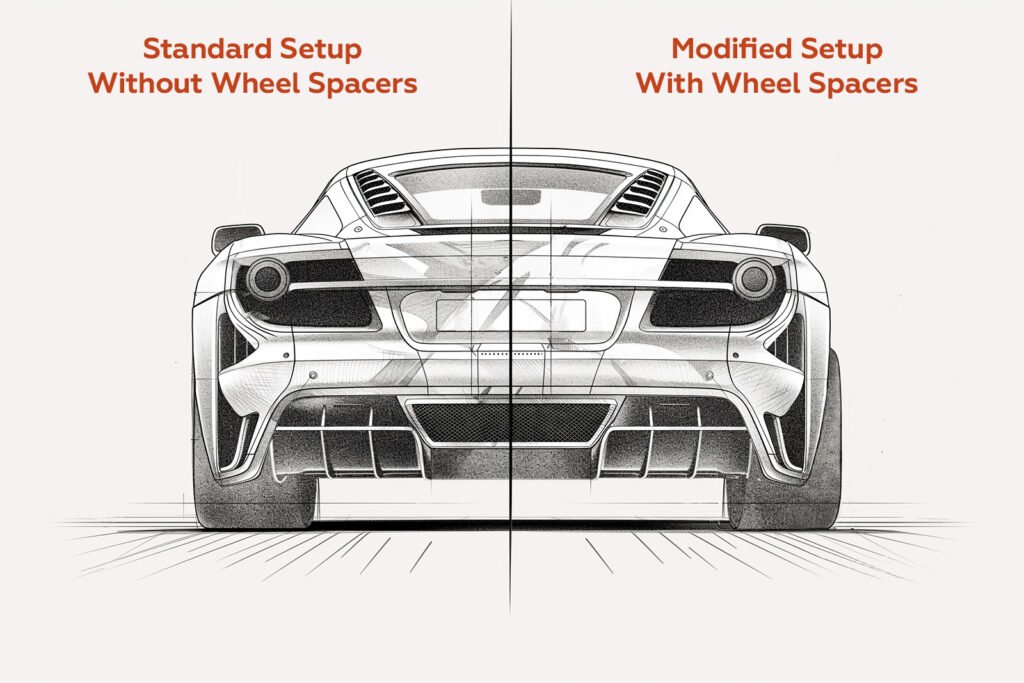
Wheel spacers are metal discs installed between the vehicle hub and the wheel. They create extra distance between the wheel mounting surface and the hub. This moves the wheel outward from the vehicle body.
To understand How Wheel Spacers Affect Vehicle Fitment, think about wheel offset. Offset describes how far the wheel mounting surface sits from the center of the wheel. A spacer effectively reduces positive offset and pushes the wheel outward.
Wheel spacers come in different thicknesses. Common sizes range from small spacers used for minor clearance changes to larger spacers designed for off-road or custom builds.

- ✦ Hub-Centric Spacers
These spacers include a center ring that matches the vehicle hub. They help keep the wheel centered and reduce vibration risk.
- ✦ Bolt-On Spacers
These spacers attach to the vehicle hub with their own bolts and provide more room for larger fitment changes.
- ✦ Slip-On Spacers
These slide over existing studs and are often used for smaller spacing adjustments.
Why Drivers Use Wheel Spacers
Many owners install spacers to improve wheel appearance or fit wider wheels. They are also useful when brake calipers contact the inside of aftermarket wheels.
In trucks and SUVs, wheel spacers are often used to create more aggressive wheel positioning for off-road builds.
- ✦ Better Wheel Clearance
Spacers can create extra room between wheels, brake parts, and suspension components.
How Wheel Spacers Change Wheel Fitment and Offset
The biggest effect of wheel spacers is the change in wheel offset. Moving the wheel outward changes how the tire sits inside the wheel arch.
How Wheel Spacers Affect Vehicle Fitment depends on spacer thickness, wheel width, tire size, and suspension design. A small change may create perfect clearance, while a large change can cause rubbing issues.
For example, adding a 10mm spacer moves the wheel 10mm farther outward. This may help clear suspension parts but can also bring the tire closer to the fender edge.

- ✦ Wheel Arch Position
A spacer can make wheels sit closer to the outer fender, creating a wider stance.
- ✦ Backspacing Changes
Spacers reduce wheel backspacing, which changes how much space exists behind the wheel.
Understanding Offset in Simple Terms
Positive offset means the wheel sits closer to the suspension. Negative offset pushes the wheel outward. A spacer moves the setup toward a more negative offset position.
This change affects steering feel, tire movement, and suspension geometry.
- ✦ Measure Before Installing
Always check wheel width, offset, tire size, and available clearance before selecting spacers.
Benefits of Using Wheel Spacers for Vehicle Fitment
When installed correctly, wheel spacers can solve several common fitment challenges. They are popular among car enthusiasts who want better wheel positioning without replacing wheels.
The benefits of wheel spacers depend on proper sizing. A quality spacer can improve clearance and appearance without creating major issues.

- ✦ Improved Brake Clearance
Spacers can help aftermarket wheels clear larger brake calipers.
- ✦ More Aggressive Appearance
Moving wheels outward can create a wider and sportier stance.
- ✦ Better Tire Fitment Options
Spacers may allow installation of wheel and tire combinations that would otherwise contact suspension parts.
Wheel Spacers for Trucks and SUVs
Many American truck owners use wheel spacers for off-road builds. Extra clearance can help fit wider tires and improve visual style.
However, off-road use adds stress because of heavier loads and rough terrain. Choosing strong, high-quality spacers is important.
- ✦ Off-Road Considerations
Check load ratings and inspect spacer condition regularly when driving on rough surfaces.
Potential Problems Caused by Incorrect Wheel Spacers
While wheel spacers can improve fitment, incorrect installation can create problems. The most common issues come from poor measurements, low-quality parts, or excessive spacer thickness.
Learning How Wheel Spacers Affect Vehicle Fitment also means understanding their limits. A spacer changes the forces placed on wheel bearings, studs, and suspension parts.

- ✦ Wheel Vibration
Poorly centered spacers can cause vibration because the wheel may not sit perfectly on the hub.
- ✦ Fender Rubbing
Moving wheels outward too far can cause tires to touch fenders during turns or suspension movement.
- ✦ Extra Component Stress
Large spacers increase leverage on wheel bearings and suspension parts.
Why Spacer Quality Matters
Cheap spacers may use weak materials or poor machining. A properly made spacer should fit tightly and match the vehicle specifications.
Always choose spacers designed for your exact vehicle instead of universal parts with uncertain fit.
- ✦ Use Correct Hardware
Spacer installations require proper bolts or extended studs with the correct strength rating.
How to Choose the Right Wheel Spacer Size
Choosing the correct spacer size requires accurate measurements. The goal is to create enough clearance without moving the wheel too far outward.
Most drivers should measure current wheel position, check tire clearance, and consider suspension movement before installing spacers.
- ✦ Check Bolt Pattern
The spacer must match the vehicle and wheel bolt pattern exactly.
- ✦ Confirm Hub Diameter
A matching hub diameter helps keep the wheel centered.
- ✦ Measure Available Space
Check clearance between the tire, fender, brake, and suspension parts.
Professional Fitment Check
A professional installer can measure offset and clearance before installation. This helps avoid expensive mistakes.
A proper fitment check is especially useful when combining spacers with wider wheels or larger tires.
- ✦ Test Before Final Installation
Rotate the wheel and check clearance through the full steering range before driving.
Installation Tips for Safe Wheel Spacer Use
Correct installation is a key part of How Wheel Spacers Affect Vehicle Fitment. Even a high-quality spacer can cause problems if installed incorrectly.
After installation, check wheel torque and inspect the setup after driving a short distance. Regular checks help maintain safety.
- ✦ Clean Mounting Surfaces
Remove rust, dirt, and debris from the hub before installing spacers.
- ✦ Follow Torque Specifications
Use the vehicle and spacer manufacturer torque recommendations.
- ✦ Inspect Regularly
Look for loose hardware, unusual vibration, or tire contact marks.