A suspension popping noise usually comes from worn suspension joints, loose mounting hardware, damaged strut mounts, sway bar links, or coil spring movement. The sound often appears when turning, driving over bumps, braking, or changing direction. Inspect the suspension before continuing to drive if the noise is loud, new, or comes with poor steering control.
Drivers across the United States deal with many road conditions. A daily commute in New York may include potholes and rough city streets. A drive through Texas may include uneven rural roads, while mountain roads in Colorado can place extra stress on suspension parts. These conditions can expose worn or loose parts in a vehicle’s suspension system. One common warning is a sharp popping sound from the front or rear of the car.
A pop may sound like a small knock, a loud click, or a sharp crack. It may happen once or repeat each time the wheels move over a bump. The location and timing of the sound help narrow down the cause. For example, a pop during a slow turn may point to a strut bearing or steering joint. A pop over a speed bump may come from a bump stop, loose mount, or worn suspension link.
Not every popping sound means a major repair is needed. Some vehicle models have known suspension noises that manufacturers address through technical service information. However, a worn ball joint, tie rod, or loose suspension fastener can affect vehicle control. The safest approach is to record when the sound occurs, inspect visible parts, and arrange a proper diagnosis.
This guide explains the main causes, warning signs, inspection methods, and repair options. It also explains when the vehicle should stop being driven. The goal is to help you understand the problem before spending money on parts that may not fix it.
Source: enginediary.com
What Does a Suspension Popping Noise Mean?
A suspension popping noise is a sharp sound that comes from the parts that support and control wheel movement. These parts include springs, shocks, struts, control arms, bushings, and joints. They work together as the wheels move over rough roads and through turns.
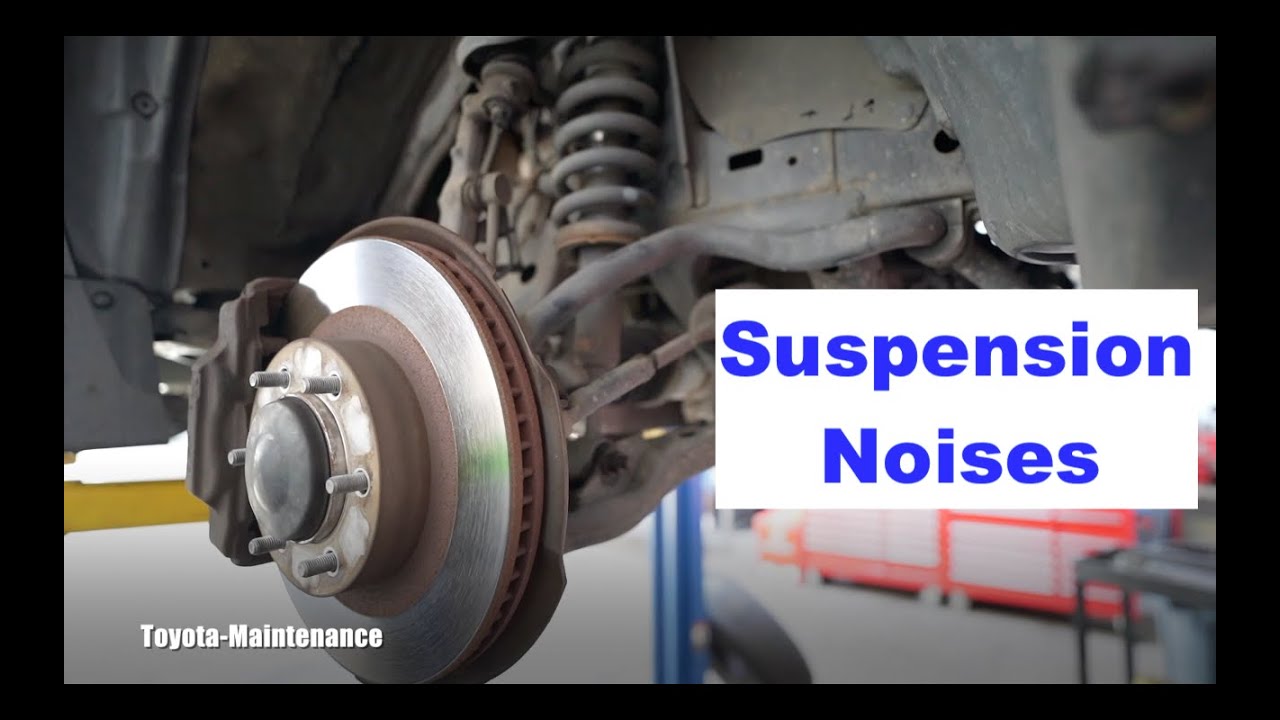
The suspension must move while keeping the tires in contact with the road. Rubber bushings help absorb movement. Ball joints allow parts to pivot. Strut bearings help the front suspension turn with the steering system. When a part wears out or shifts out of place, two parts may move against each other and create a pop.
The sound alone cannot identify the failed part. A loose heat shield, brake pad, exhaust hanger, or other nearby component can also make a noise that seems to come from the suspension. A proper diagnosis must check the area around the sound.
Single pop
One sharp sound may occur when the vehicle starts moving, changes direction, or shifts its weight during braking.
Repeated popping
A repeated sound over bumps may point to a loose link, worn joint, spring contact, or damaged mount.
Popping during turns
This may involve a strut bearing, ball joint, tie rod, coil spring, or another steering-related part.
Popping from the rear
Rear shock mounts, spring seats, suspension bushings, and loose mounting parts are possible sources.
Why Does Suspension Movement Create a Pop?
Suspension parts move through a set range as the wheels rise and fall. A worn joint may develop extra play. A loose mount may allow a part to shift suddenly. A spring may also bind and release as the suspension moves.
This sudden movement can create a sharp sound. The sound may travel through the frame, so the point where you hear it may not be the exact place where it starts.
Excess movement
A worn joint or bushing allows movement that should not occur.
Part contact
Two parts may strike or rub against each other as the wheel moves.
Spring release
A coil spring may bind under load and release with a sudden pop.
Common Causes of a Suspension Popping Noise
Several suspension parts can make a popping sound. The best place to start is the condition under which the noise occurs. Check whether it happens during a turn, over a bump, while braking, or when the vehicle changes direction.
Vehicle design also matters. A strut-based front suspension has different mounting parts from a double-wishbone system. Some vehicles use separate rear springs and shocks, while others use a combined assembly. Always use the service information for the exact make, model, and year.
Source: fwwiesbaden.de
Worn ball joints
A worn ball joint can create movement and popping during turns or over bumps. It may also cause uneven tire wear and loose steering.
Damaged strut mounts
A damaged upper mount can allow the strut to shift or knock as the suspension moves.
Faulty sway bar links
Loose or worn links can make repeated knocks or pops as one wheel moves over a bump.
Loose control arm hardware
Loose bolts or worn control arm bushings can allow sudden movement when the vehicle changes direction.
Broken or displaced coil spring
A damaged spring or spring seat can move against nearby parts and make a sharp sound.
Damaged tie rods
A worn tie rod end can create a click or pop while steering and may affect wheel direction.
Ball Joint Problems
A ball joint connects a control arm to the steering knuckle on many suspension designs. It allows the wheel assembly to move up and down while turning. The joint has an internal bearing surface and a protective dust boot.
When the bearing wears, the joint may develop excess play. This can create a pop when the vehicle turns or crosses a rough patch. A torn dust boot can allow water and dirt inside, which may speed up wear.
A badly worn ball joint can affect steering control. Do not treat a loud pop with loose steering as a minor noise. Have the joint checked promptly by a qualified technician.
Common signs
Popping over bumps, knocking during turns, uneven tire wear, and changes in steering feel.
Repair
Replace the failed joint or the approved assembly. Follow the vehicle maker’s service procedure.
Strut Mount and Bearing Failure
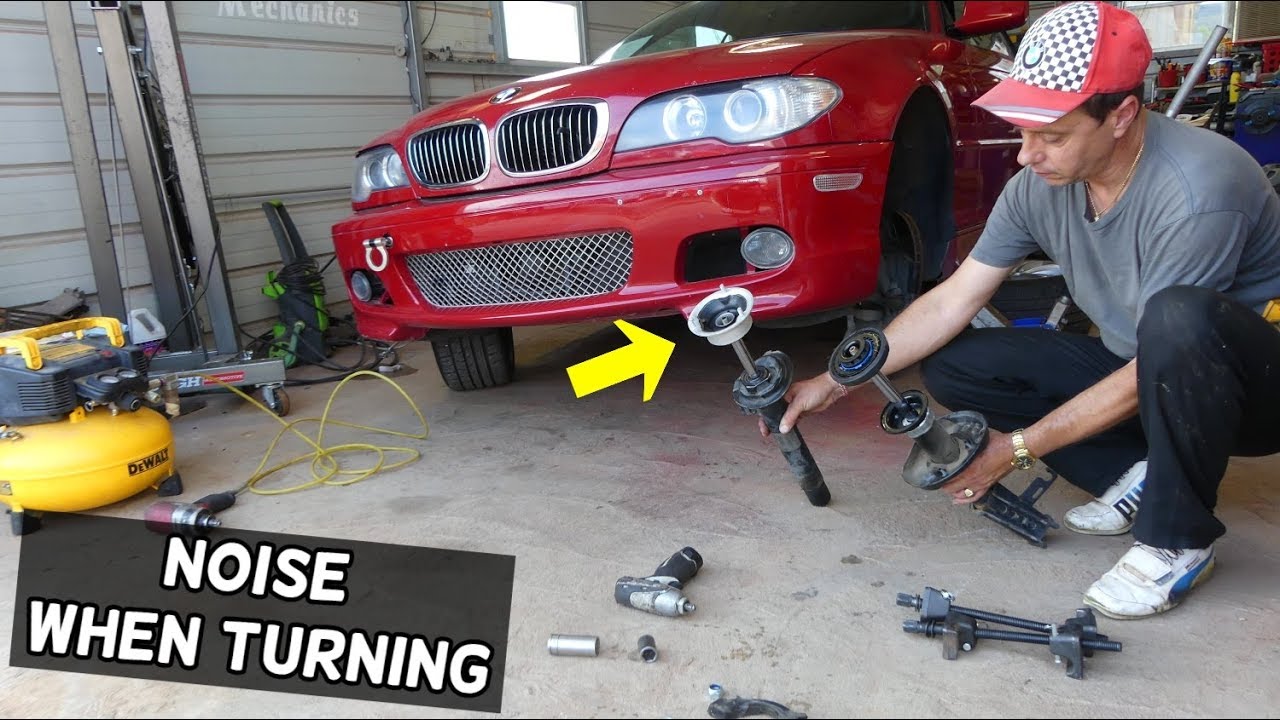
A strut mount connects the top of a strut to the vehicle body. On many front suspension designs, a bearing inside the mount allows the strut to turn with the steering system.
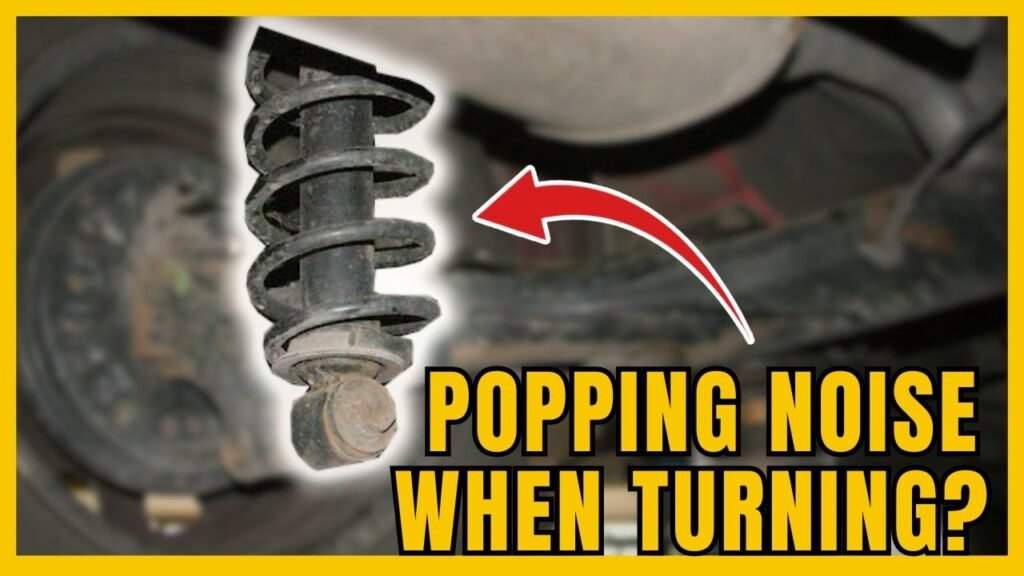
A worn bearing may bind as the driver turns the steering wheel. The coil spring can twist, store force, and then release with a pop. A damaged rubber mount may also allow the strut to shift as the wheel moves over a bump.
The sound may happen while parking, turning into a driveway, or moving over a speed bump. A technician may need to inspect the mount and spring while the suspension is loaded and unloaded.
Common signs
Popping or creaking during slow turns, noise over bumps, and visible damage around the upper mount.
Repair
Replace damaged mounts or bearings according to the vehicle service procedure. Check related hardware at the same time.
Worn Sway Bar Links and Bushings
A sway bar helps control body roll when the vehicle turns. Sway bar links connect the bar to the suspension. Rubber bushings hold the bar in place and allow controlled movement.
A worn link may move more than it should. This can create a pop or knock when one wheel moves over a pothole or uneven road. The sound may be more noticeable on small bumps or when entering a driveway at an angle.
The vehicle may still feel normal during smooth driving. That does not prove the links are safe. A technician should check the joints, bushings, and mounting points for wear and movement.
Common signs
Repeated popping over uneven pavement, clunking from one side, and visible wear around the link joints.
Repair
Replace worn links or bushings with parts that match the vehicle’s suspension design.
Control Arm Bushing Damage
Control arms guide wheel movement. Their bushings connect the arms to the vehicle frame or subframe. These bushings contain rubber or another flexible material that absorbs vibration and controls movement.
As a bushing wears, cracks, or separates, the control arm may shift under load. This can create a single pop during braking, acceleration, or a change in direction. Some vehicles may also pull to one side or show uneven tire wear.
A damaged bushing does not always look loose during a quick visual check. The technician may need to inspect it under load and compare its movement with the manufacturer’s limits.
Common signs
A pop during braking, vibration, uneven tire wear, and changes in steering response.
Repair
Replace the bushing or control arm assembly as specified by the vehicle manufacturer.
Why Does the Suspension Pop Under Different Driving Conditions?
The moment when the sound occurs can help narrow the search. Suspension parts react to different forces during turns, braking, acceleration, and road impacts. A useful diagnosis starts by matching the sound to the movement that triggers it.
Do not repeat a dangerous driving test to make the sound happen. If the vehicle feels unstable, has a loose wheel, or makes a severe noise, stop and arrange an inspection.
Source: storage.googleapis.com
When turning
Check the strut bearing, ball joints, tie rods, spring seats, and other steering-related parts.
Over bumps
Check sway bar links, strut mounts, shocks, bump stops, springs, and suspension fasteners.
During braking
Check control arm bushings, brake hardware, caliper mounting points, and other parts that react to weight transfer.
During acceleration
Check control arm bushings, engine and transmission mounts, and suspension parts that move under torque.
When shifting from reverse to drive
Check for movement in mounts, bushings, and other parts affected by changes in vehicle load.
Suspension Popping Noise When Turning
A pop during a slow turn often points to a part that moves as the steering angle changes. A strut bearing may bind and release. A worn ball joint or tie rod end may also move suddenly under load.
Listen for the side where the noise seems strongest. Also note whether the sound happens at full steering lock or during a normal turn. These details can help the repair shop choose the right inspection steps.
A vehicle-specific service bulletin may describe a known issue. For example, some Honda Civic service information describes a front bump stop that can become dislodged and pop back into place after a tight turn and a bump. That repair applies only to the listed vehicles and conditions.
Useful clue
A pop only after a tight turn may point to a spring, bump stop, or part that changes position during steering.
Next step
Ask the shop to check the exact vehicle model and VIN against applicable service bulletins.
Suspension Popping Noise Over Bumps
A pop over a speed bump or pothole may come from a loose sway bar link, worn strut mount, damaged bump stop, or displaced spring. The suspension compresses as the wheel rises and extends as the wheel moves down.
A worn or loose part may shift when the suspension changes direction. The noise may be stronger when one wheel crosses a bump than when both front wheels rise together.
A Mazda service bulletin for certain vehicles describes a popping noise caused by contact between a bump stopper and strut bearing as the shock absorber compresses. This is a documented example, not proof that every vehicle with this sound has the same fault.
Useful clue
A pop on one-wheel bumps may help a technician focus on links, joints, and mounting points.
Next step
Record the road condition and whether the sound comes from the front or rear.
Suspension Popping Noise When Braking
Braking shifts vehicle weight toward the front. This places extra force on front suspension parts and changes the position of control arms and bushings. A worn control arm bushing may move suddenly and create one pop.
However, not every pop during braking comes from the suspension. Loose brake pads, damaged caliper hardware, or a loose wheel component can create a similar sound. The brake system must be checked before blaming a suspension part.
If the brake pedal feels soft, the vehicle pulls sharply, or grinding occurs, stop driving and arrange a professional inspection. A noise that occurs during braking deserves careful attention because the brakes and suspension both affect control.
Possible source
Control arm bushings, ball joints, caliper hardware, brake pads, and mounting bolts.
Useful clue
A single pop during the first brake application may indicate movement in a component that changes position under load.
Suspension Popping Noise During Acceleration
Acceleration changes the load on the drivetrain and suspension. A worn control arm bushing or loose mounting point may shift as the vehicle moves forward. The sound may also come from an engine or transmission mount.
Listen for the timing of the pop. A sound that occurs only when power is applied may involve the drivetrain rather than the suspension. A sound that also occurs over bumps may point toward a shared suspension or mounting issue.
Possible source
Control arm bushings, engine mounts, transmission mounts, and loose suspension hardware.
Useful clue
Compare the sound during gentle acceleration and normal road movement only if the vehicle remains safe to operate.
How to Diagnose a Suspension Popping Noise
A good diagnosis starts with simple observations. You do not need to remove suspension parts to collect useful information. A clear description of the sound can save time and reduce unnecessary repairs.
Start with a safe parking area and a basic visual check. Do not crawl under the vehicle or loosen suspension bolts without the correct tools, training, and support equipment. Some suspension parts contain stored spring force and can cause serious injury if removed incorrectly.
Source: youtube.com
Step 1: Record the sound
Write down whether the pop happens during turning, braking, acceleration, or driving over bumps.
Step 2: Find the general area
Note whether the sound seems to come from the front, rear, left, or right side.
Step 3: Check the tires
Look for bulges, cuts, uneven wear, or objects trapped in the tread.
Step 4: Look for visible damage
Check accessible areas for broken springs, torn rubber boots, damaged bushings, and loose-looking parts.
Step 5: Review service information
Check for vehicle-specific technical service bulletins and recalls using the VIN.
Step 6: Arrange a professional inspection
Ask a qualified technician to check joints, mounts, fasteners, springs, and brake hardware.
Questions to Answer Before Visiting a Repair Shop
A mechanic can often narrow the problem faster when the driver provides clear details. A short video or audio recording may help if it can be made safely by a passenger while the vehicle is moving at a normal speed.
Never hold a phone or camera while driving. Do not create a dangerous road test just to record a sound.
When did the noise start?
Explain whether it appeared after a pothole, repair, tire change, or gradual wear.
Does temperature affect it?
Mention whether the sound is worse in cold weather or after rain.
Does vehicle speed matter?
Explain whether the noise occurs at parking speeds, on city roads, or at higher speeds.
Has the suspension been repaired?
Share details about recent strut, shock, spring, control arm, or alignment work.
What a Professional Suspension Inspection Includes
A qualified technician may inspect the vehicle on a lift and check the suspension under controlled conditions. The inspection can include ball joints, tie rods, sway bar links, control arm bushings, strut mounts, spring seats, and shock absorber hardware.
The technician may use a suitable loading tool or chassis listening equipment to find the source of a noise that does not appear during a normal visual inspection. The exact method depends on the vehicle and the suspected fault.
After identifying the source, the technician should compare the condition with the manufacturer’s service limits. Replacing parts based only on the sound can lead to wasted money and may leave the real problem unresolved.
Joint inspection
Check for excess movement, damaged dust boots, and worn bearing surfaces.
Mount inspection
Check mounting bolts, rubber isolators, bearings, and contact points.
Spring inspection
Check for cracks, damaged seats, incorrect positioning, and contact with nearby parts.
Road test
Repeat the reported condition under safe and controlled conditions after the vehicle passes its initial safety inspection.
How to Fix a Suspension Popping Noise
The correct repair depends on the failed part. There is no single spray, adjustment, or replacement that fixes every popping sound. A technician should confirm the cause before installing new components.
Some repairs involve replacing a worn link or bushing. Others require removing a strut assembly or working with a loaded coil spring. These jobs have different safety risks and should follow the vehicle manufacturer’s repair instructions.
Source: youtube.com
Replace worn ball joints
Install the correct joint or approved assembly when inspection confirms excessive wear or damage.
Repair strut mounts
Replace damaged mounts or bearings and inspect the spring, strut, and related hardware.
Replace sway bar links
Install suitable links and inspect the sway bar bushings and brackets.
Repair control arm bushings
Replace the failed bushing or control arm assembly as required by the vehicle design.
Correct spring position
Inspect the spring and seat. Replace a damaged spring and correct improper installation.
Tighten or replace hardware
Use the specified fasteners and torque values. Replace damaged or single-use hardware when required.
Should You Replace Both Suspension Parts at Once?
Some suspension repairs are best performed in pairs across the same axle. Shock absorbers and struts are commonly replaced in axle pairs when their condition or the manufacturer’s instructions support that approach. This helps maintain similar damping behavior on both sides.
However, not every suspension part must be replaced as a pair. The correct choice depends on the part, vehicle design, wear condition, and service instructions. A technician should explain why a paired replacement is needed before adding it to the repair estimate.
Shock absorbers and struts
Check the manufacturer’s guidance on replacing both sides of the same axle.
Ball joints and links
Replace the failed component and inspect the opposite side for similar wear.
Control arms
Use the vehicle’s service procedure to decide whether one or both assemblies need replacement.
What Happens After the Repair?
A suspension repair should end with a check of the related parts and fasteners. The technician should confirm that all components are installed correctly and that no tools or loose parts remain in the work area.
A wheel alignment may be needed after work involving control arms, tie rods, struts, or other parts that affect wheel position. Follow the manufacturer’s instructions rather than assuming every repair requires the same alignment procedure.
A final road test should confirm that the original noise is gone under the reported conditions. The technician should also check steering response, braking behavior, and vehicle stability.
No repeat noise
The original popping sound should no longer occur under the same safe test conditions.
Stable steering
The steering should respond normally without unusual looseness or pulling.
Correct alignment
The wheels should meet the manufacturer’s alignment specifications when an alignment check or adjustment is required.
No loose hardware
The technician should verify the correct installation and torque of all related fasteners.
When Is a Suspension Popping Noise Dangerous?
A suspension pop can be minor, but some causes can affect steering and wheel control. The sound itself does not tell you how safe the vehicle is. Look for other signs that show whether a part may have failed.
A damaged ball joint or tie rod can create serious handling problems. A broken coil spring may damage a tire or affect ride height. Loose wheel or suspension hardware can also lead to loss of control.
Do not continue a normal commute if the vehicle has severe steering changes, visible wheel movement, a badly leaning body, or a broken spring near a tire. Arrange a tow or professional help when the vehicle cannot be driven safely.
Source: pinterest.com
Loose steering
The steering wheel feels unusually loose, does not respond normally, or changes position without a clear reason.
Severe pulling
The vehicle suddenly pulls to one side or becomes difficult to keep in a straight line.
Broken spring
A coil spring is visibly cracked, displaced, or close to the tire.
Wheel movement
A wheel appears to lean, wobble, or sit at an unusual angle.
Brake problems
The brake pedal feels abnormal, braking performance changes, or a warning light appears with other symptoms.
Can You Drive With a Suspension Popping Noise?
It depends on the cause and the vehicle’s condition. A faint noise with normal steering and handling may allow a short, careful trip to a repair shop after an initial safety assessment. However, a loud or repeated pop should not be ignored.
Avoid highways, heavy loads, rough roads, and long trips until the vehicle has been inspected. If you notice a handling change or a visible damaged part, stop in a safe place and arrange a tow.
A vehicle manufacturer may document a specific popping sound as harmless on certain models. For example, a 2025 Land Rover service message describes a particular rear suspension popping symptom on specified Range Rover models and advises against replacing parts based on that symptom alone. That guidance is limited to the listed models and conditions. It does not establish that other vehicles with similar sounds are safe.
A short trip may be reasonable
Only when there are no warning signs, steering changes, visible damage, or manufacturer instructions against driving.
A tow is safer
When steering feels loose, a wheel sits incorrectly, a spring is broken, or the vehicle feels unstable.
How Much Does It Cost to Fix a Suspension Popping Noise?
Repair costs vary by vehicle, part, labor rate, and location. A small sway bar link repair may cost much less than replacing a complete strut assembly or control arm. Some vehicles also require special tools or extra labor to access the damaged part.
There is no reliable universal price for a popping noise because the sound does not identify one specific repair. A repair estimate should list the failed component, parts cost, labor, alignment needs, and any related work.
Drivers in the United States may receive different estimates from independent repair shops and dealerships. Labor rates also vary between large cities and smaller towns. Compare estimates based on the same repair and parts quality rather than choosing the lowest number without checking the work.
Source: youtube.com
Part cost
The price depends on the vehicle, brand, material, and whether the part is sold separately or as an assembly.
Labor cost
Access, corrosion, special tools, and suspension design can change the time needed for the repair.
Alignment cost
Some suspension repairs require an alignment check or adjustment after installation.
Additional damage
A worn joint may have caused tire wear or damaged nearby components, adding to the repair.
How to Review a Suspension Repair Estimate
Ask the shop to identify the exact part that caused the noise. A statement such as front suspension problem is not enough to support an expensive repair. Request the inspection findings and ask whether the part has measurable play, visible damage, or a documented failure.
Ask whether the estimate includes new mounting hardware, an alignment, and any required related parts. Also check whether the repair uses original equipment, an approved replacement, or an aftermarket part with different specifications.
If the diagnosis is unclear, a second inspection may help. Avoid approving a full suspension replacement when the shop has not shown which parts are damaged.
Request proof
Ask for photos, inspection notes, or a clear explanation of the failed component.
Compare equal repairs
Check that both estimates include the same parts, labor, hardware, and alignment work.
Ask about warranty
Confirm the parts and labor warranty before approving the job.
Common Mistakes When Diagnosing Suspension Popping
A popping noise can lead drivers to replace the first part that seems related. This approach can waste money and leave the real fault in place. A sound may travel through the frame, making the source difficult to locate.
Use the sound as a clue, not as a final diagnosis. Check the conditions that trigger it and have the related parts inspected before approving repairs.
Replacing parts without inspection
A noise during turning does not automatically mean the strut mount has failed. Other joints and nearby parts may create the same sound.
Ignoring brake hardware
A pop during braking may come from pads or caliper hardware rather than the suspension.
Using random lubricants
Spraying lubricant on bushings or joints may damage rubber, affect other parts, or hide the symptom without fixing the cause.
Tightening bolts without specifications
Incorrect torque can damage fasteners, bushings, or mounting parts. Use the correct service procedure.
Ignoring a technical service bulletin
A vehicle-specific bulletin may explain a known noise and provide the correct diagnostic path.
Working under an unsupported car
A hydraulic jack alone is not safe support. Use rated jack stands on a suitable surface and follow the service manual.
Why Lubrication Is Not Always the Answer
Some suspension parts have grease fittings and require lubrication as part of their service schedule. Other joints are sealed and should not receive extra grease. Rubber bushings may also need a specific material or treatment.
Lubrication cannot restore a worn bearing, repair a torn boot, or correct a loose bolt. It may briefly change a squeak without fixing a pop caused by excess movement.
Use only products and procedures approved for the exact component. When the part is damaged, replacement or a specified repair is the proper solution.
Check the part design
Confirm whether the component is serviceable or sealed.
Follow product guidance
Use only the lubricant and method approved by the vehicle or component manufacturer.
How to Prevent Future Suspension Popping Noises
Regular inspections can help catch suspension wear before it creates a loud noise or handling problem. The best schedule depends on the vehicle manufacturer’s maintenance plan and the conditions in which the car is used.
Drivers who often travel on rough roads, carry heavy loads, or drive through areas with frequent potholes should pay attention to changes in ride quality and steering. A quick inspection after a severe pothole impact can help identify tire, wheel, or suspension damage.
Preventive care does not mean replacing every suspension part early. It means checking the parts that show wear and repairing problems before they affect other components.
Inspect suspension parts
Have joints, bushings, links, springs, and mounts checked during scheduled maintenance.
Check tire condition
Look for uneven wear, bulges, cuts, and incorrect tire pressure.
Avoid severe road impacts
Slow down for potholes, broken pavement, and speed bumps when conditions allow.
Use correct replacement parts
Choose parts that meet the vehicle’s fit and performance requirements.
Review repairs
Check that suspension fasteners and alignment meet the manufacturer’s specifications after related work.
Act on new sounds
Arrange an inspection when a new pop appears or an existing noise becomes louder.
What to Check After Hitting a Pothole
A strong pothole impact can damage more than a tire. It may bend a wheel, affect alignment, damage a control arm, or harm a strut. A new popping sound after an impact should not be dismissed.
Park safely and check the tire for a bulge, cut, or loss of air. Look at the wheel for visible damage. Do not touch a broken spring or try to move a damaged suspension part by hand.
If the steering wheel is off center, the vehicle pulls, or the tire rubs against the body, arrange an inspection before driving farther.
Check the tire
Look for sidewall damage, bulges, and pressure loss.
Check the wheel
Look for cracks, bends, and unusual vibration.
Check handling
Notice any new pulling, steering changes, or unusual body movement.
Frequently Asked Questions
Q
Why does my suspension make a popping noise when I turn?
A popping noise during turns may come from a worn strut bearing, ball joint, tie rod end, coil spring, or damaged suspension mount. These parts move or carry changing loads as the wheels turn. A technician should inspect the steering and suspension system to identify the exact source.
Q
Can bad shocks cause a popping noise?
Yes. A damaged shock or strut mount, loose mounting hardware, or a worn upper bearing can create popping or knocking sounds. However, the shock absorber itself is not always the cause. Other suspension parts may make a similar noise.
Q
Why does my car pop when going over speed bumps?
A pop over speed bumps may come from sway bar links, strut mounts, bump stops, coil springs, or loose suspension hardware. The sound may happen when the suspension compresses or extends. A vehicle-specific service bulletin may also describe a known bump-stop or spring-contact issue.
Q
Is a suspension popping noise dangerous?
It can be dangerous when the sound comes from a worn ball joint, tie rod, broken spring, or loose suspension fastener. These faults may affect steering or wheel control. Stop driving if the vehicle pulls sharply, has loose steering, shows visible wheel movement, or feels unstable.
Q
Can a suspension popping noise go away by itself?
A noise may become less noticeable when road or temperature conditions change. However, that does not prove the problem has been repaired. A worn joint, damaged mount, or loose part usually needs proper inspection and may require replacement.
Q
Should I replace both front struts if one makes a popping noise?
Not automatically. Many manufacturers recommend replacing shocks or struts in axle pairs when they are worn or when the service procedure requires it. A popping sound alone does not prove that both struts have failed. Ask the technician to inspect both sides and explain the recommended repair.
✦ Wrapping Up
Conclusion
A suspension popping noise can come from several parts, including ball joints, strut mounts, sway bar links, control arm bushings, coil springs, and loose mounting hardware. The sound may appear during turns, over bumps, or when braking and accelerating. The timing of the noise is a useful clue, but it cannot confirm the failed part on its own.
Start by recording when and where the sound occurs. Check the tires and visible suspension areas without placing yourself under an unsupported vehicle. Then arrange a professional inspection if the sound continues, becomes louder, or affects steering and handling.
A correct diagnosis can prevent unnecessary part replacement and help protect the vehicle’s stability. Always use vehicle-specific repair instructions and approved parts. If the car has loose steering, a broken spring, severe pulling, or visible wheel movement, stop driving and arrange a tow.
💡 Key Takeaway
Record the exact conditions that trigger the popping sound, check for visible tire or suspension damage, and have a qualified technician inspect the joints, mounts, springs, and fasteners before approving repairs.
About john Adword
John Adword has tested and reviewed car seat covers and interior accessories for 5 years, evaluating fit, material performance, and long-term wear across a range of vehicles and climates. His testing approach follows the same methodology used across car Reviewer Plus's product reviews — hands-on installation, real-world use, and comparison against manufacturer claims — with an ongoing focus on tracking new seat cover materials and cooling technology as they come to market.