Car AC pressure problems usually come from low refrigerant, excess refrigerant, poor condenser airflow, a blocked component, or a failing compressor. Checking both high-side and low-side pressures under the correct conditions helps identify the cause. However, pressure readings alone cannot confirm every AC fault.
On a hot summer afternoon in the United States, a working car air conditioner can make a long drive much more comfortable. But when the vents start blowing warm air, the problem may be deeper than a simple refrigerant shortage. Pressure inside the AC system plays a major role in how well the system cools the cabin. A reading that is too high or too low can point to a problem with refrigerant flow, heat removal, or compressor operation.
Car AC pressure problems can affect vehicles with both R-134a and R-1234yf systems. The correct pressure depends on the refrigerant, outside temperature, vehicle design, and compressor type. A reading that looks normal on one vehicle may be wrong on another. This guide explains what the two gauges mean, how to understand common pressure patterns, and which checks should come before replacing expensive parts.
The safest approach is to use pressure readings as diagnostic clues rather than treating them as a final answer. A proper diagnosis also checks vent temperature, condenser airflow, compressor operation, refrigerant charge, and possible leaks. These checks help prevent unnecessary repairs and repeated refrigerant loss.
Source: bryansgarage.com
What Do the Two Car AC Pressure Readings Mean?
A car AC system uses refrigerant to move heat from the cabin to the outside air. The compressor pumps refrigerant through a closed loop. During this process, the refrigerant changes pressure, temperature, and state as it passes through different parts.
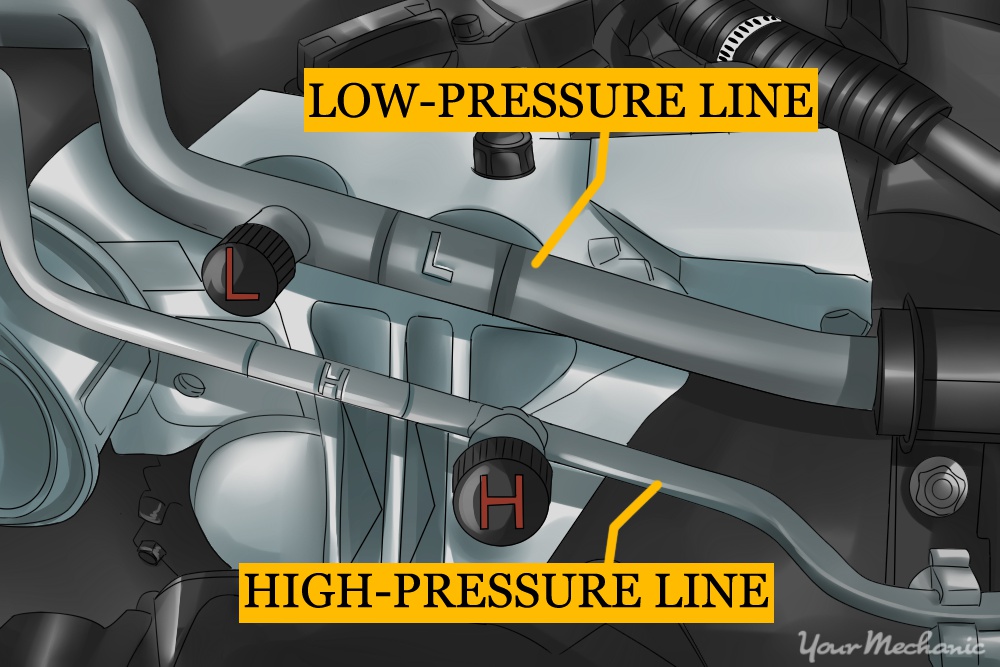
A manifold gauge set measures pressure on two sides of this system. The blue gauge measures low-side pressure, while the red gauge measures high-side pressure. Both readings help show whether the refrigerant is moving and changing pressure as expected.
The low side works between the evaporator and the compressor inlet. Here, refrigerant absorbs heat from the cabin. The high side starts at the compressor outlet and continues through the condenser. Here, the refrigerant releases heat into the outside air.
Source: hitchesguide.com
Low-side pressure
This is the suction pressure. It helps show how refrigerant enters the compressor after absorbing heat in the evaporator. A reading that is too low may point to low refrigerant, a restriction, or an evaporator problem.
High-side pressure
This is the discharge pressure. It shows the pressure created by the compressor as refrigerant moves toward the condenser. A high reading may point to excess refrigerant, poor heat removal, or a restriction.
Static pressure
This is the pressure measured while the AC compressor is off and the system has had time to equalize. Both gauges should normally move toward the same pressure. This reading is affected by refrigerant temperature and cannot prove that the system contains the correct charge.
Operating pressure
This is the pressure measured while the AC system is running under defined test conditions. The compressor creates a pressure difference between the two sides. The size of that difference provides useful clues about system performance.
Why Does AC Pressure Change?
Refrigerant pressure changes with temperature. When outside air gets hotter, the pressure in a working AC system often rises. The condenser must release heat into that warmer air, so the system may need a higher pressure to complete the cooling cycle.
Engine speed, humidity, cabin heat, blower speed, and condenser fan operation also affect the readings. Modern vehicles may use variable-displacement compressors that adjust their output. This means older pressure charts may not match the behavior of a newer vehicle.
Always identify the refrigerant and check the vehicle service information before judging a gauge reading.
Outside temperature
Hot weather can raise both operating pressures, especially on a vehicle sitting in direct sunlight.
Compressor design
A fixed-displacement compressor may create a different pressure pattern from an electronically controlled variable-displacement unit.
Condenser airflow
Poor airflow makes it harder to remove heat. This can raise high-side pressure.
What Is Normal Car AC Pressure?
Normal car AC pressure depends on the vehicle and the conditions used during testing. There is no single pressure range that applies to every car, truck, and SUV. Refrigerant type also matters because R-134a and R-1234yf systems have different pressure characteristics.
For example, an AutoZone R-134a diagnostic guide gives an illustrative reading of about 40 to 50 PSI on the low side and 175 to 210 PSI on the high side at 80 degrees Fahrenheit. These figures are reference values, not universal specifications for every vehicle.
The engine speed and AC settings must also match the test procedure. Some service manuals call for an engine speed near 1,500 RPM, maximum cooling, and high blower speed. Other vehicles require different conditions.
The best reference is the manufacturer’s service information for the exact vehicle. Compare the readings only after the system has stabilized and the correct test conditions have been set.
Check the refrigerant label
Look under the hood for the AC refrigerant label. It identifies the refrigerant type and usually lists the correct charge amount.
Check the ambient temperature
Record the outside temperature before testing. A pressure chart made for 70 degrees Fahrenheit should not be used as the target for a 100-degree day.
Use both gauges
A single low-side gauge cannot show the complete pressure difference. A proper diagnosis needs information from both sides.
Allow readings to stabilize
Pressure can change after the compressor starts. Follow the vehicle’s service procedure and wait for stable readings before making a judgment.
Can Static Pressure Tell You If Refrigerant Is Low?
Static pressure is useful, but it has limits. When the AC is off and the refrigerant has equalized, the standing pressure mainly reflects the refrigerant temperature when liquid and vapor are present.
A system can have a standing pressure that looks reasonable while still containing less refrigerant than the correct amount. This is why a static reading cannot replace a proper charge measurement.
Very low static pressure may indicate a serious refrigerant shortage. However, the system still needs a leak check before anyone adds more refrigerant.
Both gauges read equally
This is normally expected after the system has had enough time to equalize.
Both gauges read unusually low
The system may be undercharged or nearly empty. A leak inspection is the next step.
The readings remain different
The system may not have equalized yet, or a valve or restriction may be preventing normal pressure balance.
Common Car AC Pressure Problems and Their Causes
The relationship between the low-side and high-side readings is often more useful than either number alone. Different pressure combinations point toward different problems. However, each pattern can have more than one cause.
The following patterns are general diagnostic clues. They apply most directly to conventional AC systems, so electronically controlled compressors may require extra checks before a part is blamed.
Source: expressluberichlandhills.com
Both low-side and high-side pressures are too low
This often indicates an undercharged system. A refrigerant leak at an O-ring, hose, condenser, evaporator, or compressor seal may have allowed refrigerant to escape. A severely undercharged system may also prevent the compressor from operating because a pressure sensor or switch disables it. Find and repair the leak before recharging.
Both low-side and high-side pressures are too high
Possible causes include excess refrigerant, poor condenser airflow, air trapped inside the system, or an incorrect oil charge. A dirty condenser or failed cooling fan can prevent heat from leaving the refrigerant. Check airflow and verify the refrigerant charge before replacing components.
Low-side pressure is high and high-side pressure is low
This pattern may indicate weak compressor pumping. Worn internal valves, a faulty compressor control valve, or a slipping compressor clutch can reduce the pressure difference. An expansion valve stuck too far open may also contribute. Further testing is needed to separate these causes.
Low-side pressure is low and high-side pressure is high
A restriction may be blocking refrigerant flow. Possible locations include the expansion valve, orifice tube, receiver-drier, or a damaged refrigerant line. Frost or a sharp temperature drop near a component can help locate the restriction.
Low-side pressure is high and high-side pressure is also high
Excess refrigerant, poor condenser cooling, air in the system, or an expansion valve problem may cause this pattern. A cooling fan that does not run at the correct speed can make the high side rise, especially in traffic.
Both pressures are close together while the AC is running
On a conventional system, this may mean the compressor is not pumping or is not being driven. Check compressor engagement, clutch operation, electrical supply, and control signals. Some variable-displacement systems need scan-tool testing because their normal pressure behavior is different.
Low-side pressure keeps rising and falling
Rapid pressure changes may occur when the compressor repeatedly switches on and off. Low refrigerant, a faulty pressure sensor, an expansion valve problem, or an electrical control fault may cause this behavior. Check the reason for the cycling instead of bypassing the safety switch.
How a Restricted AC System Affects Pressure
A restriction prevents refrigerant from moving freely through the system. The compressor may continue pulling refrigerant from the low side while the blocked component limits the amount that can return.
This can cause low suction pressure and high discharge pressure. The restricted point may become unusually cold or develop frost because refrigerant pressure changes sharply across it.
A clogged expansion valve is one possible cause. A damaged hose or blocked receiver-drier can create a similar pattern. Temperature measurements across the system help locate the problem.
Expansion valve restriction
A stuck or blocked valve can reduce refrigerant flow into the evaporator.
Orifice tube blockage
Debris can restrict refrigerant movement through the metering device.
Damaged refrigerant line
A crushed or sharply bent line can reduce flow and create abnormal pressure differences.
Symptoms That Often Accompany AC Pressure Problems
Pressure problems often appear with changes in cooling performance, compressor behavior, or airflow. These symptoms help narrow the search, but they do not prove that a particular component has failed.
Pay attention to when the problem occurs. An AC system that cools on the highway but blows warm air at idle may have an airflow or condenser fan problem. A system that cools for a few minutes and then becomes warm may have an intermittent restriction or control fault.
Source: yourmechanic.com
AC blows warm air
Low refrigerant, excess refrigerant, compressor trouble, and poor condenser cooling can all reduce cooling performance. Check the actual vent temperature and pressure readings.
AC works at highway speed but not at idle
The condenser may not receive enough airflow when the vehicle stops. A failed cooling fan, damaged fan wiring, or blocked condenser can cause high-side pressure to rise.
Compressor switches on and off repeatedly
Rapid cycling may be caused by low refrigerant, pressure sensor faults, or problems with the expansion valve. It can also occur when system controls are not working correctly.
Compressor makes unusual noise
A damaged compressor, poor lubrication, or excessive mechanical load may create noise. Pressure readings and a mechanical inspection are needed before replacing it.
Cooling changes during the drive
An intermittent restriction, evaporator icing, moisture in the system, or an electronic control problem may cause cooling to come and go.
AC stops working in very hot weather
High outside temperatures increase the work needed to remove heat. A weak condenser fan or existing pressure problem may become more noticeable under these conditions.
Why Does AC Pressure Become High at Idle?
At idle, a vehicle moves little or no air through the condenser. The electric cooling fan must provide enough airflow to remove heat. If the fan is damaged or does not reach the required speed, high-side pressure can rise.
This problem is common enough to deserve an early check when the AC cools during highway driving but becomes warm in traffic. The condenser may also be covered with dirt, insects, leaves, or road debris.
Inspect the fan and condenser without touching moving parts. A technician can compare fan commands, actual fan operation, and pressure readings to confirm the cause.
Cooling fan failure
The fan motor, relay, fuse, wiring, or fan control module may be faulty.
Blocked condenser
Dirt and debris can reduce airflow through the condenser fins.
Incorrect fan control
A faulty temperature sensor or pressure sensor may prevent the fan from operating as designed.
How to Diagnose Car AC Pressure Problems Safely
A safe diagnosis starts with basic visual checks and the correct vehicle information. Do not begin by adding refrigerant. An incorrect charge can make the problem worse and may damage the compressor.
A professional pressure test uses the correct manifold gauge set or an approved AC service station. The technician checks both sides and compares the readings with the manufacturer’s specifications. Other measurements help confirm whether the problem is related to charge, airflow, or refrigerant flow.
Source: hvacseer.com
Step 1: Identify the refrigerant
Read the underhood AC label. Confirm whether the vehicle uses R-134a, R-1234yf, or another specified refrigerant. Never assume the type from the vehicle’s age alone.
Step 2: Inspect visible components
Look for damaged hoses, loose fittings, oily residue, damaged condenser fins, and obvious signs of leakage. Check the cabin blower and condenser fan operation.
Step 3: Check the static pressure
With the engine off, allow enough time for the system to equalize. Compare both gauge readings with the correct refrigerant temperature-pressure information. Do not use this test alone to decide the charge amount.
Step 4: Test operating pressure
A trained person should follow the vehicle’s test procedure. This may include a specified engine speed, maximum cooling, high blower speed, and a defined ambient temperature. Record both gauge readings after they stabilize.
Step 5: Measure vent temperature
Use a thermometer at the center dashboard vent. Record the temperature and compare it with the vehicle’s expected performance under the same test conditions.
Step 6: Check the compressor and fans
Confirm that the compressor receives the correct command and that the condenser fan operates as required. Modern vehicles may need scan-tool data to check electronic compressor controls.
Step 7: Perform a leak test
If the charge is low, locate the leak with suitable equipment. An electronic refrigerant detector, approved leak-detection method, or other professional test can help identify the source.
What Tools Are Used for AC Pressure Diagnosis?
A manifold gauge set is the main tool for checking high-side and low-side pressure. The gauges must match the refrigerant and service connections used by the vehicle.
A digital thermometer helps check vent and refrigerant line temperatures. A scan tool may also be needed to read pressure sensor data, compressor commands, fan commands, and stored climate control faults.
Professional AC service equipment can recover refrigerant, identify the refrigerant when equipped with the correct identifier, remove moisture through evacuation, and recharge the system by the specified weight.
Manifold gauge set
Measures both pressure sides during static and operating tests.
Digital thermometer
Checks vent temperature and helps locate unusual temperature changes across components.
Scan tool
Reads electronic control data and helps identify sensor, wiring, and compressor command problems.
Refrigerant service station
Recovers and recharges refrigerant using the correct service procedure and measured charge weight.
When Should You Stop Testing?
Stop if the high-side pressure rises beyond the vehicle’s specified limit, a hose appears damaged, or the compressor makes severe mechanical noise. Do not keep running a system that shows signs of dangerous pressure or mechanical failure.
Never open a pressurized AC line. Liquid refrigerant can cause severe frostbite if it contacts skin or eyes. Keep hands, tools, and clothing away from cooling fans and moving belts.
Very high pressure
Stop the test and have the system checked before further operation.
Visible refrigerant leak
Avoid touching the leaking area and arrange a proper repair.
Electrical or mechanical failure
Stop if wiring overheats, the belt slips, or the compressor makes severe noise.
How to Fix Car AC Pressure Problems
The correct repair depends on what caused the pressure to change. Adding refrigerant is not a complete repair when the system has a leak, and replacing the compressor will not solve a blocked condenser.
A proper repair restores the correct refrigerant charge, removes any restriction, and ensures that the compressor and condenser can work as designed. The system should then be tested again under the correct operating conditions.
Source: hvacseer.com
Repair refrigerant leaks
Replace damaged seals, hoses, condensers, or other leaking parts. Then recover and recharge the system according to the manufacturer’s specified procedure and charge weight.
Correct an overcharge
Have excess refrigerant recovered with suitable service equipment. The final charge must match the vehicle’s specified amount.
Restore condenser airflow
Clean external debris carefully and repair faulty cooling fans, relays, wiring, or fan controls.
Remove system restrictions
Replace a blocked expansion valve, orifice tube, receiver-drier, or damaged line as required. Check for debris and moisture that may have caused the blockage.
Repair compressor problems
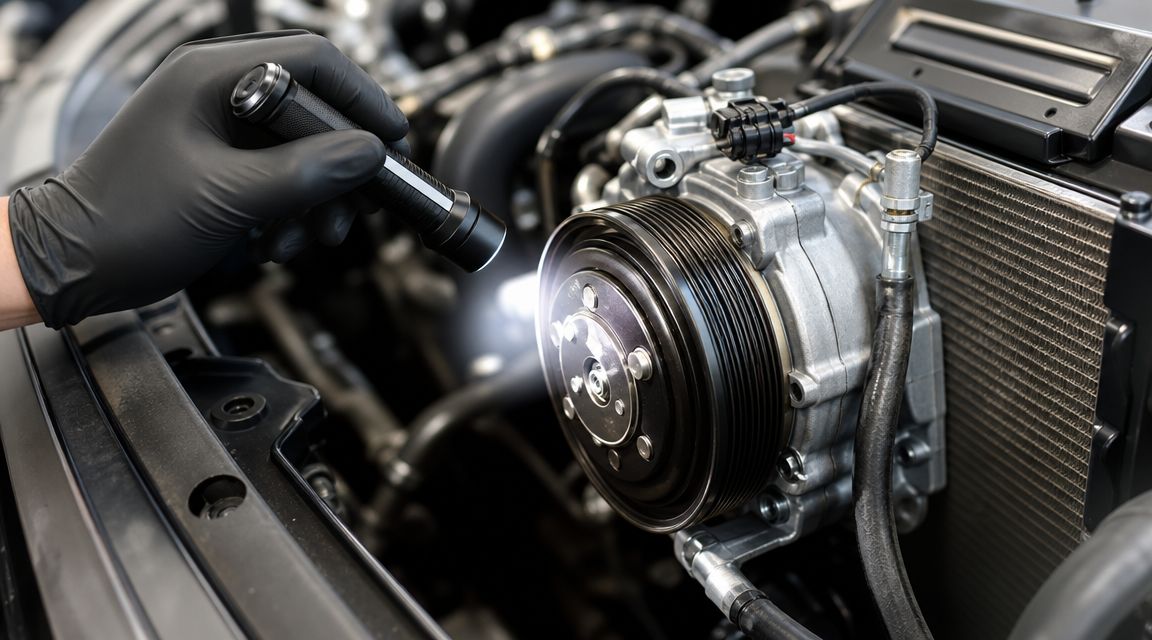
Check the compressor clutch, electrical supply, control valve, and internal pumping performance. Replace the compressor only after the diagnosis confirms failure.
Correct sensor or electrical faults
Test pressure sensors, switches, connectors, fuses, and control wiring. Replace faulty parts and confirm that the compressor and cooling fan respond correctly.
Why the Correct Refrigerant Charge Matters
The amount of refrigerant inside a car AC system is critical. Too little refrigerant can reduce cooling and affect compressor lubrication. Too much can increase operating pressure and reduce heat transfer performance.
A proper recharge uses the exact refrigerant type and measured weight listed by the manufacturer. A technician first recovers the remaining refrigerant, repairs leaks, evacuates the system, and then adds the specified amount.
Do not judge a full charge by the pressure on a small recharge can. Pressure alone cannot show the exact mass of refrigerant in the system.
Undercharging
Can reduce cooling and cause abnormal low-side and high-side readings.
Overcharging
Can raise operating pressures and place extra strain on AC components.
Incorrect refrigerant
Can create compatibility, performance, and safety problems. Always use the refrigerant specified for the vehicle.
Common Mistakes When Diagnosing AC Pressure
Incorrect testing can turn a small AC fault into an expensive repair. Many pressure problems become harder to understand when the system is tested under the wrong conditions or refrigerant is added without a diagnosis.
Avoid the following mistakes before deciding which component needs attention.
Using one gauge as the complete diagnosis
A single low-side gauge cannot show the pressure difference between the two sides. It may help with limited checks, but it cannot replace a proper two-sided diagnosis.
Following a universal pressure chart
Different vehicles and refrigerants have different operating specifications. A chart from another vehicle may give the wrong target.
Adding refrigerant without checking for leaks
A leak allows the new refrigerant to escape. Repeated top-offs waste money and may lead to further compressor damage.
Assuming every warm-air problem is low refrigerant
A faulty fan, blend door, compressor control valve, blocked expansion valve, or electrical problem can also reduce cooling.
Replacing the compressor too early
A weak pressure difference may come from a control problem, slipping clutch, or other fault. Confirm the compressor’s operation before replacement.
Mixing refrigerants
Different refrigerants require the correct equipment and service connections. Mixing them can contaminate the system and create serious service problems.
Bypassing pressure switches
These controls protect the system from unsafe operating conditions. Bypassing them can allow the compressor to operate when pressure is too low or too high.
Why AC Recharge Cans Can Give Misleading Results
Many consumer recharge cans include a low-side gauge. This can show suction pressure, but it does not reveal what is happening on the high side.
For example, a low-side reading may appear acceptable while high-side pressure is already excessive because of poor condenser airflow. Adding more refrigerant in this situation can make the problem worse.
The correct charge must be measured by weight, not guessed from a single pressure reading. A complete diagnosis should also confirm cooling performance and system operation.
Limited information
A single gauge does not show both sides of the refrigeration cycle.
Overcharging risk
Adding refrigerant without measuring the existing charge can create excessive pressure.
Leak risk
A recharge does not repair a damaged hose, seal, or component.
Questions to Ask After an AC Pressure Test
A pressure test is only the start of a complete diagnosis. The next question should depend on the pattern found, the vehicle design, and the symptoms reported by the driver.
Several useful follow-up questions deserve more attention than simply asking whether the refrigerant is low. These questions help connect gauge readings with the actual cause and the repair needed.
Source: bryansgarage.com
Inferred next need: Can static pressure confirm a full refrigerant charge?
Reader stage: Before diagnosis. Reviewed coverage: Some inspected diagnostic guides explain static pressure but give limited attention to its limits. Reader benefit: Prevents an owner from treating equal standing pressure as proof of a correct charge. Evidence: Refrigerant pressure-temperature behavior and professional AC charging procedures. Priority: High. Placement: Normal pressure section.
Inferred next need: Why does the AC work while driving but fail at idle?
Reader stage: During troubleshooting. Reviewed coverage: This issue is discussed in general condenser airflow guidance, but the connection with fan commands and actual fan operation deserves a clear explanation. Reader benefit: Helps separate airflow problems from refrigerant charge problems. Evidence: Condenser heat-transfer principles and vehicle cooling fan diagnostics. Priority: High. Placement: Symptom section.
Inferred next need: Can a pressure reading prove that the compressor is bad?
Reader stage: Before authorizing a repair. Reviewed coverage: Gauge guides describe weak compression, but variable-displacement systems and electronic control faults need more explanation. Reader benefit: Reduces unnecessary compressor replacement. Evidence: Compressor operation principles and scan-tool diagnostic procedures. Priority: High. Placement: Pressure pattern section.
Inferred next need: What happens after a refrigerant leak is found?
Reader stage: After diagnosis. Reviewed coverage: Leak and recharge steps are covered, but the full repair sequence is not always explained. Reader benefit: Helps the owner understand leak repair, refrigerant recovery, evacuation, and accurate recharging. Evidence: EPA MVAC servicing requirements and standard professional repair procedures. Priority: High. Placement: Repair section.
Observed question: Does outside temperature change normal AC gauge readings?
Reader stage: During pressure testing. Basis: This question appears in the inspected AutoZone diagnostic guide’s FAQ section. Reviewed coverage: Answered, although vehicle-specific conditions still matter. Reader benefit: Prevents incorrect comparisons between readings taken on different days. Evidence: Refrigerant pressure-temperature behavior and manufacturer service specifications. Priority: Medium. Placement: Normal pressure section.
Frequently Asked Questions
Q
What causes high pressure in a car AC system?
High pressure can result from too much refrigerant, a dirty condenser, a failed cooling fan, air trapped inside the system, or a restriction in the refrigerant circuit. High outside temperatures can also raise normal operating pressure.
Check condenser airflow and compare both gauges with the vehicle’s specifications. A professional charge check can determine whether excess refrigerant is present.
Q
What causes low pressure on both AC gauges?
Low readings on both sides often indicate that the system is undercharged. A leak in the condenser, evaporator, hose, compressor seal, or connection may have allowed refrigerant to escape.
A nearly empty system may not allow the compressor to engage. Find and repair the leak before adding the correct refrigerant charge.
Q
Can low AC pressure damage the compressor?
Yes, low refrigerant can contribute to compressor damage. Refrigerant carries oil through the system, and a shortage can reduce proper lubrication and cooling.
Many vehicles use pressure protection to stop the compressor when refrigerant pressure becomes too low. Do not bypass this protection to force the compressor to run.
Q
Should car AC pressure be checked with the engine on or off?
Both tests can provide useful information. With the engine off and the system equalized, the technician can check static pressure. With the engine running and the AC operating, both gauges show how the compressor and refrigeration circuit behave.
The two tests answer different questions. Follow the vehicle manufacturer’s procedure and use the correct refrigerant pressure-temperature information.
Q
Can a bad AC pressure switch cause warm air?
Yes. A faulty pressure switch or pressure sensor may send incorrect information to the AC control system. The system may then prevent the compressor from operating or switch it off at the wrong time.
A scan tool and electrical tests can help compare the sensor signal with actual system pressure. Do not replace the switch until its wiring and the real refrigerant pressure have been checked.
Q
Can I drive with high car AC pressure?
A pressure reading that is above the vehicle’s specified limit should not be ignored. Excessive pressure can place extra strain on hoses, seals, the compressor, and other AC components.
Stop the AC test if pressure becomes dangerously high, the compressor makes severe noise, or a hose appears damaged. Have the system inspected before continuing to use the AC.
Q
How often should car AC pressure be checked?
A vehicle does not need a pressure test at every routine service if the AC works properly. Testing is useful when cooling becomes weak, the compressor cycles abnormally, or a leak or component fault is suspected.
If the system needs repeated refrigerant additions, arrange a leak inspection instead of treating recharging as routine maintenance.
✦ Wrapping Up
Conclusion
Car AC pressure problems can come from several different sources. Low refrigerant, excess refrigerant, poor condenser airflow, blocked components, compressor faults, and electrical problems can all affect the readings. The key is to understand both the low-side and high-side pressures instead of relying on one number.
Outside temperature, refrigerant type, compressor design, and test conditions also matter. A pressure chart is useful only when it matches the vehicle and the conditions being tested. A complete diagnosis should include vent temperature, condenser airflow, leak checks, and compressor operation.
For US vehicle owners, refrigerant handling also has legal and safety limits. The EPA prohibits intentional refrigerant venting. Technicians who service motor vehicle AC systems for payment must meet Section 609 certification and equipment requirements. R-1234yf systems also have specific safety requirements because this refrigerant is mildly flammable.
💡 Key Takeaway
Start by checking the underhood refrigerant label, inspecting visible AC components, and recording the outside temperature and cooling symptoms. Have both pressure sides tested against the correct vehicle specifications. Repair any leak or restriction before recharging, and use a qualified AC technician for refrigerant recovery, evacuation, and accurate charging.
About john Adword
John Adword has tested and reviewed car seat covers and interior accessories for 5 years, evaluating fit, material performance, and long-term wear across a range of vehicles and climates. His testing approach follows the same methodology used across car Reviewer Plus's product reviews — hands-on installation, real-world use, and comparison against manufacturer claims — with an ongoing focus on tracking new seat cover materials and cooling technology as they come to market.