
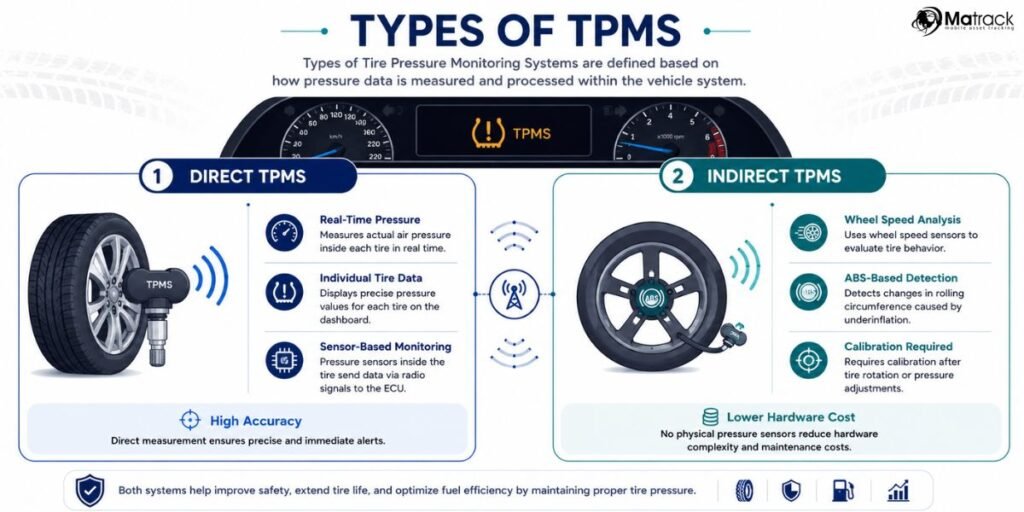
How Direct TPMS Differs From Indirect TPMS is a common question among U.S. drivers who see a tire pressure warning light but do not know what happens behind the scenes. Both systems have the same goal: helping drivers keep tires properly inflated and safer on the road.
From my experience studying automotive systems, the biggest difference is the way each system collects information. Direct TPMS checks tire pressure directly with sensors, while indirect TPMS uses existing vehicle technology to detect changes that may suggest low pressure.

What Is a Tire Pressure Monitoring System (TPMS)?
A Tire Pressure Monitoring System, often called TPMS, is a safety system that checks tire inflation levels. It alerts drivers when one or more tires lose pressure below a safe level.
In the United States, TPMS became required on most new passenger vehicles after the Tire Pressure Monitoring Act. The goal was to reduce accidents caused by underinflated tires and improve road safety.
Understanding How Direct TPMS Differs From Indirect TPMS starts with knowing that both systems solve the same problem but use different methods.
- ✦ Safety purpose
TPMS helps drivers find low tire pressure before it creates handling problems, poor fuel economy, or excess tire wear.
- ✦ Driver warning
When pressure drops too low, the vehicle displays a warning light on the dashboard.
How Direct TPMS Works
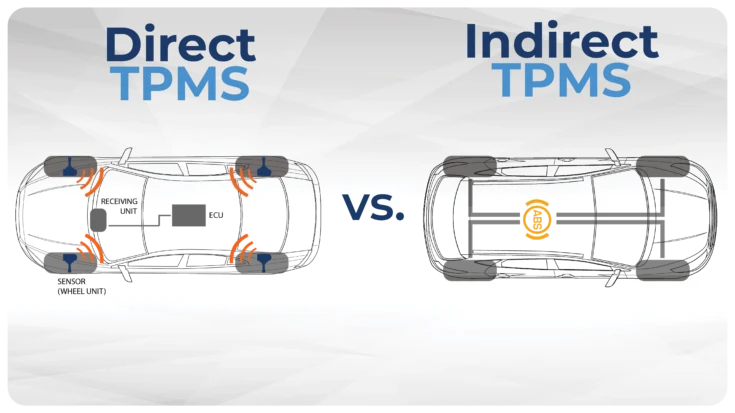
Direct TPMS uses dedicated pressure sensors installed inside each wheel. These sensors measure the actual air pressure and often measure tire temperature as well.
The sensors send wireless information to the vehicle control module. If pressure falls below a programmed limit, the system turns on the TPMS warning light.
When comparing How Direct TPMS Differs From Indirect TPMS, direct systems stand out because they provide real pressure measurements instead of estimates.

- ✦ Wheel-mounted sensors
Each tire has a sensor attached to the valve stem or mounted inside the wheel assembly.
- ✦ Real-time readings
The system can show individual tire pressure values on many modern vehicles.
- ✦ Battery-powered design
Most direct sensors use built-in batteries that usually last several years before replacement is needed.
Advantages of Direct TPMS
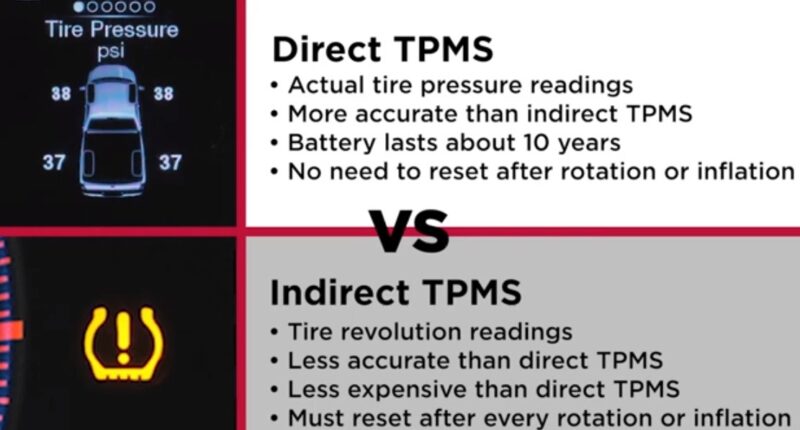
Direct TPMS provides accurate pressure data because it measures pressure inside each tire. It can quickly identify which tire has a problem.
This makes it useful for drivers who want precise information, especially during long trips, seasonal weather changes, or towing situations.
- ✦ High accuracy
The system measures actual tire pressure instead of predicting pressure loss.
- ✦ Individual tire monitoring
Drivers can know exactly which tire needs attention.
How Indirect TPMS Works
Indirect TPMS works differently because it does not use pressure sensors inside the tires. Instead, it uses wheel speed sensors that are already part of the vehicle’s anti-lock braking system.
A tire with low pressure becomes slightly smaller in diameter. Because of this change, it rotates faster than properly inflated tires. The vehicle computer detects this difference and estimates possible pressure loss.
When learning How Direct TPMS Differs From Indirect TPMS, the key point is that indirect systems measure tire behavior rather than tire pressure itself.
- ✦ Uses ABS sensors
Indirect TPMS relies on existing wheel speed sensors instead of separate pressure sensors.
- ✦ No tire sensors required
The system has fewer components inside the wheel, which can reduce maintenance needs.
Advantages of Indirect TPMS
Indirect TPMS can be simpler because it uses hardware already installed in the vehicle. There are no pressure sensors with batteries inside the wheels.
This design can lower repair costs when compared with replacing direct TPMS sensors.
- ✦ Lower component count
The system does not require individual tire pressure sensors.
- ✦ Simple maintenance
Wheel sensor battery replacement is not needed because the system uses existing vehicle sensors.
Direct TPMS vs Indirect TPMS: Main Differences
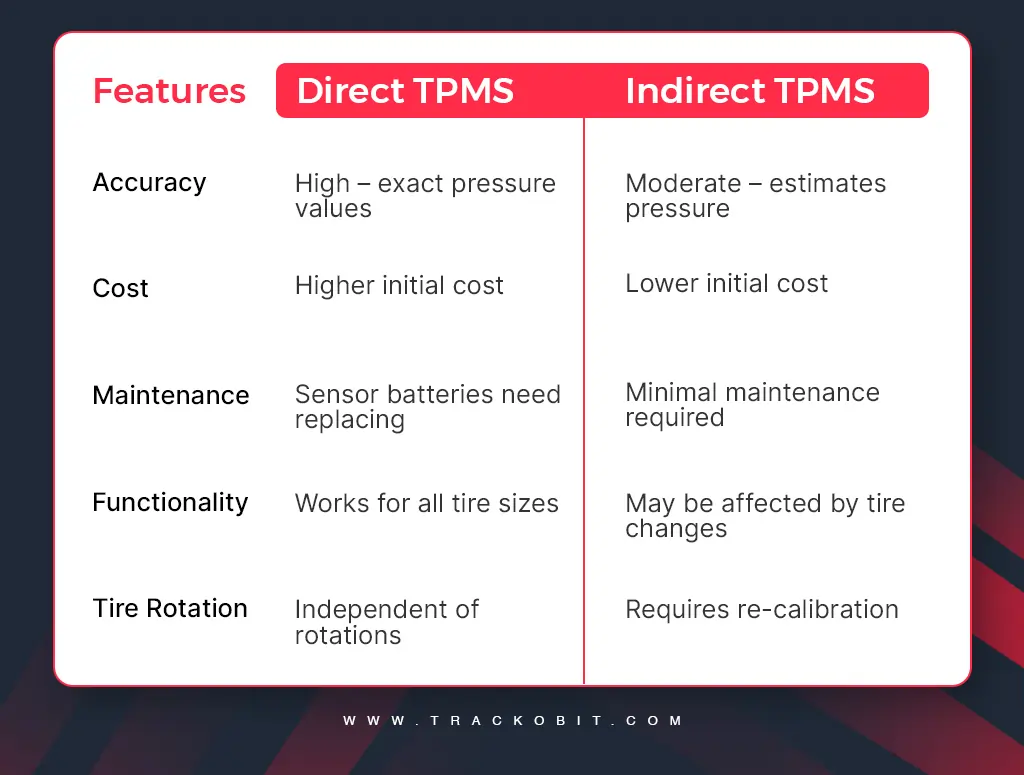
The biggest difference between direct and indirect TPMS is the source of information. Direct TPMS collects pressure data from sensors, while indirect TPMS calculates possible pressure changes from wheel rotation patterns.
Both systems can protect drivers, but they work differently in accuracy, maintenance, and repair requirements.
A clear comparison helps explain How Direct TPMS Differs From Indirect TPMS for vehicle owners.
- ✦ Measurement method
Direct TPMS measures tire pressure directly. Indirect TPMS estimates pressure changes through wheel speed differences.
- ✦ Accuracy
Direct systems generally provide more precise pressure information.
- ✦ Maintenance
Indirect systems usually need less tire sensor maintenance.
- ✦ Repair cost
Direct TPMS repairs may cost more because individual sensors can require replacement.
Which TPMS System Is More Reliable?
Reliability depends on the vehicle design, maintenance habits, and driving conditions. Direct TPMS provides more detailed information, but its sensors can eventually need service.
Indirect TPMS has fewer parts inside the wheels, but it may not detect slow pressure changes as quickly because it relies on calculated differences.
Knowing How Direct TPMS Differs From Indirect TPMS helps drivers understand what their warning light means and how to respond.
- ✦ Direct TPMS reliability
Provides accurate readings but requires sensor maintenance over the vehicle’s lifetime.
- ✦ Indirect TPMS reliability
Offers a simple design but depends on accurate wheel speed calculations.
TPMS Maintenance Tips for Vehicle Owners
Even the best TPMS system cannot replace regular tire checks. Drivers should still inspect tires and check pressure with a manual gauge when needed.
Temperature changes can affect tire pressure. Many U.S. drivers notice warning lights during cold weather because air pressure drops as temperatures fall.
Proper maintenance keeps both direct and indirect TPMS systems working correctly.
- ✦ Check tire pressure regularly
Follow the vehicle owner’s manual for recommended tire pressure levels.
- ✦ Reset the system after service
Some vehicles require a TPMS reset after tire rotation or inflation adjustments.
- ✦ Inspect warning lights
A TPMS warning should not be ignored because it may indicate a safety issue.



