
Learning how one pedal driving works in electric cars helps new EV owners understand one of the biggest changes from traditional gas-powered vehicles. Instead of moving between the gas pedal and brake pedal often, drivers can control much of their speed with one pedal.
From my experience studying electric vehicle technology, the easiest way to understand this feature is to think of the accelerator as a speed control tool. Press it to move forward, lift your foot to slow down, and let the vehicle recover energy during deceleration.
Many electric cars sold in the United States now offer one pedal driving modes. This feature is especially useful in busy city traffic, where frequent stops and starts are common.

What Is One Pedal Driving in an Electric Car?
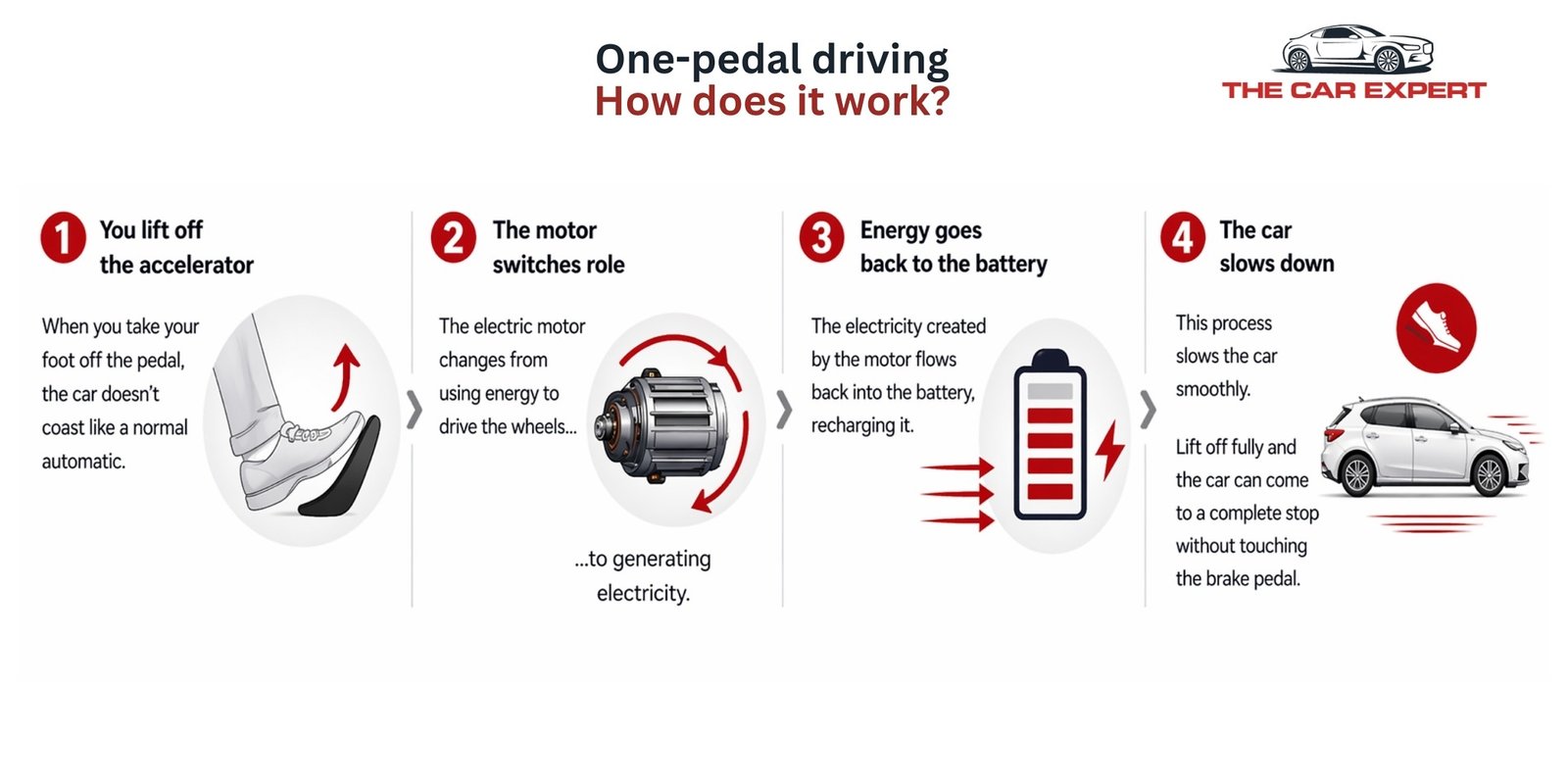
One pedal driving is an EV feature that allows drivers to control acceleration and slowing with mostly one pedal. The accelerator pedal becomes more than a tool for increasing speed because it also controls regenerative braking when released.
When the driver presses the accelerator, the electric motor receives power from the battery and turns the wheels. When the driver lifts their foot, the motor changes its role and helps slow the vehicle while sending energy back to the battery.
Understanding how one pedal driving works in electric cars starts with knowing that electric motors can work in two directions. They can use electricity to create movement, or they can act like generators to recover energy.
- ✦ Acceleration Control
Pressing the accelerator sends electrical energy from the battery to the motor, creating movement.
- ✦ Energy Recovery
Releasing the accelerator activates regenerative braking, which helps recharge the battery.
- ✦ Reduced Pedal Switching
Drivers can handle many traffic situations without moving their foot between two pedals.
How It Differs From Traditional Driving
Gas-powered cars usually coast when the driver releases the accelerator. EVs with strong one pedal driving settings slow down because the motor creates resistance.
This creates a different driving feeling. New EV drivers often need a short adjustment period because the car responds immediately when they change pedal pressure.
How One Pedal Driving Works in Electric Cars Through Regenerative Braking
The main technology behind one pedal driving is regenerative braking. This system captures some of the energy that would normally disappear as heat during braking.
In a normal vehicle, brake pads create friction against the wheels to slow the car. That process turns movement energy into heat. An EV can recover part of that energy by using the electric motor as a generator.
When researching how one pedal driving works in electric cars, the key idea is simple: slowing down can become a way to recover energy instead of only losing it.
- ✦ Motor Becomes a Generator
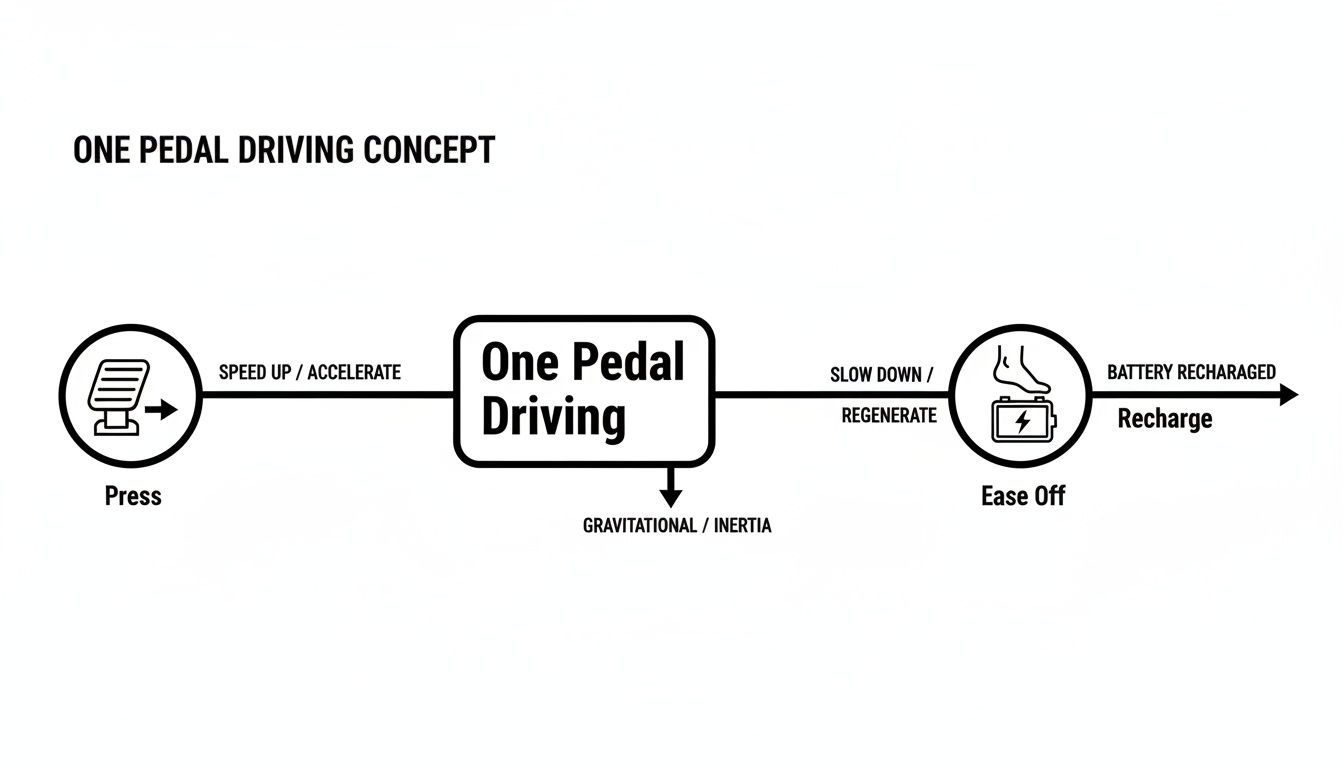
The electric motor changes operation during deceleration and creates electrical energy.
- ✦ Battery Receives Energy
Recovered electricity flows back into the battery pack for later use.
The Energy Flow During One Pedal Driving
The process starts when the driver removes pressure from the accelerator. The vehicle control system detects the change and adjusts motor behavior.
The motor resistance slows the wheels while generating electricity. The amount of braking force depends on the vehicle settings and driving mode.
What Happens When You Press and Release the Accelerator Pedal?
One pedal driving feels different because the accelerator controls both speed increase and speed reduction. Small changes in pedal movement create noticeable changes in vehicle behavior.
Pressing down harder increases power delivery. Slowly lifting your foot reduces power and increases regenerative braking force.
Many drivers learn to make smoother movements after a few trips. Once familiar, they often find traffic driving less stressful.

- ✦ Light Pedal Pressure
The vehicle maintains lower power output and smoother acceleration.
- ✦ Full Release
The vehicle begins slowing through regenerative braking.
- ✦ Brake Pedal Use
The brake pedal remains available for emergency stops or stronger braking needs.
Why EV Drivers Need an Adjustment Period
Drivers coming from gasoline cars often expect the vehicle to roll forward after releasing the accelerator. One pedal driving changes that expectation.
A few practice sessions in an empty parking area or quiet street can help drivers learn smooth pedal control.
Benefits of One Pedal Driving for EV Owners
One pedal driving provides several practical benefits for daily EV use. It can make driving smoother while reducing the effort needed in stop-and-go traffic.
For many American drivers who commute through busy urban areas, this feature can improve comfort during long periods of repeated acceleration and braking.
The system also supports efficient driving because it helps recover energy that would otherwise be lost during slowing.

- ✦ Less Brake Wear
Regenerative braking reduces reliance on traditional friction brakes, which may extend brake component life.
- ✦ Better City Driving
Frequent stops become easier because drivers can manage speed with fewer pedal changes.
- ✦ Improved Energy Efficiency
Recovered energy can slightly improve overall driving efficiency.
Limitations and Challenges of One Pedal Driving
Although one pedal driving is useful, it is not perfect for every situation. Drivers need to understand its limits and know when to use the brake pedal.
The braking feel can change depending on battery temperature, charge level, vehicle model, and selected driving mode.
Understanding how one pedal driving works in electric cars also means knowing when the system cannot replace normal braking.

- ✦ Emergency Stops
Drivers must use the brake pedal when quick and strong stopping power is needed.
- ✦ Different Driving Conditions
Snow, ice, and slippery roads may require careful use because strong deceleration can affect traction.
- ✦ Driver Preference
Some drivers prefer traditional coasting behavior instead of strong regenerative braking.
Is One Pedal Driving Always Active?
Most EV manufacturers allow drivers to turn one pedal driving on or off. Some vehicles offer adjustable levels of regenerative braking.
This flexibility helps drivers choose the experience that feels most comfortable.
