Understanding How Tire Pressure Sensors Are Powered helps drivers know why a TPMS warning light appears and why sensor replacement is sometimes needed. Modern vehicles in the United States use tire pressure monitoring systems to improve safety, reduce tire wear, and help maintain proper fuel economy.
From my experience researching automotive systems, many drivers are surprised that a small sensor inside each wheel can work for years without any external power source. The secret is a low-energy design that combines a long-lasting battery, smart sleep modes, and efficient wireless communication.
How Tire Pressure Sensors Are Powered Inside the Wheel
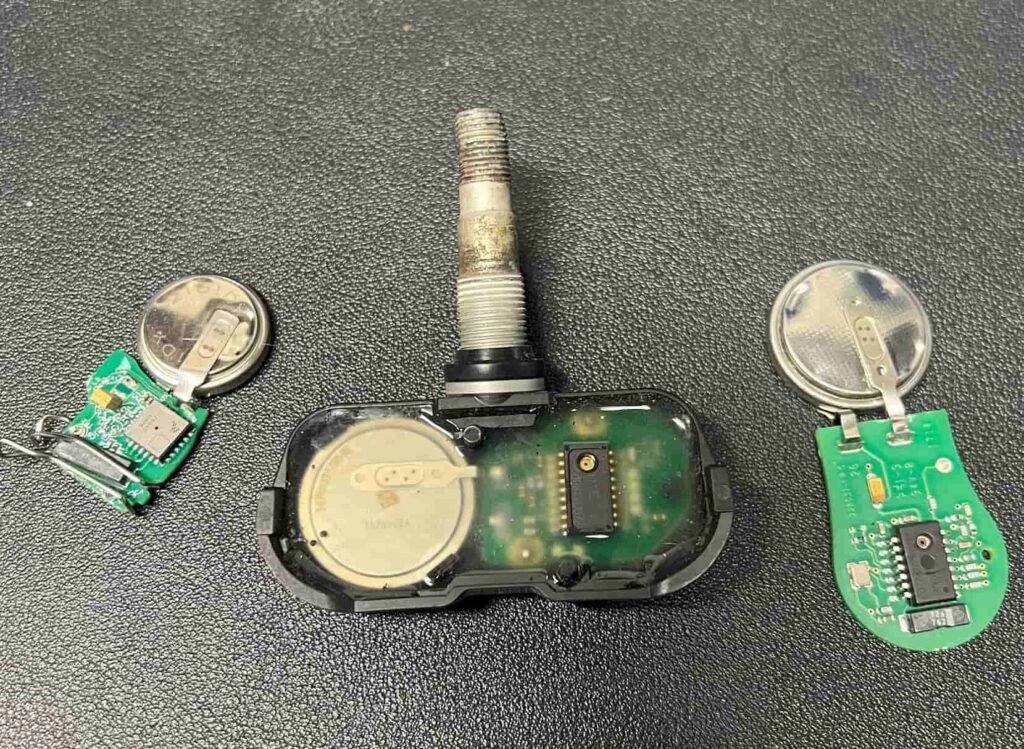
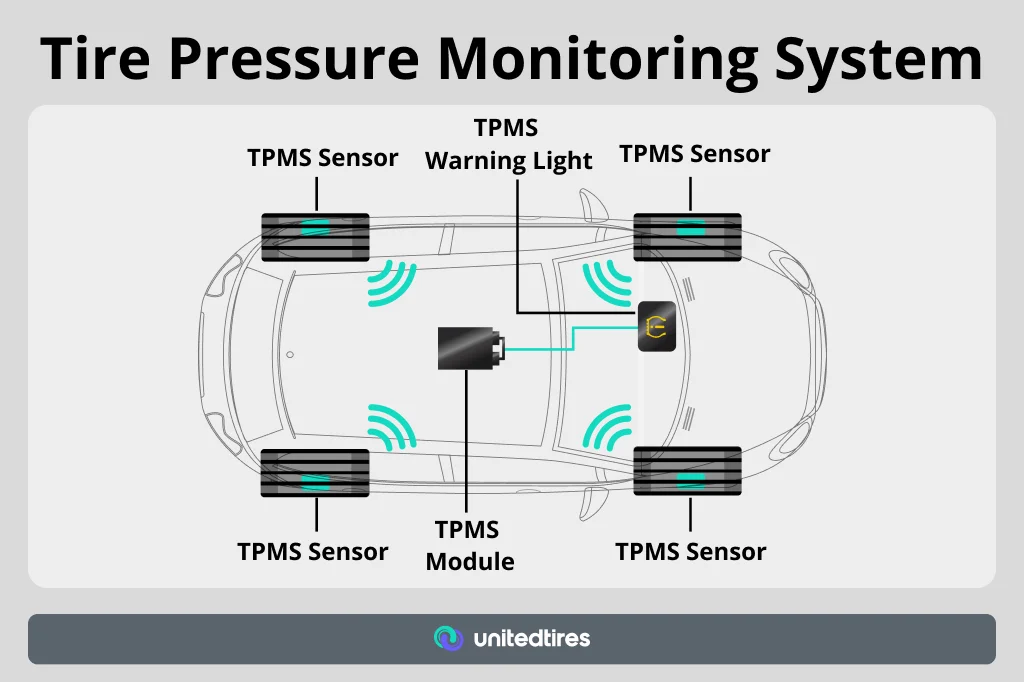
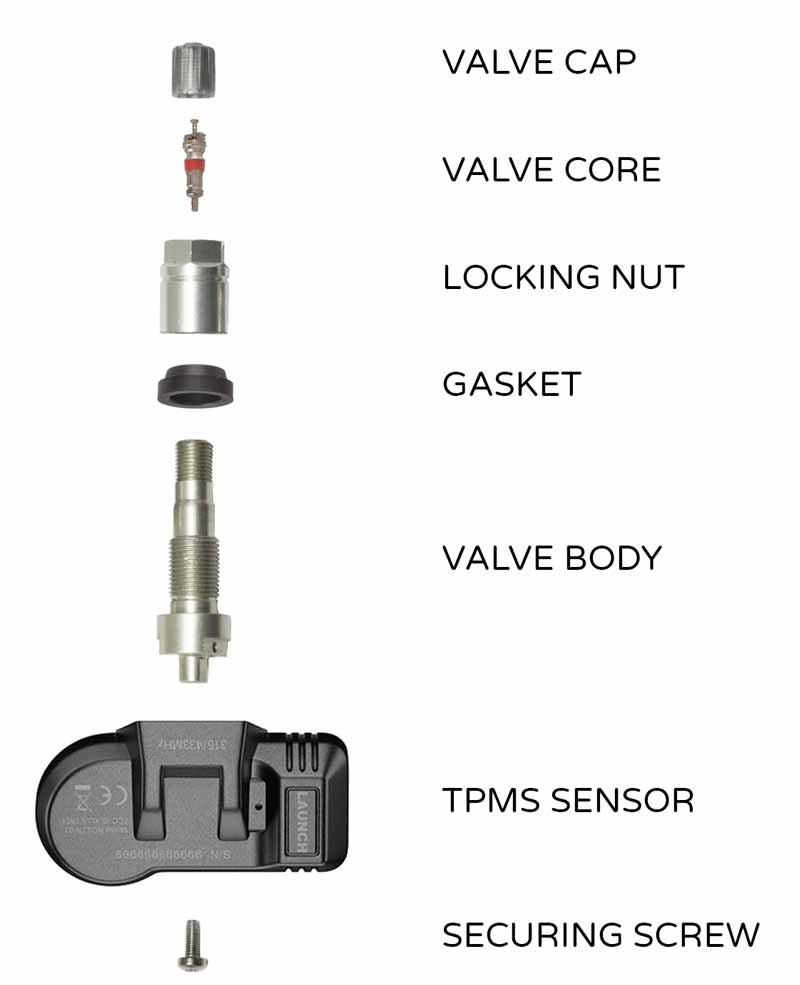
Direct TPMS sensors use a small internal battery to power their electronic parts. The battery supplies energy to the pressure sensor, temperature sensor, computer chip, and radio transmitter.
Unlike many car parts, a tire pressure sensor does not connect to the vehicle wiring system. It must operate independently because it sits inside the rotating wheel assembly where normal power connections are not practical.
- ✦ Internal lithium battery
Most TPMS sensors use sealed lithium batteries designed to provide stable power for several years.
- ✦ Low power electronics
The sensor uses energy-saving components to reduce battery drain during daily driving.
- ✦ Wireless communication
A small radio transmitter sends tire pressure information to the vehicle receiver.
Why TPMS Sensors Need Their Own Power Source
The wheel moves constantly while driving, so connecting a sensor to the vehicle battery would be difficult and unsafe. A self-powered design allows the sensor to measure tire conditions without physical wires.
- ✦ Independent operation
Each sensor works separately and continues monitoring even while the wheel rotates.
The Battery Technology Used in Tire Pressure Sensors
Most direct TPMS sensors use lithium-based batteries because they perform well in extreme temperatures. Tires experience heat from road surfaces and brakes, as well as cold conditions during winter driving.
The battery inside a TPMS sensor is usually sealed into the sensor housing. This protects it from moisture, vibration, and damage caused by road conditions.

- ✦ Long service life
A quality TPMS battery can often operate for five to ten years depending on usage and environmental conditions.
- ✦ Temperature resistance
Lithium batteries maintain reliable performance across a wide range of temperatures.
Why TPMS Batteries Cannot Usually Be Recharged
Most tire pressure sensors are designed as sealed units. Opening the sensor can damage the waterproof housing and affect accurate readings, so manufacturers typically replace the entire sensor when the battery dies.
- ✦ Sealed sensor design
The sealed structure protects electronics but makes battery replacement impractical.
How TPMS Sensors Save Battery Power
A key part of understanding How Tire Pressure Sensors Are Powered is knowing how they manage energy. These sensors do not transmit data continuously because that would quickly drain the battery.
Instead, TPMS sensors spend most of their time in a low-power sleep mode. They wake up at specific times, measure tire conditions, and send updates only when required.
- ✦ Sleep mode
The sensor shuts down most functions when the vehicle is parked to save energy.
- ✦ Motion activation
Many sensors become active when wheel movement is detected.
- ✦ Smart data transmission
The sensor sends only necessary information to reduce battery usage.
How Driving Habits Affect TPMS Battery Life
Frequent driving, long trips, and extreme temperature changes can affect battery performance over time. However, normal daily driving usually allows modern TPMS sensors to last many years.
- ✦ Vehicle usage
More frequent sensor activity may slightly increase battery consumption.
What Happens When a Tire Pressure Sensor Battery Dies
When a TPMS battery becomes weak, the sensor may stop sending accurate information to the vehicle computer. The dashboard may display a TPMS warning light even when tire pressure is correct.
A professional technician can test the sensor using a TPMS diagnostic tool. If the battery has reached the end of its life, replacing the sensor is usually the correct solution.
- ✦ Warning light appears
The vehicle may alert the driver because it cannot receive sensor data.
- ✦ Incorrect readings
A failing sensor may provide delayed or inaccurate tire information.
- ✦ Sensor replacement
A new sensor is installed when the internal battery is no longer reliable.
Signs of a Weak TPMS Sensor Battery
Common signs include a TPMS warning light that stays on, missing tire pressure information, or repeated communication errors during vehicle scans.
- ✦ No pressure reading
The dashboard cannot display data from the affected wheel sensor.
Different Types of Tire Pressure Sensor Power Systems
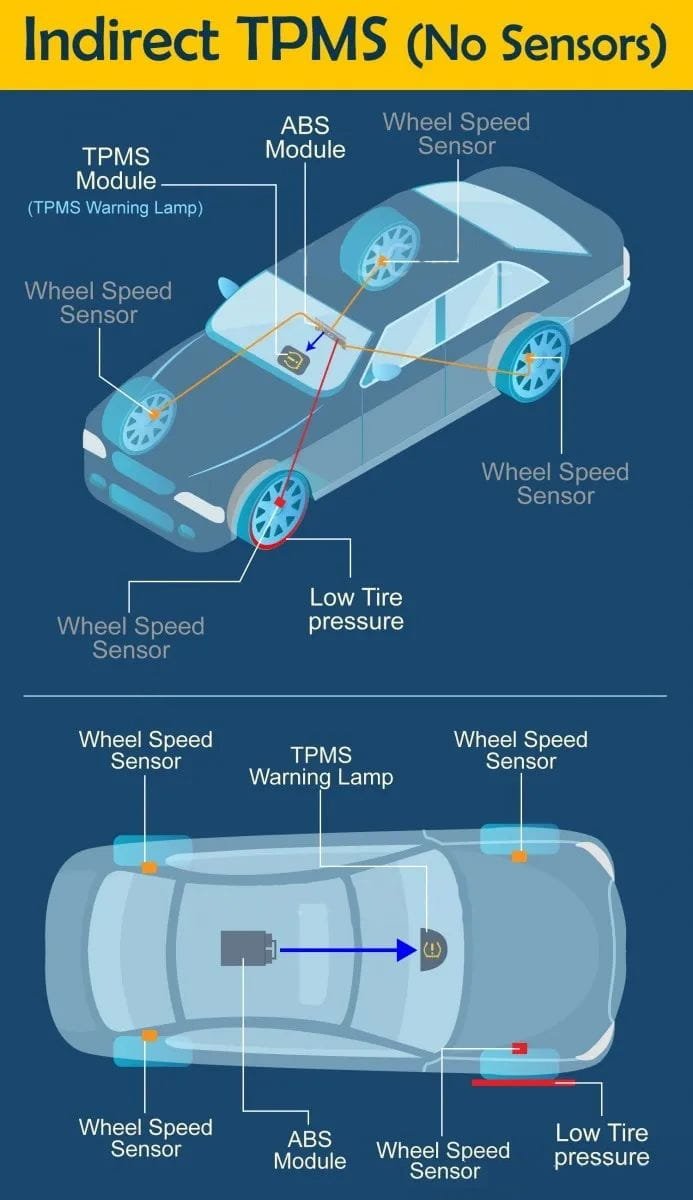
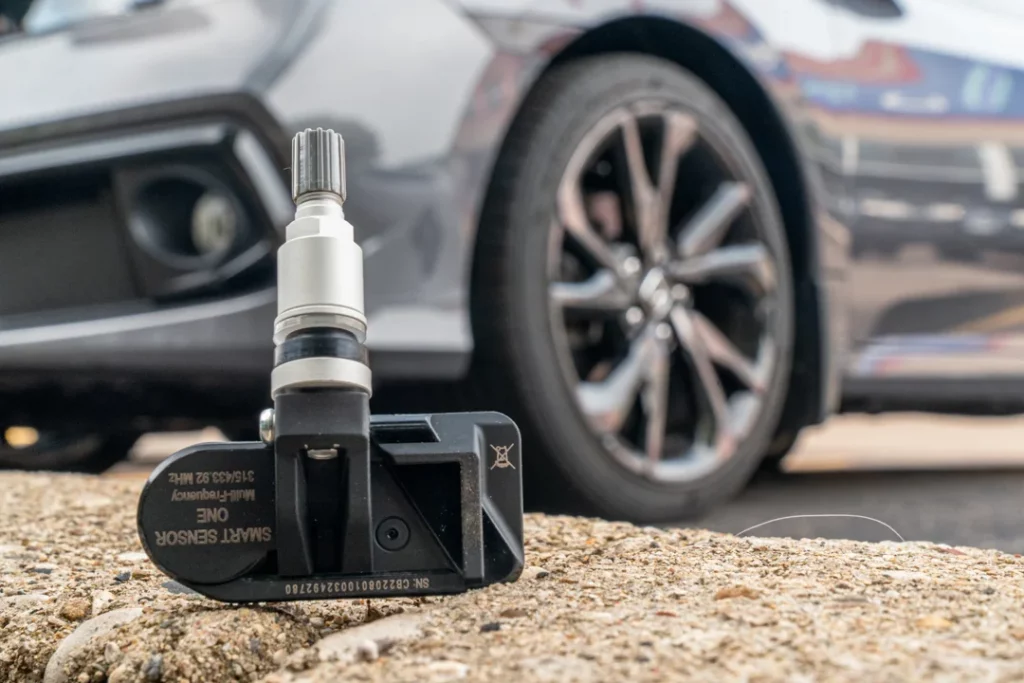
Most modern vehicles use battery-powered direct TPMS sensors, but tire pressure monitoring systems can also use indirect methods. Indirect systems do not use wheel sensors with batteries because they estimate pressure changes through wheel speed sensors.
Direct TPMS remains popular because it measures actual tire pressure and temperature. This requires a dedicated powered sensor inside each tire.
- ✦ Direct TPMS
Uses battery-powered sensors mounted inside each wheel.
- ✦ Indirect TPMS
Uses existing wheel speed sensors and vehicle software instead of battery-powered pressure sensors.
Why Direct TPMS Needs Batteries but Indirect TPMS Does Not
Direct systems must collect pressure data from inside the tire, so they need their own energy source. Indirect systems use information already available from the vehicle’s anti-lock braking system.
- ✦ Measurement method
The type of monitoring system determines whether a separate power source is required.
How Long Do Tire Pressure Sensor Batteries Last
A common question about How Tire Pressure Sensors Are Powered is how long the battery will continue working. In most cases, TPMS sensor batteries last around five to ten years before replacement becomes necessary.
Battery life depends on sensor design, driving conditions, temperature exposure, and how often the sensor communicates with the vehicle.

- ✦ Average lifespan
Most factory-installed TPMS sensors provide several years of dependable service.
- ✦ Replacement timing
Many drivers replace sensors during tire replacement if the sensors are already old.
How To Extend TPMS Sensor Life
Drivers cannot recharge a sealed TPMS battery, but proper tire maintenance can reduce unnecessary sensor stress. Keeping tires correctly inflated helps the system work efficiently.
- ✦ Maintain proper tire pressure
Correct inflation reduces unnecessary warnings and helps protect tire components.