

How TPMS Sensors Are Relearned is a common question after a tire change or sensor replacement. In the United States, many drivers face this issue after buying new tires, rotating tires, or replacing a weak sensor battery. A TPMS warning light may stay on until the vehicle learns the new sensor positions and identification codes.
From years of working with vehicle maintenance topics, the biggest mistake people make is assuming a new sensor works instantly. Most modern vehicles need a relearn procedure so the receiver module knows which sensor belongs to each wheel. The exact steps depend on the vehicle brand, model year, and TPMS system design.
What Is a TPMS Sensor Relearn Process?
A TPMS relearn process teaches the vehicle control module to recognize the tire pressure sensors installed on the vehicle. Each sensor has a unique identification code that allows the car to track pressure readings from each wheel.
When a sensor is replaced, the vehicle may not know the new sensor exists. The relearn process connects the new sensor information with the vehicle computer so the TPMS warning system can work correctly.
- ✦ Sensor identification
The vehicle stores unique sensor IDs to monitor individual tires.
- ✦ Position matching
The system learns which sensor belongs to the front, rear, left, and right wheels.
Why TPMS Sensors Need Relearning
A relearn is needed because the vehicle computer does not automatically know when a sensor changes. The system must update its stored information before it can display accurate tire pressure data.
- ✦ Common situations
New sensors, tire rotations, wheel replacements, and battery failures can require a relearn.
Different Ways TPMS Sensors Are Relearned
How TPMS Sensors Are Relearned depends on the type of vehicle system. Some cars can complete the process automatically while others require a TPMS programming tool or diagnostic scanner.
Professional technicians check the vehicle service information before starting because using the wrong method can waste time or leave the warning light active.
- ✦ Automatic relearn
Some vehicles learn sensor locations while driving after a replacement or reset.
- ✦ Manual relearn
Some vehicles require a button sequence or ignition steps to begin learning mode.
- ✦ Tool-based relearn
Many modern vehicles use TPMS tools to activate sensors and send data to the car.
Using a TPMS Scan Tool
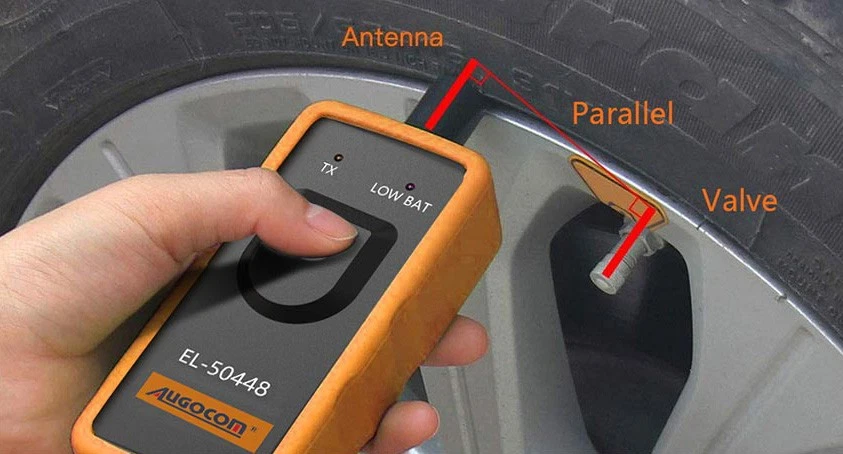
A TPMS scan tool can activate sensors and read their identification codes. The technician places the tool near each wheel, collects sensor data, and transfers the information to the vehicle computer.
- ✦ Professional approach
Repair shops often use scan tools because they support many vehicle brands.
Step-by-Step Process of How TPMS Sensors Are Relearned
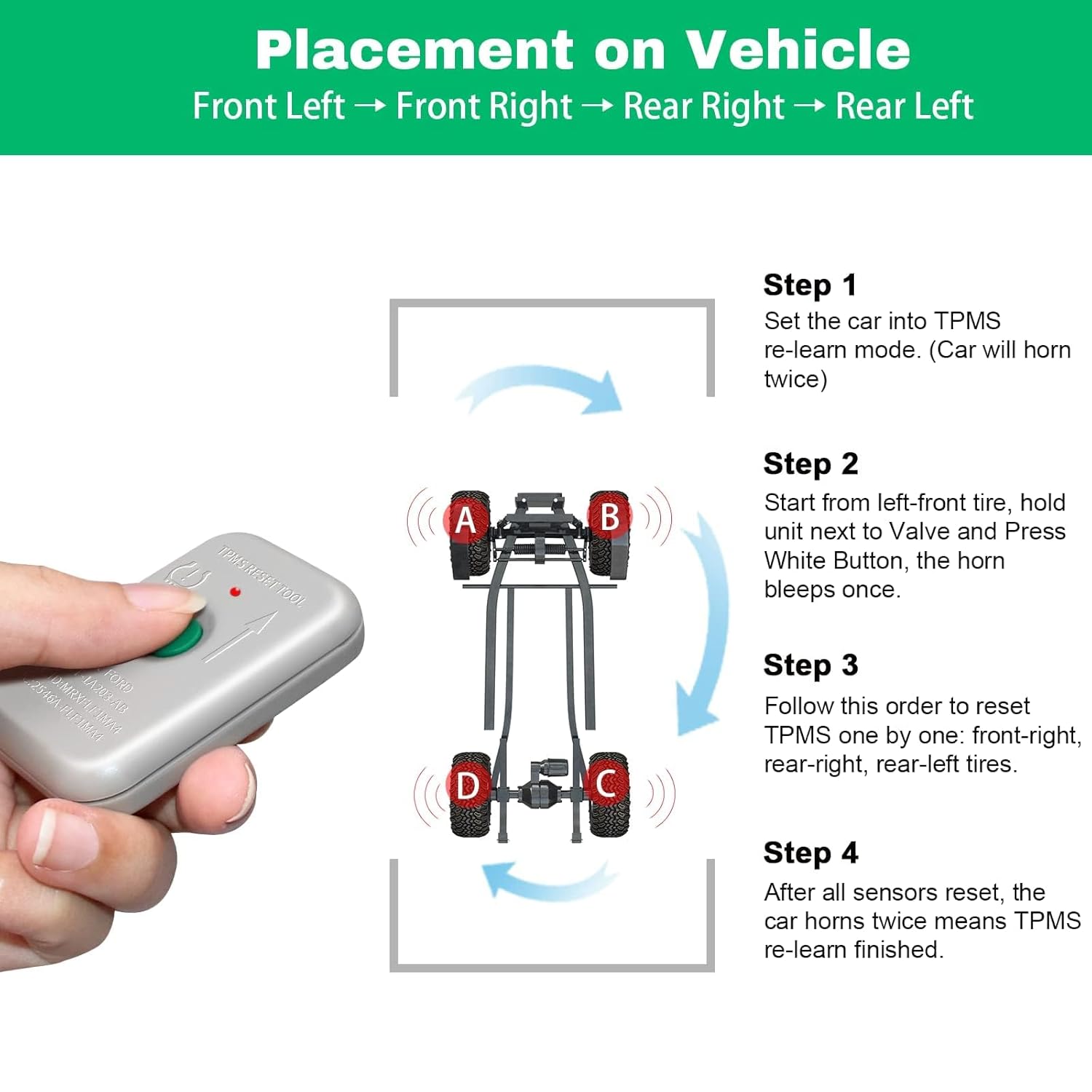
Although procedures vary, most relearn processes follow a similar pattern. The vehicle enters learning mode, each sensor is activated, and the computer saves the new sensor information.
Before starting, check the tire pressure and confirm that all sensors are installed correctly. A wrong sensor type or damaged sensor can prevent successful learning.

- ✦ Check tire pressure
Set all tires to the recommended pressure before starting the relearn.
- ✦ Activate learning mode
Follow the vehicle-specific steps to place the TPMS system into relearn mode.
- ✦ Trigger each sensor
Use a tool or driving procedure to send sensor information to the vehicle.
What Happens During Sensor Activation
The TPMS tool sends a signal that wakes the sensor. The sensor then transmits its unique ID and pressure information so the vehicle can store the correct data.
When You Need to Relearn TPMS Sensors
Drivers often search How TPMS Sensors Are Relearned after seeing a warning light following tire service. Not every warning means a sensor is bad. Sometimes the system simply needs updated sensor information.
A proper relearn can restore accurate pressure readings and prevent confusion when checking tire safety.

- ✦ New TPMS sensor installation
Replacement sensors usually need to be registered with the vehicle.
- ✦ Tire rotation
Some vehicles need relearning after wheel positions change.
- ✦ New wheels
Aftermarket wheels with sensors may require programming.
Common TPMS Relearn Problems and Solutions
A failed relearn can happen for several reasons. The sensor may have a dead battery, the wrong frequency, or an incorrect installation.
Checking the basics first can save time. Many TPMS issues come from simple problems rather than a major vehicle fault.

- ✦ Dead sensor battery
Most TPMS sensors use internal batteries that eventually wear out.
- ✦ Wrong sensor type
The replacement sensor must match vehicle requirements.
- ✦ Low tire pressure
Incorrect pressure can trigger warnings even after a successful relearn.
Why the TPMS Light May Stay On
If the warning light remains after relearning, inspect sensor compatibility, battery condition, and stored error codes. A diagnostic scan may be needed.
Can You Relearn TPMS Sensors Yourself?
Many vehicle owners can perform a TPMS relearn at home if their vehicle supports a simple procedure. Some cars only require driving for a certain distance, while others need a special tool.
Before attempting How TPMS Sensors Are Relearned at home, check the owner’s manual. Using the correct method prevents unnecessary sensor replacement and saves money.

- ✦ DIY advantages
A home relearn can reduce service costs for compatible vehicles.
- ✦ Professional help
A technician is useful when programming tools or diagnostics are required.



