Common timing belt failure symptoms include engine misfires, rough idling, difficulty starting, unusual ticking or rattling noises, sudden engine stalling, and a complete failure to start. However, some timing belts break without giving clear warning signs. Following your vehicle manufacturer’s replacement schedule is the best way to prevent serious engine damage.
For drivers across the United States, a timing belt problem can turn a normal commute into an expensive roadside breakdown. Whether you drive through busy city streets, travel on an interstate, or use your vehicle for daily work, a healthy timing belt plays a major role in keeping your engine running. When this belt wears out or breaks, the engine can lose its precise timing and stop working.
A timing belt is a reinforced rubber belt with teeth that keep important engine parts moving together. It connects the crankshaft and camshaft so the engine valves open and close at the correct moments. If the belt slips, loses teeth, or breaks, the engine may run poorly or stop completely. Some engines can also suffer serious internal damage when the valves hit the pistons.
The difficult part is that a failing timing belt does not always make a clear warning sound. Some drivers notice rough running or strange noises, while others experience sudden engine failure. Understanding the warning signs, checking your maintenance records, and knowing when to stop driving can help protect your engine and your repair budget.
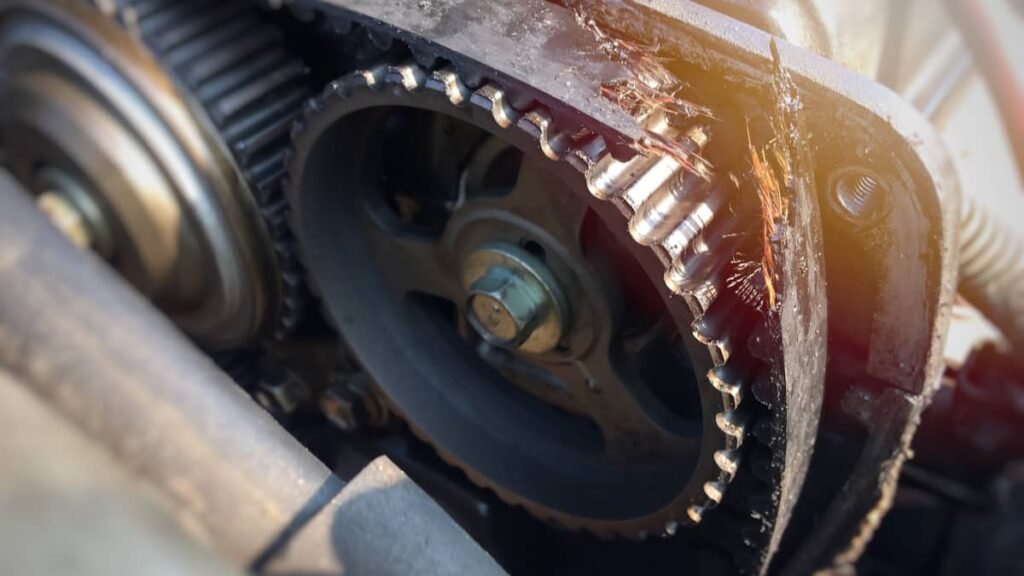
Source: autoglobes.com
What Is a Timing Belt and Why Does It Matter?
A timing belt is a toothed belt that controls the relationship between the crankshaft and camshaft. These two engine parts must move in a precise pattern. The crankshaft moves the pistons, while the camshaft controls the opening and closing of the engine valves.
In a typical four-stroke engine, the crankshaft turns twice for every single camshaft revolution. The timing belt keeps this relationship correct. It helps the engine draw in air, compress the mixture, produce power, and release exhaust gases at the right moments.
When the belt stretches, loses teeth, slips, or breaks, the valves may open at the wrong time. The engine can lose power, misfire, or stop running. The result depends on the engine design and how far the timing has moved.
Some vehicles have interference engines. In these engines, the pistons and valves use overlapping space inside the cylinders at different points in their movement. If the timing belt fails, a moving piston may strike an open valve. This can bend valves and damage pistons or the cylinder head.
Other vehicles have non-interference engines. Their design normally provides enough clearance to prevent piston-to-valve contact when the timing belt breaks. These engines can still stop running and leave you stranded, but the chance of this particular type of internal damage is lower.
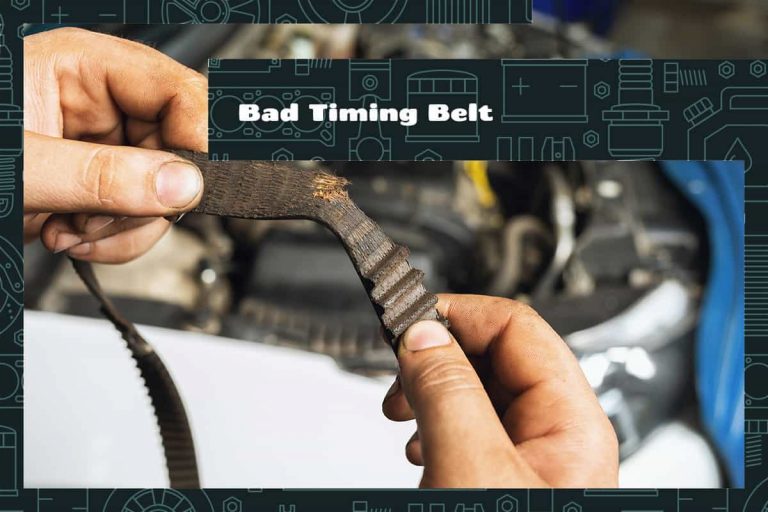
Source: upgradedvehicle.com
Crankshaft
The crankshaft converts the pistons’ up-and-down movement into rotational movement.
Camshaft
The camshaft controls when the intake and exhaust valves open and close.
Timing belt
The toothed belt keeps the crankshaft and camshaft synchronized.
Tensioner and pulleys
These parts guide the belt and maintain the correct tension during engine operation.
Is a Timing Belt the Same as a Serpentine Belt?
No. A timing belt and a serpentine belt have different jobs. The serpentine belt usually drives external accessories such as the alternator, air conditioning compressor, and power steering pump. The timing belt controls internal engine timing.
A broken serpentine belt can cause charging problems, loss of accessory functions, or overheating in some vehicles. A broken timing belt can stop the engine and may cause internal engine damage. Do not confuse noises or wear from one belt with a problem in the other.
Common Timing Belt Failure Symptoms
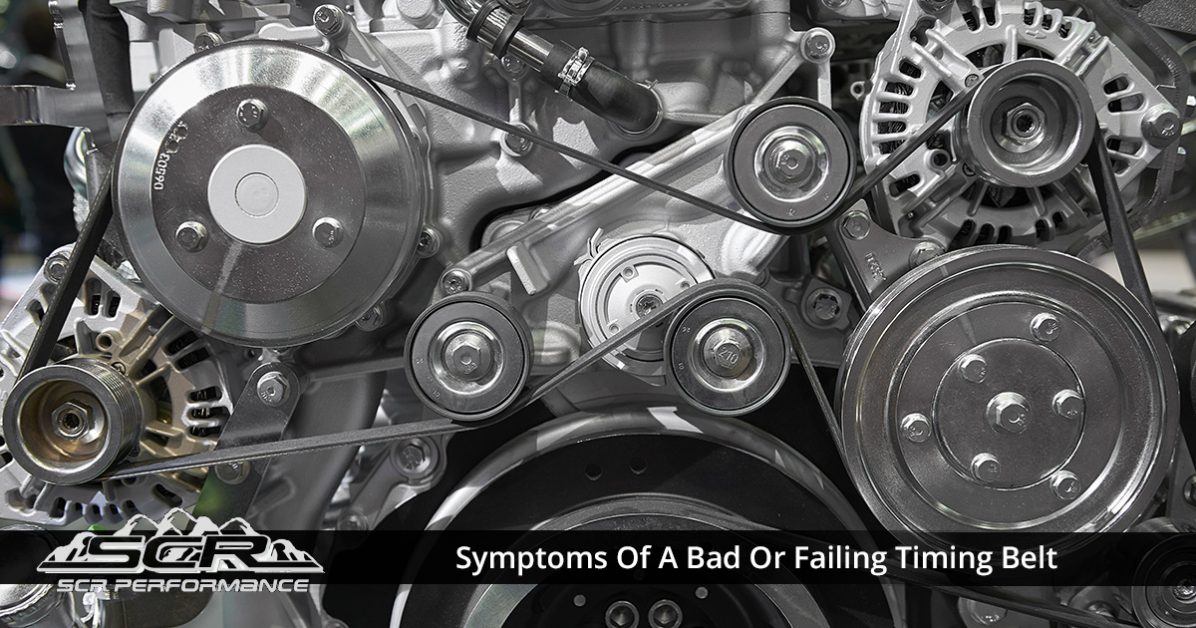
A failing timing belt can affect how your engine starts, idles, and produces power. The symptoms depend on whether the belt has started wearing out, slipped out of position, lost some teeth, or broken completely.
One warning sign alone does not prove that the timing belt is bad. Ignition faults, fuel delivery problems, low compression, sensor failures, and other engine issues can create similar symptoms. Look at the full pattern and arrange a proper diagnosis.
Source: scrperformance.com
1. Difficulty Starting the Engine
An engine with incorrect valve timing may struggle to start or fail to start. If the belt has slipped, the camshaft and crankshaft may no longer work in the correct relationship. A broken belt can also prevent the engine from starting. A weak battery, bad starter, or fuel problem can cause similar trouble, so testing is necessary.
2. Engine Misfires
Incorrect valve timing can disturb the normal combustion process. You may notice hesitation, shaking, uneven engine operation, or a loss of power. A timing belt that has jumped one or more teeth may cause the engine to run poorly because the valves no longer open at the intended moments.
3. Rough Idling
A healthy engine should maintain a fairly steady idle. If the timing belt slips or the timing components wear out, the engine may vibrate or shake while stopped. The RPM reading may also move up and down. Ignition coils, spark plugs, vacuum leaks, and fuel problems can produce the same behavior.
4. Unusual Ticking or Rattling Noise
A worn timing belt or a damaged component in the timing drive may produce ticking, rattling, humming, or whining sounds. A loose belt may strike its cover, while a failing tensioner, idler pulley, or water pump bearing may create noise. A new or changing noise near the timing cover deserves prompt inspection.
5. Sudden Engine Stalling
If the belt loses its teeth or breaks while the engine is running, the camshaft may stop turning in the correct relationship with the crankshaft. The engine can stall immediately. If this happens while driving, move to a safe location if possible, switch off the engine, and arrange a tow.
6. Loss of Engine Power
A belt that has slipped can change valve timing and reduce engine performance. You may notice weak acceleration, hesitation when pressing the gas pedal, or poor response while climbing a hill. The engine may also run unevenly under load. Do not assume that replacing spark plugs will solve the issue without checking the timing system.
7. Check Engine Light
Incorrect engine timing can trigger a check engine warning. Depending on the vehicle, a diagnostic scan may reveal misfire codes or camshaft and crankshaft correlation faults. These codes provide useful clues, but they do not prove that the timing belt itself has failed. A technician must check the mechanical timing and related components.
8. Engine Overheating
Overheating is not a universal warning of a failing timing belt. However, some engines use the timing belt to drive the water pump. If the belt breaks or a related pump fails, coolant circulation may stop or become inadequate. Watch the temperature gauge and stop safely if the engine overheats.
What Does a Broken Timing Belt Sound Like?
There is no single sound that confirms a broken timing belt. A belt that has already snapped may produce a brief mechanical noise followed by an engine that stops running. A worn tensioner or pulley may create a rattling, clicking, or humming noise before a complete failure.
A ticking sound alone does not mean the timing belt is failing. Low engine oil, valve train noise, loose components, and other mechanical faults can sound similar. The location of the noise and a proper inspection matter more than the sound alone.
Rattling
May indicate a loose belt, a worn tensioner, or a damaged pulley.
Whining
May point to excessive belt tension or a failing bearing in the timing drive.
Repeated clicking
May come from a damaged timing component or another part of the engine.
Visible Signs of a Worn or Damaged Timing Belt
A physical inspection can reveal damage that may not be obvious from the driver’s seat. Common problems include cracks, frayed edges, missing teeth, unusual wear, and contamination from engine fluids.
The main challenge is access. Most modern timing belts sit behind protective covers. You may not be able to see the belt without removing engine components. A technician should perform this inspection using the correct procedure for your vehicle.
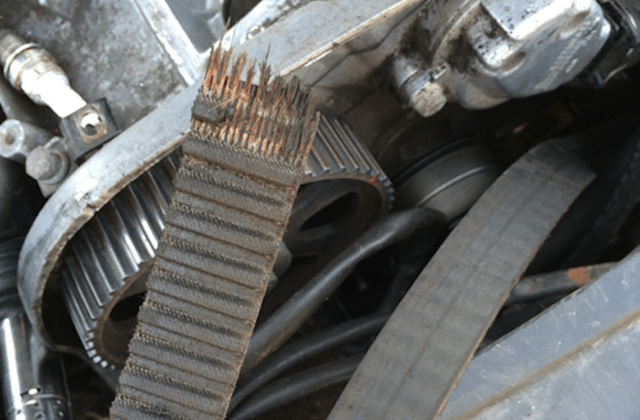
Source: gmb.net
Cracks on the Belt Surface
Small cracks can indicate aging, heat exposure, or material deterioration. Cracking is a reason for professional inspection, especially when the belt is near its replacement limit.
Frayed or Damaged Edges
Worn edges may point to pulley misalignment, bearing movement, or incorrect belt tracking. The underlying cause must be corrected before fitting a replacement.
Missing or Damaged Teeth
The teeth engage with the timing pulleys. Missing, rounded, or damaged teeth can allow the belt to slip and disturb engine timing.
Oil or Coolant Contamination
Oil, coolant, and other fluids can damage the belt material. Leaking seals, hoses, or a water pump may expose the belt to harmful fluids.
Rubber Dust or Belt Debris
Unusual rubber particles near the timing cover may indicate friction, misalignment, or belt deterioration. A technician should inspect the belt and its drive components.
Uneven Wear
One side of the belt may wear faster when pulleys are misaligned or a bearing has excessive movement. Uneven wear should never be treated as a belt-only problem.
Can You Check a Timing Belt Without Removing the Cover?
You may be able to check service records, look for an under-hood replacement sticker, and inspect visible areas for oil or coolant leaks. These checks can provide useful information, but they cannot confirm the full condition of a hidden timing belt.
Do not remove engine covers or put your hands near moving parts while the engine is running. Some engines require special tools and procedures to inspect the belt correctly. If you suspect damage, let a qualified technician handle the inspection.
What Should You Do If You Suspect Timing Belt Failure?
Your first priority should be protecting yourself and preventing further engine damage. If the engine suddenly stalls, makes a serious mechanical noise, or refuses to start after a suspected timing failure, do not keep trying to start it.
Repeated cranking can create additional problems, especially in an interference engine where valves and pistons may already be out of sync. A tow is usually the safer option than driving or attempting another start.
Source: autocar-inspection.blogspot.com
Step 1: Move to a Safe Location
If the engine stops while driving, use your remaining vehicle momentum to reach a safe shoulder or parking area. Turn on the hazard lights and keep away from traffic. Do not remain in an unsafe lane to investigate the engine.
Step 2: Switch Off the Engine
Once safely stopped, turn off the ignition. Do not repeatedly crank the engine to see whether it will start. If the timing belt has broken, another attempt may increase the risk of damage.
Step 3: Check for Obvious Problems
Look for warning lights, visible fluid leaks, smoke, or signs of overheating from a safe position. Never open a hot radiator cap or touch moving engine parts. Do not remove timing covers unless you have the correct training and tools.
Step 4: Arrange a Tow
Contact roadside assistance or a towing service. Tell the repair shop that you suspect a timing belt problem and describe the symptoms that occurred before the engine stopped.
Step 5: Request a Full Timing System Inspection
Ask the technician to inspect the belt, tensioner, idler pulleys, water pump if belt-driven, and related components. If the belt has broken, ask whether the engine needs compression testing or another internal damage assessment.
Is It Safe to Drive With Timing Belt Warning Signs?
Driving with suspected timing belt damage is risky. A belt that has slipped or is close to failure may break while the engine is running. This can leave you stranded and may cause major internal damage.
If you hear a new rattling noise near the timing cover, notice a serious loss of power, or experience repeated misfires, arrange an urgent inspection. If the engine stalls, overheats, or produces a severe mechanical noise, stop driving and arrange a tow.
How Mechanics Diagnose Timing Belt Problems
A proper diagnosis starts with the vehicle’s service history and the symptoms you noticed. A technician should identify the exact engine and confirm whether it uses a timing belt, timing chain, or another timing system. This matters because replacement procedures and service requirements vary.
The technician may then inspect the timing cover area, scan the engine computer, and check whether the crankshaft and camshaft remain synchronized. If the belt has broken or slipped, the mechanic may need to remove the cover and inspect the belt and related parts.
A diagnostic trouble code can help narrow down the cause. For example, a camshaft and crankshaft correlation code may suggest incorrect timing. However, damaged sensors, wiring problems, and other faults can create similar readings. A code alone is not enough to authorize a timing belt replacement.
If the belt has broken on an interference engine, the mechanic may perform compression testing, cylinder leak-down testing, or a borescope inspection. These tests can help determine whether the valves, pistons, or cylinder head have suffered damage.
Service History Review
The technician checks previous replacement dates, recorded mileage, and the manufacturer’s recommended service interval.
Diagnostic Scan
The scan tool retrieves fault codes and available engine timing information.
Physical Inspection
The mechanic checks belt condition, tooth damage, contamination, tension, and pulley alignment.
Mechanical Timing Check
The technician checks the crankshaft and camshaft positions against the manufacturer’s timing specifications.
Internal Engine Testing
Compression, leak-down, or borescope testing may be needed after a belt failure to assess possible internal damage.
Why Is a Timing Belt Problem Sometimes Mistaken for a Sensor Problem?
Modern engines use crankshaft and camshaft position sensors to monitor engine timing. If the timing belt slips, the sensor signals may no longer match the expected relationship. The computer may then store a fault code and turn on the check engine light.
However, a faulty sensor, damaged connector, or wiring problem can also cause timing-related codes. A mechanic should verify the actual mechanical timing before replacing expensive parts.
What Causes a Timing Belt to Fail?
Timing belts wear because they operate under repeated bending, heat, friction, and tension. Their rubber material and internal reinforcement can deteriorate over time. Even a vehicle that spends long periods parked may have an aging belt.
A belt can also fail early when another timing component becomes damaged. Replacing only the belt without correcting the underlying problem may lead to another failure.
Age and Mileage
The belt gradually wears during engine operation. Heat and material aging can also reduce its strength when the vehicle is driven very little.
Oil Leaks
Leaking camshaft or crankshaft seals can expose the belt to engine oil. Fluid contamination may weaken the belt material and damage its teeth.
Coolant Leaks
A leaking water pump or another coolant source may contaminate the belt. The leak should be repaired before installing a new belt.
Faulty Tensioner
A worn tensioner may fail to maintain the correct belt tension. Excessive movement or incorrect tension can cause noise, wear, and possible belt failure.
Damaged Idler Pulley
A worn or seized pulley bearing can create friction and prevent the belt from tracking correctly.
Water Pump Failure
On engines with a belt-driven water pump, a damaged pump bearing can affect belt movement and contribute to premature failure.
Incorrect Installation
Incorrect tension, poor alignment, wrong belt selection, or improper fitting can shorten belt life and disturb engine timing.
Foreign Objects
Debris entering the timing drive can damage the belt or its teeth. A damaged cover or incorrectly fitted component may allow unwanted contact.
Can an Oil Leak Damage a Timing Belt?
Yes. Engine oil can damage certain timing belt materials and contribute to premature wear. A leaking crankshaft seal, camshaft seal, or another nearby component may allow oil to reach the belt.
If you notice oil around the timing cover, arrange an inspection. The mechanic should find the source of the leak, repair it, and assess whether the belt and related components need replacement. Installing a new belt without correcting the leak can allow the same problem to return.
Timing Belt Replacement Intervals and Preventive Maintenance
The best way to prevent a timing belt breakdown is to replace the belt according to the exact maintenance schedule for your vehicle. There is no single mileage limit that applies to every car, truck, or SUV.
Some manufacturers set replacement limits based on mileage, while others also specify a maximum number of years. Both matter because rubber materials can age even when the vehicle is not driven often. A car with low mileage may still have an overdue belt.
Check the owner’s manual and the official maintenance guide for your exact year, make, model, and engine. Do not rely on a general internet recommendation or assume that every engine uses the same belt interval.
If you purchase a used vehicle without reliable service records, ask a qualified shop to verify the timing belt history. A service sticker may provide a useful clue, but an invoice or documented repair record is stronger evidence. If the replacement cannot be confirmed, discuss preventive replacement with the technician.
Follow the Manufacturer’s Mileage Limit
Use the mileage interval listed for your exact engine. Do not assume that a replacement figure from another vehicle applies to yours.
Follow the Time Limit
Check the maximum age specified by the manufacturer, even if your vehicle has covered relatively few miles.
Inspect Related Components
Have the tensioner, idler pulleys, seals, and water pump checked when the timing belt is serviced.
Keep Repair Records
Save the replacement invoice, mileage, date, and details of the parts installed. This makes future maintenance easier to plan.
Repair Fluid Leaks Early
Fix oil and coolant leaks near the timing drive before they damage a replacement belt.
Should You Replace the Water Pump With the Timing Belt?
It depends on the engine design. If the timing belt drives the water pump, many repair procedures recommend replacing the pump during the same service when appropriate. This can prevent a later pump failure from requiring another major labor-intensive repair.
The tensioner and idler pulleys should also be checked and replaced according to the vehicle manufacturer’s procedure and the condition of the components. Many shops use a complete timing belt kit for this reason. Ask what the kit includes and whether the water pump is part of your engine’s timing drive.
Common Mistakes When Identifying Timing Belt Failure
Timing belt problems can be expensive, so it is easy to jump to conclusions when an engine makes an unusual noise or starts running poorly. The better approach is to separate warning signs from confirmed mechanical faults.
Several common mistakes can lead to unnecessary repairs or allow a serious problem to become worse.
Assuming Every Engine Uses a Timing Belt
Some vehicles use timing chains instead. Others use different belt designs, including oil-immersed timing belts. Confirm the engine configuration before ordering parts or planning service.
Waiting for a Warning Noise
A timing belt may fail without a clear sound or dashboard warning. Waiting until the engine starts making noise is not a reliable maintenance strategy.
Confusing the Timing Belt With the Serpentine Belt
A squealing accessory belt does not automatically indicate a timing belt problem. These systems have different functions and need separate diagnosis.
Ignoring the Belt’s Age
Low mileage does not mean the belt is still within its service life. Rubber can deteriorate during long periods of storage and limited driving.
Replacing Only the Belt
A worn tensioner, damaged pulley, or leaking water pump can damage a new belt. The complete timing drive should be checked.
Trusting a Diagnostic Code Without Inspection
A timing-related fault code does not automatically prove that the belt is broken. The mechanic should verify sensor operation and mechanical timing.
Trying to Restart a Stalled Engine Repeatedly
If the timing belt may have broken, repeated starting attempts can increase the risk of additional damage. Stop and arrange professional diagnosis.
Questions to Ask Before Approving a Timing Belt Repair
After identifying a possible timing belt problem, your next decision is how to confirm the fault and choose the right repair. The most useful follow-up questions concern engine type, service history, related components, and possible internal damage.
These are inferred next needs based on the decisions a driver must make before and after a repair. They are not claims about verified search volume. In the five technical and service resources reviewed for this guide, basic symptoms, replacement intervals, and engine damage received attention. The practical steps for verifying an unknown vehicle’s service history and deciding what to inspect after failure deserve additional clarity.
Question 1: Does My Exact Engine Use a Timing Belt or Chain?
Reader stage: Before booking a repair. Basis: Inferred next need from vehicle identification. Reviewed coverage: The inspected sources explain timing belt and timing chain differences, but do not fully resolve every vehicle’s engine configuration. Reader benefit: Prevents ordering the wrong parts or booking the wrong service. Answer evidence: Confirm the VIN, engine code, owner’s manual, or official parts information. Priority: High. Placement: Initial diagnosis.
Question 2: Is My Timing Belt Overdue by Mileage or Age?
Reader stage: Before approving preventive maintenance. Basis: Inferred next need from replacement planning. Reviewed coverage: Toyota, Dayco, and Continental emphasize manufacturer-specific service intervals, but a used-car history check needs separate attention. Reader benefit: Helps avoid an unexpected failure. Answer evidence: Compare the documented replacement date and mileage with the exact manufacturer’s maintenance schedule. Priority: High. Placement: Maintenance planning.
Question 3: Should the Tensioner, Idlers, and Water Pump Also Be Replaced?
Reader stage: During the repair estimate. Basis: Inferred next need from the connected timing drive components. Reviewed coverage: Continental discusses related component wear and water pump replacement, while other reviewed pages provide less detail on the full repair decision. Reader benefit: Reduces the chance of paying for repeat labor after a related component fails. Answer evidence: Follow the engine-specific service procedure and inspect the complete timing drive. Priority: High. Placement: Repair planning.
Question 4: Has a Broken Belt Damaged the Engine Internally?
Reader stage: After a confirmed belt failure. Basis: Inferred next need from the risk of piston and valve contact. Reviewed coverage: The reviewed sources explain possible internal damage, but practical diagnostic choices need further explanation. Reader benefit: Helps the owner understand whether a belt replacement alone is enough. Answer evidence: Use mechanical timing checks and appropriate compression, leak-down, or borescope testing. Priority: High. Placement: Post-failure diagnosis.
What Information Should You Give the Repair Shop?
Give the mechanic your vehicle’s year, make, model, engine size, and current mileage. Describe any unusual noise, starting trouble, warning lights, overheating, or sudden loss of power. Mention whether the engine stopped while driving or failed to start after being parked.
Share any previous timing belt replacement invoices or maintenance records. These details can help the technician choose the correct diagnostic procedure and determine whether preventive service is overdue.
Frequently Asked Questions
Q
Can a Timing Belt Break Without Warning?
Yes. A timing belt can break without giving the driver a clear warning. Some belts develop visible wear, unusual noise, or starting problems before failure, but these signs are not guaranteed.
This is why following the manufacturer’s mileage and age limits is more reliable than waiting for symptoms. A belt can also suffer sudden damage because of a failed pulley, tensioner, water pump, or fluid leak.
Q
Can I Drive My Car With a Failing Timing Belt?
Driving with suspected timing belt damage is not recommended. A belt that has slipped or become badly worn may break while the engine is running. This can leave you stranded and may cause serious internal damage in an interference engine.
If you notice unusual timing-area noise, repeated misfires, or sudden power loss, arrange an urgent inspection. If the engine stalls or produces a severe mechanical noise, stop driving and have the vehicle towed.
Q
Will the Check Engine Light Come On When a Timing Belt Fails?
It may, but it is not guaranteed. Incorrect valve timing can trigger camshaft and crankshaft correlation codes or engine misfire codes. The exact warning depends on the vehicle and the type of failure.
A broken belt may stop the engine before you receive a useful warning. A diagnostic scan can help identify the problem, but a mechanical inspection is needed to confirm timing belt failure.
Q
How Long Does a Timing Belt Usually Last?
Timing belt life varies by vehicle, engine design, belt material, operating conditions, and maintenance schedule. Some manufacturers use mileage limits, while others also set a maximum age.
There is no safe universal replacement interval for every vehicle. Check your owner’s manual or official maintenance guide for the exact mileage and time limits. Do not assume a low-mileage vehicle has an acceptable belt.
Q
What Happens When a Timing Belt Breaks While Driving?
The engine usually stops running because the crankshaft and camshaft can no longer maintain their correct relationship. You may lose engine power suddenly and need to move safely away from traffic.
On an interference engine, the pistons may strike open valves and cause serious damage. Possible repairs include replacing bent valves or repairing the cylinder head. The exact damage depends on the engine design and operating conditions when the belt failed.
Q
Can a Bad Timing Belt Cause Engine Misfires?
Yes. If the timing belt slips or loses teeth, the valves may open and close at the wrong moments. This can disturb combustion and lead to engine misfires, rough idling, weak acceleration, and starting problems.
However, ignition coils, spark plugs, fuel injectors, and other faults can also cause misfires. A technician should check engine timing before deciding which part needs replacement.
✦ Wrapping Up
Conclusion
Timing belt problems can begin with rough idling, engine misfires, unusual noises, or difficulty starting. In more serious cases, the engine may stall or refuse to start. A complete belt failure can also cause major internal damage, especially in an interference engine.
The best protection is preventive maintenance. Check the exact replacement schedule for your vehicle, consider both mileage and age, and repair oil or coolant leaks near the timing system. During replacement, have the tensioner, idler pulleys, and water pump inspected as required by the manufacturer’s procedure.
Do not wait for a broken belt to tell you that service is overdue. If your engine suddenly stalls or you suspect timing belt failure, switch it off and arrange a professional inspection. A timely repair can help you avoid a much larger engine problem.
💡 Key Takeaway
Check your owner’s manual today for the timing belt replacement interval. If you cannot verify when the belt was last replaced, ask a qualified mechanic to identify your exact engine, review its service history, and inspect the complete timing drive before the next long trip.
About john Adword
John Adword has tested and reviewed car seat covers and interior accessories for 5 years, evaluating fit, material performance, and long-term wear across a range of vehicles and climates. His testing approach follows the same methodology used across car Reviewer Plus's product reviews — hands-on installation, real-world use, and comparison against manufacturer claims — with an ongoing focus on tracking new seat cover materials and cooling technology as they come to market.