

Understanding what causes a TPMS warning light helps drivers respond before a small tire issue becomes a safety problem. In the United States, many drivers rely on their vehicles every day for commuting, family trips, and long-distance travel, making proper tire pressure important.
From years of automotive maintenance experience, the most common reason for a TPMS warning light is simple: a tire has lost air. However, the warning can also point to sensor damage, electrical issues, or a need for system calibration.
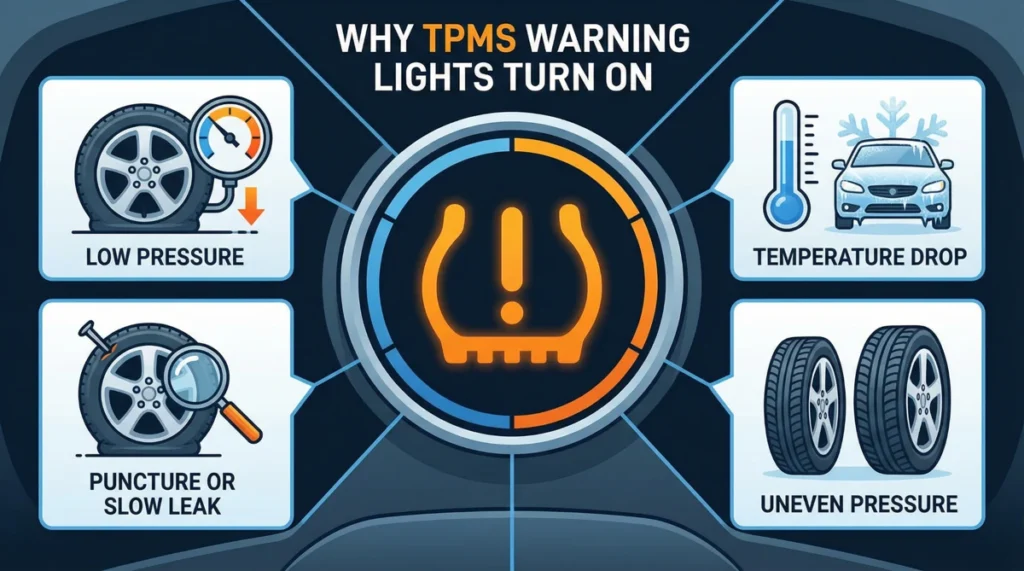
What Is a TPMS Warning Light?
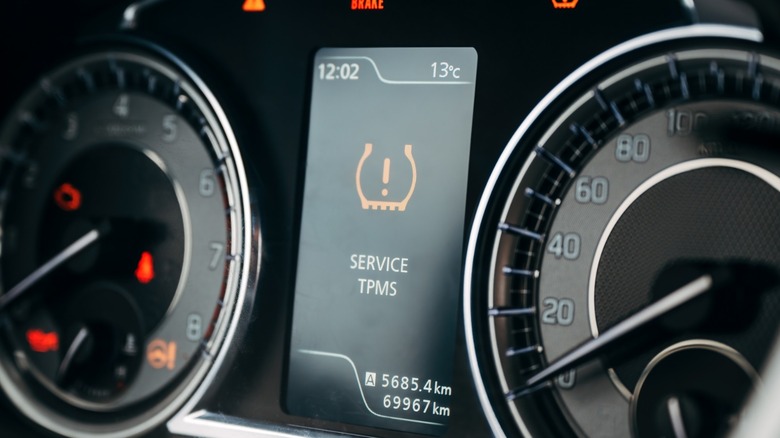
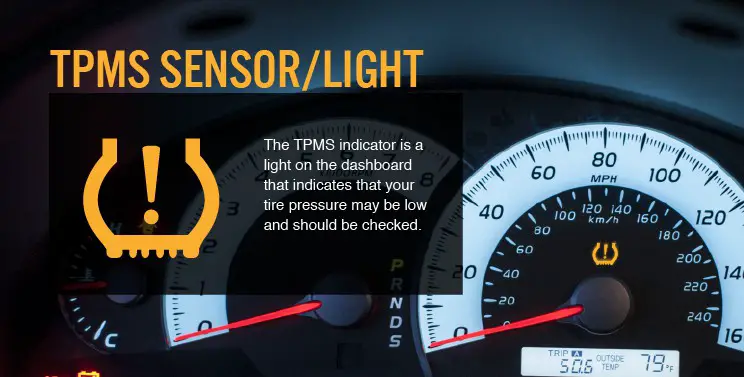
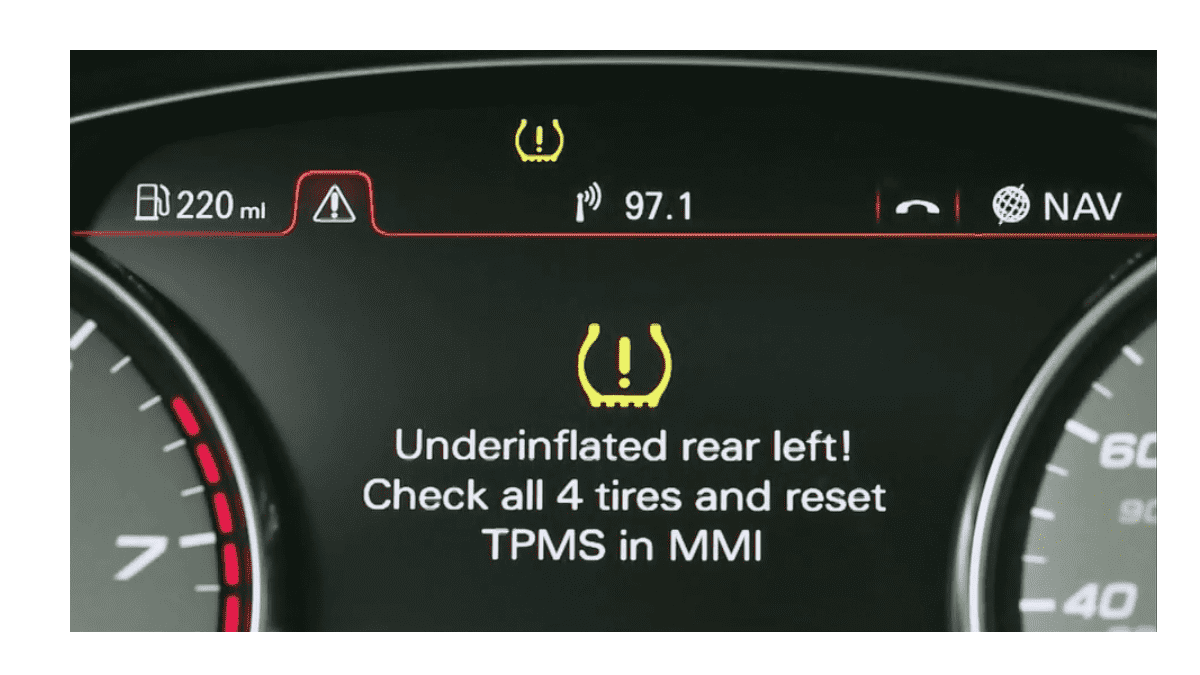
A Tire Pressure Monitoring System (TPMS) uses sensors and vehicle software to track tire pressure. When pressure drops below a safe level, the system alerts the driver with a dashboard warning light.
The TPMS warning light is designed as an early warning tool. It does not replace regular tire checks, but it helps drivers notice problems before they affect handling, fuel use, or tire life.
- ✦ Direct TPMS
Direct TPMS uses sensors inside each wheel to measure actual tire pressure and send data to the vehicle computer.
- ✦ Indirect TPMS
Indirect TPMS uses wheel speed sensors from the anti-lock braking system to detect pressure changes through tire rotation differences.
The Most Common Causes of a TPMS Warning Light
When asking what causes a TPMS warning light, low tire pressure is the first issue to check. Tires naturally lose air over time, even when there is no visible damage.
A warning light may appear suddenly after a temperature drop, a tire puncture, or a slow leak. Finding the exact cause helps prevent repeated warnings.
- ✦ Low Tire Pressure
Cold weather, normal air loss, or small leaks can reduce tire pressure enough to activate the TPMS warning.
- ✦ Tire Punctures or Leaks
Nails, screws, damaged valves, and worn tire areas can slowly release air and trigger the system.
- ✦ Temperature Changes
Cold temperatures reduce air pressure inside tires, which is why warnings often appear during winter mornings.
Why Cold Weather Triggers TPMS Alerts
Air pressure changes with temperature. A tire that looks fine during warm weather may show a warning after a cold overnight drop.
Drivers should check tire pressure when tires are cold and compare readings with the recommended pressure listed on the driver’s door label.
TPMS Sensor Problems That Turn On the Warning Light
A damaged or failing sensor is another answer to what causes a TPMS warning light. Each sensor has electronic parts and a battery that can wear out over time.
Most TPMS sensors are built to last for years, but harsh road conditions, corrosion, and old sensor batteries can cause communication problems.
- ✦ Dead Sensor Battery
A weak internal battery may stop the sensor from sending pressure information to the vehicle.
- ✦ Broken Sensor
Impact damage during tire service or driving over rough roads can damage TPMS components.
- ✦ Sensor Communication Error
The vehicle may fail to recognize a sensor after tire replacement or wheel changes.
Signs of a Bad TPMS Sensor
A warning light that stays on after correct tire inflation may indicate a sensor issue. Some vehicles also display messages such as TPMS malfunction or sensor fault.
A professional scan tool can identify which sensor is causing the problem.
How to Check Why Your TPMS Warning Light Is On
Knowing what causes a TPMS warning light allows drivers to take the right first steps. Start with a visual inspection and check each tire for damage or unusual shape.
A tire pressure gauge provides a more accurate reading than looking at the tire. Always compare the pressure with the vehicle manufacturer’s recommendation.

- ✦ Check Tire Pressure
Measure all four tires and add air if pressure is below the recommended level.
- ✦ Inspect Tires
Look for punctures, cuts, cracks, or objects stuck in the tread.
- ✦ Reset the System
Some vehicles require a TPMS reset after tire inflation or sensor replacement.
Can You Drive With the TPMS Warning Light On?
Many drivers wonder what causes a TPMS warning light and whether they can continue driving. The answer depends on the reason behind the warning.
Driving with slightly low pressure for a short distance may be possible after checking the tire, but ignoring the warning for a long time can increase the risk of tire damage and poor handling.
- ✦ Check Immediately
Inspect the tires as soon as the warning appears, especially before highway driving.
- ✦ Avoid Ignoring Flashing Lights
A flashing TPMS light often indicates a system problem that needs attention.
Why Proper Tire Pressure Matters
Correct tire pressure supports better handling, braking, and tire performance. It also helps tires wear more evenly.
Regular tire checks are one of the easiest ways to maintain vehicle safety.
How to Prevent Future TPMS Warning Lights
Preventing TPMS issues starts with regular tire care. Simple habits can reduce unexpected dashboard warnings and extend tire life.
Many drivers only check tires when a warning appears, but monthly inspections can help find problems earlier.
- ✦ Check Pressure Monthly
Use a reliable gauge and inspect tire pressure regularly, especially before long trips.
- ✦ Maintain Tire Service
Professional tire rotations and inspections can help identify problems before they become serious.
- ✦ Replace Old Sensors
Replace aging TPMS sensors when needed, especially during tire replacement.



