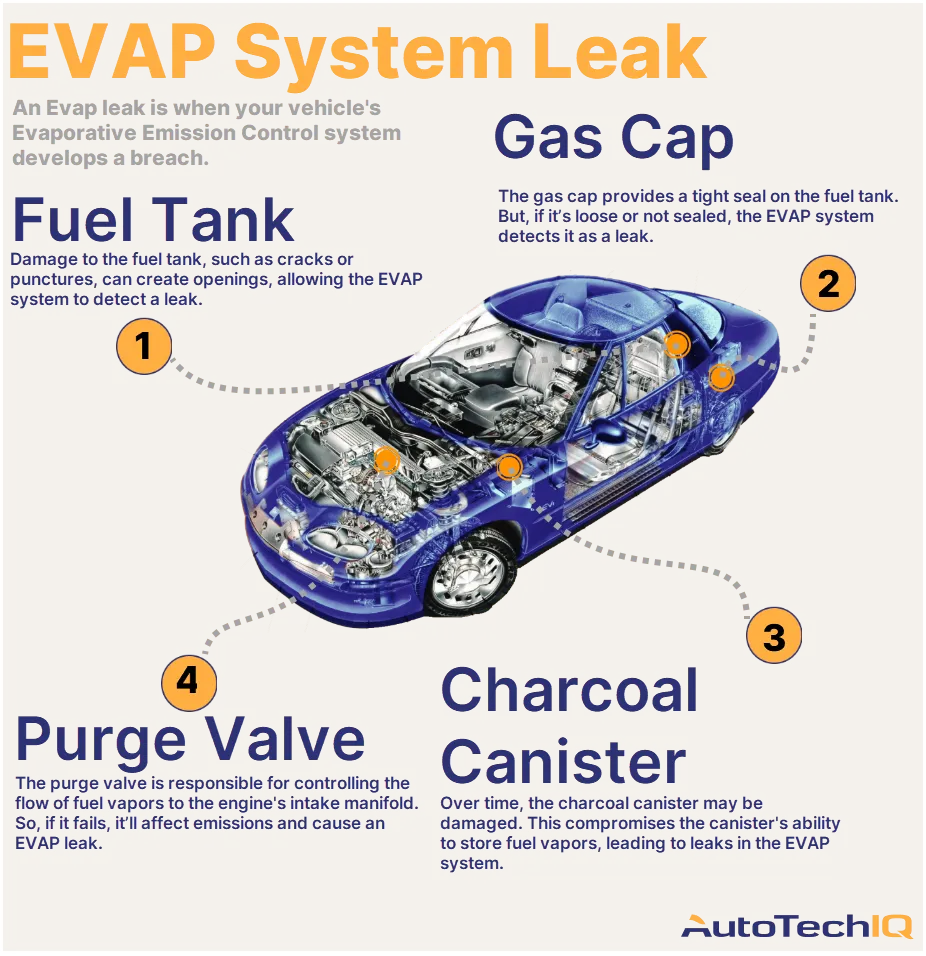
What Causes an EVAP System Leak is a common question among U.S. drivers who see a check engine light appear on their dashboard. The EVAP system is designed to capture fuel vapors and stop them from escaping into the air. When this sealed system develops a leak, the vehicle computer detects the pressure change and stores an EVAP trouble code.
In my experience working with vehicle diagnostic topics, many EVAP problems come from small parts that age over time. A cracked rubber line or worn gas cap seal can create a leak that seems complicated but may have a simple cause. Understanding the system makes diagnosis much easier.

How the EVAP System Works and Why Leaks Happen
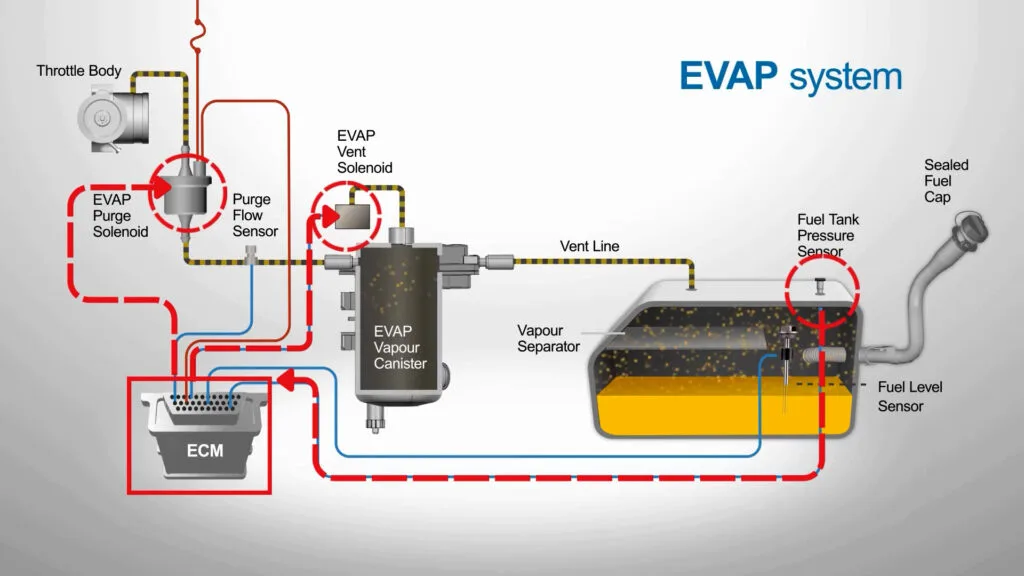
The EVAP system stores fuel vapors from the gas tank instead of allowing them to enter the atmosphere. These vapors move into a charcoal canister where they stay until the engine can safely burn them.
The vehicle control module checks the EVAP system for leaks by creating pressure or vacuum conditions. If the system cannot hold that pressure, the computer identifies an EVAP leak.

- ✦ Fuel tank
The fuel tank produces vapors as gasoline expands and warms.
- ✦ Charcoal canister
The canister stores fuel vapors before they return to the engine.
- ✦ Control valves
Valves manage vapor flow and help keep the system sealed.
Common Causes of an EVAP System Leak
What Causes an EVAP System Leak often comes down to wear, damage, or failed components. Most EVAP parts are exposed to heat, vibration, fuel vapors, and weather conditions for years.
A leak does not always mean a major repair. Many problems start with small sealing issues that become easier to notice when the vehicle performs an EVAP self-test.

- ✦ Loose or damaged gas cap
A gas cap that is loose, cracked, or has a worn seal can allow vapor to escape and trigger an EVAP code.
- ✦ Cracked EVAP hoses
Rubber vapor lines can become brittle and develop small cracks that create leaks.
- ✦ Faulty purge valve
A stuck purge valve can prevent proper vapor control and cause system pressure problems.
- ✦ Damaged charcoal canister
A broken or saturated canister may fail to store fuel vapors correctly.
Signs Your Vehicle Has an EVAP Leak
An EVAP leak may not change how your vehicle drives. Many drivers only notice the problem after the check engine light turns on.
The symptoms can vary based on the size and location of the leak. A small leak may be difficult to find without proper testing.
- ✦ Check engine light
The most common sign is a warning light caused by an EVAP-related trouble code.
- ✦ Fuel smell
Escaping fuel vapors may create a gasoline smell around the vehicle.
- ✦ Failed emissions test
A leaking EVAP system can cause a vehicle to fail state emissions testing.
How Mechanics Diagnose an EVAP System Leak
Finding What Causes an EVAP System Leak requires more than replacing random parts. Professional technicians use a step-by-step process to locate the exact problem.
An OBD2 scanner can show stored codes, but the code alone does not identify the failed component. Additional testing helps confirm the repair.

- ✦ OBD2 scan
A scanner identifies EVAP-related trouble codes such as P0455, P0442, and P0456.
- ✦ Visual inspection
Technicians inspect hoses, caps, connectors, and valves for damage.
- ✦ Smoke test
A smoke machine helps reveal small leaks that are hard to see.
Can You Drive With an EVAP System Leak?
Many EVAP leaks do not create an immediate safety risk, and the vehicle may continue running normally. However, ignoring the problem can lead to failed inspections and continued fuel vapor release.
Drivers in the United States should repair EVAP issues before emissions testing or when the check engine light stays on for a long time.
- ✦ Small leaks
Small leaks may allow normal driving but still require attention.
- ✦ Large leaks
Large leaks can create stronger fuel odors and may indicate bigger system damage.