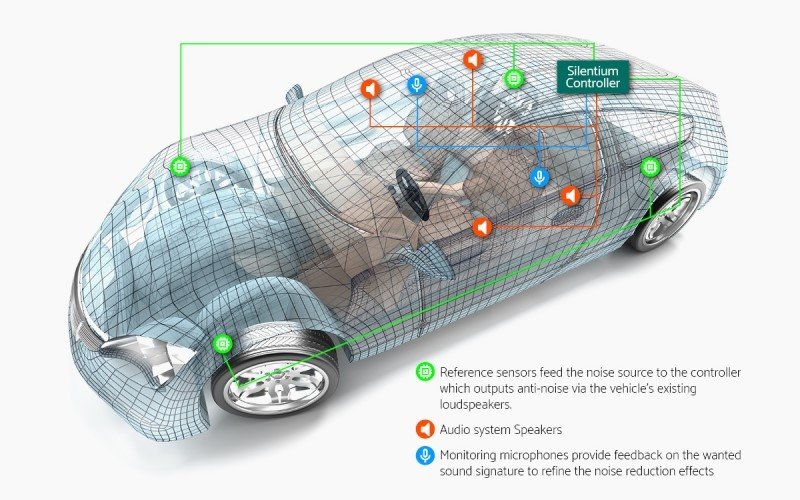
If you drive on American highways, you know how much road noise can affect comfort. Tire hum, engine vibration, and wind noise can make long trips tiring. What Is Active Noise Cancellation in Cars is a common question because modern vehicles now use smart audio technology to create quieter cabins.
From my experience studying automotive technology, active noise cancellation is one of the most interesting improvements in vehicle comfort. Instead of only blocking sound with heavy materials, the system listens to unwanted noise and creates a matching sound wave to reduce it.
What Is Active Noise Cancellation in Cars?
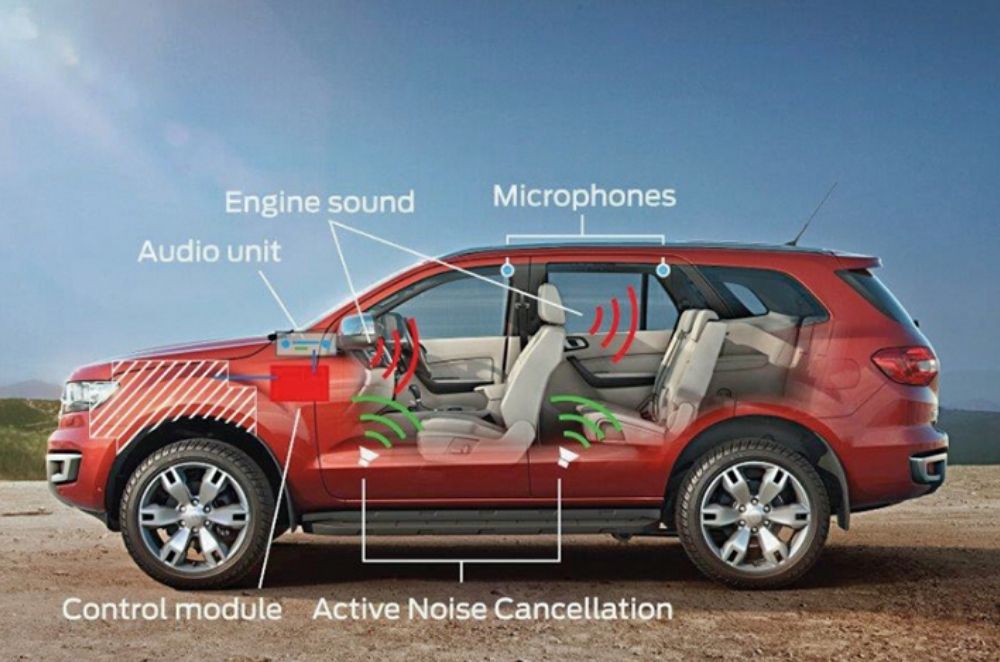
Active noise cancellation in cars is a technology that reduces unwanted sounds inside the vehicle cabin. It uses microphones to detect noise and speakers to produce opposite sound waves. These opposite waves help lower the volume of certain sounds before they reach passengers.
Unlike simple insulation materials, ANC does not only block noise. It actively responds to sound changes while the vehicle is moving. This makes it useful for reducing repeating sounds such as engine vibration and road rumble.

- ✦ Sound Detection
Microphones inside the vehicle monitor unwanted sounds in real time.
- ✦ Noise Cancellation
The system creates a reverse sound wave that reduces specific noise frequencies.
- ✦ Cabin Comfort
Passengers experience a smoother and quieter ride during daily driving.
How ANC Differs From Soundproofing
Traditional soundproofing uses materials like foam, insulation, and thicker panels to block sound. Active noise cancellation uses electronics and software to manage noise after it enters the cabin.
Many vehicles combine both methods because insulation reduces a wide range of sounds while ANC focuses on specific frequencies.
How Does Active Noise Cancellation Work in a Vehicle?
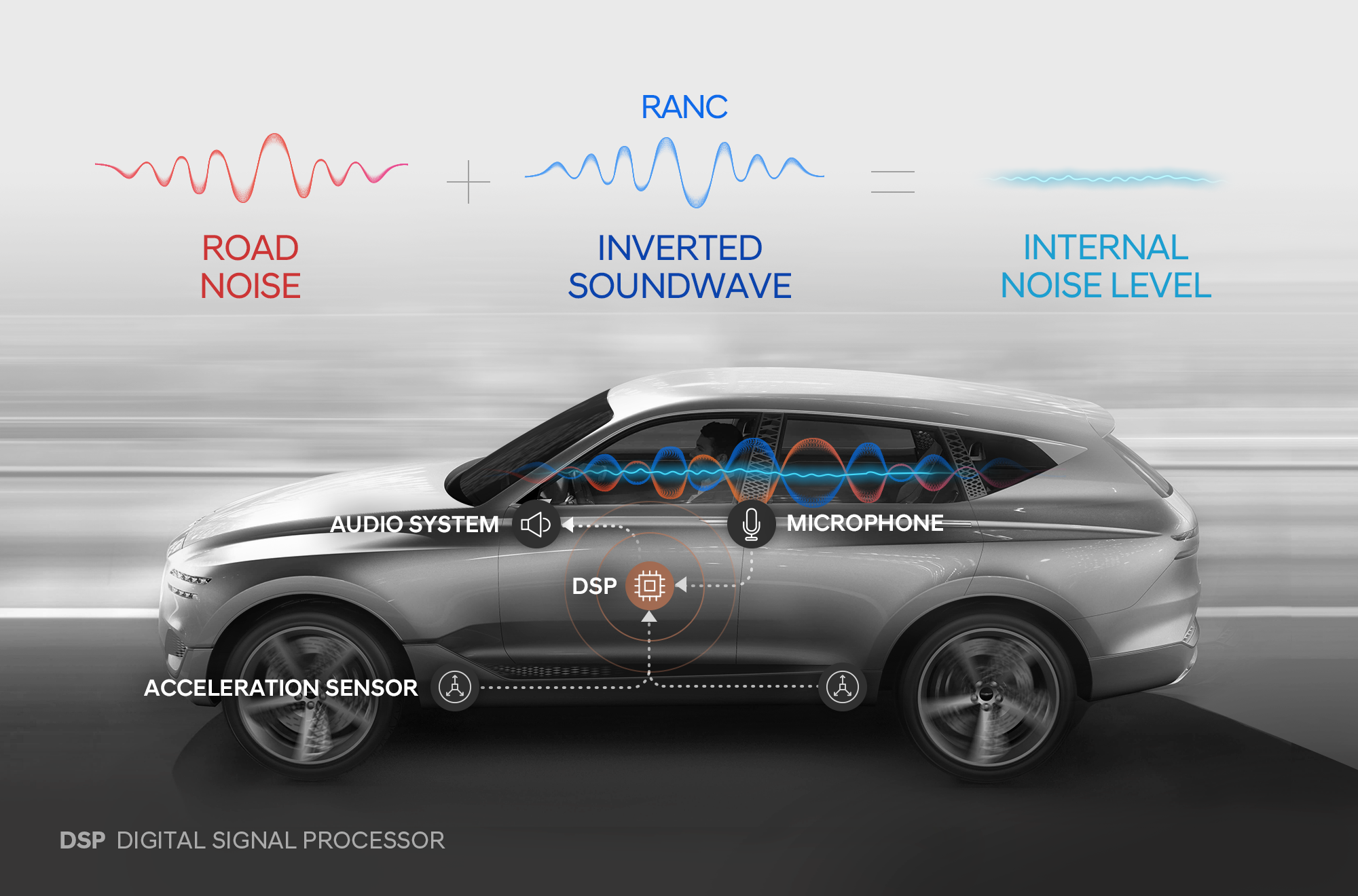
To understand What Is Active Noise Cancellation in Cars, it helps to understand the basic process. The system works through microphones, a control unit, and the vehicle speakers. Each part works together to detect and reduce unwanted sound.
When sensors identify noise, the control system analyzes its frequency and timing. It then sends a signal to speakers that create an opposing sound wave. The result is less noticeable noise inside the cabin.
- ✦ Microphones
Small microphones capture sounds created by the engine, tires, and road surface.
- ✦ Electronic Control Unit
The computer processes sound information and calculates the cancellation signal.
- ✦ Vehicle Speakers
Speakers produce the cancelling sound wave without requiring separate audio equipment.
The Role of Frequency and Sound Waves
ANC works best with predictable, low-frequency sounds. These sounds repeat in patterns, making them easier for the system to identify and cancel.
High-pitched sounds like horns or sudden voices are harder to remove because they change quickly and do not follow predictable patterns.
What Types of Noise Can Car ANC Reduce?
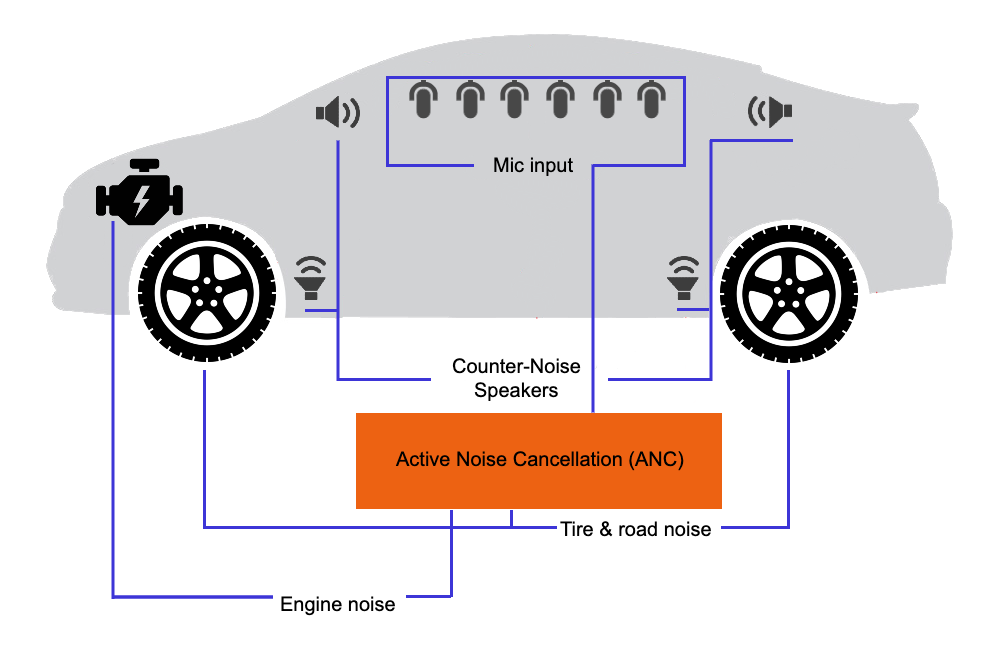
Active noise cancellation in cars is designed for common driving noises that repeat over time. It is especially useful during highway driving, where constant road sounds can become distracting.
The system does not make a vehicle completely silent. Instead, it reduces certain sounds to create a more relaxed cabin environment.
- ✦ Engine Noise
ANC can reduce low-frequency engine sounds during acceleration and cruising.
- ✦ Road Noise
The system can lower tire and road vibration sounds on many surfaces.
- ✦ Electric Vehicle Sounds
Some EVs use ANC to manage new sounds created by electric motors and reduced engine noise.
Benefits of Active Noise Cancellation in Cars
Understanding What Is Active Noise Cancellation in Cars also means understanding why manufacturers add this feature. A quieter cabin can improve comfort, communication, and the overall driving experience.
For many drivers in the United States, especially those who spend hours commuting, reduced cabin noise can make daily travel less stressful.

- ✦ Better Driving Comfort
Lower noise levels help create a calmer environment during short and long trips.
- ✦ Clearer Conversations
Passengers can talk more easily without raising their voices.
- ✦ Improved Audio Experience
Music and podcasts can sound clearer because background noise is reduced.
- ✦ Reduced Driver Fatigue
A quieter cabin may help drivers feel more comfortable during extended journeys.
Limitations of Active Noise Cancellation Systems
Although active noise cancellation in cars is advanced, it has limits. The technology cannot remove every sound because some noises are too sudden or complex for the system to handle.
Drivers should view ANC as a comfort feature rather than a complete replacement for good vehicle design and insulation.
- ✦ Limited Noise Range
ANC mainly targets specific low-frequency sounds rather than all cabin noise.
- ✦ System Dependence
The technology depends on working microphones, software, and vehicle electronics.
- ✦ Vehicle Differences
Performance varies depending on vehicle design and manufacturer implementation.
Can ANC Replace Traditional Sound Insulation?
No. Sound insulation remains important because it handles many noises that ANC cannot reduce effectively.
The best quiet vehicles usually combine smart noise cancellation with quality materials and careful cabin design.
Which Car Brands Use Active Noise Cancellation?
Many modern manufacturers use active noise cancellation technology in different forms. Some call it Active Noise Control, Active Road Noise Cancellation, or cabin noise management.
The feature appears in various vehicle categories, including luxury cars, family SUVs, and electric vehicles. Availability depends on the model, trim level, and market.
- ✦ Luxury Vehicles
Premium vehicles often use ANC to improve a quiet and comfortable cabin experience.
- ✦ Mainstream Vehicles
Some everyday vehicles include ANC as part of upgraded audio or comfort packages.
- ✦ Electric Vehicles
EV manufacturers use ANC to manage new sound patterns caused by electric drivetrains.