If you have ever wondered what is camber on a car, it is one of the most important parts of suspension geometry. Camber controls how your tires meet the road and affects grip, steering feel, and tire wear.
From my experience studying vehicle suspension setups, many drivers notice camber only after seeing uneven tire wear or after modifying their suspension. A correct camber setting helps a daily driver feel stable on highways and helps performance cars handle corners with more control.

What Is Camber on a Car and How Does It Work?
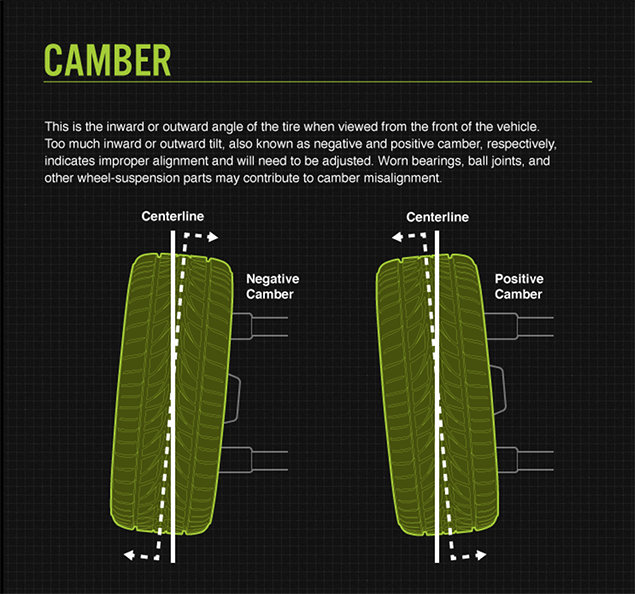
What is camber on a car refers to the vertical angle of the wheel when viewed from the front of the vehicle. A wheel with zero camber sits perfectly straight, while a tilted wheel has either positive or negative camber.
The suspension system controls camber through parts such as control arms, struts, ball joints, and adjustable components. Manufacturers choose camber settings based on vehicle purpose, comfort goals, and handling needs.
- ✦ Zero Camber
The wheel stays straight up and down. This creates balanced tire contact for many everyday vehicles.
- ✦ Positive Camber
The top of the wheel tilts outward. Some vehicles use this setup for stability and suspension movement.
- ✦ Negative Camber
The top of the wheel tilts inward. It is common in performance vehicles because it can improve cornering grip.
Understanding Positive Camber and Negative Camber
Understanding the difference between positive and negative camber helps explain why vehicles handle differently. Each setting changes how much tire surface stays connected to the road during driving.
Most passenger cars use a small amount of camber designed for comfort and long tire life. Performance vehicles often use more negative camber because hard cornering can change the tire angle.

- ✦ Negative Camber Benefits
Negative camber can increase cornering grip by keeping more tire surface connected during turns.
- ✦ Negative Camber Drawbacks
Too much negative camber may cause faster inside tire wear and reduced straight-line braking grip.
- ✦ Positive Camber Effects
Positive camber may improve stability in some applications but can reduce cornering performance.
Why Race Cars Use Negative Camber
Race cars experience strong side forces during turns. Negative camber helps the outside tire maintain a better contact patch when the suspension compresses during cornering.
- ✦ Better Cornering Response
The tire can maintain more grip when the vehicle changes direction quickly.
How Camber Affects Vehicle Handling and Driving Feel
Camber has a direct effect on how a car feels behind the wheel. A properly adjusted camber angle can improve steering response, especially when driving through curves or changing lanes.
When camber is incorrect, the vehicle may feel unstable, pull to one side, or respond differently during turns. These changes are often noticeable during highway driving in the United States, where long-distance stability matters.

- ✦ Steering Response
Correct camber helps the tires react smoothly to steering inputs.
- ✦ Cornering Ability
The right camber setting improves tire grip during turns.
- ✦ Driving Comfort
Balanced camber supports predictable handling for daily driving.
How Camber Affects Tire Wear
One major reason drivers search what is camber on a car is uneven tire wear. Incorrect camber changes the pressure distribution across the tire surface.
Excessive negative camber usually wears the inside edge of the tire. Excessive positive camber can wear the outside edge. Regular alignment checks help identify these issues early.

- ✦ Inside Edge Wear
Often linked with too much negative camber.
- ✦ Outside Edge Wear
Can happen when positive camber is too high.
- ✦ Uneven Tire Contact
Incorrect camber reduces the tire’s ability to distribute force evenly.
Camber vs Toe vs Caster: Understanding Alignment Angles
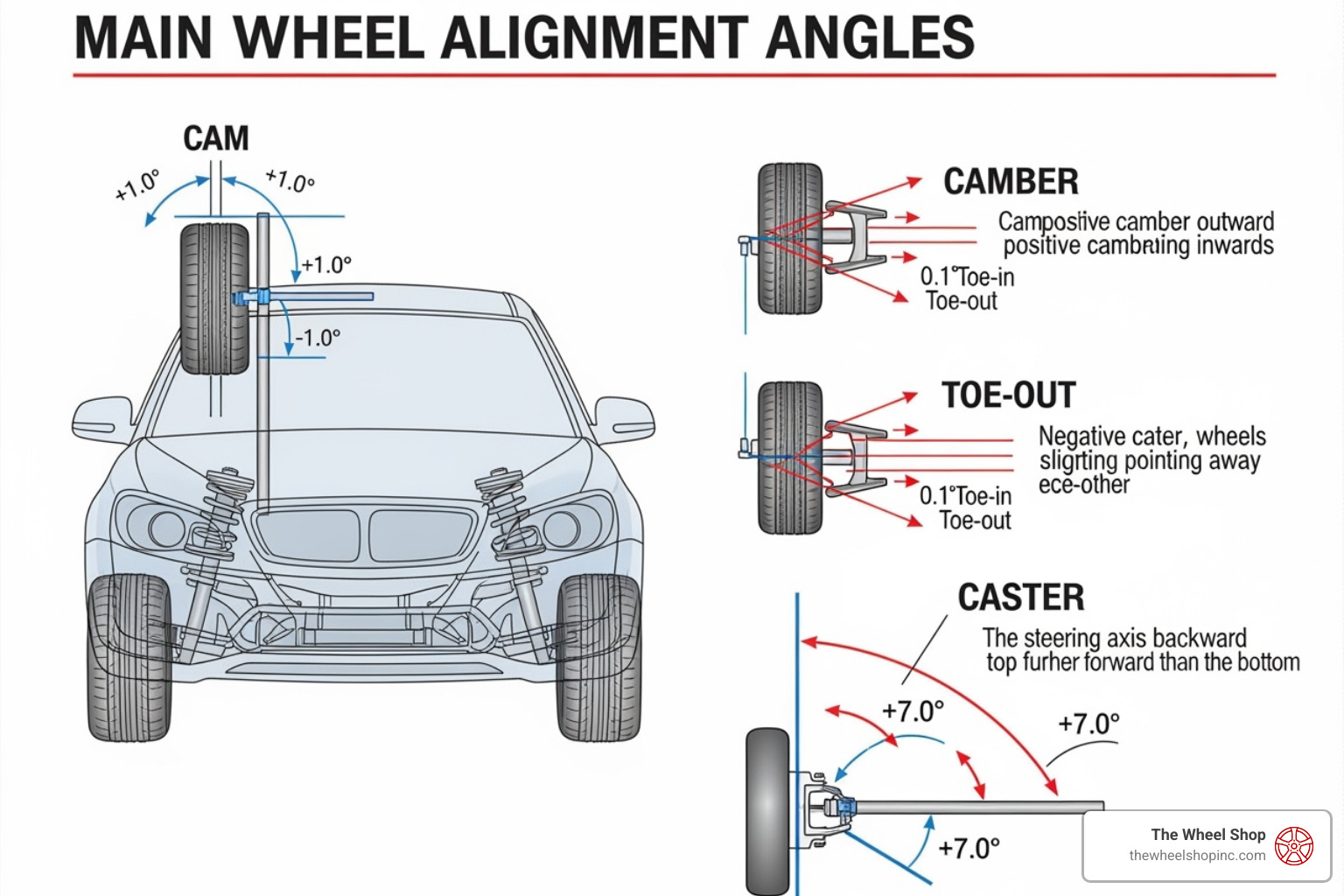
Camber is only one part of wheel alignment. Professional technicians also measure toe and caster because these angles work together to control vehicle behavior.
Camber describes wheel tilt from the front view. Toe describes whether tires point inward or outward from above. Caster affects steering stability and self-centering.
- ✦ Camber
Controls wheel tilt and tire contact during driving.
- ✦ Toe
Controls whether wheels point toward or away from each other.
- ✦ Caster
Controls steering stability and steering return behavior.
Can You Adjust Camber on a Car?
Many modern vehicles allow some camber adjustment, but the available range depends on the suspension design. Some cars have factory adjustment points, while others need aftermarket parts.
Drivers who install lowering springs, coilovers, or performance suspension systems often adjust camber to match their driving goals. Any major suspension change should include a professional alignment.
- ✦ Factory Camber Adjustment
Some vehicles allow technicians to adjust camber using factory components.
- ✦ Aftermarket Camber Kits
Special parts can provide additional adjustment for modified vehicles.