Many drivers notice a tire is low after a few weeks but cannot find a clear reason. What causes slow tire pressure loss is often a small problem that allows air to escape little by little. These issues may not create a flat tire overnight, but they can affect handling, fuel use, and tire wear.
From years of working with vehicle maintenance topics, one common lesson is that a tire losing air slowly should never be ignored. A small leak can become a bigger safety issue if the tire runs underinflated for too long. In the United States, where many people drive long distances every day, keeping correct tire pressure is an important part of routine car care.

Common Reasons Behind Slow Tire Pressure Loss
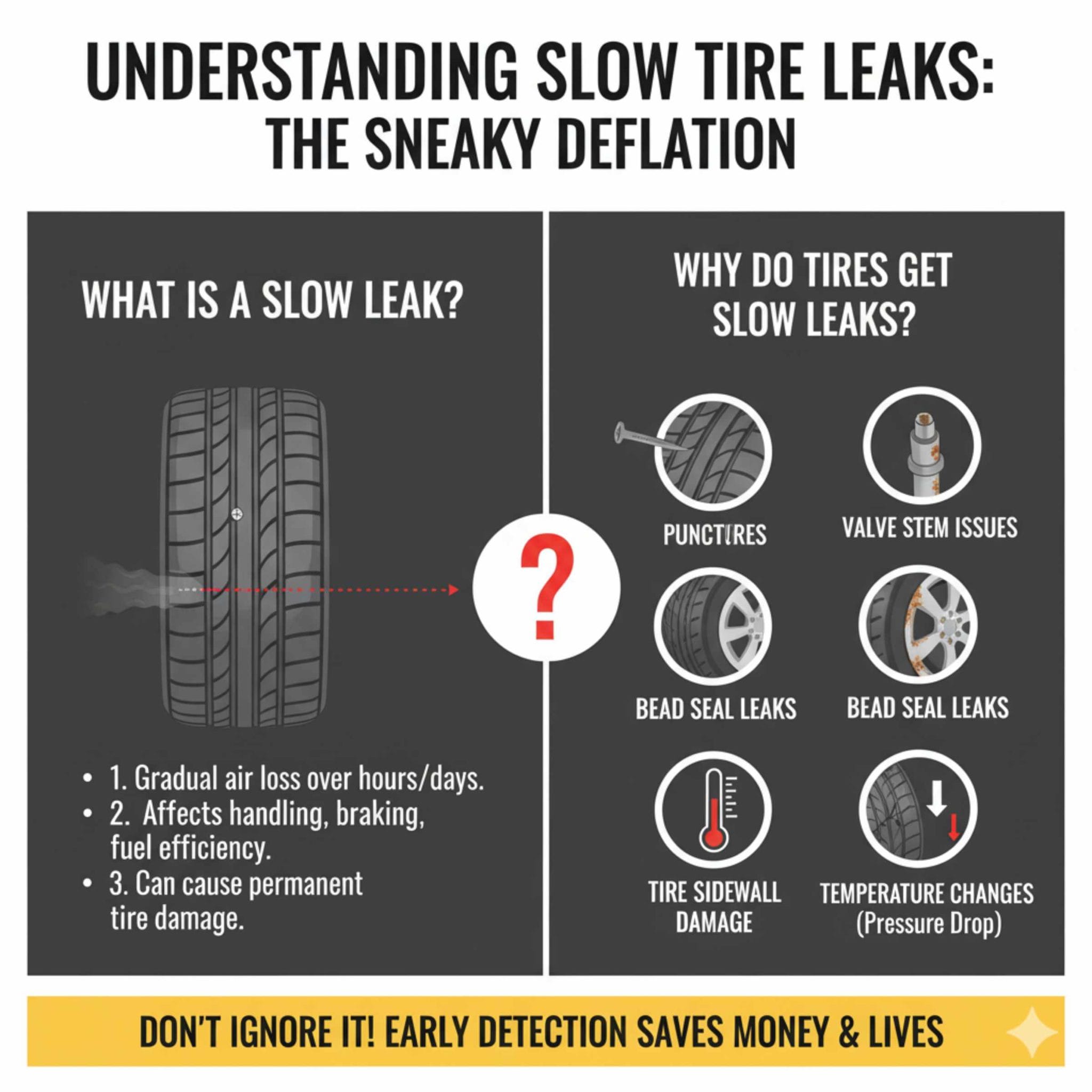
The most common causes of slow tire pressure loss are small air leaks that are hard to notice. Unlike a large puncture, these problems may reduce tire pressure by only a few PSI over several days or weeks.
Finding the exact cause requires checking the entire tire system. This includes the tire surface, valve stem, bead area, and wheel rim.
- ✦ Small punctures
Nails, screws, and sharp objects can create tiny holes that slowly release air instead of causing an immediate flat tire.
- ✦ Damaged valve stems
A worn or damaged valve stem can allow air to escape even when the tire has no visible damage.
- ✦ Wheel problems
Bent or corroded wheels can stop the tire from creating a perfect seal.
Why Small Leaks Are Easy to Miss
A slow leak may not create obvious signs at first. Drivers often notice the problem only when the tire pressure warning light appears or when one tire looks lower than the others.
Checking tire pressure once a month with a reliable gauge can help find slow pressure loss before it causes damage.
- ✦ Warning signs
Frequent pressure adjustments, uneven tire height, and repeated dashboard warnings may point to a slow leak.
Tire Bead Leaks and Poor Wheel Seals
The tire bead is the area where the tire connects with the wheel rim. This connection must stay airtight to hold pressure correctly.
A damaged bead seal is one of the main answers to what causes slow tire pressure loss. Dirt, rust, corrosion, or installation mistakes can create tiny gaps where air escapes.
- ✦ Corroded wheel surface
Rust or buildup around the rim can prevent the tire from sealing properly.
- ✦ Incorrect tire installation
A tire mounted incorrectly may develop a slow leak near the bead area.
How Professionals Find Bead Leaks
Technicians often use soapy water around the tire bead to look for bubbles. Growing bubbles show where air escapes.
Repair usually involves removing the tire, cleaning the sealing area, and reinstalling it correctly.
- ✦ Professional inspection
A tire shop can identify leaks that are difficult to see during a basic home check.
Temperature Changes and Natural Air Loss
Temperature changes are another major reason for slow tire pressure loss. Air pressure drops when temperatures become colder because the air inside the tire contracts.
Many drivers notice lower tire pressure during winter months. In many parts of the United States, a cold weather change can make tires appear low even without a leak.

- ✦ Cold weather effects
Lower temperatures reduce tire pressure and may require more frequent checks.
- ✦ Natural air loss
All tires slowly lose air over time because air molecules can pass through tire materials.
How Often Should Tire Pressure Be Checked
Most drivers should check tire pressure at least once a month and before long trips. Always check pressure when tires are cold for the most accurate reading.
Following the vehicle manufacturer’s recommended PSI helps maintain proper performance.
- ✦ Monthly habit
A quick pressure check can prevent many tire-related problems.
Signs Your Tire Has a Slow Air Leak
A tire with slow pressure loss often gives small warning signs before it becomes dangerous. Recognizing these signs early can save money and prevent tire damage.
A tire that repeatedly needs air is not normal. Even if the vehicle drives well, the issue should be inspected.

- ✦ Frequent refilling
If you add air every few weeks, there may be a hidden leak.
- ✦ Uneven tire wear
Low pressure can cause extra wear on the tire edges.
- ✦ Dashboard warning light
The tire pressure monitoring system may alert you when pressure drops.
Why Driving With Low Pressure Is Risky
Driving with low tire pressure can reduce handling control and increase stopping distance. It also creates extra heat inside the tire.
Long-term low pressure can damage the tire structure and shorten its service life.
- ✦ Safety impact
Proper inflation helps tires maintain their designed grip and stability.
How to Diagnose and Fix Slow Tire Pressure Loss
Finding what causes slow tire pressure loss starts with a careful inspection. Drivers can check for obvious damage, but some leaks require professional equipment.
A proper repair depends on the location and size of the leak. Some issues can be repaired, while others may require tire replacement.

- ✦ Use soapy water
Apply soapy water around possible leak areas and watch for bubbles.
- ✦ Check tire pressure regularly
Record pressure readings to identify patterns over time.
- ✦ Visit a tire professional
A technician can inspect internal damage and repair the problem safely.
When a Tire Should Be Replaced
Not every tire can be safely repaired. Sidewall damage, severe wear, or structural problems may require replacement.
A professional inspection is the best way to decide whether repair or replacement is the safer option.
- ✦ Replacement situations
Deep damage, repeated leaks, or unsafe repairs may mean the tire needs replacement.