A burning rubber smell from your car often means a slipping serpentine belt, rubbing tire, overheated brake, or slipping clutch. It can also point to melting wiring or debris touching the hot exhaust. Stop driving if you see smoke, smell burning electrical parts, or notice changes in braking, steering, or engine temperature.
On American roads, this problem can appear during a daily commute, a long interstate trip, or a drive through heavy city traffic. You may notice it after using the brakes, turning a corner, or switching on the air conditioner. The smell is a warning that some part of your vehicle may be getting too hot.
The odor alone cannot tell you which part has failed. A rubber belt, tire, brake pad, or electrical wire can all create a similar smell. The safest approach is to stop when the odor is strong, let the vehicle cool, and check for clear warning signs before deciding what to do next.
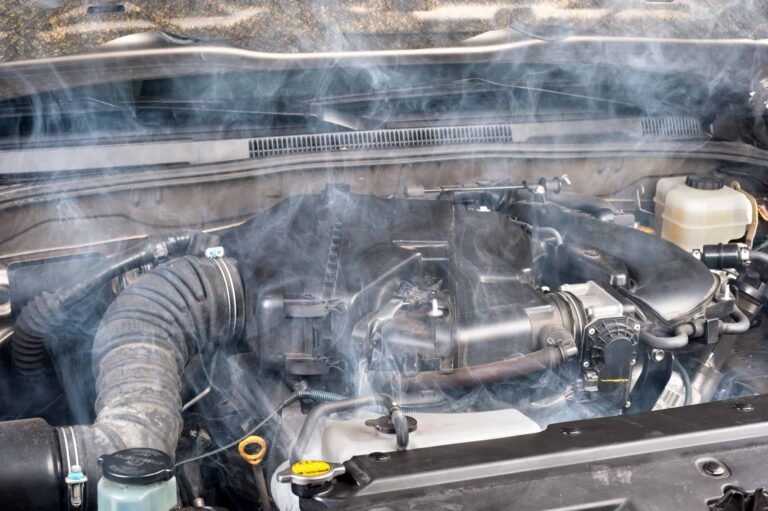
If you see smoke or flames, pull over as soon as it is safe, turn off the engine, and get everyone out. Move at least 100 feet away from the vehicle and call 911. Do not open the hood if you suspect an engine-bay fire.
Source: autoglobes.com
When a Burning Rubber Smell Means You Should Stop
A strong or growing burning odor deserves attention right away. Find a safe place to pull over. Avoid stopping in a traffic lane or on a narrow highway shoulder if you can reach a safer area. Turn off the engine and check for smoke from a safe distance.
The U.S. Fire Administration advises drivers to stop, switch off the vehicle, evacuate everyone, and move at least 100 feet away if a vehicle catches fire. It also warns against opening the hood when an engine-bay fire is suspected. Opening it can allow more air to reach the fire.
A burning smell does not always mean a fire has started. However, some faults can grow quickly. A damaged belt can fail, a dragging brake can lose stopping power, and overheated wiring can damage nearby parts.
Smoke under the hood
Pull over, turn off the engine, and get everyone out. Do not open the hood. Call 911 if you suspect a fire.
Burning plastic or electrical odor
Treat this as an urgent warning. An overheated connector, wire, motor, or fuse area may be involved. Do not continue driving.
Weak or unusual brakes
Stop in a safe place if the brake pedal feels different, the car pulls during braking, or stopping takes longer than usual.
Engine temperature warning
Stop safely if the temperature rises into the danger range or an overheating warning appears. Continued driving can cause major engine damage.
Damaged tire
Do not drive on a tire with exposed cords, a bulge, a deep cut, or severe rubbing damage. Arrange roadside help.
The Most Common Causes of a Burning Rubber Smell
The location and timing of the odor offer useful clues. A smell from the engine bay often points to a belt or pulley. A smell near one wheel may indicate a brake or tire problem. A smell that enters through the cabin vents may come from the engine bay or an electrical part in the heating and cooling system.
Do not rely on smell alone to name the failed part. Several vehicle systems use rubber, plastic, and friction materials. A proper diagnosis checks the related parts and looks for signs of heat, wear, or contact.
Source: carxplorer.com
Slipping serpentine belt
A worn, glazed, loose, or contaminated accessory belt can slip across a pulley. Friction creates heat and a hot rubber odor. A squealing sound may also occur.
Seized pulley or belt tensioner
A pulley bearing or tensioner that does not work correctly can make the belt slip or rub. Replacing the belt alone may not solve the problem.
Tire rubbing
A tire may touch a loose wheel-well liner, damaged body panel, or suspension part. The smell may appear during turns, over bumps, or when the vehicle carries a heavy load.
Overheated brakes
Heavy braking, a dragging caliper, or a parking brake that stays partly engaged can create intense heat near a wheel.
Slipping clutch
A manual transmission clutch can overheat when it slips. This may happen during hill starts, heavy traffic, or when a driver keeps the clutch partly engaged.
Electrical overheating
Damaged insulation, loose connectors, failing blower motors, and overloaded circuits can create a hot plastic or rubber-like odor.
Plastic or debris on the exhaust
A plastic bag, leaf, or other road debris can stick to a hot exhaust part. It may melt and produce a strong odor.
A Slipping Serpentine Belt
The serpentine belt is a long rubber belt that drives several engine accessories. Depending on the vehicle, these may include the alternator, air-conditioning compressor, power steering pump, or water pump. The exact layout varies by make and model.
When the belt loses grip, it slides across a pulley instead of moving smoothly. This friction creates heat. The rubber may smell hot or burnt, and you may hear a high-pitched squeal during startup or acceleration.
A damaged tensioner, worn pulley bearing, or incorrect belt alignment can cause the same problem. This is why a mechanic should inspect the whole belt drive system instead of changing the belt without checking its related parts.
Common signs
A rubber odor under the hood, squealing near the engine, visible belt wear, or a charging warning light.
Possible result
A failed belt can stop some accessories from working. On certain engines, it can also affect the cooling system.
A Tire Rubbing Against the Wheel Well
A tire should have enough room to rotate without touching the vehicle body. A loose plastic liner, bent fender, damaged suspension part, or incorrect tire size can reduce this space. The tire may then rub against another part as the wheel turns.
This problem often appears during sharp turns or when driving over road bumps. You may hear a scraping or rubbing noise before the smell becomes clear. A heavily loaded vehicle can make an existing clearance problem worse.
Check the visible tire sidewall for cuts, worn patches, or exposed cords after the vehicle has stopped and cooled. Tire damage can lead to a sudden loss of pressure. Have the clearance checked before driving again if contact is suspected.
Look for rubbing marks
Dark marks or worn areas on the wheel-well liner may show where the tire has made contact.
Check tire condition
Look for cuts, bulges, unusual wear, or damaged rubber. Do not touch a hot tire or reach near moving parts.
Overheated Brakes
Brakes create heat by using friction to slow the vehicle. A short period of hard braking can make the brakes very hot. This may happen after a long downhill drive or repeated stops in heavy traffic.
A sticking brake caliper is more serious. It may keep the brake pad in contact with the rotor even when your foot is off the pedal. A parking brake that does not release fully can cause a similar problem.
The smell may be strongest near one wheel. The vehicle may also pull to one side or feel slow to move. Never touch a wheel, rotor, or caliper to check its temperature. These parts can remain dangerously hot after the car stops.
One wheel seems much hotter
This may point to a dragging brake. Keep your hands away and arrange an inspection.
Smoke near a wheel
Stop driving. Smoke can indicate severe brake overheating or another dangerous fault. Request roadside assistance.
A Slipping Clutch
A manual transmission clutch connects the engine to the transmission. When the clutch slips, its friction surfaces generate excess heat. The odor can resemble burnt rubber or hot friction material.
This can happen when a driver holds the vehicle on a hill with the clutch, rides the clutch pedal in slow traffic, or carries a heavy load. A worn clutch can also slip during normal acceleration.
A common warning sign is an engine that revs higher without a matching increase in vehicle speed. If the smell returns during normal driving, have the clutch checked. Avoid repeated attempts to test it under heavy load.
Use the clutch correctly
Press the pedal fully when changing gears and avoid resting your foot on it while driving.
Watch for repeated slipping
A recurring smell or loss of drive needs a professional transmission inspection.
Use Timing and Location to Find the Source
The moment the smell appears can help narrow the search. Think about what the vehicle was doing just before you noticed it. Also note whether the smell seems strongest under the hood, near a wheel, or inside the cabin.
These clues are not a final diagnosis. Air can carry odors from one part of the vehicle to another. For example, the ventilation system may pull a smell from the engine bay into the cabin.
Source: hondatheotherside.com
The smell appears during acceleration
A slipping belt or clutch may be involved. A belt may also squeal as engine speed changes.
The smell appears after braking
Check for a brake issue. Heavy braking can create temporary heat, but a recurring smell may indicate a dragging caliper or parking brake.
The smell appears while turning
A tire may rub against a wheel-well liner or body panel. Notice whether the odor appears during left turns, right turns, or both.
The smell appears over bumps
A loose liner, damaged splash shield, or shifted component may be contacting a tire or another moving part.
The smell appears when the air conditioner runs
The belt or A/C compressor may be involved. An overheating blower motor or electrical connector is another possibility.
The smell appears after parking
Heat from the brakes or exhaust may make an existing problem easier to notice. Look for smoke or signs of melted debris from a safe distance.
The smell comes through the vents
The HVAC system may be drawing an engine-bay odor into the cabin, or a blower motor and its wiring may be overheating.
When the Air Conditioner Is On
If the odor starts when you switch on the A/C, the compressor or its drive belt may be under extra load. A worn belt can slip when the compressor engages. A failing compressor or pulley bearing may also create unusual heat or noise.
If the odor comes from the dashboard vents, consider the blower motor and electrical parts as well. A burning plastic smell is especially concerning. Turn the system off, stop safely, and arrange an inspection if the odor is strong or returns.
Notice the pattern
Record whether the smell starts with the A/C compressor, the cabin fan, or both.
Do not keep testing it
Repeatedly switching the system on and off can make an electrical or mechanical fault worse.
How to Check Your Car Safely
You can gather useful clues without taking the vehicle apart. Start with safety. Park on firm ground away from traffic, turn off the engine, and allow hot parts to cool.
Do not inspect a moving belt or reach near a cooling fan. Some electric cooling fans can start even when the engine is not running. Manufacturer maintenance guidance warns against inspecting an accessory belt while the engine is running.
You do not need to remove covers, loosen parts, or lift the vehicle to make these basic checks. If a part is hard to see or reach, leave it for a trained mechanic.
Source: onlymechanic.com
Step 1: Stop in a safe place
Turn on your hazard lights if needed. Switch off the engine. If there is smoke or fire, evacuate and follow emergency guidance.
Step 2: Wait for the vehicle to cool
Do not touch the exhaust, brakes, belt, pulleys, or wheels. Hot parts can cause serious burns.
Step 3: Check the tires from a safe position
Look at each visible tire for cuts, bulges, unusual wear, or signs of rubbing. Check the wheel-well liner for loose or damaged sections.
Step 4: Look under the vehicle
From outside the vehicle, check for obvious melted plastic, hanging panels, or road debris. Never crawl under a vehicle supported only by a jack.
Step 5: Inspect the engine bay only when safe
If there is no smoke or fire and the engine is fully cool, you may look for obvious belt damage or melted material. Do not remove guards or touch electrical connections.
Step 6: Record the warning signs
Write down when the odor began, where it seemed strongest, which warning lights appeared, and whether you heard squealing or scraping.
Step 7: Arrange a professional check
Share your observations with a repair shop. If the smell is strong, recurring, or linked to a safety problem, have the vehicle towed.
What Not to Do During an Inspection
Do not start the engine with your hands near the belt to find the source of a squeal. Do not touch a hot brake rotor to compare wheel temperatures. Do not spray water on hot exhaust parts or attempt to remove melted plastic while the exhaust is hot.
Avoid guessing and replacing parts at random. A new belt may fail again if a pulley is seized. A new tire will not solve a damaged wheel-well liner. Finding the cause matters more than hiding the smell.
Do not ignore smoke
Smoke means the vehicle needs immediate attention. Get out and move away if a fire is possible.
Do not drive on damaged tires
Visible structural tire damage requires a safe replacement or roadside repair.
Do not handle high-voltage parts
Hybrid and electric vehicle electrical systems require trained service procedures.
What a Mechanic Should Inspect
A mechanic should identify the source before recommending a repair. The inspection may begin with the location of the odor and the conditions that make it appear. The technician can then check the systems most likely to create that type of heat.
For a belt-related odor, the inspection should include the belt, tensioner, pulleys, and accessory bearings. A belt can look fairly new and still slip because a pulley is misaligned or a tensioner has lost its proper force.
For a wheel-related odor, the technician should inspect the tire, wheel-well liner, brake caliper, parking brake, and nearby suspension parts. A road test may help confirm the issue, but only after the vehicle is safe to operate.
An electrical odor needs a careful inspection of wiring, connectors, fuses, relays, and electrical motors. Replacing a fuse without finding the reason it overheated can leave the original fault in place.
Source: motoraudit.com
Belt and pulley inspection
The technician checks for glazing, cracks, fraying, contamination, poor alignment, damaged pulleys, and a weak tensioner.
Brake system inspection
The technician checks the pads, rotors, caliper pistons, slide pins, brake hoses, and parking brake mechanism.
Tire and wheel inspection
The technician checks tire clearance, liner position, tire size, wheel condition, and suspension components.
Clutch inspection
The technician checks for clutch wear, slipping, engagement problems, and related transmission faults.
Electrical inspection
The technician looks for overheated wires, loose connectors, damaged insulation, and electrical components that draw too much current.
Exhaust and underbody inspection
The technician checks for plastic debris, damaged shields, loose hoses, and parts touching hot exhaust surfaces.
Why Replacing the Belt May Not Be Enough
A serpentine belt works with several pulleys and accessories. If one pulley becomes difficult to turn, the belt may slip and overheat. A weak tensioner can cause the same result.
A mechanic should correct the underlying problem before fitting a replacement belt. Otherwise, the new belt may develop the same smell, noise, and wear.
The belt, tensioner, idler pulleys, and driven accessories should be checked together.
Follow the correct service procedure
Belt routing and tension requirements differ by vehicle. Use the correct service information for the exact model.
Can You Keep Driving With the Smell?
There is no safe universal driving distance for a vehicle that smells like burning rubber. The answer depends on the source, how strong the odor is, and whether other symptoms appear. A car that still moves normally may have a serious problem that has not yet caused a warning light.
A brief odor after a long downhill drive may come from hot brakes. Allow them to cool in a safe place. If the smell returns during normal driving, or you notice a pull, noise, smoke, or change in brake feel, arrange an inspection before driving again.
A recurring engine-bay odor should not be treated as harmless. A belt can fail without much warning, and an electrical fault can become worse. If you cannot identify a harmless cause, roadside assistance is a safer choice than driving to a shop.
Stop and call for help
Choose this action if there is smoke, fire, a strong electrical smell, brake failure, tire damage, overheating, or a warning light linked to a serious fault.
Arrange a tow
A tow is the safer option for a suspected dragging brake, severely rubbing tire, damaged belt with overheating, or repeated strong odor.
Arrange prompt inspection
If the odor was brief and there are no warning signs, book an inspection if it returns. Avoid long trips until the source is understood.
Do not rely on the smell fading
The part may have cooled down without the underlying fault being repaired. A missing odor is not proof that the vehicle is safe.
What If the Smell Happens Only Once?
A one-time odor can come from road debris touching the exhaust or temporary brake heat after hard use. However, you should still look for smoke, visible damage, warning lights, or changes in how the vehicle moves.
If there are no warning signs and the smell does not return, record the event and watch for another occurrence. If it happens again, arrange a proper diagnosis rather than waiting for a stronger warning.
One brief event
Check for visible debris and damage after the vehicle cools. Do not assume the source without an inspection.
Repeated events
A repeated odor points to an ongoing problem. Have the related mechanical or electrical system checked.
Special Cases: New Brakes, Air Conditioning, and Electric Cars
Some situations need a little more care because the odor may have more than one possible cause. Recent repairs, new parts, and different vehicle designs can change which checks matter most.
New brakes
New pads and rotors may produce some odor during their initial bedding process, depending on the parts and manufacturer procedure. The smell should not be used as a reason to ignore smoke, pulling, weak braking, or a persistent hot-wheel odor.
New tires
A recent tire installation does not explain away a strong burning smell. Check for incorrect tire size, poor clearance, a loose liner, or brake trouble.
Air conditioning
A smell that begins with A/C use may involve the compressor, belt, blower motor, or electrical connections. A technician should separate these possible causes.
Hybrid vehicles
A hybrid may still have an engine belt, friction brakes, and other parts found in conventional vehicles. It also has high-voltage equipment that requires trained service.
Electric vehicles
A typical battery electric vehicle does not use a conventional engine serpentine belt or engine clutch. Tire rubbing, brake heat, road debris, and electrical faults remain possible. Never inspect or touch high-voltage battery components yourself.
After Installing New Brake Pads
Some brake manufacturers specify a bedding procedure for new pads and rotors. This process helps establish the correct contact between the friction surfaces. The exact method depends on the parts and vehicle.
Follow the instructions supplied with the brake parts or provided by the repair shop. Do not perform hard stops on public roads to test the brakes. If the vehicle pulls, the pedal feels wrong, or smoke appears, stop and contact the installer.
Follow the specified procedure
Do not use a general bedding method in place of the instructions for your exact brake parts.
Watch for persistent heat
A continuing odor, smoke, or one unusually hot wheel needs a professional inspection.
Electric Vehicle Safety
Electric vehicles have different power systems from gasoline vehicles. A burning smell near a damaged battery area or high-voltage component deserves immediate attention. A crash, underbody impact, or visible smoke increases the concern.
If an EV shows smoke or signs of fire, stop in a safe place, get everyone out, move away, and call 911. Do not touch exposed wires or battery parts. Contact the vehicle manufacturer or dealer for guidance before moving a damaged vehicle.
Avoid high-voltage repairs
Battery packs, orange high-voltage cables, and related parts should only be handled by qualified technicians.
Report battery damage
Tell emergency responders and the repair provider that the vehicle is electric or hybrid if a fire or battery fault is suspected.
Questions Drivers Should Ask After the First Check
Finding the likely source is only the first step. Drivers also need to know whether the car is safe to move, whether a recent repair matters, and what information to give the mechanic. The following questions cover practical decisions that are often left unclear in short troubleshooting guides.
Can I drive if the smell disappears?
No clear odor does not prove the fault is gone. Heat may have fallen after the vehicle stopped. Check for warning signs and arrange an inspection if the odor returns or its source remains unknown.
How can I tell a belt smell from tire rubbing?
A belt smell is often strongest near the engine bay and may come with a squeal. Tire rubbing may happen during turns or over bumps and may leave marks inside the wheel well. These are clues, not a final diagnosis.
Why does the odor enter through the vents?
The HVAC intake may draw engine-bay air into the cabin. A failing blower motor or overheated electrical connection may also create an odor inside the ventilation system.
Should I blame new brake pads?
Not automatically. Initial bedding can create some odor, but smoke, pulling, weak braking, or persistent heat requires a brake inspection.
What should I tell the repair shop?
Describe when the smell starts, where it seems strongest, how long it lasts, whether the A/C is running, and whether you notice noise, smoke, warning lights, or handling changes.
Frequently Asked Questions
Q
Why does my car smell like burning rubber but show no warning light?
A warning light does not appear for every mechanical fault. A slipping belt, rubbing tire, dragging brake, or melted road debris may create an odor without triggering a dashboard warning.
Pay attention to the smell, noise, and driving behavior. If the odor is strong or returns, arrange an inspection even if the dashboard looks normal.
Q
Can a bad serpentine belt cause a burning rubber smell?
Yes. A worn or slipping serpentine belt can create heat as it moves across the pulleys. The smell may be strongest under the hood and may come with a squealing noise.
A damaged pulley, weak tensioner, or failing accessory can also make the belt slip. Have the complete belt system checked before replacing parts.
Q
Why does my car smell like burning rubber after driving?
The smell may come from overheated brakes, a slipping belt, a rubbing tire, or road debris touching the exhaust. The source depends on where the odor is strongest and what the vehicle was doing before you noticed it.
A smell that returns after every trip needs diagnosis. Stop immediately if smoke, electrical odors, overheating, or braking problems appear.
Q
Can overheated brakes smell like burning rubber?
Yes. Hot brake pads and other friction materials can produce a strong odor that some drivers describe as burning rubber. This may follow repeated hard braking or a long downhill drive.
A sticking caliper or parking brake can cause the brakes to remain hot even during normal driving. Smoke, pulling, or reduced braking performance requires immediate attention.
Q
Why does my car smell like burning rubber when the AC is on?
The A/C compressor can add load to the accessory belt. If the belt slips or a pulley has a problem, it may create friction and heat when the compressor operates.
An overheating blower motor or electrical connector can also create an odor through the vents. Turn off the system and arrange an inspection if the smell is strong or returns.
Q
Is a burning rubber smell dangerous?
It can be. Some causes are minor, but others involve overheated brakes, damaged tires, electrical faults, or parts touching hot exhaust components. These problems can affect vehicle safety or create a fire risk.
Stop driving if you see smoke, notice a strong electrical odor, experience brake or steering changes, or see an overheating warning. If a fire is possible, evacuate and call 911.
✦ Wrapping Up
Conclusion
A burning rubber odor is a warning that something may be overheating or rubbing against another part. The most common places to investigate include the accessory belt, pulleys, tires, brakes, clutch, and electrical system. The timing and location of the smell can help narrow down the cause.
Do not ignore a strong or recurring odor. Let hot parts cool, check only what you can see safely, and avoid touching moving or high-temperature components. A qualified mechanic can find the source and check whether nearby parts have also suffered damage.
Smoke, flames, electrical burning, weak brakes, damaged tires, or engine overheating are reasons to stop. Protect everyone in the vehicle before worrying about the repair.
💡 Key Takeaway
If you notice a burning rubber smell, pull over safely when needed, switch off the vehicle, and look for smoke, tire damage, or warning signs from a safe distance. Do not continue driving when a serious fault is possible. Record when the smell occurs and arrange a professional inspection to identify the real cause.
About john Adword
John Adword has tested and reviewed car seat covers and interior accessories for 5 years, evaluating fit, material performance, and long-term wear across a range of vehicles and climates. His testing approach follows the same methodology used across car Reviewer Plus's product reviews — hands-on installation, real-world use, and comparison against manufacturer claims — with an ongoing focus on tracking new seat cover materials and cooling technology as they come to market.