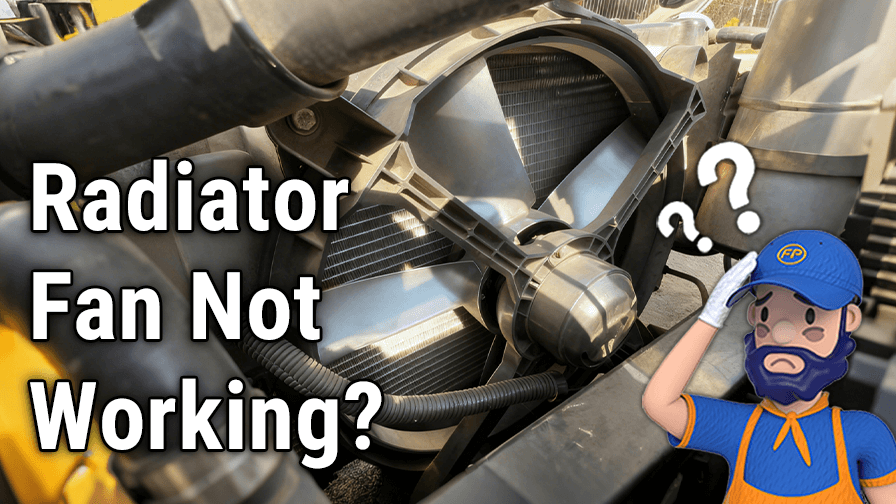
An engine fan that does not turn on may have a blown fuse, bad relay, failed fan motor, faulty coolant temperature sensor, damaged wiring, or a defective fan control module. However, the fan does not need to run all the time. If the engine overheats and the fan stays off, stop driving and diagnose the cooling system before serious engine damage occurs.
If you drive in the United States, you may notice a cooling problem while sitting in summer traffic, waiting at a stoplight, or driving through a busy city. Your temperature gauge may rise even though the engine seems to run fine at highway speeds. One possible reason is that the engine cooling fan is not turning on when needed.
The cooling fan helps move air through the radiator. This air removes heat from the engine coolant and helps keep the engine within its normal temperature range. When the car moves at highway speeds, natural airflow often provides enough cooling. At idle or in slow traffic, the electric fan must provide extra airflow on vehicles that use electric cooling fans.
A fan that stays off does not always mean the motor has failed. The problem may be in the electrical supply, temperature sensor, computer control, or cooling system itself. The correct diagnosis starts with checking whether the engine is actually hot enough to request fan operation. It also requires knowing whether your vehicle uses an electric fan or an engine-driven fan.
Source: thecarbuzz.com
Why Is the Engine Cooling Fan Not Turning On?
The engine cooling fan may not turn on because the engine is still cool, or because a part of the fan control system has failed. The fan needs a power source, a working motor, and a control signal before it can operate. If one of these parts stops working, the fan may remain off even when the engine needs more cooling.
Most modern cars and trucks use an electric cooling fan. A coolant temperature sensor sends temperature information to the engine control module, often called the PCM or ECM. The computer uses this information and other operating conditions to decide when the fan should run and how fast it should spin.
Older vehicles may use a temperature switch and relay instead of a computer-controlled fan system. Some vehicles have two fans, separate low- and high-speed circuits, or an electronic control module built into the fan assembly. These design differences matter because the same symptom can have different causes.
An electric cooling fan usually cycles on and off. It may stay off during a cold start and while driving at higher speeds because natural airflow can remove enough heat. Therefore, seeing a stationary fan while the engine is running does not automatically mean something is broken. The expected operating temperature and fan command depend on the vehicle model. citeturn768687view0turn829027view3
Source: thirdgen.org
Normal fan operation
The fan remains off when the engine is cold, starts when extra cooling is needed, and stops after the coolant temperature drops.
Electrical failure
A failed fuse, relay, motor, connector, or wire can interrupt the power supply and prevent the fan from spinning.
Control system failure
A bad temperature signal, fan control module, or computer command can prevent the fan from receiving the correct operating signal.
Mechanical fan problem
An engine-driven fan may have a damaged belt, faulty fan clutch, or another problem with its drive system.
When Should a Radiator Fan Turn On?
There is no single fan activation temperature for every car. The manufacturer sets the operating range based on the engine, cooling system, and fan control strategy. Some fans also use different speeds instead of switching between completely off and fully on.
The fan may also run when the air conditioner is operating because the AC condenser needs airflow. However, some vehicles control fan operation according to refrigerant pressure, outside temperature, and other conditions. Always check the service information for your exact model.
Cold engine
The fan will often remain off because additional airflow is not yet needed.
Hot engine at idle
The fan should operate when the coolant temperature reaches the manufacturer’s activation range.
Highway driving
Natural airflow may reduce or stop the need for electric fan operation.
Air conditioner running
The fan may run to cool the condenser, depending on the vehicle’s control system.
Common Causes of an Engine Fan Not Turning On
Several parts work together to operate an electric cooling fan. Finding the failed part is easier when you check the electrical supply, control signal, and motor separately. Replacing the fan motor without testing the rest of the circuit can waste money and leave the original problem unfixed.
Source: vautobasics.com
1. Blown cooling fan fuse
The fuse protects the fan circuit from excessive electrical current. If it blows, the fan may lose all power. A short circuit, damaged wire, seized motor, or excessive current draw can cause the fuse to fail. Check the correct fuse location and rating in the owner’s manual. Replace it only with the specified rating. If it blows again, stop replacing fuses and have the circuit tested.
2. Bad radiator fan relay
The relay acts as an electrical switch. It allows a low-current control signal to operate the higher-current fan circuit. Burned contacts, a damaged coil, or an internal connection failure can stop the fan from receiving power. A clicking sound does not prove that the relay contacts are working correctly.
3. Failed cooling fan motor
The electric motor turns the fan blades and moves air through the radiator. Internal wear, damaged brushes, worn bearings, overheating, or water damage can cause the motor to stop. An aging motor may also work intermittently before failing completely.
4. Faulty coolant temperature sensor
The engine coolant temperature sensor measures coolant temperature and sends information to the engine computer. If it reports an incorrect reading, the computer may not request fan operation at the right time. A sensor fault may also trigger a check engine light or a temperature-related trouble code.
5. Damaged wiring or loose connectors
The fan needs a complete electrical circuit. A broken power wire, poor ground, corroded connector, loose terminal, or damaged harness can interrupt that circuit. Heat and vibration can make electrical faults worse over time.
6. Defective fan control module
Many newer vehicles use an electronic module to control fan speed. Some modules are built into the fan assembly. A failed module can prevent the fan from starting, limit its speed, or cause irregular operation even when the motor itself is still good.
7. Faulty fan resistor or low-speed circuit
Some older electric fan systems use a resistor or separate relay circuit to control low and high speeds. If the low-speed circuit fails, the fan may only work at high speed. This can cause poor cooling in traffic even though the fan still operates under some conditions.
8. Low coolant or a thermostat problem
Low coolant does not automatically mean the fan circuit has failed. However, it can cause poor heat transfer, overheating, and air pockets that affect temperature readings. A thermostat stuck open may prevent the engine from reaching the temperature needed to request fan operation. A thermostat stuck closed can cause rapid overheating and requires prompt attention.
How a Blown Fuse Can Point to a Bigger Problem
A blown fuse is often easy to find, but it is not always the root cause. The fuse may have opened because the fan motor draws too much current or because a wire has shorted against metal. Installing another fuse without checking the cause can lead to another failure.
Never install a larger fuse to keep the fan running. The original rating protects the wiring and connected parts. A higher rating can allow the wiring to overheat and create a fire risk.
Fuse blows immediately
A short circuit or serious electrical fault may be present.
Fuse blows when the fan starts
The motor may draw excessive current, or the wiring may have a fault that appears under load.
New fuse stays intact but fan remains off
Check the relay, motor, power supply, ground, and control signal.
How to Troubleshoot an Engine Fan That Will Not Start
Start with simple visual checks before testing electrical parts. You do not need to remove the fan assembly to identify several common problems. However, electrical testing should follow the wiring diagram and service procedure for your vehicle.
Park on a level surface, apply the parking brake, and switch off the ignition before inspecting the engine compartment. Keep your hands, clothes, and tools away from the fan blades. An electric fan can start automatically under certain conditions, even when the engine is not running. Toyota owner manuals specifically warn about this risk when the vehicle’s electrical system is switched on. citeturn963251search1turn963251search2
Source: thecarbuzz.com
Step 1: Check the temperature gauge
Look at the dashboard temperature gauge or digital temperature display. If the engine is cold or operating within its normal range, the fan may not need to run. If the temperature rises toward the red zone, stop testing and deal with the overheating condition first.
Step 2: Check the coolant level
Allow the engine to cool completely. Inspect the coolant reservoir and compare the level with the MIN and MAX marks. Look for visible leaks around hoses, the radiator, and the reservoir. Never remove a radiator or pressurized coolant cap while the system is hot.
Step 3: Inspect the cooling fan fuse
Use the owner’s manual to locate the correct cooling fan fuse. Switch the vehicle off before inspecting it. Look for a broken internal element or test the fuse with a suitable meter. If it is blown, use only the specified replacement rating. If the replacement fails again, arrange electrical diagnosis.
Step 4: Inspect the relay
Find the cooling fan relay using the fuse box diagram or service manual. Check for visible damage, corrosion, or a loose fit. A technician can test the relay coil and switching contacts. Swapping relays is only suitable when the replacement has identical specifications and the vehicle manufacturer permits it.
Step 5: Inspect the fan wiring
With the ignition off, look for damaged insulation, loose connectors, corrosion, melted plastic, and signs of rubbing near the fan assembly. Do not pull on wires or touch exposed terminals. A damaged connector may need repair even if the fan motor is in good condition.
Step 6: Check fan operation with the AC
If the engine is operating normally, use the vehicle’s normal AC controls and observe fan operation from a safe position. On many vehicles, an AC request causes the fan to run. However, this is not universal. Refrigerant pressure, outside temperature, and manufacturer programming may affect the result.
Step 7: Read engine temperature data
An OBD-II scanner with suitable live-data support can show the coolant temperature reported to the engine computer. Compare the reading with actual operating conditions. A reading that is clearly unrealistic may point toward a sensor or wiring problem. More advanced scan tools may also show the requested fan speed or fan command.
Step 8: Test the fan motor and power supply
A qualified technician can test the motor using the correct wiring diagram and a properly protected test circuit. The technician should verify power and ground under the correct operating command. If the motor receives the required supply but does not turn, the motor or fan assembly may have failed. If power or ground is missing, the fault is farther upstream.
What Tools Help Diagnose the Problem?
Basic visual checks require little equipment, but accurate electrical diagnosis often needs more than a replacement fuse. A digital multimeter can measure voltage, resistance, and continuity. A test light may help with some circuits, while an enhanced scan tool can show temperature readings and fan commands.
Use a vehicle-specific wiring diagram before testing relay terminals or applying external power. Modern fan assemblies can contain electronic controls, and incorrect probing or jumper connections can damage the control unit. If you do not understand the circuit, leave these tests to an automotive technician.
Owner’s manual
Identifies the fuse locations, recommended coolant, and vehicle-specific operating instructions.
Digital multimeter
Helps a trained user check electrical supply, ground, resistance, and continuity.
OBD-II scan tool
Can reveal diagnostic trouble codes and, with suitable vehicle support, live coolant temperature data.
Vehicle wiring diagram
Shows the correct fuse, relay, motor, control module, and sensor connections.
What the Fan Symptoms Tell You
The way your engine fan behaves can narrow down the cause before you replace any parts. Pay attention to when the problem happens, whether the engine overheats, and whether the fan works under another operating condition.
The following guide connects common symptoms with possible fault areas. These are diagnostic clues, not final diagnoses. A technician should confirm the problem with the correct electrical and temperature tests.
Source: carcaresite.com
The fan stays off and the engine overheats at idle
Check the fan fuse, relay, motor, wiring, coolant temperature signal, and fan control module. A fan that does not provide enough airflow may allow temperatures to rise while the vehicle is stationary.
The fan works with AC but not when the engine gets hot
The motor and at least part of its power circuit may be working. The temperature sensor, its wiring, the engine computer’s fan command, or the temperature-control circuit may need further testing.
The fan does not work with AC or engine heat
Check the main power supply, fuse, relay, motor, ground, connectors, and fan control module. A complete loss of power is one possible explanation.
The fan works at high speed but not low speed
Investigate the low-speed relay, resistor, control module, or associated wiring. The fan motor may still be functional.
The fan starts and stops randomly
An intermittent relay, loose connector, worn motor, damaged wire, or unstable control signal may be responsible. Check for heat-related electrical faults.
The fan runs after the engine is switched off
Some vehicles allow the fan to continue running briefly to remove excess heat. This can be normal. If it never stops or drains the battery, investigate a stuck relay, control module, or wiring fault.
The temperature gauge stays low and the fan never starts
A thermostat stuck open may prevent the engine from reaching the fan activation range. Check the actual coolant temperature and thermostat operation before replacing the fan.
Does a Working AC Fan Prove the Cooling Fan Is Good?
No. Seeing the fan run when the AC is selected is a useful clue, but it does not prove that every part of the cooling system works correctly. The engine temperature control circuit may still have a problem even when the AC control circuit can operate the fan.
Some vehicles also use separate fan speeds or multiple fans. One fan may operate while another remains inactive. A fan that runs slowly may also fail to provide enough airflow when the engine needs more cooling. A proper diagnosis should check all commanded speeds and operating conditions. citeturn768687view0
Fan runs with AC
The motor can operate under that command, but the temperature-based control system still needs checking.
Fan does not run with AC
This may indicate a power, control, motor, or AC-related issue. Check the manufacturer’s expected fan behavior before drawing a conclusion.
Only one fan runs
Check whether the vehicle has separate fans with different control conditions and test each circuit.
Mechanical Cooling Fan Problems
Not every engine cooling fan uses an electric motor. Some cars and trucks use a mechanical fan driven by the engine through a belt or another drive arrangement. These fans often use a thermostatic fan clutch to control how much power reaches the fan.
A mechanical fan may rotate whenever the engine runs, but its clutch changes how strongly it engages. When more cooling is needed, the clutch should allow greater fan speed. If the clutch slips, the fan may not move enough air even though it appears to be spinning.
A damaged belt or fan drive can also affect operation. If the fan does not rotate as expected, inspect the drive system according to the manufacturer’s procedure. Never try to stop, turn, or test a running mechanical fan by hand.
Source: youtube.com
Failed fan clutch
A worn clutch may fail to engage properly. The engine may overheat at idle or in slow traffic because the fan cannot pull enough air through the radiator.
Damaged drive belt
A broken, loose, or slipping belt can prevent a belt-driven fan from operating correctly. On some vehicles, the same belt also drives other important engine components.
Damaged fan blades
Cracked, bent, or missing blades can reduce airflow and cause vibration. A damaged fan assembly should be inspected and repaired before further operation.
Faulty fan clutch bearing
A worn bearing may create noise, looseness, or vibration. It can also affect fan alignment and safe operation.
How to Recognize a Bad Mechanical Fan Clutch
A mechanical fan clutch problem often becomes noticeable when the engine is hot but the vehicle is moving slowly. The temperature may rise in traffic and improve when the vehicle reaches highway speed. This pattern suggests that airflow at low speed may be insufficient.
Other signs can include unusual fan noise, poor cooling performance, and visible damage around the fan assembly. However, these symptoms can also come from a clogged radiator, low coolant, or another cooling system problem. A proper inspection should confirm the cause before replacing the clutch.
Overheating in traffic
The fan clutch may not engage strongly enough to provide the airflow needed at low vehicle speed.
Excessive fan noise
A clutch that remains heavily engaged may create unusually loud fan noise, while other mechanical faults can cause rattling or vibration.
Poor cooling despite normal belt operation
The belt may be working while the clutch fails to transfer enough power to the fan.
Can You Drive With an Engine Fan That Is Not Turning On?
Driving with a cooling fan that has failed can be dangerous for the engine. The risk is higher in hot weather, slow traffic, long idle periods, and situations where the vehicle needs extra cooling. Without enough airflow, coolant temperature can rise beyond the safe operating range.
If the temperature gauge enters the red zone, a high-temperature warning appears, steam comes from under the hood, or coolant leaks become visible, pull over as soon as it is safe. Switch off the engine and allow the cooling system to cool. Do not keep driving just because the vehicle still has power.
Continuing to drive an overheating vehicle can damage the cylinder head, head gasket, engine block, and other components. A repair that begins with a failed fan can become a much larger engine repair if the warning is ignored.
Source: thecarbuzz.com
Stop driving
Stop in a safe location if the engine temperature rises into the danger zone or an overheating warning appears.
Switch off the engine
Turn off the engine once the vehicle is safely parked. Do not leave it running in an attempt to cool it with a fan that may not work.
Wait for the engine to cool
Keep away from hot coolant, hoses, and radiator components. Never remove a pressurized cooling system cap while hot.
Arrange professional help
If the engine overheated or the fan failure is confirmed, arrange a tow or professional inspection rather than risking further engine damage.
What Should You Do If Steam Comes From Under the Hood?
Steam may indicate that coolant is escaping or boiling inside the cooling system. Pull over safely, switch off the engine, and keep a safe distance from the engine compartment. Do not open the radiator cap or coolant reservoir while the system is hot.
Wait until the engine has cooled fully before checking the visible coolant level. If coolant is leaking, the reservoir is empty, or the temperature warning remains, arrange professional assistance. A cooling system that has lost coolant needs more than a simple fan inspection.
Never remove a hot radiator cap
Hot coolant and steam can escape under pressure and cause serious burns.
Do not pour cold water over a hot engine
Sudden temperature changes can create additional problems. Follow the vehicle manufacturer’s cooling instructions.
Look for visible leaks only after cooling
Check the ground, reservoir, and accessible hoses without touching hot or pressurized components.
Common Mistakes When Diagnosing a Cooling Fan
A cooling fan problem can lead to unnecessary part replacement when the diagnosis starts with guesses. A careful check of the operating conditions and electrical circuit can prevent this. Avoid shortcuts that may damage the vehicle or put you at risk.
Source: youtube.com
Replacing the fan motor first
The motor may be fine while a blown fuse, bad relay, damaged wire, or control module prevents operation. Test the circuit before buying a replacement assembly.
Assuming the fan must run at startup
A cold engine often does not need extra airflow. Check the temperature and the manufacturer’s fan activation conditions first.
Installing a higher-rated fuse
A larger fuse can allow excessive current to damage the wiring. Always use the specified fuse rating.
Replacing the temperature sensor without testing it
A sensor code or fan problem does not always prove that the sensor itself has failed. Its wiring, connector, and actual temperature reading also need inspection.
Ignoring low coolant
A fan may work correctly while low coolant still causes overheating. Inspect the full cooling system instead of focusing only on the fan.
Touching the fan to see if it moves
An electric fan can start automatically. Never place your fingers near the blades, even when the engine is switched off.
Driving with a rising temperature gauge
A vehicle that still moves is not necessarily safe to drive. Stop when the engine shows signs of overheating.
What Should You Ask a Mechanic to Check?
If basic inspections do not identify the problem, a qualified mechanic can test the complete fan circuit. Ask for the actual fault to be confirmed before approving a motor, relay, sensor, or control module replacement.
A useful diagnosis should separate a missing fan command from a missing power supply. The mechanic can check the coolant temperature data, requested fan speed, relay output, motor power, ground quality, and wiring condition. This approach helps identify exactly where the operation stops.
Live coolant temperature
Ask whether the temperature reported to the engine computer matches the actual operating conditions.
Fan command and actual operation
Check whether the computer requests fan operation and whether the fan responds.
Power and ground
Verify the electrical supply and ground at the fan connector under the correct test conditions.
Motor current draw
Check whether the motor draws the correct current according to the manufacturer’s specifications.
Complete wiring inspection
Look for shorts, open circuits, damaged terminals, and corroded connectors.
How to Prevent Future Engine Cooling Fan Problems
Regular cooling system care can reduce the chance of fan-related overheating. It cannot prevent every electrical failure, but it helps you catch leaks, damaged wiring, and airflow restrictions before they become serious.
Follow the maintenance schedule in your owner’s manual. Use the correct coolant type and mixture, keep the radiator and condenser clear of debris, and inspect accessible hoses and connectors during routine service. Do not use a universal coolant or add an unapproved chemical without checking vehicle compatibility.
Check coolant levels regularly
Inspect the reservoir when the engine is cold. A falling coolant level may indicate a leak that needs repair.
Keep radiator airflow clear
Remove loose leaves and visible debris from accessible areas without bending the radiator fins or damaging the condenser.
Inspect electrical connections
Look for corrosion, loose plugs, damaged insulation, and melted terminals during routine inspections.
Follow the correct service schedule
Use the manufacturer’s coolant replacement interval and recommended service procedures.
Pay attention to unusual fan behavior
New rattling, grinding, intermittent operation, or unusual overheating should be checked before the problem becomes worse.
Repair coolant leaks promptly
A leaking radiator, hose, water pump, or reservoir can reduce cooling performance even when the fan operates correctly.
Why Radiator and Condenser Cleaning Matters
The radiator and air conditioning condenser sit near the front of many vehicles. Dirt, leaves, insects, and other debris can restrict airflow through their fins. This makes it harder for the cooling system to release heat.
Check the visible surfaces during routine maintenance. Use a gentle cleaning method that does not bend the delicate fins. If the blockage is deep inside the cooling stack, have a technician clean it using an appropriate procedure.
Inspect the front grille
Check for leaves, plastic bags, and other objects that may block incoming air.
Inspect the radiator fins
Look for heavy dirt buildup, bent fins, and signs of corrosion.
Check the condenser
A blocked condenser can affect airflow and AC performance, adding to cooling system concerns.
Frequently Asked Questions
Q
Should the engine fan turn on as soon as I start my car?
No. An electric cooling fan usually stays off when the engine is cold because extra airflow is not needed yet. It starts when the cooling system reaches the manufacturer’s activation conditions. Some vehicles may also operate the fan when the air conditioner is requested.
If the fan remains off during a cold start but the temperature stays normal, this is often normal behavior. Check for a problem if the engine overheats or the fan fails to respond when the vehicle requests cooling.
Q
Why does my radiator fan not turn on when I turn on the AC?
A radiator fan may fail to start with the AC because of a blown fuse, bad relay, faulty motor, damaged wiring, or defective fan control module. An AC pressure sensor or other air conditioning control issue may also prevent the fan request.
However, not every vehicle runs its fan whenever the AC button is pressed. Fan operation may depend on refrigerant pressure, outside temperature, and the vehicle’s control programming. Check the manufacturer’s operating instructions before assuming the fan is faulty.
Q
Can low coolant cause the engine fan not to turn on?
Low coolant does not directly prove that the fan circuit has failed. However, a low coolant level can cause overheating, poor heat transfer, and air pockets in the cooling system. These conditions may also affect temperature readings and cooling performance.
Check the coolant level only when the engine is completely cold. If the level keeps dropping, find and repair the leak instead of repeatedly adding coolant.
Q
How do I know if the radiator fan motor or relay is bad?
A bad fan motor may show no movement even when the correct power and ground reach its connector. A faulty relay may prevent the motor from receiving power even when the computer or temperature switch requests fan operation.
A mechanic can distinguish these problems by checking relay operation, voltage, ground, wiring, and motor response. A clicking relay is not enough to confirm that its internal contacts are working.
Q
Can I drive my car if the radiator fan is not working?
Driving with a failed cooling fan can cause the engine to overheat, especially in traffic, at idle, or during hot weather. If the temperature gauge rises above normal, a warning light appears, or steam comes from under the hood, stop safely and switch off the engine.
Do not continue driving an overheating vehicle to reach a repair shop. Let the engine cool and arrange a tow if the fan failure or overheating condition is confirmed.
Q
Why does my engine fan work sometimes but not all the time?
Intermittent fan operation can result from a worn motor, loose connector, failing relay, damaged wiring, or faulty electronic control module. Heat and vibration can make some electrical problems appear and disappear.
A fan that operates only at high speed may have a failed low-speed circuit or resistor. A mechanic can check the fan command and electrical output under different operating conditions.
Q
Is it normal for the engine fan to run after I turn off the car?
Yes. Some vehicles allow the cooling fan to run for a short time after the engine is switched off. This helps remove excess heat from the engine compartment and is part of the normal cooling strategy on those vehicles.
If the fan continues running unusually long, never stops, or repeatedly drains the battery, have the relay, fan control module, and wiring inspected. The correct shutdown behavior varies by vehicle.
✦ Wrapping Up
Conclusion
An engine cooling fan that does not turn on can point to a simple electrical problem or a more serious cooling system fault. A blown fuse, bad relay, failed motor, faulty coolant temperature sensor, damaged wiring, and defective fan control module are all possible causes. The first step is to confirm that the engine actually needs additional cooling and that the fan is supposed to be operating.
Start with safe visual checks, the coolant level, and the correct fuse. Then check the relay, connectors, temperature data, and fan control signals. Do not replace expensive parts until testing identifies the failed component. Remember that some vehicles use mechanical fans, while others use electric fans with several speeds and different control strategies.
Most importantly, do not ignore an overheating warning. A failed fan can turn a manageable repair into serious engine damage if you continue driving. Stop safely, let the cooling system cool, and seek professional help when the problem is not clear.
💡 Key Takeaway
Check the temperature gauge first, inspect the coolant level when the engine is cold, and verify the correct fan fuse and relay. If the engine overheats or the fan still does not operate when required, stop driving and have the fan motor, wiring, temperature sensor, and control module tested before replacing parts.
About john Adword
John Adword has tested and reviewed car seat covers and interior accessories for 5 years, evaluating fit, material performance, and long-term wear across a range of vehicles and climates. His testing approach follows the same methodology used across car Reviewer Plus's product reviews — hands-on installation, real-world use, and comparison against manufacturer claims — with an ongoing focus on tracking new seat cover materials and cooling technology as they come to market.