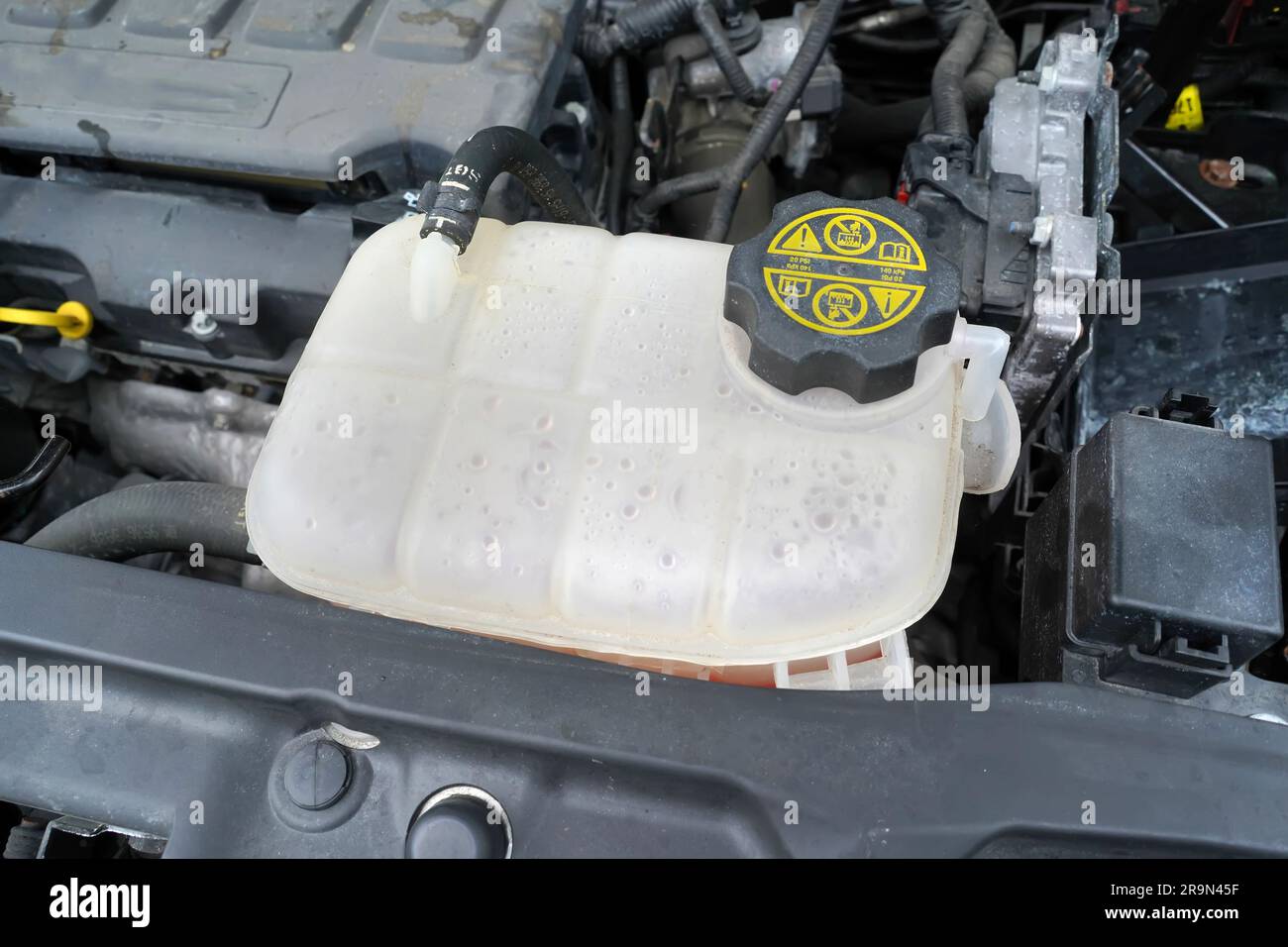
An empty coolant reservoir usually points to coolant loss, a leaking reservoir, a damaged hose, a faulty radiator cap, or trapped air. Check the coolant only when the engine is completely cold. Refill it with the correct coolant, then find out why the level dropped. Repeated coolant loss needs a proper inspection.
Across the United States, drivers depend on their vehicles for daily commutes, school runs, road trips, and long highway drives. A cooling system problem can turn an ordinary trip into an expensive repair. One warning sign deserves quick attention: an empty coolant reservoir. You may notice the problem during a routine oil check, after parking in your driveway, or when a low coolant warning appears on your dashboard.
The coolant reservoir holds extra engine coolant as the engine heats and cools. It helps maintain the correct amount of fluid in the cooling system. If the tank is empty, the system may have lost coolant or may not be moving it correctly. A damaged cap, cracked tank, leaking hose, water pump problem, or internal engine leak can cause this issue.
An empty tank does not always mean the engine is already overheating. For example, some vehicles have a separate overflow bottle that can be empty while the radiator still holds coolant. Other vehicles use a pressurized expansion tank that forms part of the main cooling circuit. The difference matters when checking the fluid and deciding whether the car is safe to drive. This guide explains the causes, safe checks, refill steps, and warning signs that call for professional help.
Source: storage.googleapis.com
What Does an Empty Coolant Reservoir Mean?
An empty coolant reservoir means the fluid level has fallen below the normal range. In some cases, the tank contains a small amount of coolant that sits below the visible level markings. In other cases, the tank is completely dry. Both conditions deserve attention, especially if the level was normal during your last check.
Your engine creates a great deal of heat while it runs. Coolant absorbs that heat and carries it to the radiator, where airflow helps release it. The water pump moves coolant through the engine, radiator, and other cooling passages. The thermostat helps control the flow as the engine reaches its normal operating temperature.
The reservoir supports this process by holding extra coolant and allowing the system to manage changes in fluid volume. When the engine heats up, coolant expands. When the engine cools, the fluid contracts. The reservoir and its connecting parts help keep the system supplied with the correct amount of coolant.
If the tank becomes empty, the system may have lost fluid somewhere. It may also have a problem that prevents coolant from returning to the correct place. Simply adding more fluid does not repair the cause. The best approach is to identify the type of reservoir, inspect the cooling system, and check how the fluid level changes.
Source: storage.googleapis.com
Low coolant supply
The engine may not have enough coolant to control heat. This can increase the risk of overheating and engine damage.
Possible coolant leak
A cracked tank, loose hose, damaged radiator, or leaking water pump can allow coolant to escape.
Poor coolant recovery
A damaged radiator cap or blocked recovery hose may stop coolant from returning to the radiator after the engine cools.
Trapped air
Air left inside the cooling system after maintenance can cause unusual coolant level changes and poor circulation.
Coolant Reservoir vs. Pressurized Expansion Tank
Not every vehicle uses the same cooling system design. Some cars have a simple overflow bottle connected to the radiator through a small hose. The radiator has its own pressure cap, and the bottle collects extra coolant as the engine heats up. During cooling, the system should draw the fluid back into the radiator.
Other vehicles use a pressurized expansion tank. This tank is part of the main cooling circuit and often serves as the primary filling point. It may have a pressure cap and several coolant hoses. If this tank is empty, the engine may have a direct coolant shortage.
Check your owner’s manual before opening any cap or adding fluid. Do not assume that every plastic tank is only an overflow bottle. Knowing the system design helps prevent incorrect filling and unsafe checks.
Overflow bottle
Usually stores extra coolant and supports the radiator’s coolant recovery process.
Pressurized expansion tank
Forms part of the main cooling system and may be the correct coolant filling point.
Common Causes of an Empty Coolant Reservoir
Several problems can cause the coolant level to fall. External leaks are a common place to begin, but the reservoir itself is not always the source. A damaged cap, restricted hose, or internal engine problem can also cause coolant loss.
Look for signs that help narrow down the cause. Dried coolant marks, a sweet smell, wet areas under the vehicle, and repeated low-level warnings can all provide useful clues. The timing also matters. A problem that starts after a coolant flush may have a different cause from one that develops slowly over several months.
Source: vehiclefreak.com
1. Cracked coolant reservoir
Plastic coolant tanks face repeated heating and cooling cycles. Over time, the plastic can become brittle and develop small cracks. Coolant may escape through a seam, hose connection, mounting point, or damaged cap opening. Look for wet spots and dried white, pink, orange, green, or blue residue. The exact residue color depends on the coolant.
2. Damaged or loose coolant hose
A damaged hose can allow coolant to escape when the system heats up and pressure rises. Check the small hose between the radiator and overflow bottle, as well as the larger radiator and heater hoses. Look for cracks, loose clamps, soft areas, swelling, and dried coolant near the connections.
3. Faulty radiator cap
The radiator cap helps control cooling system pressure and coolant movement. On recovery-style systems, its return valve also helps draw coolant back from the reservoir as the engine cools. A weak seal, damaged spring, or faulty valve can interrupt this process. The engine may lose coolant even when the cap looks normal from the outside.
4. Leaking radiator
A radiator can leak through its core, plastic end tanks, seams, drain fitting, or hose connections. Small leaks may appear only when the system is hot and pressurized. You may notice coolant stains, a sweet smell, or a small puddle near the front of the vehicle.
5. Failing water pump
The water pump moves coolant through the engine. Its internal seal can wear and allow coolant to escape through a small drainage opening called a weep hole. Other warning signs may include coolant residue near the pump, unusual bearing noise, or engine overheating. A water pump problem needs proper inspection.
6. Leaking thermostat housing
The thermostat housing connects cooling system passages and hoses. Its gasket or plastic body may crack or wear out. A leak can leave dried coolant around the housing or nearby engine parts. Some leaks appear only after the engine reaches operating temperature.
7. Blown head gasket or internal engine leak
A damaged head gasket can allow combustion gases to enter the cooling system or coolant to enter the engine cylinders or oil passages. This may cause repeated coolant loss, overheating, bubbling, misfires, or persistent white exhaust smoke. These symptoms do not prove a failed head gasket by themselves, but they call for proper testing.
8. Air trapped after coolant service
Air can remain inside the cooling system after a radiator replacement, coolant flush, thermostat repair, or hose replacement. As the air moves through the system, the coolant level may change. The vehicle may need a specific bleeding or vacuum-filling procedure to remove the trapped air.
Can Coolant Disappear Without a Visible Leak?
Yes. A coolant leak does not always leave a puddle on the driveway. A small leak may release fluid only when the engine is hot. The coolant can land on a warm engine part and evaporate before it reaches the ground.
Coolant can also escape through a heater core or an internal engine fault. A leaking heater core may cause a sweet smell inside the cabin, damp carpet, or unusual window fogging. An internal engine leak may have no obvious external signs.
If the tank keeps becoming empty but you cannot find a leak, ask a repair shop for a cooling system pressure test. A UV dye test or combustion-gas test may also help identify the source.
Look for dried residue
Old coolant can leave a chalky or crusty mark around a leaking connection.
Check the cabin
A sweet odor, wet passenger-side carpet, or unusual window fogging may point to a heater-core leak.
Check the oil and exhaust
Unusual oil contamination or persistent white exhaust smoke after warm-up can support further testing for an internal leak.
Coolant Reservoir Empty but Radiator Full: What It Means
An empty reservoir with a full radiator is a different situation from having both components empty. It often points to a problem with the coolant recovery path. The radiator may still contain enough coolant, but the system may not be moving fluid between the radiator and the bottle correctly.
In a traditional recovery system, hot coolant expands and moves through a small hose into the overflow bottle. When the engine cools, the radiator creates a slight vacuum that draws the stored coolant back through the cap and hose. A damaged cap, leaking hose, or blocked connection can interrupt this cycle.
The radiator may appear full during one inspection, but that does not prove the system will remain full during the next heat cycle. If the recovery system fails, air may enter the radiator as it cools. The main coolant level can then fall and cause overheating.
The next step depends on the exact pattern. Check whether the reservoir was empty before driving, became empty after a trip, or started losing fluid immediately after a repair. These details can help a mechanic narrow down the cause.
Source: storage.googleapis.com
Reservoir empty but radiator full
Start by checking the radiator cap, small recovery hose, bottle connections, and reservoir body. Confirm the system type before checking the radiator.
Both reservoir and radiator low
This suggests a wider coolant shortage. Look for leaks and avoid running the engine until the correct coolant level and system condition are confirmed.
Reservoir fills when hot but empties when cold
This may point to a coolant recovery problem, especially if the radiator cap or return hose cannot draw fluid back.
Reservoir overflows during driving
Possible causes include overheating, excess system pressure, trapped air, a faulty cap, or combustion gases entering the cooling system.
Reservoir empties after recent maintenance
The system may have trapped air or an incorrect fill level. Check the factory bleeding procedure rather than repeatedly adding coolant.
Why a Full Radiator Does Not Always Mean the Car Is Safe
A full radiator can be reassuring, but it is only one part of the diagnosis. The cooling system also needs the correct pressure, proper circulation, and a working coolant recovery path. A faulty cap or leaking hose can cause trouble even before the radiator becomes visibly low.
Some newer vehicles do not have a separate radiator cap that drivers can access. Their pressurized expansion tank may be the correct place to check and fill coolant. Never open a sealed cooling system just to compare fluid levels. Follow the vehicle-specific instructions.
If the temperature gauge rises, the coolant warning appears, or the cabin heater suddenly blows cold air while the engine is hot, stop driving. These signs can indicate poor coolant circulation or an overheating condition.
Do not rely on one level check
Compare the coolant level when the engine is fully cold and follow the vehicle’s specified checking procedure.
Watch the next cold level
A repeated drop after a full cool-down suggests that the system needs further inspection.
How to Check and Refill an Empty Coolant Reservoir Safely
You can perform a basic coolant inspection at home if the vehicle is parked safely and the engine is completely cold. You will need the correct coolant for your vehicle, a clean funnel, a flashlight, and a pair of suitable gloves. Keep children and pets away from the work area because engine coolant can be poisonous.
Park on a level surface, switch off the engine, and engage the parking brake. Allow the engine and cooling system to cool completely. This may take several hours after a hot drive. Do not rely on the temperature gauge alone to decide whether a pressurized cap is safe to open.
Find the coolant reservoir and inspect the markings on its side. Most tanks have MIN and MAX or LOW and FULL lines. When the engine is cold, the level should fall within the range stated in the owner’s manual. A tank that is completely empty needs more attention than a level that is only slightly below the minimum mark.
Source: carstale.com
Step 1: Read the owner’s manual
Identify the correct coolant filling point, coolant specification, mixture, and any special instructions for your vehicle.
Step 2: Check the tank
Look for cracks, damaged seams, loose connections, and dried coolant marks. Do not remove the cap while the engine is hot.
Step 3: Inspect the hoses
Look for splits, loose clamps, swelling, and visible leaks around the reservoir, radiator, and nearby hoses. Avoid touching hot or moving engine parts.
Step 4: Choose the correct coolant
Use the coolant specification approved for your exact vehicle. Follow the required concentration and use a suitable premixed product or the correct distilled-water mixture when required.
Step 5: Add coolant slowly
If the owner’s manual permits a simple top-up, add coolant to the correct filling point. Bring the level to the specified cold mark. Do not fill above MAX.
Step 6: Secure the cap
Check that the cap and its seal are in good condition. Install it correctly according to the vehicle instructions.
Step 7: Monitor the level
If the vehicle is safe to operate, monitor the temperature and recheck the coolant after the engine has cooled completely. A repeated drop means the underlying problem remains.
Which Coolant Should You Use?
The correct coolant depends on the vehicle’s manufacturer, model, engine, and cooling system materials. Different coolant formulas use different corrosion protection packages. Mixing incompatible products can reduce protection or cause cooling system problems.
Do not choose antifreeze by color. Green, orange, pink, blue, and yellow fluids do not provide a reliable way to identify chemical compatibility. Two products with the same color may use different formulas.
Check the owner’s manual or manufacturer-approved service information for the required specification. If you use concentrated coolant, follow the stated dilution ratio. Many vehicles use a 50/50 coolant and water mixture, but this is not a universal rule. Premixed coolant is another option when it matches the required specification.
Use approved coolant
Match the manufacturer’s required specification instead of relying on a generic coolant label.
Avoid random mixing
Do not combine different coolant formulas unless the manufacturer confirms compatibility.
Avoid unnecessary additives
Stop-leak products and extra additives can create other problems. Use them only when the vehicle manufacturer or a qualified repair professional specifically approves them.
What If the Coolant Level Drops Again After Refilling?
If the tank becomes empty again, stop treating the problem as a simple top-up. Repeated coolant loss means the system may have a leak, a pressure problem, trapped air, or an internal fault. Adding fluid again without finding the cause can allow the engine to overheat.
A cooling system may require a special bleeding procedure after repairs. Some vehicles have air bleed screws, electric water pumps, or manufacturer-specific filling steps. Others need a vacuum filling tool. Do not use a generic bleeding method when the correct procedure is available in the service information.
If the level falls slowly
Arrange a cooling system inspection and pressure test to locate a possible small leak.
If the level falls quickly
Do not continue driving. A rapid loss can lead to overheating and serious engine damage.
If the problem started after a repair
Ask the repair shop to check the fill procedure, bleed process, hose connections, and pressure cap.
When Should You Stop Driving and Visit a Mechanic?
An empty coolant reservoir can become a serious problem when the engine no longer has enough coolant to control its temperature. If the cooling system loses pressure or fluid, hot spots can develop inside the engine. Continued driving can damage the cylinder head, head gasket, and other expensive components.
Do not wait for smoke to appear before taking action. The temperature gauge, dashboard warnings, coolant smell, and changes in cabin heat can provide early clues. If the engine temperature rises above its normal range, pull over in a safe place, switch off the engine, and arrange help.
Never pour cold coolant into a severely overheated engine as a quick fix. Sudden temperature changes can cause thermal stress, and the pressurized system may still release hot steam. Allow the engine to cool fully and follow the manufacturer’s emergency instructions.
Source: motorvehiclehq.com
Temperature gauge enters the hot zone
Stop safely and shut off the engine. Do not continue driving to see whether the temperature returns to normal.
Steam comes from under the hood
Stop the vehicle and keep away from escaping steam. Do not open the hood if doing so would expose you to hot fluid or steam.
Coolant leaks rapidly
A large leak can empty the cooling system quickly. Arrange a tow instead of driving the vehicle.
Cabin heater suddenly blows cold air
If the engine is hot, this may indicate low coolant or poor circulation. Stop and arrange an inspection.
Repeated bubbling or overflowing
The system may have trapped air, boiling coolant, excessive pressure, or combustion gases entering the cooling circuit.
Persistent white exhaust smoke
White smoke after the engine is fully warm, especially with coolant loss or rough running, needs an internal engine leak check.
What Will a Mechanic Check?
A qualified mechanic can use pressure tests and other diagnostic tools to identify a coolant leak. A cooling system pressure test checks whether the system can hold the pressure specified by the vehicle manufacturer. It can help reveal leaks around hoses, radiator connections, the reservoir, and other components.
The mechanic may also test the radiator cap separately. This helps determine whether the cap maintains the correct pressure and allows coolant to return through the recovery system. A visual inspection alone may not identify a weak internal valve.
If there is no visible external leak, additional tests may be needed. A combustion-gas test can help identify exhaust gases entering the cooling system. A cylinder leak-down test or other engine checks may help confirm an internal problem. The right test depends on the symptoms and vehicle design.
Cooling system pressure test
Helps identify external leaks and pressure loss.
Radiator cap test
Checks whether the cap holds and releases pressure within its specified range.
Combustion-gas test
Checks for exhaust gases entering the coolant.
Cooling system bleeding
Removes trapped air using the procedure required for the vehicle.
Water pump inspection
Checks the pump seal, weep hole, and surrounding area for signs of leakage.
Can You Drive With an Empty Coolant Reservoir?
There is no universal answer because the risk depends on the vehicle’s cooling system design and the actual coolant level in the main circuit. An empty atmospheric overflow bottle with a full radiator is different from an empty pressurized expansion tank.
If the system is pressurized through the empty tank, the engine may have lost a large part of its coolant supply. Do not drive it. If you cannot confirm that the main cooling circuit is properly filled, arranging a tow is the safer choice.
Even when the engine appears to run normally, an empty recovery bottle should not be ignored. The system may lose coolant during the next heat cycle. Have the problem checked before a long trip or regular highway use.
Do not drive
If the engine overheats, the pressurized expansion tank is empty, coolant is leaking rapidly, or a warning light indicates a serious problem.
Arrange prompt inspection
If the radiator is full but the overflow bottle remains empty, and the engine has no warning signs, arrange a prompt check of the recovery system.
Choose towing when uncertain
If you cannot confirm the correct coolant level or identify the reservoir design, do not take a risk with the engine.
Common Mistakes to Avoid
A common mistake is filling the tank and assuming the problem is fixed. A refill only replaces lost fluid. It does not repair a damaged hose, cap, pump, or gasket. Repeated top-ups can hide a developing problem until the engine overheats.
Another mistake is opening the cap while the engine is hot. Cooling systems operate under pressure, and hot fluid can spray out with enough force to cause serious burns. Always allow the system to cool completely before following the manufacturer’s checking instructions.
Also avoid using a higher-pressure radiator cap to stop coolant loss. The specified pressure rating is part of the cooling system design. A cap with the wrong rating may place extra stress on hoses, seals, and other components.
Do not open a hot cap
Wait until the engine and cooling system are completely cold.
Do not overfill
Follow the cold-fill markings. Excess coolant may escape through the overflow system.
Do not mix coolant randomly
Use the approved formula and mixture for your vehicle.
Do not ignore repeated coolant loss
A recurring drop is a warning that the cooling system needs diagnosis.
Do not rely on a normal temperature gauge alone
A faulty sensor or low coolant around the sensor can affect the accuracy of temperature readings on some vehicles.
Frequently Asked Questions
Q
Is It Normal for a Coolant Reservoir to Be Empty?
No. A coolant reservoir should normally contain fluid within the manufacturer’s recommended cold-fill range. The level may change slightly as the engine heats and cools, but a completely empty tank is not a normal condition.
Check the cooling system when the engine is fully cold. If the tank is empty, identify the reason before relying on the vehicle for regular driving.
Q
Why Is My Coolant Reservoir Empty but My Car Is Not Overheating?
The engine may still have enough coolant in the main cooling circuit to maintain its normal temperature. This can happen when a separate overflow bottle is empty but the radiator remains full.
A faulty radiator cap, leaking reservoir, damaged recovery hose, or trapped air may cause the problem. However, a normal temperature reading does not prove that the cooling system is healthy. Check the coolant level and arrange an inspection.
Q
Can a Bad Radiator Cap Make the Coolant Reservoir Empty?
Yes. A faulty radiator cap can interrupt the normal movement of coolant between the radiator and recovery bottle. Its seals or return valve may fail, allowing coolant to escape or preventing the system from drawing fluid back after cooling.
The cap should have the correct pressure rating for the vehicle. A mechanic can test it with suitable equipment and replace it if it fails.
Q
Can I Put Water in an Empty Coolant Reservoir?
The correct choice is the coolant specified by the vehicle manufacturer. Some manufacturers allow distilled or deionized water as part of a temporary emergency procedure, but plain water does not provide the same corrosion and freeze protection as the correct coolant mixture.
Do not use tap water as a routine coolant replacement or mix random fluids. Follow your owner’s manual and restore the proper coolant concentration as soon as possible.
Q
Why Does My Coolant Reservoir Keep Emptying After I Fill It?
Repeated coolant loss usually indicates an unresolved problem. Possible causes include a cracked reservoir, leaking hose, faulty radiator cap, water pump leak, radiator damage, thermostat housing leak, or internal engine fault.
Trapped air after recent maintenance can also cause the level to change. If the tank becomes empty again, arrange a cooling system pressure test and any other tests needed to find the cause.
Q
Can a Blown Head Gasket Cause an Empty Coolant Reservoir?
Yes. A failed head gasket can allow coolant to enter the combustion chamber or allow combustion gases to enter the cooling system. This can cause repeated coolant loss, overheating, bubbling, engine misfires, or persistent white exhaust smoke.
These signs can also have other causes. A combustion-gas test and further engine checks can help confirm whether the head gasket is damaged.
Q
How Often Should I Check My Coolant Reservoir?
Check the coolant level according to your vehicle’s maintenance schedule. A monthly cold-level check is a useful general habit for many drivers, and checking before a long road trip can help catch a problem early.
You should also inspect the level after cooling system repairs or any overheating event. If you notice a sudden drop, do not wait until the next scheduled check.
✦ Wrapping Up
Conclusion
An empty coolant reservoir is a warning that your vehicle’s cooling system needs attention. The cause may be simple, such as a loose hose or damaged cap. It may also involve a leaking radiator, failing water pump, trapped air, or an internal engine problem. The first step is to understand your vehicle’s cooling system and check the fluid level safely.
Always inspect coolant when the engine is completely cold. Use the correct coolant, follow the manufacturer’s filling instructions, and avoid opening a pressurized cap while the engine is hot. If the level drops again, do not keep topping it up without finding the source.
Pay close attention to overheating warnings, steam, rapid coolant loss, and unusual changes in cabin heat. These signs can point to a serious problem. A proper pressure test and further inspection can help prevent a small cooling system fault from turning into major engine damage.
💡 Key Takeaway
Let the engine cool completely, check the reservoir against its cold-fill marks, inspect the visible tank and hoses, and use only the manufacturer-approved coolant. If the reservoir is empty again, the engine overheats, or you cannot confirm the main coolant level, stop driving and arrange a professional cooling system inspection.
About john Adword
John Adword has tested and reviewed car seat covers and interior accessories for 5 years, evaluating fit, material performance, and long-term wear across a range of vehicles and climates. His testing approach follows the same methodology used across car Reviewer Plus's product reviews — hands-on installation, real-world use, and comparison against manufacturer claims — with an ongoing focus on tracking new seat cover materials and cooling technology as they come to market.