Car AC evaporator problems usually involve refrigerant leaks, restricted airflow, ice buildup, dirt, corrosion, or a blocked condensate drain. Common warning signs include weak cooling, musty odors, inconsistent airflow, frost, and water inside the passenger cabin. Proper diagnosis helps identify whether the evaporator needs cleaning, repair, or replacement.
In the United States, a working car air conditioner is more than a comfort feature during long summer drives. Drivers in hot states such as Texas, Arizona, Florida, and California depend on reliable cabin cooling during daily commutes and road trips. When the air turns warm or a musty smell comes from the vents, the evaporator is one component worth checking.
The AC evaporator sits inside the heating, ventilation, and air conditioning system, usually behind the dashboard. It absorbs heat from cabin air and removes moisture before the blower sends cooled air through the vents. A leak, blockage, frozen coil, or dirty surface can affect the entire cooling system.
However, not every AC problem comes from a damaged evaporator. A weak blower motor, dirty cabin air filter, low refrigerant, faulty expansion valve, or blocked drain can create similar symptoms. The best approach is to identify the exact problem before paying for an expensive repair.
Source: coolcarairconditioning.com.au
What Is a Car AC Evaporator and How Does It Work?
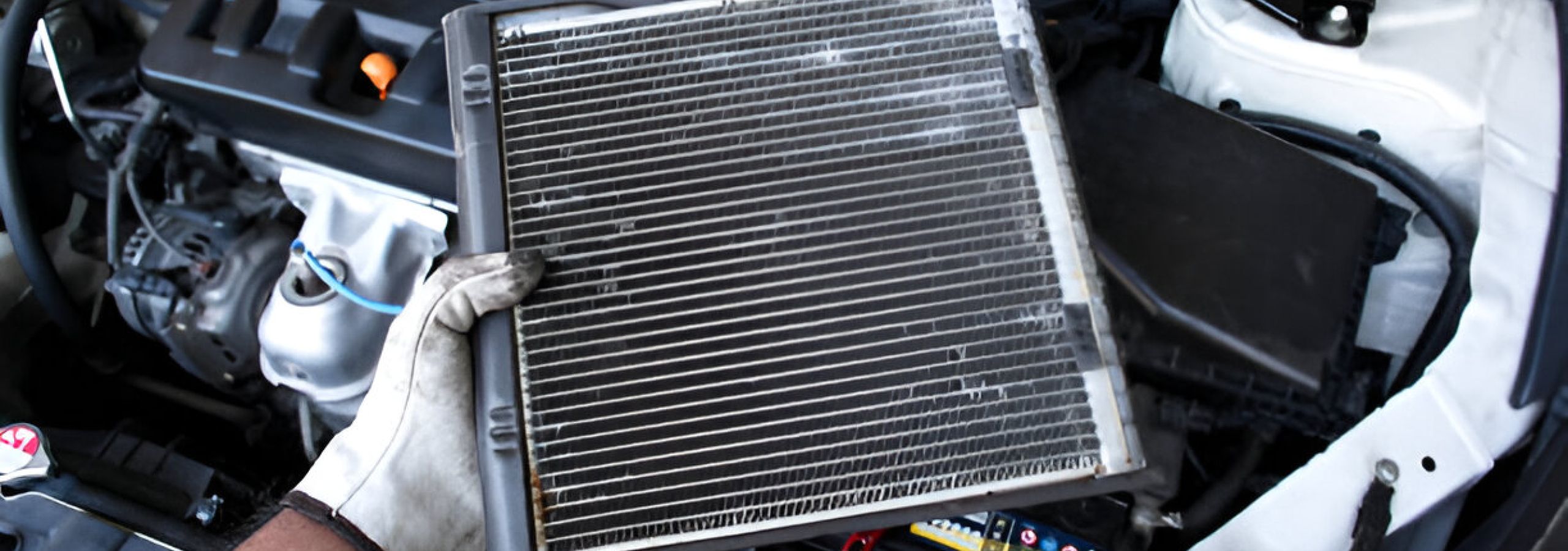
The car AC evaporator is a heat exchanger that removes heat and moisture from the air inside your vehicle. It usually sits inside the HVAC housing behind the dashboard, near the blower motor and other climate control components.
When the air conditioner operates, cold, low-pressure refrigerant enters the evaporator. Warm cabin air passes over its metal fins. The refrigerant absorbs heat and changes from a liquid-vapor mixture into a gas before returning to the compressor.
This process cools the air that enters the passenger compartment. It also removes moisture because water vapor condenses on the cold evaporator surface. The collected water moves into a drain pan and exits through a small drain tube.
The evaporator works with the compressor, condenser, expansion valve or orifice tube, and other AC components. A problem in one part can affect the others. That is why checking the complete system is more useful than replacing the evaporator based on one symptom.
Heat removal
The evaporator absorbs heat from cabin air and transfers it into the refrigerant.
Moisture removal
Water vapor condenses on the cold surface and normally leaves through the evaporator drain.
Air distribution
The blower motor pushes air across the evaporator before sending it through the dashboard vents.
System protection
The expansion valve and temperature controls help manage refrigerant flow and prevent unwanted ice buildup.
Why Does the Evaporator Produce Water?
The evaporator naturally collects moisture when warm, humid cabin air touches its cold surface. This is similar to the water that forms on a cold glass on a humid summer day. The moisture itself is not a sign of damage.
A working drain system carries this water outside the vehicle. A small puddle under the passenger side after using the AC is usually normal. Problems begin when the water cannot leave the HVAC housing and starts collecting inside the cabin.
Normal condition
Clear water drips beneath the vehicle after the AC has been running.
Possible drain problem
Water collects on the passenger floor, behind the glove box, or inside the HVAC housing.
Common Symptoms of Car AC Evaporator Problems
A failing evaporator can produce several warning signs, but no single symptom confirms the problem. Some signs point toward refrigerant loss, while others suggest contamination, poor drainage, or temperature control issues.
Pay attention to when the symptoms occur. For example, cooling that becomes weaker after several minutes may suggest an icing problem. Warm air that remains constant may point toward a refrigerant leak or another system fault.
1. Weak or warm air from the vents
A leaking or restricted evaporator may reduce cooling performance. The vents may produce slightly cool air instead of the cold air you expect. However, low refrigerant, compressor problems, and a faulty expansion valve can create the same symptom.
2. Musty or unpleasant odors
Moisture and organic material can collect on the evaporator surface. This creates conditions for microbial growth and unpleasant smells. A dirty cabin filter or contaminated HVAC housing can also contribute.
3. Refrigerant loss
A leaking evaporator allows refrigerant to escape from the closed AC system. Cooling may gradually become weaker, and the compressor may stop operating when system pressure falls outside its permitted range.
4. Ice or frost buildup
An evaporator may freeze when refrigerant flow, airflow, or temperature control is incorrect. You might notice cooling at first, followed by weaker airflow or warm air as ice blocks the fins.
5. Water inside the passenger cabin
A blocked, damaged, or disconnected evaporator drain can allow condensation to collect inside the HVAC housing. The water may reach the passenger-side carpet or appear near the glove box.
6. Inconsistent cooling
The AC may cool normally at first and then become warm. A frozen coil, refrigerant restriction, temperature sensor fault, or expansion valve problem can cause this pattern.
7. Poor windshield defogging
The evaporator helps remove moisture from cabin air. If the AC system cannot dehumidify properly, the windshield may remain foggy in damp conditions. A faulty climate control system can produce the same issue.
How to Recognize an Evaporator That Is Freezing
An evaporator that freezes often produces a repeating pattern. The AC may work well for a short time, then airflow becomes weak even though the blower fan is still running. After the AC is switched off and the ice melts, airflow may return.
This pattern suggests that ice may be blocking the evaporator fins. It does not prove that the evaporator itself is defective. A restricted cabin air filter, low refrigerant charge, faulty temperature sensor, or expansion valve problem may be responsible.
Do not keep running the system for long periods when the airflow repeatedly disappears. Have the cause checked before further operation.
Cooling at startup
The vents initially deliver cold air.
Airflow gradually drops
The blower continues running, but less air reaches the vents.
Cooling returns after a break
The ice melts and airflow improves after the AC has been switched off.
What Causes a Car AC Evaporator to Fail?
An evaporator can fail because of corrosion, refrigerant leaks, contamination, physical damage, or problems elsewhere in the AC system. Some issues affect the evaporator itself, while others interfere with its ability to cool and remove moisture.
Finding the original cause matters. Replacing a damaged evaporator without checking the expansion valve, refrigerant condition, drain, and HVAC housing may leave the vehicle with another problem.
Corrosion and metal deterioration
Moisture, contaminants, and long-term exposure to harsh conditions can damage metal surfaces and joints. Corrosion may eventually create small refrigerant leaks.
Refrigerant leaks
Cracks, damaged joints, weak connections, or failed seals can allow refrigerant to escape. A leak inside the HVAC housing may be difficult to see without special equipment.
Dirt and debris accumulation
Dust, leaves, and other material can collect around the evaporator and restrict airflow. A damaged or neglected cabin air filter may make contamination worse.
Blocked condensate drain
Dirt, organic material, and debris can block the drain tube. Water then remains inside the HVAC housing and may cause damp carpets or unpleasant odors.
Faulty expansion valve
A malfunctioning valve may allow too much or too little refrigerant into the evaporator. Incorrect flow can reduce cooling or contribute to freezing.
Temperature sensor failure
A faulty evaporator temperature sensor may send incorrect readings to the climate control system. The compressor may not cycle as intended, allowing the evaporator to become too cold.
Moisture or contamination inside the system
Improper servicing can introduce moisture, dirt, or incompatible materials into the refrigerant circuit. Contamination can affect the expansion valve and other internal components.
Can a Dirty Cabin Air Filter Damage the Evaporator?
A dirty cabin air filter can restrict the amount of air passing through the evaporator. Reduced airflow may contribute to icing and poor cooling. It can also make odors worse when the filter holds dust, moisture, and organic material.
The filter is usually much easier and less expensive to inspect than the evaporator. Check the vehicle maintenance schedule and replace the filter when required. Use the correct filter size and type for the vehicle.
A new filter will not repair a refrigerant leak or a damaged evaporator. However, it can remove one possible airflow restriction before more complex testing begins.
Restricted airflow
A heavily clogged filter can reduce the volume of air reaching the HVAC system.
Persistent odor
Dirt and moisture trapped in an old filter may contribute to unpleasant smells.
Preventive maintenance
Inspect and replace the cabin filter according to the vehicle manufacturer’s service schedule.
How to Diagnose Car AC Evaporator Problems
The best diagnostic process starts with simple observations and moves toward professional testing. Since the evaporator is usually hidden behind the dashboard, a visual inspection alone may not reveal a leak or internal problem.
Before replacing anything, separate airflow problems, water drainage problems, and refrigerant problems. This makes it easier to identify the correct repair and avoid replacing parts that still work.
Source: exyylokxb.blob.core.windows.net
Step 1: Record the symptoms
Notice whether the AC blows warm air all the time or only after running for a while. Record unusual odors, weak airflow, frost, and water inside the vehicle.
Step 2: Check the cabin air filter
Inspect the filter if the vehicle has an accessible cabin filter. Replace it if it is clogged, damaged, or overdue according to the maintenance schedule.
Step 3: Check the airflow
Run the blower at different speeds. If airflow remains weak even when the AC is switched off, the problem may involve the filter, blower motor, or air distribution system rather than the refrigerant circuit.
Step 4: Look for water inside the cabin
Check the passenger-side carpet and the area below the glove box. Wet flooring may indicate a blocked or disconnected condensate drain, but other water leaks must also be considered.
Step 5: Observe normal condensation
After using the AC in warm, humid weather, look for clear water dripping beneath the vehicle. This is usually normal and shows that condensation is leaving the HVAC housing.
Step 6: Arrange a refrigerant leak test
If cooling is weak and a refrigerant leak is suspected, ask an automotive AC technician to test the system. A leak detector or approved fluorescent dye may help locate a hidden evaporator leak.
How Professionals Test for an Evaporator Leak
Professional evaporator diagnosis often requires electronic refrigerant leak detection. Since the core sits inside the HVAC housing, a technician may inspect the evaporator drain opening with a suitable detector. Refrigerant escaping from the core can collect inside the housing and reach this area.
Some technicians also use approved fluorescent leak-detection dye. If dye appears near the evaporator drain, it can indicate a leak in the evaporator assembly. However, the expansion valve, nearby connections, and seals may also be located inside the housing, so the exact source must be confirmed.
A technician may also recover and measure the refrigerant charge, check system pressures, compare line temperatures, and inspect sensor operation. These tests help separate an evaporator problem from a compressor, condenser, expansion valve, or control fault.
A single pressure reading is not enough to identify every AC failure. Readings must be compared with vehicle-specific service information and the correct operating conditions.
Electronic leak detection
A suitable electronic detector can identify refrigerant escaping from difficult-to-reach areas.
UV dye inspection
Approved fluorescent dye can help reveal a leak when inspected with the correct UV equipment.
Pressure and temperature testing
These checks help identify incorrect refrigerant flow, restrictions, and other system faults.
Component inspection
The technician checks the evaporator, expansion valve, fittings, seals, and drain before deciding on a repair.
Clogged Evaporator Drain, Musty Odors, and Water Leaks
A blocked evaporator drain is one of the most common reasons for water inside a vehicle after using the AC. It is important to understand that a blocked drain and a leaking refrigerant evaporator are two different problems.
The drain carries condensation away from the HVAC housing. When dirt, leaves, or organic material block the tube, water builds up and may spill onto the passenger-side carpet. A damaged or disconnected drain hose can produce a similar result.
A musty smell may develop when moisture remains inside the HVAC housing. Organic material and microbial growth can contribute to the odor. However, smells can also come from a dirty cabin filter, outside air, interior materials, or other sources.
Source: autoowa.com
Clear water under the vehicle
Usually normal condensation from the evaporator, especially after AC use in humid weather.
Wet passenger-side carpet
May indicate a clogged or disconnected evaporator drain, but a heater core or body water leak should also be ruled out.
Musty smell from the vents
May indicate retained moisture, microbial growth, or contamination in the evaporator housing or cabin filter.
No visible condensation drainage
May suggest a blocked drain, although the amount of water depends on humidity, temperature, and AC operating conditions.
How to Check for a Blocked AC Drain
Park the vehicle on a safe, level surface and switch off the engine before inspecting areas underneath it. Look for the evaporator drain outlet near the firewall, using vehicle-specific service information to locate it.
If the drain is accessible, check for visible dirt, damage, or a disconnected hose. Do not push a coat hanger, screwdriver, or other sharp object deep into the tube. The drain and nearby HVAC components can be damaged by careless probing.
Avoid forcing high-pressure compressed air into the drain. Excessive pressure may damage the housing or disconnect the hose. If the blockage cannot be cleared safely from the outlet, have a technician clean it using the correct procedure.
After service, run the AC and confirm that condensation leaves the vehicle through the drain rather than entering the cabin.
Inspect the outlet
Look for visible debris, a kinked tube, or a loose connection.
Avoid sharp tools
Do not force metal objects into the drain or use excessive air pressure.
Confirm drainage
Check that condensation exits beneath the vehicle after the AC runs.
How to Reduce Musty AC Odors
Start by checking the cabin air filter. Replace it if it is dirty or has an unpleasant smell. Next, have the drain inspected if moisture is collecting inside the HVAC housing.
An automotive HVAC cleaner may help when the evaporator surface has odor-causing contamination. Choose a product designed for vehicle HVAC systems and follow its application instructions. Household bleach, strong solvents, and random cleaning chemicals can damage materials or leave harmful residues.
Some vehicles have an automatic evaporator drying or after-blow function. Others may benefit from running the ventilation fan without AC for a short period before parking, provided the vehicle’s operating instructions permit it. These steps can help dry moisture but cannot repair corrosion or a refrigerant leak.
Replace a dirty filter
Use the correct cabin air filter for the vehicle.
Clean the HVAC system properly
Use an automotive-approved evaporator cleaner when contamination is confirmed.
Keep the drain clear
Correct drainage helps prevent standing water inside the HVAC housing.
How to Fix Car AC Evaporator Problems
The correct repair depends on the confirmed failure. A dirty evaporator may need cleaning, while a blocked drain needs proper clearing. A corroded evaporator with a refrigerant leak usually requires replacement rather than a simple cleaning treatment.
A technician should identify the original cause before fitting a new part. Otherwise, the same airflow restriction, contamination, or control problem may affect the replacement component.
Clean a contaminated evaporator
Use a suitable automotive HVAC cleaning method when dirt or microbial contamination is responsible for odors or reduced airflow.
Repair the drain system
Clear a blockage or replace a damaged, kinked, or disconnected drain tube.
Replace a leaking evaporator
Install a compatible replacement when the core is cracked, corroded, or otherwise unable to hold refrigerant.
Correct a sensor or expansion valve fault
Replace or repair the confirmed faulty control component to restore proper refrigerant flow and temperature regulation.
Restore proper airflow
Replace a clogged cabin filter or repair a faulty blower motor or air distribution component.
When Does an Evaporator Need Replacement?
An evaporator generally needs replacement when testing confirms that the core itself has a refrigerant leak, severe corrosion, physical damage, or an internal restriction that cannot be corrected reliably.
Some related faults may be repairable without replacing the entire core. For example, a faulty sensor, damaged wiring connection, or accessible drain hose may be the actual cause. The technician should identify the precise failure before recommending a major repair.
If the expansion valve is mounted inside the HVAC housing, the technician should inspect its connections and condition during evaporator replacement. Replacing related seals or service parts may also be necessary under the vehicle manufacturer’s instructions.
Confirmed refrigerant leak
The core fails an appropriate leak test and the leak source cannot be corrected through a separate connection repair.
Severe corrosion
The evaporator has deteriorated to the point that reliable operation cannot be restored.
Unrepairable internal damage
Physical damage or internal blockage prevents the component from working as designed.
What Happens During Evaporator Replacement?
Evaporator replacement can be a major repair because the core is usually buried inside the dashboard HVAC housing. The exact procedure varies by vehicle. Some models require extensive dashboard removal, while others provide better access through a smaller service area.
The technician first recovers the refrigerant with suitable equipment. The relevant dashboard panels and HVAC components are then removed according to the service manual. After gaining access, the technician disconnects the evaporator and inspects the housing, fittings, expansion valve, and related parts.
The new core is installed with the correct seals and connections. The receiver-drier or accumulator should also be serviced or replaced when required by the manufacturer. This helps address moisture and contamination concerns when the refrigerant circuit has been opened.
The system is then checked for leaks, evacuated as required, and recharged with the specified refrigerant amount by weight. The technician should verify cooling performance, airflow, drainage, and correct system operation before returning the vehicle.
Refrigerant recovery
Remove and handle refrigerant using approved service equipment.
Dashboard and HVAC access
Remove the required interior components to reach the evaporator housing.
Component installation
Fit the replacement core with compatible seals and inspect connected parts.
System restoration
Perform the required evacuation, leak checks, refrigerant charging, and performance tests.
Car AC Evaporator Repair Costs and Replacement Considerations
The cost of an evaporator repair depends on the vehicle, the type of failure, the replacement part, and the labor needed to reach the component. A clogged drain or dirty filter is usually a much smaller job than replacing an evaporator hidden deep inside the dashboard.
Labor can account for a large share of the total bill because some vehicles require substantial dashboard and HVAC housing disassembly. Parts prices also vary between original equipment, aftermarket, and vehicle-specific replacement assemblies.
There is no reliable single price for every car. A compact sedan with accessible HVAC components may have a very different repair bill from a modern SUV with a complex dashboard system.
Vehicle make and model
Dashboard design and access requirements can change the amount of labor involved.
Replacement part quality
Original equipment and aftermarket evaporators may differ in price, construction, and warranty coverage.
Related components
A receiver-drier, accumulator, expansion valve, seals, or other parts may need service during the repair.
Refrigerant type
The vehicle’s specified refrigerant and the equipment needed to service it affect the repair process.
Additional diagnosis
A difficult-to-find leak or an electrical control fault may require extra testing before the repair begins.
How to Evaluate an Evaporator Repair Estimate
Ask the repair shop to explain how it confirmed the evaporator failure. A good estimate should identify the test results and explain why cleaning, drain repair, or another component replacement will not solve the problem.
Request a breakdown of parts, labor, refrigerant recovery and recharge, required seals, and related service items. Ask whether the quote includes a leak test after installation and a final cooling performance check.
Compare the warranty on the replacement part and the labor. A low initial quote may not offer the same coverage or include all the work needed to restore the AC system.
Confirm the diagnosis
Ask whether an electronic leak detector, approved dye, or another suitable test confirmed the leak.
Review included parts
Check whether required seals, drier components, and expansion valve service are included.
Check the warranty
Understand the coverage for both replacement parts and installation labor.
Mistakes to Avoid When Troubleshooting an AC Evaporator
A common mistake is replacing the evaporator as soon as the AC starts blowing warm air. Several other components can cause the same problem. Testing the complete system first can prevent unnecessary expenses.
Another mistake is adding refrigerant without finding the source of a leak. A vehicle AC system is designed to operate with a specified refrigerant charge. Adding too much can also reduce performance or damage components.
Cleaning chemicals and drain-clearing tools also require care. The evaporator is delicate, and careless cleaning can damage its fins, seals, electrical parts, or nearby HVAC components.
Do not assume every odor means a bad evaporator
Check the cabin filter, moisture buildup, drain system, and other possible odor sources.
Do not keep adding refrigerant
Repeated refrigerant loss requires leak diagnosis and proper repair.
Do not use random cleaning chemicals
Household cleaners, bleach, and strong solvents may damage HVAC materials or leave harmful residues.
Do not force objects into the drain
Sharp tools and excessive compressed air can damage the drain or HVAC housing.
Do not ignore repeated freezing
Repeated icing may indicate an unresolved airflow, refrigerant, sensor, or expansion valve problem.
Do not replace parts without testing
Confirm the actual failure before approving an expensive dashboard repair.
Important Refrigerant Safety Rules in the United States
Automotive AC systems contain refrigerant under pressure. Opening a line or releasing refrigerant without the proper equipment can cause injury and harm the environment. Never attempt to vent refrigerant into the air.
In the United States, technicians who service motor vehicle air conditioning systems for payment or other consideration must meet EPA Section 609 certification requirements and use approved refrigerant-handling equipment. The EPA also prohibits intentional refrigerant release during service and repair.
Vehicle refrigerants are not interchangeable. Check the under-hood refrigerant label and vehicle service information before any work. Never mix refrigerants or use an unapproved substitute.
If the system needs refrigerant recovery, leak testing, or recharging, use a qualified automotive AC shop with equipment designed for the specified refrigerant.
Avoid direct contact
Refrigerant can cause cold burns or other injuries if released onto skin or eyes.
Use approved equipment
Refrigerant recovery and charging require suitable equipment and proper procedures.
Follow the vehicle specification
Use only the refrigerant type and charge amount listed for the vehicle.
How to Prevent Future Evaporator Problems
Regular HVAC maintenance can reduce the risk of airflow restrictions, moisture buildup, and unpleasant odors. Although the evaporator does not normally have a routine replacement interval, its surrounding components still need attention.
A clean cabin filter helps maintain airflow. A working drain removes condensation, while correct refrigerant servicing helps protect the entire cooling circuit. These simple maintenance steps can help the system operate as intended.
Prevention cannot stop every leak or corrosion problem. However, early attention to unusual smells, weak cooling, and repeated icing may help identify a fault before it causes more damage.
Replace the cabin air filter on schedule
Follow the maintenance interval in the owner’s manual and inspect the filter sooner if driving conditions are dusty.
Keep the HVAC drain clear
Have the drain checked if condensation stops exiting beneath the vehicle or water appears inside the cabin.
Address odors early
Investigate persistent musty smells rather than masking them with air fresheners.
Repair refrigerant leaks
Find and correct the leak instead of relying on repeated refrigerant top-ups.
Use qualified AC service
Have refrigerant work performed with the correct equipment and vehicle-specific service information.
Watch for repeated icing
Investigate weak airflow or cooling that repeatedly stops after the system has been running.
Does an Evaporator Need Regular Replacement?
No. Most vehicles do not have a scheduled evaporator replacement interval. The component is generally replaced when it develops a confirmed leak, severe corrosion, or damage that prevents reliable operation.
Routine filter replacement and proper drainage can help maintain the HVAC system. Professional AC inspection is useful when cooling performance changes or refrigerant loss occurs, but replacing a working evaporator as preventive maintenance is usually unnecessary.
Normal maintenance
Inspect filters, monitor drainage, and address unusual HVAC symptoms.
Repair when needed
Replace the evaporator only when testing confirms a failure that requires replacement.
Frequently Asked Questions
Q
What are the first signs of a bad car AC evaporator?
The first signs may include weak cooling, inconsistent air temperature, a persistent musty smell, or refrigerant loss. Some vehicles also develop repeated evaporator icing or unusual water accumulation inside the cabin.
These symptoms can have other causes. A proper inspection is necessary before deciding that the evaporator needs replacement.
Q
Can a leaking AC evaporator cause the air conditioner to stop working?
Yes. A leaking evaporator can gradually reduce the refrigerant charge. When the pressure becomes too low, the system may prevent the compressor from operating to protect its components.
The AC may initially provide weak or intermittent cooling before stopping altogether. A refrigerant leak test can help confirm whether the evaporator is responsible.
Q
How can I tell if my AC evaporator is clogged or leaking?
A clogged or contaminated evaporator may cause poor airflow, unusual odors, or drainage problems. A refrigerant leak can cause weak cooling and a gradual loss of refrigerant.
These problems can overlap. A technician can use an electronic leak detector, approved UV dye, pressure testing, and component inspection to identify the exact fault.
Q
Why does my car AC smell bad when I turn it on?
A musty smell often comes from moisture and organic material inside the HVAC housing. The evaporator stays wet during AC operation, which can create conditions for microbial growth.
A dirty cabin filter, blocked drain, or contamination elsewhere in the HVAC system may also cause the odor. Inspecting and cleaning the correct area is more effective than simply using an air freshener.
Q
Is water leaking under my car a sign of a bad evaporator?
Usually, no. Clear water dripping beneath the vehicle after running the AC is generally normal condensation from the evaporator.
Water inside the passenger cabin is different. It may indicate a blocked or disconnected drain, but a heater core leak or water entering through the body should also be considered.
Q
Can I clean my car AC evaporator without removing the dashboard?
Sometimes. Depending on the vehicle, a technician may access part of the evaporator through the cabin filter opening, blower motor opening, or another service access point. A suitable automotive HVAC cleaner may remove surface contamination.
However, cleaning cannot repair a cracked or corroded evaporator. It also may not reach every part of a heavily contaminated core. The correct cleaning method depends on the vehicle design.
Q
How long does it take to replace a car AC evaporator?
Replacement time depends on the vehicle’s dashboard design, HVAC housing, and access to the evaporator. Some models require extensive interior disassembly, while others are easier to service.
Ask the repair shop for a vehicle-specific labor estimate. The estimate should also explain whether related components, seals, refrigerant service, and final leak testing are included.
Q
Can I drive with a bad AC evaporator?
A faulty evaporator does not automatically make the vehicle unsafe to drive. However, poor cooling and reduced moisture removal can affect comfort and windshield defogging.
Do not continue driving if fogged windows prevent a clear view of the road. Also arrange prompt repairs if water inside the cabin is reaching electrical components or causing interior damage.
✦ Wrapping Up
Conclusion
Car AC evaporator problems can affect cooling, airflow, moisture removal, and cabin comfort. Common causes include refrigerant leaks, corrosion, contamination, restricted airflow, sensor faults, and blocked condensate drains.
The most useful first step is to identify the symptoms and separate a refrigerant problem from an airflow or drainage issue. Check the cabin filter, observe condensation drainage, and note when cooling performance changes. Leave refrigerant testing and repairs to a properly equipped technician.
A confirmed evaporator leak may require replacement, especially when the core has corroded or suffered physical damage. However, a dirty filter, blocked drain, or faulty expansion valve may need a much simpler repair. Accurate diagnosis protects your budget and helps restore reliable AC performance.
💡 Key Takeaway
If your car AC blows warm air, freezes repeatedly, or creates a persistent musty odor, arrange a complete HVAC inspection before replacing the evaporator. Ask the technician to confirm the fault, check related components, and verify cooling performance after the repair.
About john Adword
John Adword has tested and reviewed car seat covers and interior accessories for 5 years, evaluating fit, material performance, and long-term wear across a range of vehicles and climates. His testing approach follows the same methodology used across car Reviewer Plus's product reviews — hands-on installation, real-world use, and comparison against manufacturer claims — with an ongoing focus on tracking new seat cover materials and cooling technology as they come to market.