Car AC expansion valve problems can cause weak cooling, warm air, evaporator icing, and irregular AC performance. A stuck, blocked, or damaged valve can prevent the right amount of refrigerant from reaching the evaporator. Proper diagnosis requires checking refrigerant pressure, temperature, airflow, and system charge before replacing the valve.
During a hot summer in the United States, a working car air conditioner makes a big difference. Think about sitting in traffic in Texas, driving across Arizona, or leaving a car in a sunny parking lot in Florida. When the AC starts blowing warm air, the problem can make even a short trip uncomfortable. One possible cause is a faulty expansion valve.
The expansion valve controls how much refrigerant enters the evaporator. It helps keep the refrigerant at the right pressure and temperature for cooling. When the valve sticks, becomes blocked, or loses its ability to regulate flow, the entire AC system can struggle. You may notice weak cooling, changing vent temperatures, or ice on parts of the AC system.
However, these signs do not prove that the expansion valve has failed. Low refrigerant, a dirty condenser, a weak compressor, and poor cabin airflow can create similar symptoms. The best approach is to understand how the valve works and check the complete system before paying for a repair.
Source: ricksfreeautorepairadvice.com
What Does a Car AC Expansion Valve Do?
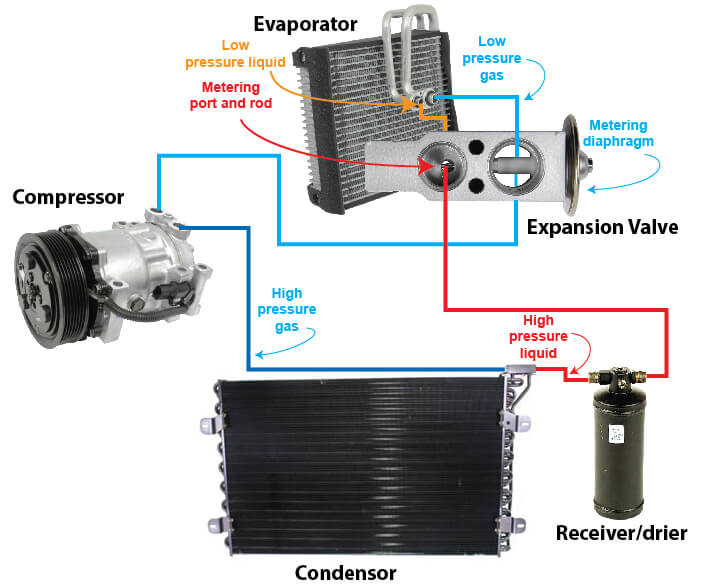
The expansion valve controls refrigerant flow between the condenser and evaporator. It creates a small opening that allows high-pressure liquid refrigerant to enter the low-pressure side of the AC system. This change in pressure also lowers the refrigerant temperature.
The cold refrigerant then enters the evaporator. Warm cabin air passes over the evaporator fins, and the refrigerant absorbs heat from that air. The cooled air moves through the dashboard vents while the refrigerant changes into vapor and returns toward the compressor.
The valve must supply enough refrigerant to handle the heat inside the cabin. It must also prevent too much liquid refrigerant from leaving the evaporator. This balance protects cooling performance and helps keep liquid refrigerant away from the compressor.
Source: ricksfreeautorepairadvice.com
Controls refrigerant flow
The valve adjusts the amount of refrigerant entering the evaporator. It opens or closes as cooling demand and operating conditions change.
Reduces refrigerant pressure
The small metering opening separates the high-pressure liquid side from the low-pressure evaporator side.
Supports efficient cooling
The correct refrigerant flow allows the evaporator to absorb heat without becoming flooded or starved.
Helps protect the compressor
The valve helps the refrigerant leave the evaporator as vapor rather than allowing excessive liquid refrigerant to return to the compressor.
How a Thermal Expansion Valve Works
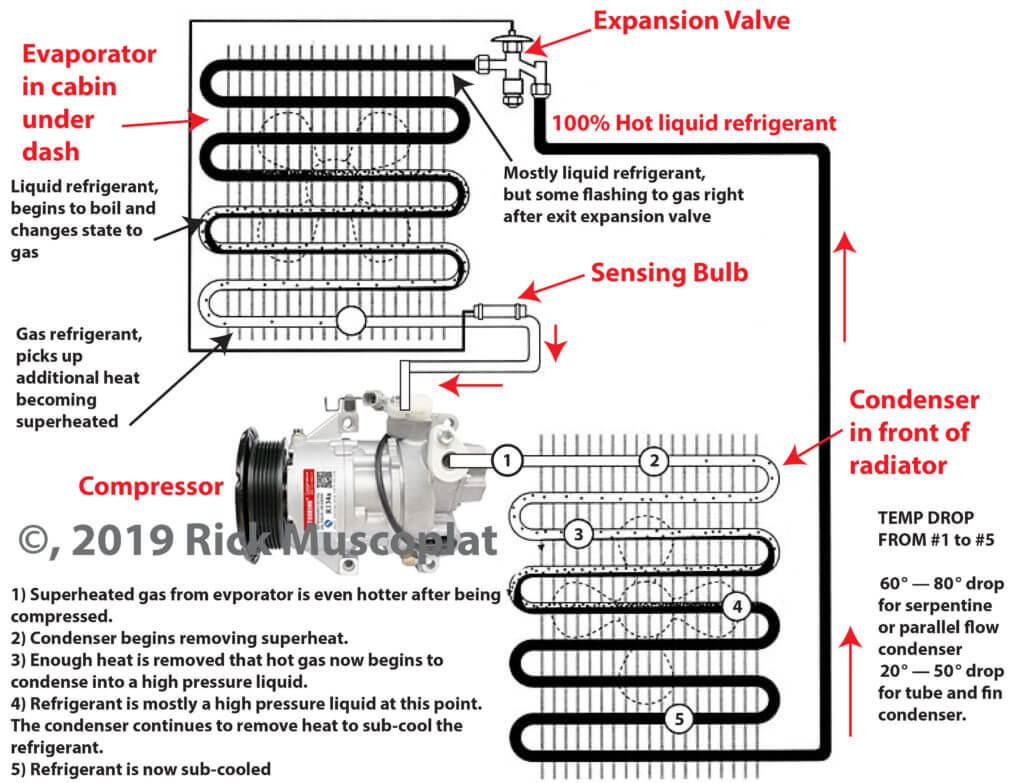
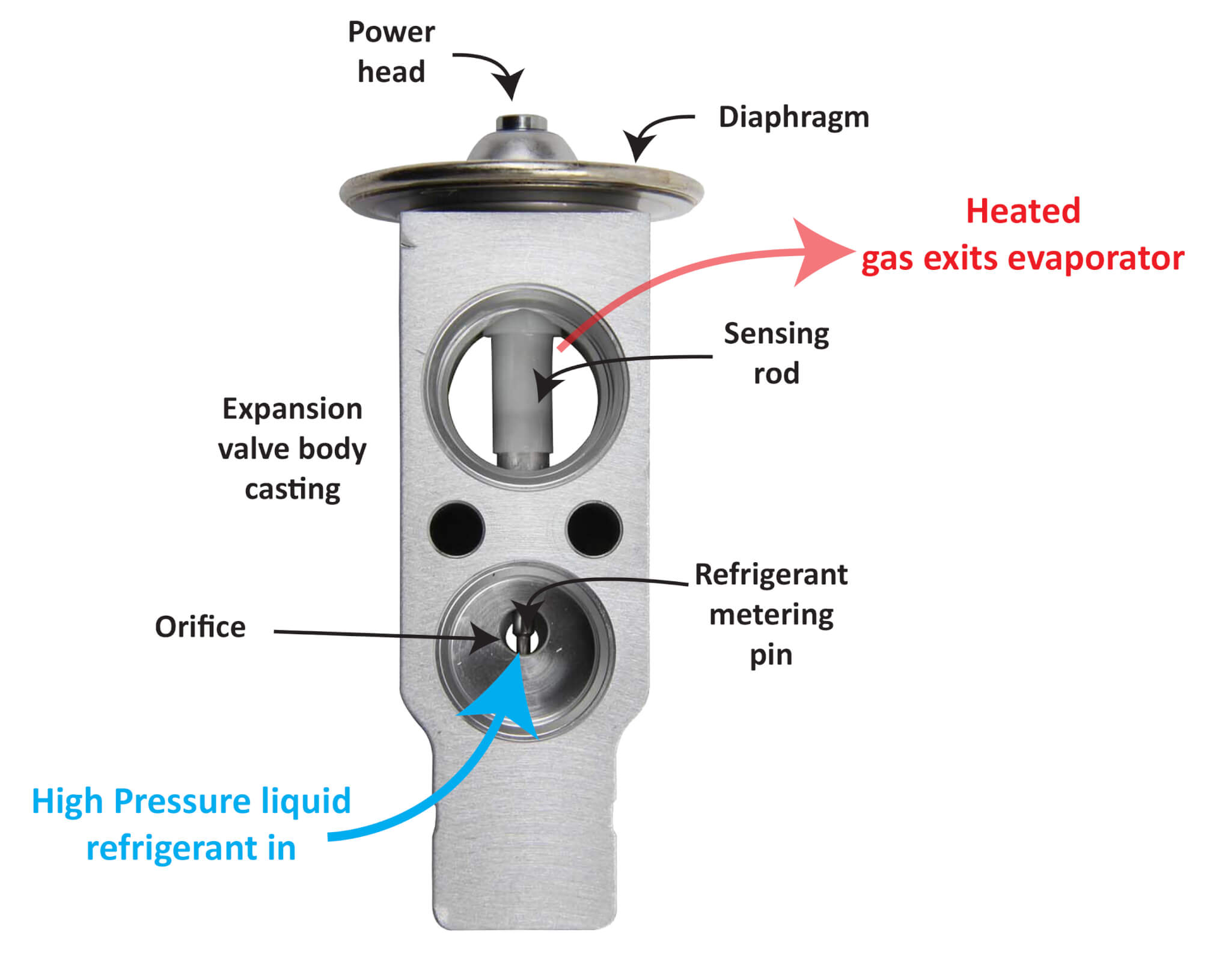
A thermal expansion valve, also called a TXV, uses pressure and temperature changes to control its opening. Many traditional designs use a temperature-sensing bulb attached to the evaporator outlet. The bulb responds to refrigerant temperature and helps control a diaphragm inside the valve.
When the evaporator outlet becomes warmer, the valve can open farther to supply more refrigerant. When the outlet becomes cooler, the valve can reduce refrigerant flow. A spring and evaporator pressure also affect this movement.
This process helps maintain superheat. Superheat is the temperature of refrigerant vapor above its boiling temperature at the measured pressure. Correct superheat helps confirm that liquid refrigerant has evaporated before reaching the compressor.
Sensing bulb
Measures temperature near the evaporator outlet on designs that use an external bulb.
Diaphragm
Responds to pressure changes and helps move the valve mechanism.
Metering opening
Controls how much refrigerant enters the evaporator.
Block-Type Expansion Valves
Some vehicles use an H-block or block-style expansion valve. This design combines several refrigerant passages and sensing functions in one compact body. It often sits near the evaporator connections at the firewall.
A block valve performs the same basic job as a traditional TXV. However, its internal sensing arrangement differs. This matters during diagnosis because not every vehicle has a separate external sensing bulb that a technician can inspect or reposition.
Common Symptoms of a Bad AC Expansion Valve
A failing expansion valve often affects how well the evaporator receives refrigerant. You may notice poor cooling, uneven vent temperatures, or an AC system that works for a while and then stops cooling. The exact symptoms depend on whether the valve is stuck open, stuck closed, or partly restricted.
Some faults develop slowly. Others appear after an AC repair, refrigerant leak, or compressor failure. Pay attention to when the problem starts and whether it changes with engine speed, outside temperature, or driving conditions.
The following signs can help narrow down the problem. None of them confirms a bad valve on its own.
Source: ricksfreeautorepairadvice.com
1. Warm air from the AC vents
A restricted or stuck-closed valve may prevent enough refrigerant from reaching the evaporator. The evaporator then absorbs less heat, so the cabin vents may deliver warm or mildly cool air. A low refrigerant charge or compressor problem can cause the same symptom.
2. Weak cooling during hot weather
The AC may work reasonably well on a mild day but struggle when outside temperatures rise. A valve that cannot adjust refrigerant flow correctly may fail to meet the increased cooling demand. Poor condenser airflow and an incorrect refrigerant charge must also be checked.
3. AC cooling that comes and goes
Moisture inside the system can freeze near the valve opening and restrict refrigerant flow. Cooling may stop as ice forms and return after the ice melts. This pattern can repeat during the same trip.
4. Ice or frost near AC components
A faulty valve can contribute to unusual refrigerant pressure and evaporator icing. You may notice frost on a refrigerant line or around the evaporator connections. However, low airflow, a faulty evaporator sensor, and other problems can also cause ice.
5. Uneven cabin temperatures
The air may feel cool at first and then become warmer. In some vehicles, vent temperatures may change as the refrigerant flow becomes unstable. A faulty blend door or climate control sensor can produce similar results.
6. Unusual AC pressure readings
A technician may find unusually low suction pressure when a valve is restricted or stuck closed. A valve stuck open can produce excessive suction pressure or other abnormal pressure patterns. The readings must be compared with vehicle-specific specifications.
7. Whistling or unusual refrigerant noise
A damaged or poorly operating valve may create a whistling sound as refrigerant passes through it. However, hissing and other AC noises can also come from normal pressure changes, refrigerant restrictions, or other components.
Symptoms of an Expansion Valve Stuck Closed
A stuck-closed valve restricts refrigerant flow into the evaporator. The evaporator receives too little refrigerant, so it cannot absorb enough heat from cabin air. Cooling becomes weak or may stop completely.
A technician may find very low suction pressure, sometimes approaching a vacuum, depending on the system and test conditions. A restriction caused by moisture or dirt can create a similar pattern. The technician must identify the actual source before replacing parts.
Reduced refrigerant flow
The evaporator receives less refrigerant than it needs.
Low suction pressure
The low side may fall below the vehicle’s expected operating range.
Poor cooling
The AC may deliver warm air or cool only for short periods.
Symptoms of an Expansion Valve Stuck Open
A stuck-open valve can send too much refrigerant into the evaporator. This may lower superheat and increase suction pressure. In some conditions, liquid refrigerant can leave the evaporator before it fully changes into vapor.
Excessive liquid return can place the compressor at risk because the compressor is designed to compress vapor, not liquid. Poor cooling and evaporator icing may also occur. A technician should confirm the condition through pressure and temperature tests.
Excessive refrigerant flow
The valve does not reduce its opening when the cooling demand falls.
Unusual suction pressure
The low-side pressure may be higher than the expected range.
Possible compressor stress
Liquid refrigerant returning to the compressor can cause serious internal damage.
What Causes Car AC Expansion Valve Problems?
Expansion valves can fail because of contamination, moisture, internal wear, or incorrect installation. Their small metering openings make them sensitive to dirt and other particles. Even a small amount of contamination can affect refrigerant flow.
A valve may also appear faulty when another AC component sends it the wrong operating conditions. For example, an undercharged system may not supply enough liquid refrigerant to the valve. A weak condenser can also affect the pressure and condition of refrigerant entering it.
Source: drautomotive.org
Moisture inside the AC system
Water can enter when the system is opened for repair or when a seal fails. Moisture may freeze near the expansion valve opening and temporarily block refrigerant flow. A saturated receiver-drier or desiccant can make the problem worse.
Dirt and metal particles
Debris from a failing compressor, deteriorating hoses, or damaged internal components can travel through the refrigerant circuit. These particles may block the valve inlet screen or interfere with its moving parts.
Failed internal components
The diaphragm, spring, metering mechanism, or temperature-sensing element may stop working correctly. Mechanical wear can prevent the valve from responding properly to changes in temperature and pressure.
Damaged sensing bulb or capillary
On designs with an external bulb, a damaged sensing element can send incorrect temperature information to the valve. A loose or poorly positioned bulb may also affect valve operation.
Incorrect installation
A replacement valve may have the wrong calibration, port size, or application. Poor sealing or incorrect bulb positioning can also create operating problems.
Incorrect refrigerant charge
Too little or too much refrigerant can affect system pressures and cooling performance. This may look like a valve problem even when the valve itself is working.
How Moisture Blocks the Expansion Valve
Moisture is a common cause of intermittent refrigerant restrictions. As refrigerant passes through the small valve opening, pressure and temperature drop. Water inside the system can freeze at this point and restrict the flow.
The AC may stop cooling when ice forms. After the system warms, the ice can melt and allow refrigerant to flow again. This explains why some vehicles cool normally at first but lose cooling after several minutes.
Replacing the valve alone may not solve the problem if moisture remains inside the system. The technician must also inspect the receiver-drier or desiccant and follow the correct moisture-removal procedure.
How Debris Damages the Valve
A compressor failure can release metal particles into the refrigerant circuit. These particles may travel toward the condenser, receiver-drier, and expansion valve. Debris can block the inlet screen or prevent the valve from moving freely.
Old hoses can also release small pieces of internal material. In addition, degraded desiccant can contaminate the system. If the source of contamination is not corrected, a replacement valve may fail again.
How to Diagnose a Bad Car AC Expansion Valve
The best way to diagnose an expansion valve is to test the entire AC system in a clear order. A pressure reading alone cannot prove that the valve has failed. Refrigerant charge, outside temperature, airflow, compressor design, and system controls all affect the readings.
A professional technician will usually begin by confirming the complaint and checking basic system operation. The technician can then use service gauges, temperature measurements, scan-tool data, and the manufacturer’s diagnostic procedure to identify the fault.
This approach helps prevent unnecessary replacement of a working valve. It also reduces the risk of overlooking moisture or debris that could damage the replacement part.
Source: ricksfreeautorepairadvice.com
Step 1. Confirm the cooling complaint
Record the outside temperature, vent temperature, and conditions under which cooling fails. Check whether the AC works at idle, during highway driving, or only for a short time after startup.
Step 2. Check cabin airflow
Inspect the cabin air filter, blower motor, and air intake. A clogged filter or weak blower can reduce cooling and make the evaporator appear to have a refrigerant problem.
Step 3. Inspect the condenser and cooling fans
Check for dirt, damaged fins, blocked airflow, and fan problems. Poor heat removal at the condenser can change refrigerant pressure before it reaches the expansion valve.
Step 4. Check refrigerant pressure
Use suitable manifold gauges to compare high-side and low-side pressure with the vehicle’s service specifications. Interpret both readings together and consider the outside temperature and test conditions.
Step 5. Measure refrigerant line temperatures
Compare temperatures at suitable points around the condenser, liquid line, valve, evaporator outlet, and suction line. Unexpected temperature changes may help locate a restriction or poor refrigerant flow.
Step 6. Verify refrigerant charge
A qualified technician can recover and weigh the refrigerant to check whether the system contains the specified amount. The technician should also identify the refrigerant and inspect for leaks or contamination.
Step 7. Test the expansion valve
Use the vehicle manufacturer’s diagnostic procedure to assess valve operation. Check the sensing arrangement, inlet screen, and other accessible components where the design permits.
Understanding AC Pressure Readings
The low-side gauge measures pressure in the evaporator outlet and compressor suction circuit. The high-side gauge measures pressure in the compressor discharge and condenser circuit. Both readings help show how refrigerant moves through the system.
A restricted valve may produce unusually low suction pressure because the evaporator is starved of refrigerant. A stuck-open valve may produce excessive suction pressure or other abnormal pressure patterns. However, these patterns can overlap with low refrigerant, compressor faults, and other restrictions.
There is no single pressure range that works for every car. For example, a system using R-134a may have different specifications from a newer R-1234yf system. The correct reference must come from the exact vehicle’s service information.
Low suction pressure
May indicate a restricted valve, low refrigerant charge, or another blockage.
High suction pressure
May indicate excessive valve flow, a compressor problem, or a different system fault.
Pressure that changes repeatedly
May point to an intermittent restriction, moisture freezing, or an unstable control condition.
Why a Pressure Test Is Not Enough
Pressure readings change with engine speed, outside temperature, humidity, condenser airflow, and cabin heat load. Modern vehicles may also use variable-displacement compressors and electronic refrigerant controls. These systems require more than a basic pressure comparison.
A good diagnosis combines pressure, temperature, airflow, and scan-tool information when available. If the evidence does not point clearly to the expansion valve, the technician should continue testing instead of replacing it by guesswork.
How Is a Car AC Expansion Valve Replaced?
A faulty expansion valve usually needs replacement when testing confirms that its internal mechanism has failed or that it cannot regulate refrigerant flow correctly. The exact repair process depends on the vehicle and valve design. Some valves are accessible near the firewall, while others require substantial dashboard or HVAC housing work.
The repair involves more than removing the old valve and fitting a new one. Refrigerant must be recovered with suitable equipment, the correct replacement part must be installed, and the system must be evacuated and recharged to the manufacturer’s specification.
The technician should also find out why the original valve failed. If moisture or debris remains inside the system, the new valve may develop the same problem.
Source: ricksfreeautorepairadvice.com
1. Recover the refrigerant
Use approved recovery equipment to remove the refrigerant before opening the system. Refrigerant must not be intentionally released into the atmosphere.
2. Access and remove the valve
Follow the vehicle-specific removal procedure. Depending on the design, the technician may need to remove refrigerant lines, access panels, or parts of the HVAC housing.
3. Inspect the system for contamination
Check the old valve, inlet screen, refrigerant oil, and accessible lines for metal particles, dirt, or signs of moisture damage.
4. Install the correct replacement
Use a valve designed for the exact vehicle and refrigerant system. Replace disturbed seals and O-rings with the correct compatible parts.
5. Service the receiver-drier when required
Replace the receiver-drier or desiccant according to the vehicle manufacturer’s instructions and the condition of the system. This helps control moisture and contamination.
6. Evacuate the system
Use a suitable vacuum pump and follow the required service procedure to remove air and moisture. Check that the system holds the required vacuum.
7. Recharge and test
Charge the system with the correct refrigerant by the specified weight. Then test vent temperature, system pressures, cooling performance, and operation under the required conditions.
Should the Receiver-Drier Be Replaced Too?
The receiver-drier stores refrigerant, filters particles, and absorbs moisture in many TXV systems. Its desiccant has a limited ability to hold water. Once saturated, it may no longer protect the system as intended.
The need for replacement depends on the vehicle manufacturer’s instructions and the reason for the repair. A system that has been open for a long time or contains moisture and debris may need additional service beyond the valve itself.
The technician should also check whether the condenser can be cleaned or flushed effectively. Some modern condenser designs have small internal passages that cannot be reliably flushed after serious contamination.
Why Correct Refrigerant and Oil Matter
Many older US vehicles use R-134a, while many newer models use R-1234yf. These refrigerants have different system requirements and must not be treated as interchangeable. Always check the refrigerant label under the hood.
The compressor oil type and quantity also matter. Using the wrong oil or adding too much can affect lubrication and cooling performance. The technician should follow the vehicle manufacturer’s exact specifications.
Other AC Problems That Can Look Like a Bad Expansion Valve
Several AC components can create symptoms that closely match a faulty expansion valve. Replacing the valve without checking these parts can waste money and leave the original problem unresolved. A complete diagnosis should rule out common faults first.
This is especially important in modern vehicles. Electronic compressor controls, pressure sensors, evaporator temperature sensors, and automatic climate control systems can all change how the AC behaves.
Source: ricksfreeautorepairadvice.com
Low refrigerant charge
A leak can reduce refrigerant flow and cooling performance. Both high-side and low-side pressures may be lower than expected. Find and repair the leak before charging the system.
Dirty or restricted condenser
Dirt, bent fins, and blocked airflow can reduce heat removal. This can increase system pressure and affect the refrigerant supplied to the expansion valve.
Faulty condenser fan
A fan that does not operate correctly can cause poor cooling, especially when the car is stopped or moving slowly. Check fan operation before condemning the valve.
Weak or damaged compressor
A compressor that cannot create the required pressure difference may fail to circulate refrigerant properly. Internal compressor damage can also spread debris through the system.
Clogged cabin air filter
A dirty cabin filter can reduce airflow through the evaporator. The AC may feel weak even when the refrigerant system is operating correctly.
Faulty evaporator temperature sensor
An incorrect sensor reading can cause the system to control compressor operation improperly. Scan-tool data and electrical testing may be needed.
Blend door or climate control problem
A damaged blend door may allow warm air to mix with cooled air. This can create warm vent temperatures even when the evaporator is working.
Variable-displacement compressor control fault
Some compressors adjust their output without cycling a traditional clutch. A control valve, wiring fault, or electronic command problem can imitate expansion valve trouble.
Expansion Valve vs. Orifice Tube
An expansion valve and an orifice tube both control refrigerant flow into the evaporator, but they work differently. An expansion valve changes its opening in response to system conditions. A fixed orifice tube has a set opening and does not actively adjust refrigerant flow in the same way.
Many TXV systems use a receiver-drier before the valve. Many fixed-orifice systems use an accumulator after the evaporator. The correct layout depends on the vehicle.
Before ordering a replacement part, check the vehicle’s AC design. A car that uses an orifice tube does not need an expansion valve replacement.
How Much Does Expansion Valve Replacement Cost?
The cost of replacing a car AC expansion valve depends on the vehicle, valve location, labor time, refrigerant type, and condition of the rest of the AC system. A valve that is easy to reach may require less labor than one buried inside the dashboard or HVAC housing.
The total repair may also include new seals, a receiver-drier, refrigerant recovery, evacuation, and recharging. If the system contains metal debris or moisture, additional cleaning or component replacement may be needed.
There is no reliable single price for every US vehicle. Ask the repair shop for a written estimate that separates parts, labor, refrigerant, and related repairs. This makes it easier to compare estimates and understand what the job includes.
Source: ricksfreeautorepairadvice.com
Vehicle access
Ask whether the valve is accessible from the engine compartment or whether dashboard removal is required.
Replacement parts
Check whether the estimate includes the correct valve, new O-rings, and a receiver-drier or desiccant replacement when required.
Refrigerant service
Confirm that recovery, evacuation, leak checks, and charging by the specified refrigerant weight are included.
Contamination repair
Ask whether the shop found moisture, metal particles, or other debris that requires extra work.
Questions to Ask Before Approving the Repair
A good estimate should explain why the technician believes the valve has failed. Ask which pressure and temperature readings support the diagnosis. Also ask whether the technician verified the refrigerant charge and checked for restrictions elsewhere in the system.
If the system contains contamination, ask how the shop will protect the replacement valve and compressor. The repair plan should follow the manufacturer’s procedure rather than rely on a simple valve swap.
Was the valve failure confirmed?
Request an explanation of the test results rather than relying only on the warm-air symptom.
Was the cause identified?
Ask whether moisture, debris, incorrect charge, or another component contributed to the failure.
What does the warranty cover?
Check the parts and labor warranty and whether related contamination repairs are included.
Can You Drive With a Bad AC Expansion Valve?
In many cases, a faulty expansion valve does not directly affect the engine or transmission. The vehicle may remain drivable even when the AC stops cooling. However, continuing to operate a system with a serious refrigerant flow problem may put additional stress on the compressor.
A valve stuck open may allow liquid refrigerant to return toward the compressor under certain conditions. A severe restriction can also affect refrigerant and oil circulation. Either situation deserves attention because compressor damage can make the repair more expensive.
If you notice grinding, severe knocking, belt squealing, smoke, or an unusual smell when the AC operates, switch the AC off and arrange an inspection. If the engine overheats or the belt appears damaged, stop driving when it is safe to do so and address the mechanical problem.
Source: ricksfreeautorepairadvice.com
Warm air without other problems
You may be able to drive normally, but arrange an AC inspection when practical.
Unusual compressor noise
Turn off the AC and have the compressor and belt system checked.
Smoke or belt damage
Stop safely and seek mechanical assistance rather than continuing to run the system.
Common Mistakes to Avoid
A poor repair decision can make a small AC problem more expensive. Expansion valve symptoms overlap with several other system faults. Always confirm the cause before replacing parts or adding refrigerant.
Avoid quick fixes that do not address the source of the problem. The AC system is a sealed circuit, and its refrigerant charge must match the vehicle’s specifications.
Adding refrigerant without checking the charge
Too much refrigerant can reduce cooling and raise operating pressure. Have the existing charge measured before adding more.
Replacing the valve based on one symptom
Warm air, frost, and unusual pressures can have several causes. Confirm the diagnosis with multiple checks.
Ignoring the receiver-drier
A saturated desiccant may leave moisture in the system and contribute to repeated restrictions.
Using the wrong replacement valve
Different vehicles require specific valve designs and calibrations. Match the replacement to the exact application.
Using AC stop-leak products without checking compatibility
Some sealants can contaminate service equipment or restrict small passages. Follow vehicle and equipment manufacturer guidance before using any additive.
Ignoring compressor debris
If a compressor has failed internally, replacing the expansion valve alone may not remove the contamination.
AC Expansion Valve Safety and Maintenance
Automotive AC systems contain refrigerant under pressure. Refrigerant escaping from a fitting can cause severe cold burns or eye injuries. Do not loosen refrigerant lines or remove the expansion valve while the system is charged.
In the United States, people who service or repair motor vehicle AC systems for payment must hold the required EPA Section 609 certification and use approved refrigerant handling equipment. Refrigerant must not be intentionally vented into the atmosphere.
A qualified AC technician has the equipment to identify the refrigerant, recover it safely, check the system, and recharge it correctly. This is especially important on newer vehicles that use R-1234yf and vehicle-specific service procedures.
Check the cabin air filter
Replace it according to the vehicle maintenance schedule or sooner if it becomes dirty. Good airflow helps the evaporator work correctly.
Keep the condenser clean
Remove loose leaves and dirt from accessible areas without bending the delicate fins or damaging the cooling system.
Repair refrigerant leaks
Do not treat repeated refrigerant loss as normal. Find and repair the leak before restoring the specified charge.
Use the correct refrigerant
Follow the under-hood refrigerant label and manufacturer specifications. Never mix refrigerants or use an unapproved substitute.
Arrange a full inspection after compressor failure
Check for metal debris and contaminated oil before installing a new valve or compressor.
Frequently Asked Questions
Q
Can a bad expansion valve cause a car AC to blow hot air?
Yes. A faulty expansion valve can prevent the correct amount of refrigerant from entering the evaporator. The evaporator then cannot remove enough heat from cabin air, so the vents may blow warm or mildly cool air.
However, low refrigerant, a weak compressor, a restricted condenser, and blend door problems can cause similar symptoms. A proper system diagnosis is needed before replacing the valve.
Q
How do I know if my AC expansion valve is stuck open or closed?
A stuck-closed valve usually restricts refrigerant flow and may produce very low suction pressure. A stuck-open valve can allow excessive refrigerant flow and may produce unusually high suction pressure or low superheat.
These pressure patterns are useful clues, not final proof. A technician should compare high-side and low-side readings with line temperatures and the vehicle’s service specifications.
Q
Can a clogged expansion valve cause the evaporator to freeze?
Yes. A restriction can create abnormal refrigerant flow and pressure conditions that contribute to icing. Moisture can also freeze directly at the valve opening and temporarily block refrigerant circulation.
However, evaporator icing can also result from poor cabin airflow, a dirty filter, a weak blower, or a faulty temperature sensor. The complete system needs to be checked.
Q
Will adding more refrigerant fix a bad expansion valve?
No. Adding refrigerant will not repair a mechanically damaged or blocked expansion valve. It may also make the problem worse if the system already contains the correct amount or is overcharged.
If the system has a low charge, the technician should locate and repair the leak before recharging it. The final refrigerant amount should match the manufacturer’s specified weight.
Q
How long does an AC expansion valve last?
There is no fixed replacement interval for an automotive expansion valve. Many valves last for the life of the vehicle, while others fail because of contamination, moisture, mechanical wear, or incorrect installation.
Regularly maintaining cabin airflow and repairing refrigerant leaks can help the AC system operate correctly. If cooling problems appear, early diagnosis can help prevent further damage.
Q
Should I replace the expansion valve when replacing the AC compressor?
Not every compressor replacement automatically requires a new expansion valve. The decision depends on the compressor failure, contamination level, vehicle manufacturer’s instructions, and the condition of the valve.
If metal particles or other debris have entered the system, the technician should inspect the expansion valve and its inlet screen. Replacing a contaminated or restricted valve may help protect the new compressor.
Q
Is an expansion valve the same as an AC orifice tube?
No. Both parts regulate refrigerant flow into the evaporator, but an expansion valve adjusts its opening according to operating conditions. An orifice tube has a fixed opening.
The vehicle’s AC design determines which part it uses. Check the vehicle service information before ordering replacement components.
✦ Wrapping Up
Conclusion
Car AC expansion valve problems can affect refrigerant flow, evaporator temperature, and cabin cooling. A stuck-open valve, stuck-closed valve, or internal restriction may cause warm air, intermittent cooling, unusual pressure readings, or evaporator icing.
However, these symptoms can also come from low refrigerant, poor condenser airflow, compressor trouble, and faulty climate controls. Replacing the valve without checking the full system can waste money and leave the original fault unresolved.
The best repair starts with a proper diagnosis. Check the refrigerant charge, airflow, system pressures, line temperatures, and possible contamination. If testing confirms valve failure, use the correct replacement part and follow the manufacturer’s recovery, evacuation, and charging procedures.
💡 Key Takeaway
If your car AC blows warm air, cools intermittently, or develops unusual icing, arrange a complete AC system diagnosis before replacing the expansion valve. Ask the technician to verify refrigerant charge, inspect for moisture and debris, and explain the test results.
About john Adword
John Adword has tested and reviewed car seat covers and interior accessories for 5 years, evaluating fit, material performance, and long-term wear across a range of vehicles and climates. His testing approach follows the same methodology used across car Reviewer Plus's product reviews — hands-on installation, real-world use, and comparison against manufacturer claims — with an ongoing focus on tracking new seat cover materials and cooling technology as they come to market.