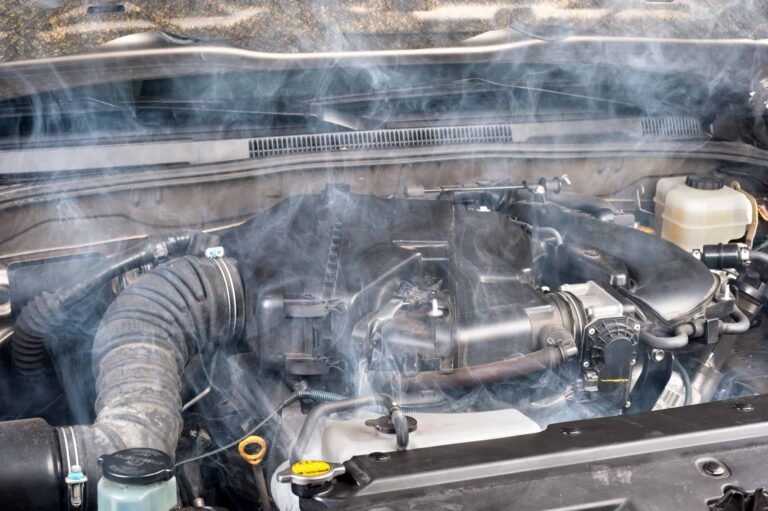
The most common signs of a clogged catalytic converter include weak acceleration, poor engine performance, reduced fuel economy, a rotten egg smell, excessive exhaust heat, and difficulty starting the engine. A check engine light may also appear. An exhaust backpressure test is one of the best ways to confirm a physical blockage.
Across the United States, drivers depend on their cars for daily commutes, road trips, and long highway drives. A clogged catalytic converter can turn a normal drive into a frustrating problem. You may notice weak acceleration when merging onto an interstate, poor power when climbing a hill, or a sudden drop in fuel economy. These changes can start slowly and become worse over time.
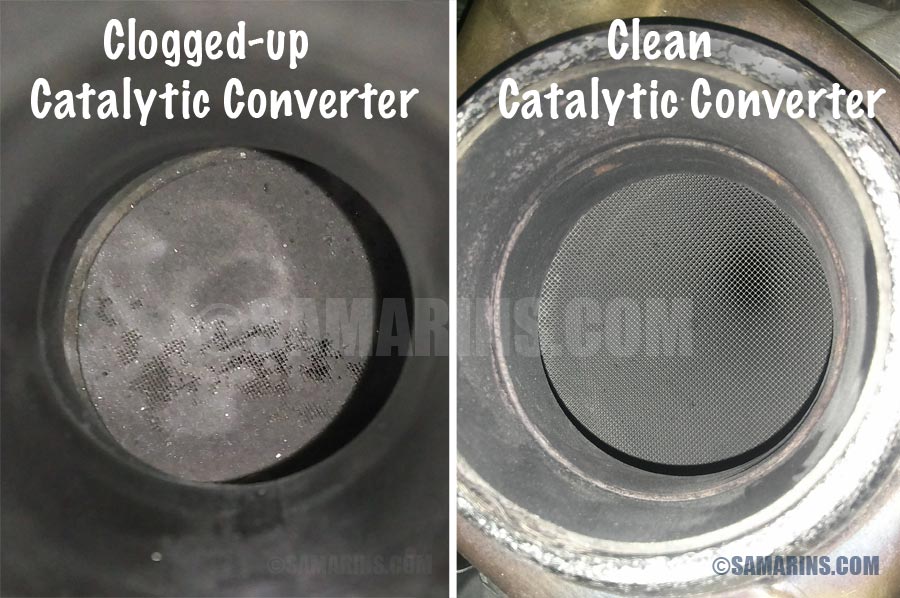
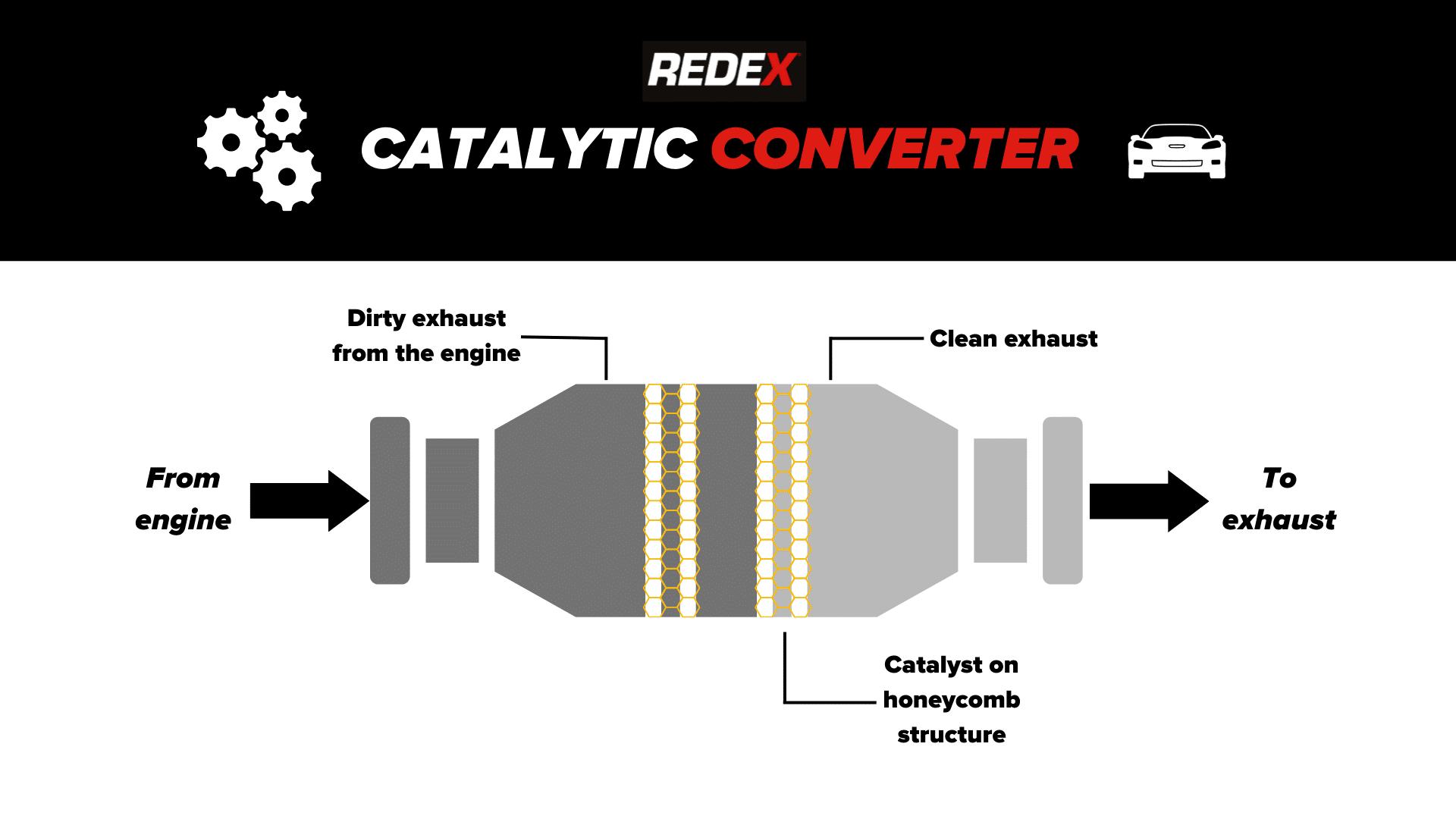
The catalytic converter is part of your vehicle’s exhaust and emissions system. It helps turn harmful exhaust gases into less harmful substances before they leave the tailpipe. Inside the converter is a honeycomb-like structure with small passages. When those passages become blocked, exhaust gas cannot flow as it should. This creates backpressure and can affect engine performance.
Not every bad catalytic converter is clogged. A converter can lose its ability to clean exhaust gases while still allowing exhaust to pass through. Problems with oxygen sensors, fuel control, engine misfires, and exhaust leaks can also create similar warning signs. This guide explains how to spot a real restriction, which tests can confirm it, and when to stop driving.
Source: douglasautomotive.pro
What Happens When a Catalytic Converter Gets Clogged?
A catalytic converter becomes clogged when its internal passages no longer allow exhaust gas to flow freely. The restriction may come from a melted ceramic core, broken internal material, heavy contamination, or damage inside the converter. As the blockage grows, pressure builds up in the exhaust system.
Most gasoline vehicles use a catalytic converter with a ceramic or metallic honeycomb core. This core has many small channels. A special coating helps convert harmful gases during normal engine operation. The channels need enough open space for exhaust to pass through.
Think of the converter like a filter with thousands of tiny pathways. If those pathways become blocked or collapse, gas cannot move through the system with ease. The engine then has to work against extra exhaust pressure.
This condition is known as excessive exhaust backpressure. It can reduce engine power, limit acceleration, and make the vehicle feel weak under load. A severe blockage may prevent the engine from running at all.
Source: youtube.com
Normal exhaust flow
Exhaust gases leave the engine, pass through the catalytic converter, and move toward the muffler and tailpipe with limited resistance.
Restricted exhaust flow
A blocked or damaged converter creates extra resistance. Exhaust gas cannot leave the engine at the rate the engine needs.
Reduced engine performance
As backpressure rises, the engine may struggle to produce power, especially during hard acceleration, uphill driving, and higher engine speeds.
Can a Catalytic Converter Be Bad Without Being Clogged?
Yes. A catalytic converter can lose its chemical efficiency without developing a physical blockage. For example, heat or contamination may damage the active coating inside the converter. Exhaust gas may still pass through, but the converter may no longer clean it well.
This difference matters during diagnosis. A catalyst efficiency problem may trigger a P0420 or P0430 code without causing major power loss. A physically clogged converter is more likely to create high backpressure and poor engine performance.
A proper diagnosis should check both catalyst efficiency and exhaust flow. Replacing a converter based on a trouble code alone can lead to an unnecessary repair.
Catalyst efficiency failure
The converter cannot process exhaust gases as expected, but its internal passages may remain open.
Physical blockage
The converter restricts exhaust flow and creates backpressure that can affect how the engine runs.
9 Common Symptoms of a Clogged Catalytic Converter
A clogged converter can cause several changes in the way your car starts, accelerates, and runs. Some signs appear early, while others develop as the restriction becomes worse. The pattern of symptoms can help guide the diagnosis.
Pay close attention to changes that happen during acceleration or when the engine is under load. These conditions can make a restricted exhaust system easier to notice.
Source: 2carpros.com
1. Weak acceleration
Slow acceleration is one of the most common signs of a restricted catalytic converter. You may press the gas pedal, but the car responds slowly. The engine may feel weak when pulling away from a stop or entering a highway. This happens because rising exhaust backpressure can limit engine performance. The problem may become more noticeable when the vehicle carries passengers or climbs a hill.
2. Poor engine power at higher speeds
A clogged converter may allow the engine to run fairly well at idle but restrict it when engine speed and exhaust flow increase. You may notice that the car struggles to pass another vehicle or maintain speed on an uphill road. The engine may feel as if it cannot breathe. This symptom can become more severe as the blockage grows.
3. Check engine light
A check engine light may appear when the vehicle detects an emissions system problem. Codes such as P0420 and P0430 relate to catalyst efficiency on Bank 1 and Bank 2. These codes do not prove that the converter is physically clogged. Other codes may point to misfires, fuel mixture problems, oxygen sensor faults, or related issues. Read the stored codes and their freeze-frame data before replacing any parts.
4. Poor fuel economy
A restricted exhaust system can affect engine operation and fuel control. You may find that you visit the gas station more often than usual. The vehicle may also need more throttle to maintain its normal speed. However, poor fuel economy has many possible causes, including low tire pressure, dirty air filters, faulty sensors, and fuel system problems. Treat this sign as a clue rather than proof of a clogged converter.
5. Rotten egg or sulfur smell
A strong rotten egg smell from the exhaust may point to a catalytic converter or fuel control problem. The smell comes from sulfur compounds in exhaust gases. A damaged or overloaded converter may fail to process these gases as expected. A rich fuel mixture can also overload the converter and cause a similar smell. If the odor is strong, arrange an inspection instead of trying to hide it with fuel additives.
6. Engine stalling or difficulty starting
A severely restricted converter can make it difficult for the engine to push exhaust gas out. This may lead to rough running, stalling, or a no-start condition. You may notice that the engine starts and then shuts off after a short time. These signs can also come from a weak battery, fuel pump, ignition fault, or sensor problem. A technician should test the exhaust system before blaming the converter.
7. Excessive heat under the vehicle
A converter that is overloaded or badly damaged can become extremely hot. You may notice unusual heat under the floor, near the center of the vehicle, or around the exhaust tunnel. Severe overheating can damage nearby parts and increase fire risk. If the converter glows red, you see smoke, or you smell burning material, stop the engine and arrange a tow. Do not park over dry grass or leaves when the exhaust is overheating.
8. Rattling noise from underneath the car
A rattling sound near the exhaust may mean that the converter’s internal honeycomb material has broken apart. Loose pieces can move inside the metal housing and make noise as the engine runs. Some broken pieces may also shift and block the remaining passages. A loose heat shield or exhaust hanger can make a similar sound, so inspect the full exhaust system before deciding that the converter needs replacement.
9. Rough running and engine misfires
A restricted converter may contribute to poor engine operation, especially when exhaust flow becomes severely limited. The engine may shake, hesitate, or feel uneven. However, an engine misfire is also a major cause of converter damage. Unburned fuel can enter the exhaust and overheat the internal core. If the check engine light flashes, reduce engine load, stop when safe, and arrange professional help.
Which Symptoms Usually Suggest a Severe Blockage?
A major loss of power, repeated stalling, and a very limited engine speed range are strong reasons to suspect a serious exhaust restriction. These signs often become worse when you press the accelerator or drive uphill. A vehicle may also struggle to maintain highway speed.
A sulfur smell or a check engine light alone is much less specific. The best approach is to look at the full pattern and confirm the problem with a proper test.
Mild warning
Slightly reduced acceleration or a change in fuel economy. Arrange diagnosis soon.
Moderate warning
Major power loss, hesitation, or repeated stalling. Avoid unnecessary driving and seek repair promptly.
Severe warning
A glowing converter, smoke, strong burning smell, or exhaust fumes in the cabin. Stop driving and arrange a tow.
What Causes a Catalytic Converter to Become Clogged?
A catalytic converter rarely becomes clogged without a reason. Engine problems, heat damage, contamination, and physical damage can all restrict its internal passages. Finding the original cause is just as important as finding the blockage.
A replacement converter may fail again if the engine still sends too much unburned fuel, oil, or coolant into the exhaust. That is why a complete repair should address the fault that damaged the original part.
Source: mechlesson.com
Engine misfires
A misfire happens when a cylinder does not burn its air-fuel mixture correctly. Unburned fuel can enter the exhaust and burn inside the converter. This creates extreme heat and may melt the ceramic core. Worn spark plugs, faulty ignition coils, bad injectors, and compression problems can all cause misfires.
Rich air-fuel mixture
A rich mixture contains more fuel than the engine can burn under the current conditions. Faulty injectors, fuel pressure problems, sensor faults, and other engine issues may cause this condition. Extra fuel can overheat and damage the converter over time.
Engine oil entering the exhaust
Worn piston rings, damaged valve seals, or other engine problems may allow oil to enter the combustion chamber. Oil can leave deposits on the converter’s internal surface. Heavy contamination can reduce catalyst performance and restrict exhaust flow.
Coolant entering the combustion chamber
A leaking head gasket or another internal coolant leak can send coolant into the engine cylinders. Some coolant-related deposits can contaminate the catalytic converter. White exhaust smoke, unexplained coolant loss, and engine overheating should be checked before replacing the converter.
Melted or broken honeycomb material
Excessive heat can soften and melt the internal structure. A physical impact can also crack the ceramic core. Broken or collapsed material may block the small exhaust passages and create a serious restriction.
Age and internal wear
Long-term heat cycles and normal wear can weaken the internal material. A damaged core may break into smaller pieces. These pieces can move and create a partial or complete blockage.
Physical damage to the exhaust system
A road impact, accident, crushed exhaust pipe, or damaged connection can restrict exhaust flow. The catalytic converter may not be the source of the problem. A full exhaust inspection helps identify the exact location.
Why Do Engine Misfires Damage Catalytic Converters?
A catalytic converter works within a certain temperature range. When a cylinder misfires, some fuel may pass into the exhaust without burning in the cylinder. That fuel can burn inside the converter and raise its temperature.
Repeated overheating can damage the internal coating and melt the honeycomb structure. The material may then collapse and block exhaust flow. This is why a misfire should be repaired before installing a new converter.
A flashing check engine light often signals an active misfire that could damage the emissions system. Avoid hard acceleration and seek service as soon as possible.
Check ignition parts
Inspect spark plugs, ignition coils, and related wiring when misfire codes are present.
Check fuel delivery
Look for leaking injectors, incorrect fuel pressure, and other fuel control problems.
Check engine condition
Use suitable compression or leak-down tests when a mechanical engine problem is suspected.
How to Diagnose a Clogged Catalytic Converter
The most useful way to confirm a clogged catalytic converter is to measure exhaust backpressure and compare the readings with the vehicle manufacturer’s specifications. A scan tool, visual inspection, and engine checks help identify the cause and rule out other faults.
A professional diagnosis should not rely on one symptom or one trouble code. Technical guidance from Walker Exhaust Systems also stresses checking engine codes, exhaust leaks, oxygen sensors, and fuel control before condemning a converter.
The following steps explain how a technician can narrow down the problem. Some tests require special tools and work near very hot exhaust parts. Leave those tests to a qualified technician if you do not have the right tools or training.
Source: storage.googleapis.com
Step 1. Check the symptoms and service history
Record when the problem started and how the car behaves. Note whether power drops at higher speeds, whether the engine stalls, and whether fuel economy has changed. Tell the technician about recent repairs, oil use, coolant loss, and previous misfires.
Step 2. Scan for diagnostic trouble codes
Connect an OBD-II scan tool and read stored, pending, and relevant history codes. P0420 generally relates to catalyst system efficiency below the expected level on Bank 1. P0430 relates to Bank 2. Misfire codes, fuel trim codes, and oxygen sensor codes may reveal the actual cause. Save freeze-frame data before clearing any codes.
Step 3. Inspect the exhaust system
Check the converter housing for impact damage, severe discoloration, and signs of overheating. Inspect the pipes, flex sections, clamps, gaskets, muffler, and resonator. A crushed pipe or damaged muffler can restrict flow even when the catalytic converter is sound. Look for exhaust leaks around sensor ports and joints.
Step 4. Check the engine before testing the converter
Inspect ignition performance, fuel delivery, engine temperature, and fuel trim data. Look for active misfires, an overly rich mixture, and signs of oil or coolant entering the exhaust. Repair these faults first when they affect the converter or its readings.
Step 5. Perform an exhaust backpressure test
A technician can use a suitable pressure gauge connected through an oxygen sensor port. Readings can be taken at idle and at a specified engine speed. Excessive pressure suggests an exhaust restriction. Testing at ports before and after the converter helps identify whether the converter or a downstream part is blocked.
Step 6. Check engine vacuum when appropriate
A vacuum gauge can help identify a restriction in the overall exhaust system. The technician records intake manifold vacuum at idle and watches how it changes as engine speed rises. A steady loss of vacuum during a sustained speed test may point to an exhaust restriction. However, valve timing and other engine faults can also affect the readings.
Step 7. Review temperature and oxygen sensor data
An infrared thermometer may help assess converter operation when used under the correct conditions. However, surface temperatures can vary with exhaust load, pipe design, and heat transfer. Temperature differences alone cannot prove that the converter is clogged. A technician should also review oxygen sensor activity and other engine data.
What Are Normal Catalytic Converter Backpressure Readings?
Backpressure limits vary by vehicle and exhaust design. As a broad screening reference, Walker Exhaust Systems describes typical limits of less than about 1.5 PSI at idle and less than about 3 PSI at 2,000 RPM for many applications. Another general exhaust testing guide uses a limit near 1 PSI at idle and 3 PSI at 2,500 RPM.
These figures are not universal repair specifications. Always use the correct service information for the exact vehicle, engine, and test conditions. A reading above the allowed limit suggests a restriction, but the technician must still locate the blocked part.
Testing at two points can make the result more useful. High pressure at the test point behind the converter may suggest a blockage farther downstream. If pressure is acceptable behind the converter but excessive ahead of it, the converter may be restricted.
Pressure is high behind the converter
Inspect the muffler, resonator, and exhaust pipes between the test point and the tailpipe.
Pressure is normal behind the converter but high ahead of it
The catalytic converter is a stronger suspect because the restriction is likely between the two test points.
Pressure is high farther upstream
Check the converter, exhaust manifold, connecting pipes, and any other part between the test point and the exhaust outlet.
Can an OBD-II Scanner Confirm a Clogged Catalytic Converter?
An OBD-II scanner can identify faults related to the emissions system, but it cannot directly confirm a physical blockage on its own. A P0420 or P0430 code reports an efficiency problem detected by the vehicle’s monitoring system.
A restricted converter may cause performance symptoms without setting a specific blockage code. Likewise, an oxygen sensor fault or exhaust leak can trigger an efficiency code when the converter itself is not clogged.
Use the scanner as part of the diagnosis. Combine its results with pressure measurements, engine data, and a physical inspection.
P0420
Catalyst system efficiency below threshold on Bank 1. This does not prove a physical blockage.
P0430
Catalyst system efficiency below threshold on Bank 2. Other sensor, leak, or engine faults may be involved.
P0300 to P030X
These codes relate to engine misfires. Find and fix the misfire before replacing a converter.
Is It Safe to Drive With a Clogged Catalytic Converter?
Driving with a suspected clogged converter is not a good long-term choice. A mild restriction may allow the vehicle to keep moving, but the condition can get worse. Severe exhaust backpressure can cause stalling, major power loss, and poor engine operation.
The greatest concern is excessive heat. A badly overheated converter can damage nearby components and create a fire risk. An engine that misfires may also send more unburned fuel into the exhaust and make the problem worse.
Do not keep driving when the converter glows red, smoke appears, or the car loses most of its power. Turn off the engine in a safe place and arrange a tow. If exhaust fumes enter the cabin, stop the vehicle, get fresh air, and do not continue driving. Exhaust gases can contain carbon monoxide, which is dangerous and cannot be detected by smell.
If the only sign is mild sluggishness, avoid towing, hard acceleration, and long highway trips until the vehicle is checked. There is no safe mileage limit that applies to every clogged converter. The level of restriction and the vehicle’s condition determine the risk.
Stop driving immediately
Do this if the converter is glowing, smoke appears, there is a strong burning smell, the engine stalls repeatedly, or exhaust fumes enter the cabin.
Arrange prompt diagnosis
Do this if acceleration is getting worse, the engine struggles under load, or a new emissions warning appears with drivability problems.
Avoid unsafe checks
Never touch a hot converter or exhaust pipe. Do not run the engine in a closed garage. Never crawl under a vehicle supported only by a jack.
Can a Clogged Catalytic Converter Damage the Engine?
A severe exhaust restriction can affect engine performance and operating conditions. It may cause poor acceleration, stalling, and excessive heat around the exhaust system. Continued operation can also make an existing misfire or fuel control problem worse.
However, a clogged converter does not automatically mean the engine will fail. The risk depends on the degree of blockage, how the vehicle is driven, and the original fault. Early diagnosis can help prevent more costly damage.
Loss of power
High backpressure can make the engine struggle to produce power under load.
Excessive exhaust heat
Overheating may damage the converter, nearby wiring, shields, and other exhaust components.
Repeated misfires
Unburned fuel can increase converter temperature and cause further internal damage.
How to Fix a Clogged Catalytic Converter
The correct repair depends on what caused the blockage and how much internal damage has occurred. A converter with melted or collapsed internal material usually needs replacement. Cleaning cannot restore a honeycomb core that has physically melted or broken apart.
A proper repair starts with the original engine or exhaust fault. If the cause is a misfire, rich mixture, oil leak, or coolant leak, that problem must be corrected. Otherwise, a replacement converter may suffer the same damage.
The repair shop should confirm the restriction, identify its location, and check the rest of the exhaust system before installing parts. This approach helps prevent repeat failures and unnecessary spending.
Source: hitchesguide.com
Repair the original engine problem
Replace failed ignition parts, repair fuel system faults, correct sensor problems, or address oil and coolant leaks as required by the diagnosis.
Replace a physically damaged converter
A melted, collapsed, or badly broken internal core usually cannot be restored to its original condition. Install a correct replacement that meets the vehicle’s emissions requirements.
Repair other exhaust restrictions
Replace or repair crushed pipes, damaged flex sections, blocked mufflers, and other faulty exhaust components when testing identifies them.
Check oxygen sensors and connections
Inspect sensor wiring, exhaust leaks, and related connections. Replace a sensor only when testing confirms that it has failed.
Verify the repair
After the repair, clear codes when appropriate, complete the required drive cycle, and check for returning faults. Confirm that exhaust flow and engine performance have returned to normal.
Can You Clean a Clogged Catalytic Converter?
Some fuel additives are marketed to help clean deposits or improve fuel system performance. Their results depend on the product, the type of contamination, and the vehicle’s condition. They cannot repair a melted, cracked, or collapsed ceramic core.
A physically blocked converter needs a proper mechanical diagnosis. If the internal structure has broken apart or melted, replacing the converter is usually the correct repair.
Be careful with advice that recommends pressure washing, harsh chemicals, or removing the converter for home cleaning. These methods can damage the internal coating, create safety risks, and fail to correct the original engine problem.
Do not spend money on repeated cleaning treatments when backpressure testing has confirmed a serious physical restriction. Ask a qualified technician to explain the test results and the recommended repair.
Light contamination
A technician may assess whether the issue comes from an engine or fuel system condition. An additive should not be treated as a proven repair for a restricted converter.
Melted internal material
Cleaning will not rebuild the damaged honeycomb structure. Replacement is generally required.
Broken internal material
Loose or collapsed pieces can block exhaust passages. The damaged converter should be replaced after the original cause is fixed.
How to Choose the Correct Replacement Converter
A replacement catalytic converter must match the vehicle’s engine, model year, emissions configuration, and legal requirements. A part that physically fits may still be unsuitable for the vehicle’s emissions certification.
The United States has federal emissions requirements, and some states apply stricter rules. California and other states that follow California emissions standards may require a specific compliant replacement. Check the vehicle application and local requirements before buying a part.
Do not remove the converter and install a straight pipe. Federal Clean Air Act anti-tampering rules prohibit removing or rendering required emissions equipment inoperative. Use a compliant replacement and keep the repair records.
Match the exact vehicle
Confirm the make, model, model year, engine size, and emissions configuration.
Check emissions certification
Confirm that the replacement meets the federal and applicable state requirements for the vehicle.
Review the warranty
Check the manufacturer’s part warranty and any remaining factory emissions warranty before paying for the repair.
Common Diagnostic Mistakes to Avoid
A catalytic converter is an expensive part on many vehicles. Replacing it without confirming the fault can waste money and leave the real problem unresolved. A careful diagnosis should separate physical blockage from catalyst efficiency failure and other engine faults.
Several common shortcuts can lead to the wrong repair. Understanding these mistakes can help you ask better questions at an auto repair shop.
Replacing the converter after seeing P0420
P0420 is an efficiency code, not a direct blockage code. The technician should inspect oxygen sensor data, exhaust leaks, fuel control, and converter performance before recommending replacement.
Blaming every power loss on the converter
A weak fuel pump, dirty air filter, ignition fault, transmission issue, or damaged exhaust pipe can also reduce performance. Confirm the cause with suitable tests.
Using temperature alone to diagnose a blockage
Temperature readings depend on engine load, exhaust design, and heat transfer. A temperature difference may help assess catalyst activity, but it cannot prove that the exhaust is restricted.
Ignoring an engine misfire
A misfire can damage a new converter. Repair the ignition, fuel, or mechanical fault before installing replacement emissions equipment.
Clearing codes without fixing the cause
Clearing a trouble code does not repair the vehicle. The warning may return after the onboard diagnostic system runs its tests again.
Trusting a universal cleaning claim
No cleaner can rebuild melted ceramic or replace missing internal material. Choose a repair based on the confirmed condition of the converter.
Ignoring the rest of the exhaust system
A muffler, resonator, or crushed pipe can also restrict flow. Test the full exhaust system before ordering a converter.
Why a Rotten Egg Smell Does Not Always Mean a Clogged Converter
A sulfur smell may appear when the catalytic converter cannot process exhaust gases as expected. However, a rich fuel mixture can also overload a converter and create this odor. The smell may therefore point to an engine problem rather than a physical blockage.
A technician should check fuel mixture, oxygen sensor data, misfire history, and converter condition. Backpressure testing is still needed when a physical restriction is suspected.
Sulfur smell with poor power
Check for both converter damage and excessive exhaust backpressure.
Sulfur smell with fuel mixture codes
Check injectors, fuel pressure, and sensor data for a rich-running condition.
Sulfur smell after repeated misfires
Inspect for heat damage and correct the misfire before replacing the converter.
What to Confirm Before Approving a Converter Replacement
Before approving an expensive exhaust repair, ask the technician to explain what the tests have proved. A useful diagnosis should show whether the converter is physically restricted, whether it has lost chemical efficiency, and whether another part of the exhaust system is responsible.
There are also a few practical questions worth asking before the work begins. These help protect your repair budget and reduce the chance of another converter failure.
Was a physical restriction confirmed?
Ask whether the shop measured backpressure or used another suitable test. A trouble code by itself does not confirm a clogged converter. This is an important next step because symptom guides often list warning signs without explaining what evidence should support an actual replacement.
Were the original engine faults repaired?
Ask whether the shop checked misfires, fuel mixture, oil consumption, coolant leaks, and exhaust leaks. These conditions can damage a replacement converter. Fixing the original fault protects the new part.
Could another exhaust part be blocked?
Ask whether the technician checked the muffler, resonator, flex pipe, and exhaust connections. A blockage farther down the system can create similar symptoms. Testing at more than one point can help locate the problem.
Is the replacement legal for this vehicle and state?
Ask for confirmation that the part meets the applicable emissions rules. Some vehicles and states require a specific certified replacement. Do not rely only on physical fit.
Could the factory emissions warranty cover the repair?
Ask the dealer to check the original warranty booklet and vehicle history. The federal emissions warranty may cover a catalytic converter for a longer period than the basic vehicle warranty.
Does a Catalytic Converter Have an 8-Year or 80,000-Mile Warranty?
Under the federal emissions warranty rules in the United States, catalytic converters are among the specified major emissions control components covered for 8 years or 80,000 miles, whichever comes first. The warranty begins from the date of sale to the original owner.
Coverage depends on the vehicle, the nature of the failure, and the applicable warranty conditions. A manufacturer may deny coverage when evidence shows that the problem resulted from misuse or failure to follow required maintenance instructions.
Check the owner’s manual and emissions warranty booklet before paying for a converter. Contact an authorized dealer if the vehicle may still qualify. Some states may provide additional emissions warranty protections.
Check the original sale date
The federal coverage period starts from the original sale to the first owner, not the date you bought a used vehicle.
Check the mileage
Compare the current odometer reading with the applicable warranty limit.
Keep the diagnostic records
Save trouble codes, emissions test results, and repair records when discussing a warranty claim.
Frequently Asked Questions
Q
Can a clogged catalytic converter cause a car not to start?
Yes. A severely blocked converter can create enough exhaust backpressure to prevent the engine from running properly. The car may start and stall, struggle to idle, or fail to start.
However, a no-start condition has many possible causes. A weak battery, faulty starter, fuel pump failure, ignition problem, or sensor fault may produce similar symptoms. Test the vehicle before replacing the converter.
Q
How can I tell if my catalytic converter is clogged or my oxygen sensor is bad?
A faulty oxygen sensor may cause poor fuel control, emissions problems, and a check engine light. A clogged converter is more likely to create high exhaust backpressure and noticeable power loss, especially at higher engine speeds.
The best approach is to scan for codes, review live sensor data, inspect for exhaust leaks, and measure backpressure. Do not replace either part based on a trouble code alone.
Q
Will a clogged catalytic converter always turn on the check engine light?
No. A physical restriction does not always trigger a check engine light right away. The onboard diagnostic system mainly monitors emissions-related performance and may not directly identify every type of blockage.
A converter can cause major power loss even when no warning light appears. If the car feels weak or struggles under load, have the exhaust system checked.
Q
Can a clogged catalytic converter make a car shake?
Yes, a severe exhaust restriction can contribute to rough engine operation and shaking. The engine may struggle to run smoothly when exhaust gases cannot leave the cylinders as expected.
However, worn spark plugs, bad ignition coils, fuel injector problems, and engine misfires are also common causes of shaking. A technician should check these faults before blaming the converter.
Q
Can I drive for a few days with a clogged catalytic converter?
There is no safe number of days or miles that applies to every vehicle. A mild restriction may allow limited driving, but the condition can become worse and reduce engine power.
Do not drive if the converter glows red, smoke appears, the engine repeatedly stalls, or exhaust fumes enter the cabin. Stop the engine and arrange a tow. For less severe symptoms, arrange diagnosis as soon as possible and avoid heavy loads.
Q
Does a clogged catalytic converter reduce gas mileage?
It can. A restricted exhaust may affect engine performance and fuel control. The engine may need more throttle to produce the same road speed, which can increase fuel use.
Poor fuel economy is not proof of a clogged converter. Low tire pressure, fuel system faults, dirty filters, faulty sensors, and driving conditions can also reduce mileage.
Q
Can fuel additives fix a clogged catalytic converter?
Fuel additives cannot repair a melted, cracked, or collapsed catalytic converter core. Some products may claim to help with deposits, but their results depend on the type of contamination and the vehicle’s condition.
If a backpressure test confirms a physical restriction, have the converter inspected and repair the original cause. Do not rely on repeated additive treatments to fix damaged internal material.
Q
Is removing a clogged catalytic converter legal in the United States?
Removing a required catalytic converter and leaving it off is generally prohibited under federal Clean Air Act anti-tampering rules. Replacing it with a straight pipe or bypassing its emissions function can also violate the law.
Use a replacement that meets the applicable federal and state emissions requirements for your vehicle. Check local rules before buying an aftermarket converter.
✦ Wrapping Up
Conclusion
A clogged catalytic converter can cause weak acceleration, poor engine power, reduced fuel economy, sulfur smells, rattling, and difficult starting. Severe blockages may also cause stalling and excessive heat. These signs can help you spot a problem, but they cannot confirm the exact cause.
A proper diagnosis should include an OBD-II scan, a full exhaust inspection, engine checks, and an exhaust backpressure test when needed. This helps separate a physical blockage from an oxygen sensor fault, an emissions efficiency problem, or a restriction in another exhaust component.
Always fix the original engine problem before replacing a damaged converter. Check the emissions warranty and make sure the replacement meets the rules for your vehicle and state. Early diagnosis can prevent further damage and help keep your car safe and reliable.
💡 Key Takeaway
If your car has weak acceleration, poor power, or repeated stalling, arrange an exhaust backpressure test. Ask the technician to check for misfires, rich fuel mixtures, oil or coolant leaks, and other exhaust restrictions before approving a catalytic converter replacement.
About john Adword
John Adword has tested and reviewed car seat covers and interior accessories for 5 years, evaluating fit, material performance, and long-term wear across a range of vehicles and climates. His testing approach follows the same methodology used across car Reviewer Plus's product reviews — hands-on installation, real-world use, and comparison against manufacturer claims — with an ongoing focus on tracking new seat cover materials and cooling technology as they come to market.