Understanding How Turn Signal Systems Work helps drivers recognize problems before they become safety risks. In the United States, turn signals are used every day on highways, city streets, and parking lots to communicate lane changes and turns.
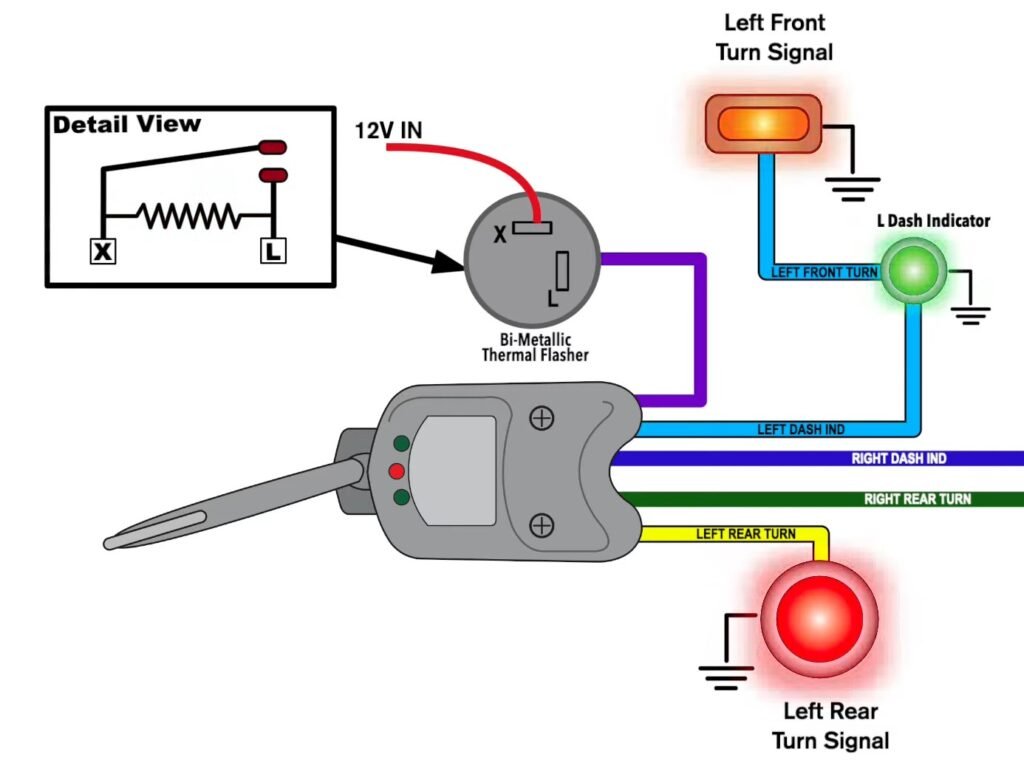
A turn signal system looks simple from the outside, but it contains several connected parts. The switch, wiring, flasher unit, control module, and lights must work together to create the familiar blinking signal.

What Is a Turn Signal System?
A turn signal system is a vehicle safety system that allows drivers to show their next movement. When a driver moves the turn signal lever, an electrical command activates blinking lights on the front and rear of the vehicle.
How Turn Signal Systems Work depends on a controlled flow of electricity. The system receives power from the vehicle battery and uses switches and control devices to make the lights flash at a steady rate.
- ✦ Driver input
The driver activates the left or right signal using a steering column switch.
- ✦ Electrical control
The system controls power delivery so the lights flash instead of staying constantly on.
Main Components of a Turn Signal System
The main parts of a turn signal system work as one unit. A failure in any component can stop the signal from working correctly.
Older vehicles often use simple mechanical parts, while newer cars use electronic control modules connected to the vehicle network.

- ✦ Turn signal switch
The steering column switch tells the system whether the driver wants a left or right signal.
- ✦ Flasher or control module
This component controls the blinking pattern by turning electrical power on and off.
- ✦ Signal bulbs or LEDs
These lights create the visible warning for other road users.
How the Electrical Circuit Creates Flashing Lights
When the driver activates a signal, electricity travels through the circuit to the selected lights. The flasher interrupts the current repeatedly, creating the blinking effect.
Modern systems may use software inside a body control module to manage timing, bulb checks, and safety alerts.
How Turn Signal Systems Work in Modern Cars
Modern vehicles have improved turn signal technology. Many cars now use LED lights and computer-controlled modules that monitor the entire lighting system.
The process starts when the driver moves the signal lever. The body control module receives the request, checks system conditions, and sends power to the correct lights.

- ✦ Electronic monitoring
Computer modules can detect burned-out bulbs and display warnings on the dashboard.
- ✦ LED technology
LED signals use less power and usually last longer than traditional bulbs.
Common Turn Signal Problems and Causes
A failed turn signal can reduce road communication and create a safety issue. Many problems are caused by simple electrical faults.
Knowing common symptoms makes troubleshooting easier before visiting a repair shop.
- ✦ Fast blinking signal
A rapid flash often means a bulb is damaged or the circuit has a problem.
- ✦ No flashing lights
Possible causes include a failed fuse, switch, relay, module, or wiring issue.
- ✦ Intermittent operation
Loose connections or damaged wiring can cause signals to work only sometimes.
How to Maintain Turn Signal Systems
Regular checks help keep turn signals reliable. Drivers should inspect exterior lights and respond quickly when dashboard warnings appear.
Simple maintenance can prevent electrical problems and improve vehicle safety.
- ✦ Check lights regularly
Walk around the vehicle and confirm that all signal lights operate correctly.
- ✦ Inspect connections
Clean and secure electrical connections when servicing lighting components.