How Wheel Alignment Angles Affect Tire Wear is a common question among U.S. drivers who notice uneven tread, pulling, or faster-than-normal tire damage. A vehicle can have new tires, but poor alignment settings can still cause those tires to wear out early.
In my experience studying vehicle maintenance, many tire problems are not caused by tire quality alone. Small changes in camber, caster, and toe angles can change the way a tire rolls, grips, and carries weight during daily driving.

Understanding Wheel Alignment and Tire Contact
Wheel alignment is the process of adjusting suspension angles so the wheels point and sit correctly on the road. The goal is to keep the tires flat, stable, and evenly loaded while driving.
How Wheel Alignment Angles Affect Tire Wear becomes clear when you understand that tires do not simply spin forward. They also turn, lean, and react to road forces. Incorrect angles create extra friction that removes tread unevenly.
- ✦ Proper tire contact
Correct alignment allows more of the tire tread to touch the road evenly, improving grip and reducing wear.
- ✦ Reduced stress
Good alignment reduces strain on suspension parts, steering components, and tires.
Why Alignment Matters for Daily Driving
American drivers often spend many hours on highways, city streets, and uneven roads. These conditions slowly change alignment settings through impacts, potholes, and normal suspension movement.
A small alignment issue may not feel serious at first, but it can create visible tire wear over thousands of miles.
- ✦ Common warning signs
Uneven tread, steering pull, off-center steering wheel, and increased road noise may indicate alignment problems.
How Camber Angle Changes Tire Wear
Camber is the inward or outward tilt of a wheel when viewed from the front of the vehicle. It directly affects which part of the tire carries more weight.
How Wheel Alignment Angles Affect Tire Wear is especially noticeable with incorrect camber because the tire may wear more on one edge instead of across the full tread.

- ✦ Negative camber
Too much inward tilt can cause increased wear on the inside edge of the tire.
- ✦ Positive camber
Too much outward tilt can create wear on the outside edge of the tire.
Camber Problems and Tire Life
Performance cars often use slight negative camber to improve cornering grip. However, excessive negative camber can reduce tire life during normal street driving.
A vehicle used mainly for commuting needs balanced camber settings to protect tread life and maintain comfort.
- ✦ Uneven shoulder wear
Camber issues often create smooth but uneven wear patterns along one tire shoulder.
How Toe Angle Affects Tire Wear Patterns
Toe angle describes whether the front edges of tires point slightly toward or away from each other. This setting has one of the strongest effects on tire wear.
When toe is incorrect, the tires may scrub against the road instead of rolling smoothly. This creates friction that can quickly damage tread.
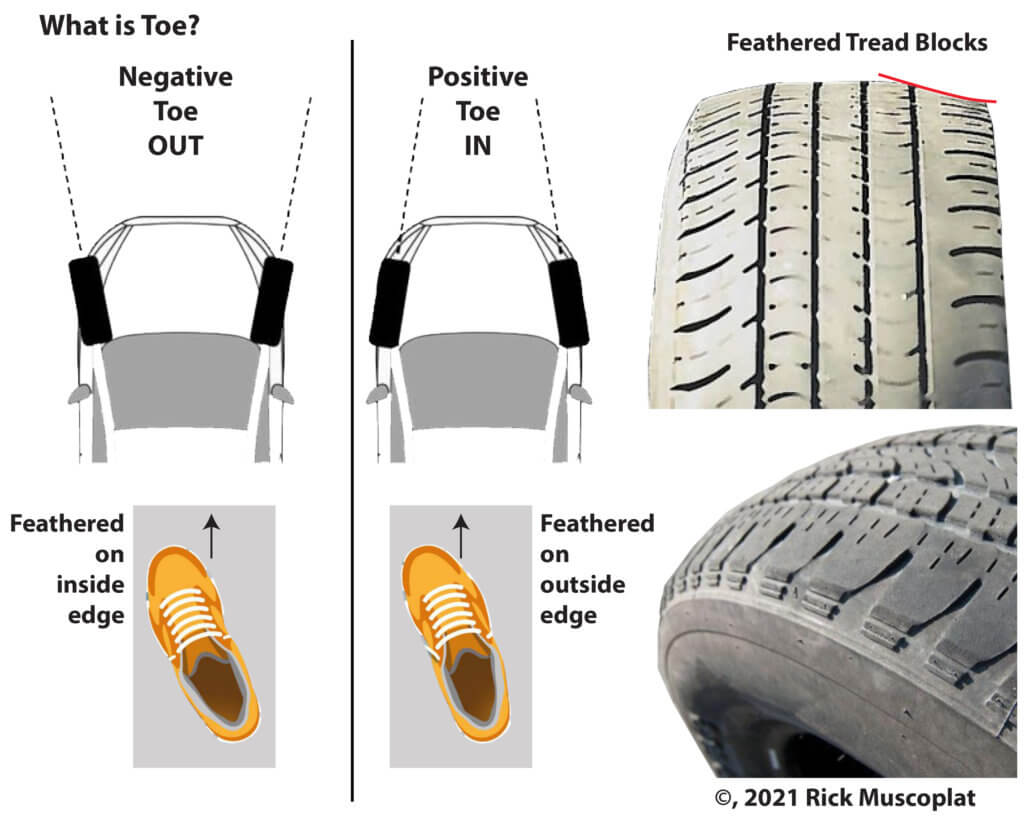
- ✦ Toe-in condition
The front edges point slightly toward each other. Too much toe-in can create feathered tread wear.
- ✦ Toe-out condition
The front edges point away from each other. Excessive toe-out can also create rapid uneven wear.
Why Toe Errors Wear Tires Quickly
Unlike some alignment problems, toe problems often create visible damage in a shorter time. The tire constantly fights against its direction of travel.
Drivers may notice a rough tread feel when running a hand across the tire surface.
- ✦ Feathering pattern
Feathering happens when tread blocks wear unevenly from one side to another.
The Role of Caster Angle in Tire Wear and Handling
Caster is the forward or backward tilt of the steering axis when viewed from the side of the vehicle. It mainly affects steering stability and wheel return action.
Caster usually does not cause direct tire wear as quickly as toe or camber, but incorrect caster can change handling balance and create uneven tire loading.

- ✦ Positive caster
Positive caster improves straight-line stability and helps the steering wheel return after turns.
- ✦ Unequal caster
Different caster values between wheels can make a vehicle pull to one side.
Caster Effects on Driving Feel
A vehicle with poor caster settings may feel unstable or require constant steering correction. This extra movement can increase tire stress over time.
Proper caster supports balanced handling and helps other alignment angles work correctly.
- ✦ Steering stability
Correct caster improves control and reduces unnecessary tire movement.
Common Tire Wear Patterns Caused by Alignment Problems
Tire wear patterns can reveal alignment problems before a driver notices serious handling changes. Checking tread condition is a simple maintenance habit.
How Wheel Alignment Angles Affect Tire Wear can be understood by matching specific wear patterns with possible alignment causes.

- ✦ Inside edge wear
Often linked to excessive negative camber or suspension issues.
- ✦ Outside edge wear
May indicate excessive positive camber or underinflation combined with alignment problems.
- ✦ Feathered tread
Commonly connected to incorrect toe settings.
How Drivers Can Inspect Tire Wear
Drivers can check tires by looking for uneven grooves, smooth areas, or different wear levels between tires.
A professional alignment inspection is needed to measure exact angles and adjust them correctly.
- ✦ Regular checks
Inspect tires during oil changes or before long road trips.
How to Prevent Alignment-Related Tire Wear
Preventing tire wear starts with regular maintenance and quick attention to warning signs. Alignment checks are especially useful after suspension repairs, accidents, or strong impacts.
Keeping correct alignment settings helps tires last longer, improves fuel efficiency, and creates a safer driving experience.

- ✦ Schedule alignment checks
Have alignment checked when replacing tires or after hitting major potholes.
- ✦ Maintain tire pressure
Correct inflation supports even wear and helps alignment settings work properly.
When Should You Get a Wheel Alignment
Most vehicles need an alignment check when tires wear unevenly, steering feels different, or suspension parts are replaced.
Following manufacturer recommendations and checking after road impacts can prevent expensive tire replacement.
- ✦ Good maintenance timing
Alignment checks should be part of regular vehicle care.