If you are learning about electric vehicles, you may wonder what is one pedal driving and why so many EV owners talk about it. The feature changes how you control a car because you can often slow down simply by lifting your foot from the accelerator. The vehicle uses regenerative braking to reduce speed and recover energy.
From a U.S. driver perspective, one pedal driving feels especially useful in daily traffic, city streets, and stop-and-go commutes. After a short adjustment period, many drivers find that they make fewer movements between the accelerator and brake pedals. However, it is important to understand how the system works before using it on every road.
What Is One Pedal Driving in an Electric Vehicle?
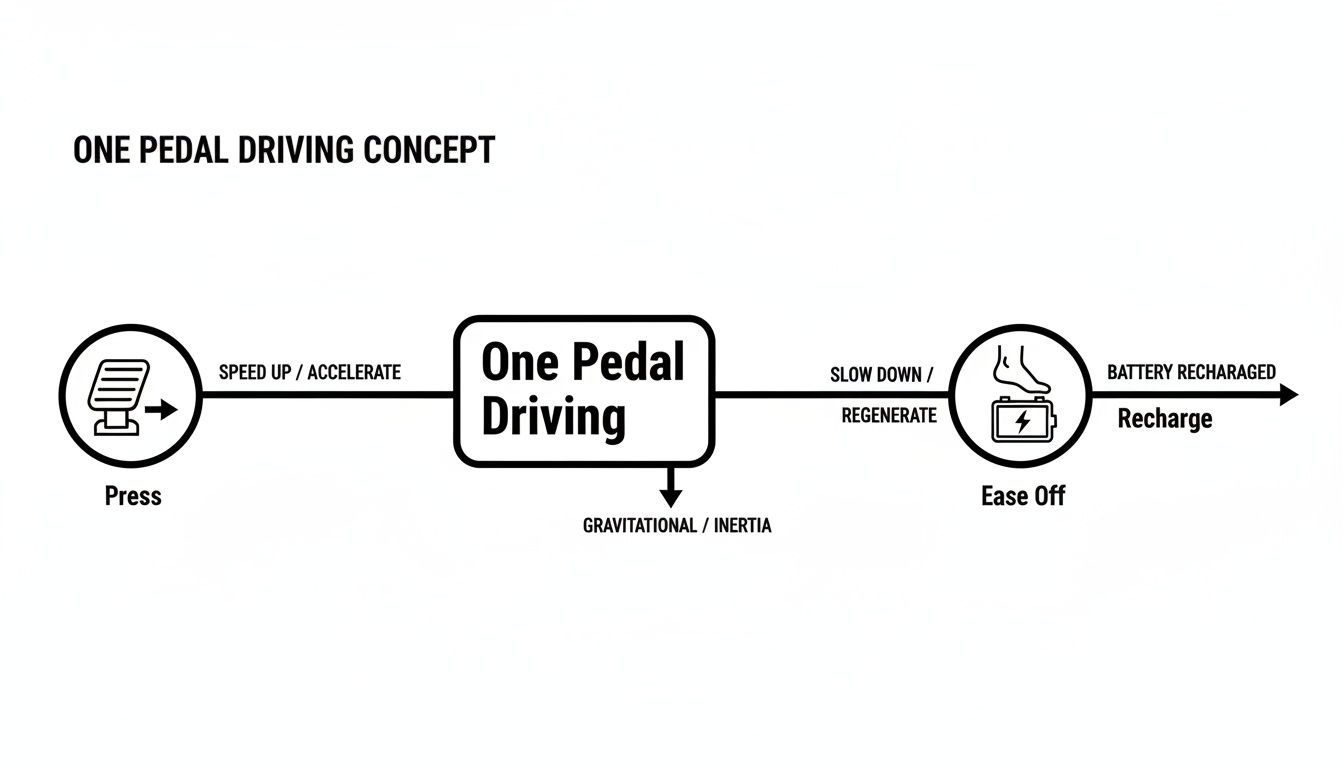
What is one pedal driving? It is an EV feature that allows the driver to control acceleration and most slowing actions with the accelerator pedal. When you press the pedal, the vehicle moves forward. When you release it, the vehicle slows down because the electric motor works as a generator.
Unlike a traditional gas car, an electric vehicle can use its motor to create resistance and recover energy. This process is called regenerative braking. The recovered energy does not fully recharge the battery, but it can improve efficiency during normal driving.
- ✦ Accelerator pedal control
The driver uses pedal pressure to manage speed instead of constantly switching between accelerator and brake.
- ✦ Regenerative braking
The electric motor captures some energy during slowing and sends it back to the battery pack.
- ✦ Different driving feel
One pedal driving creates a smoother and more controlled experience compared with traditional vehicles.
How One Pedal Driving Feels Compared With a Gas Car
A gasoline car usually keeps moving when you remove your foot from the accelerator. An EV with strong one pedal driving can slow down quickly when you lift your foot.
New EV drivers often need a few trips to adjust their foot control. Smooth pressure changes are the key to comfortable driving.
How Does One Pedal Driving Work?
One pedal driving works through the relationship between the electric motor, battery system, and vehicle software. When you accelerate, the motor uses battery power to move the wheels. When you release the pedal, the motor changes its role and helps slow the vehicle.
The system measures how much slowing force is needed and adjusts the amount of regenerative braking. Modern EVs allow drivers to select different levels of regeneration depending on their comfort and driving style.

- ✦ Energy conversion
The electric motor converts movement energy into electrical energy during deceleration.
- ✦ Software control
Vehicle computers manage braking strength to create a smooth driving experience.
- ✦ Battery support
Recovered energy returns to the battery system for later use.
The Role of Regenerative Braking
Regenerative braking is the main technology behind one pedal driving. Instead of wasting all braking energy as heat, the EV captures part of that energy and stores it.
This system works best during repeated slowing events, such as city traffic, hills, and stop signs.
Benefits of One Pedal Driving
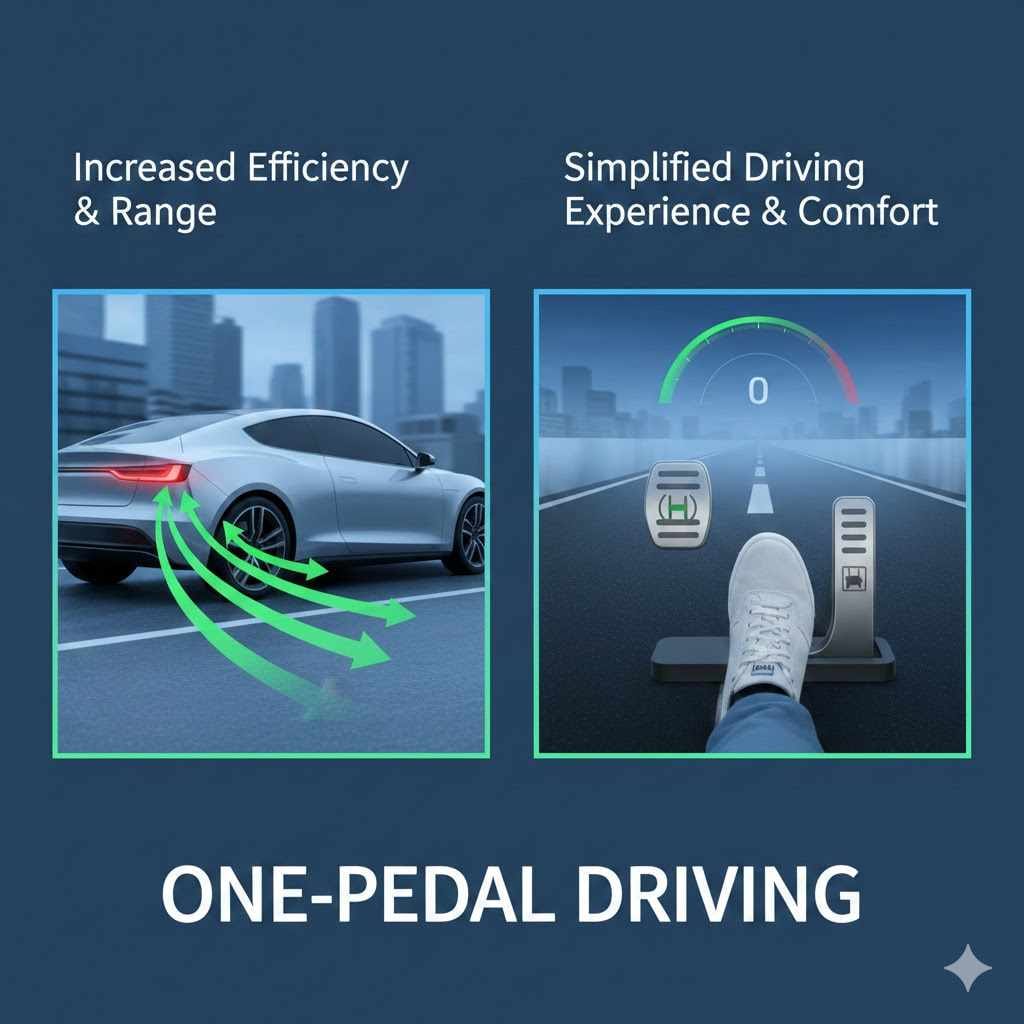
Many EV owners enjoy one pedal driving because it changes daily driving into a simpler process. Instead of moving between two pedals often, drivers can focus on smooth accelerator control.
The benefits depend on the vehicle model, driving habits, and road conditions. It is not a replacement for safe driving habits, but it can make many trips more comfortable.
- ✦ Less pedal movement
Drivers may experience less foot movement during busy traffic and regular commutes.
- ✦ Improved energy recovery
The system helps capture energy that would normally be lost during braking.
- ✦ Smooth city driving
Gradual speed changes can make stop-and-go driving easier.
- ✦ Lower brake wear
Using regenerative braking can reduce dependence on traditional friction brakes.
Why EV Drivers Like One Pedal Driving
Drivers who spend time in urban areas often appreciate the convenience. Traffic lights, intersections, and slow-moving vehicles create many chances for regenerative braking.
After learning the pedal response, many drivers describe the experience as natural and relaxing.
Are There Any Downsides to One Pedal Driving?
Although one pedal driving has many advantages, it may not feel comfortable for everyone at first. Drivers moving from gasoline cars often need time to learn the different response.
The system also does not remove the need for brake pedals. Drivers must still use the brakes when they need quick stops or when conditions require additional braking force.
- ✦ Learning curve
New EV drivers may need practice to make smooth stops and starts.
- ✦ Weather conditions
Drivers should understand how braking behavior changes on wet, icy, or slippery roads.
- ✦ Driver preference
Some people prefer traditional two-pedal driving because it feels more familiar.
How to Use One Pedal Driving Safely
Learning what is one pedal driving is only the first step. Safe use requires practice and awareness. New EV owners should test the feature in an open area before using it in heavy traffic.
The goal is smooth control, not sudden stopping. Gentle accelerator movements help create a comfortable experience for both the driver and passengers.

- ✦ Practice first
Try different regeneration settings in a safe location before regular use.
- ✦ Watch traffic distance
Keep enough space because stopping behavior may feel different from a gas vehicle.
- ✦ Use brakes when needed
Apply the brake pedal for emergency stops or situations requiring stronger braking.
Which Electric Vehicles Offer One Pedal Driving?
Many modern electric vehicles offer one pedal driving or similar regenerative braking settings. The exact name and operation can vary between manufacturers.
Some brands make the feature a central part of the driving experience, while others provide it as an optional setting. Drivers should check the owner’s manual because controls and braking strength differ.

- ✦ Tesla vehicles
Tesla models are known for strong regenerative braking settings that support one pedal driving.
- ✦ Nissan EV models
Some Nissan electric vehicles include systems designed around one pedal operation.
- ✦ Other EV manufacturers
Many newer EVs from different brands include adjustable regenerative braking modes.