Understanding Why EV Range Changes in Cold Weather helps drivers plan better trips and avoid unnecessary range concerns. Electric vehicles depend on battery chemistry, and cold temperatures can slow the movement of energy inside the battery cells.
From my experience studying EV technology and consumer driving behavior, the biggest surprise for many new EV owners is that winter range loss does not come from one single problem. Battery temperature, cabin heating, driving speed, road conditions, and charging habits all work together to change real-world range.

How Cold Temperatures Affect EV Battery Performance
The main reason Why EV Range Changes in Cold Weather is battery chemistry. EV batteries use lithium-ion cells, and these cells perform best within a certain temperature range.
When temperatures drop, chemical reactions inside the battery slow down. This means the battery cannot deliver energy as easily, especially during acceleration or fast charging.

- ✦ Slower energy movement
Cold battery cells move ions more slowly, which can reduce power output and efficiency.
- ✦ Reduced available capacity
A cold battery may temporarily provide less usable energy until it reaches a warmer temperature.
- ✦ Charging changes
Many EVs slow charging speeds when the battery is too cold to protect battery health.
Why Battery Temperature Matters
EV manufacturers add battery thermal management systems to control temperature. These systems heat or cool the battery pack to keep it within an efficient operating range.
During winter, the system may use some stored energy to warm the battery. This helps performance but can slightly reduce driving range.
- ✦ Battery protection
Temperature control prevents damage and helps maintain long-term battery health.
Why Cabin Heating Reduces EV Driving Range
Gas-powered cars use waste heat from the engine to warm the cabin. EVs do not create the same amount of heat, so they need electric systems for heating.
This is a major reason Why EV Range Changes in Cold Weather. Cabin heating can use a noticeable amount of battery energy, especially during short trips.

- ✦ Electric resistance heaters
Some EVs use electric heaters that create warmth by using battery power directly.
- ✦ Heat pumps
Many newer EVs use heat pumps because they can provide cabin heat more efficiently.
- ✦ Short winter trips
Frequent heating cycles can reduce efficiency because the vehicle spends more energy warming up.
The Role of Heat Pumps in Winter Efficiency
A heat pump transfers heat instead of creating it directly. This allows some EVs to use less energy for cabin comfort.
However, even vehicles with advanced heating systems may see lower range in very cold climates because battery efficiency still changes with temperature.
Other Factors That Explain Why EV Range Changes in Cold Weather
Temperature is only one part of winter range loss. Daily driving conditions also affect how much energy an EV uses.
Snow, ice, wind, and lower tire pressure can all increase energy demand. These factors make winter driving different from controlled testing conditions.

- ✦ Cold tires
Low temperatures reduce tire pressure and increase rolling resistance.
- ✦ Weather conditions
Snow and rain create more resistance between tires and the road.
- ✦ Higher highway speeds
Cold air creates more drag, which increases energy use at faster speeds.
Why Winter Driving Habits Matter
Aggressive acceleration and high-speed driving use more energy in any season. In winter, the effect becomes more noticeable because the battery already operates under stress.
Smooth acceleration and steady speeds can help drivers get more distance from the same battery charge.
- ✦ Drive smoothly
Gentle acceleration helps reduce unnecessary energy loss.
How Much EV Range Can Change During Winter
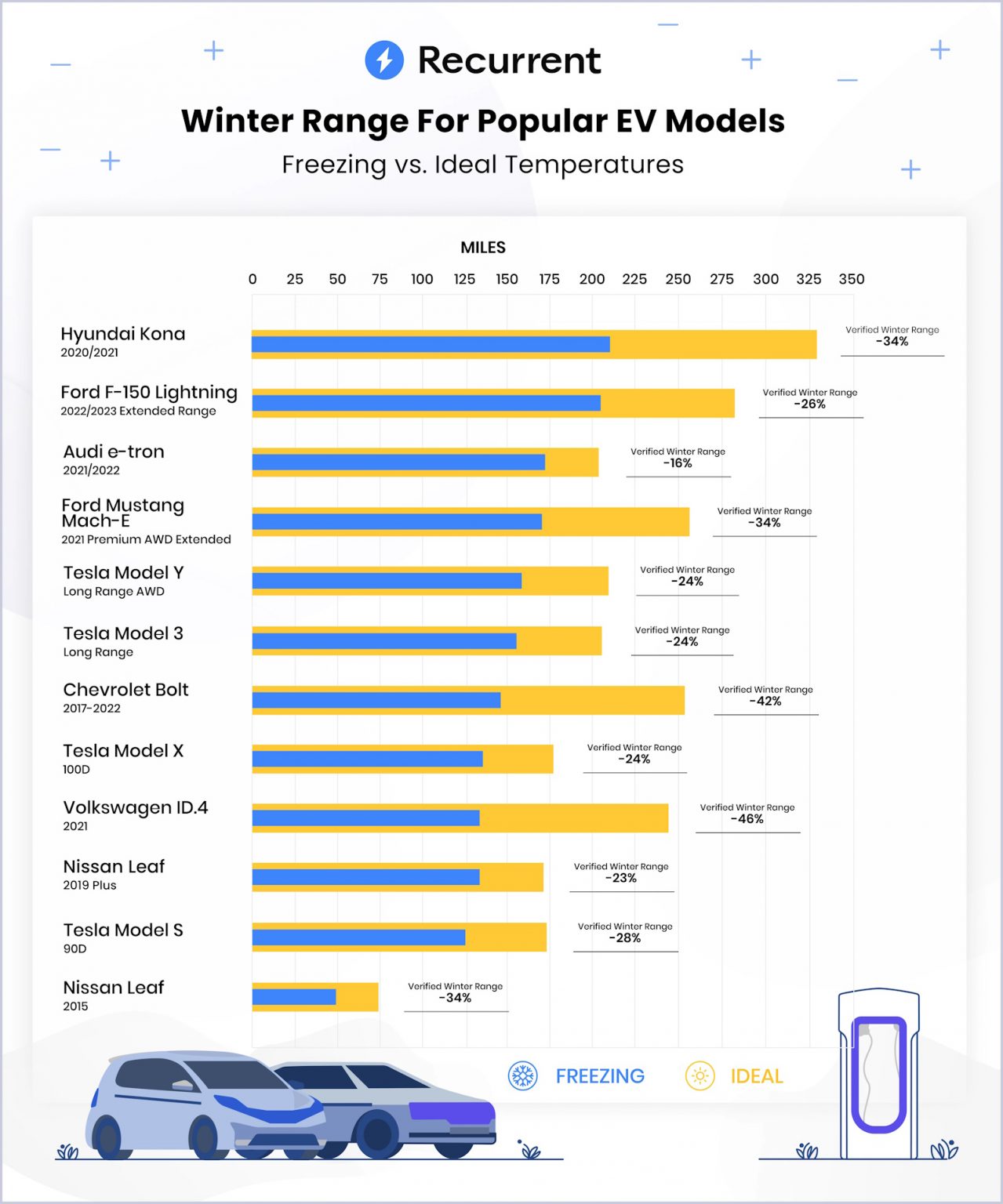
The amount of range loss depends on the EV model, battery size, temperature, and driving style. Some vehicles handle cold weather better because they have stronger thermal systems.
Studies and real-world testing show that winter range changes can vary widely between vehicles. Drivers should check their own vehicle data rather than rely only on official estimates.
- ✦ Vehicle design
Battery size, software, insulation, and heating technology affect winter performance.
- ✦ Climate differences
A mild winter in California creates different conditions than freezing temperatures in northern states.
Why EV Owners Should Understand Real-World Range
EPA range ratings are useful for comparisons, but real driving conditions can change results. Winter temperatures are one of the biggest examples of this difference.
Smart EV ownership means planning for seasonal changes and learning how your specific vehicle behaves.
Tips to Improve EV Range in Cold Weather
Drivers can reduce winter range loss with simple habits. These steps do not remove the effects of cold weather, but they help use battery energy more efficiently.
Learning Why EV Range Changes in Cold Weather also helps drivers prepare before long trips and daily commutes.
- ✦ Precondition before driving
Warm the cabin and battery while connected to a charger when possible.
- ✦ Use seat heaters
Seat heaters often use less energy than heating the entire cabin.
- ✦ Check tire pressure
Proper tire pressure improves efficiency and safety.
- ✦ Plan charging stops
Allow extra charging time and distance when traveling in cold weather.
Preparing an EV for Winter Travel
Before a long winter trip, check weather conditions, charging locations, and battery level. A small amount of planning can prevent unnecessary stress.
Many EV owners find that winter driving becomes simple once they understand their vehicle’s seasonal behavior.