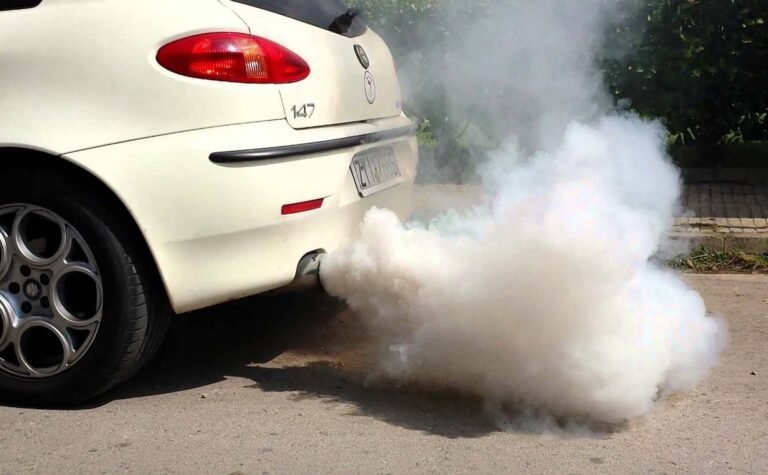
Cylinder misfire diagnosis starts with reading the trouble codes, identifying the affected cylinder, and testing its ignition, fuel supply, and compression. A scan code points to the problem area, but proper testing identifies the failed part.
Across the United States, a rough idle, shaking engine, or flashing check engine light can signal a cylinder misfire. You might notice the problem while waiting at a traffic light, pulling away from a stop sign, or driving on an interstate. The engine may also lose power or use more fuel than normal. These symptoms deserve attention because an active misfire can damage other engine parts.
Most gasoline cars and light trucks sold in the United States from the 1996 model year onward use OBD-II diagnostic systems. These systems can detect engine misfires and store trouble codes such as P0300 and P0301. A basic scan tool can provide a useful starting point, but it cannot always identify the failed component. A proper diagnosis combines scan data, visual checks, ignition tests, fuel system checks, and mechanical tests.
Source: free.singleparentfoodbank.org
What Is a Cylinder Misfire?
A cylinder misfire happens when one or more engine cylinders fail to produce a normal combustion event. A gasoline engine needs the correct amount of air, fuel, and spark to create power. It also needs enough compression to keep that combustion inside the cylinder. When one part of this process fails, the affected cylinder produces less power than expected.
Think of each cylinder as one member of a team. Every cylinder must do its share of the work to keep the engine running smoothly. When one cylinder falls behind, the crankshaft receives uneven power. You may feel this as a shake, stumble, or loss of acceleration.
Modern engine computers can detect these changes by watching crankshaft speed. The computer compares small changes in engine rotation with expected combustion events. If the pattern meets its misfire detection limits, the system can store a diagnostic trouble code and turn on the check engine light.
Source: nissankaengine.com
Single-cylinder misfire
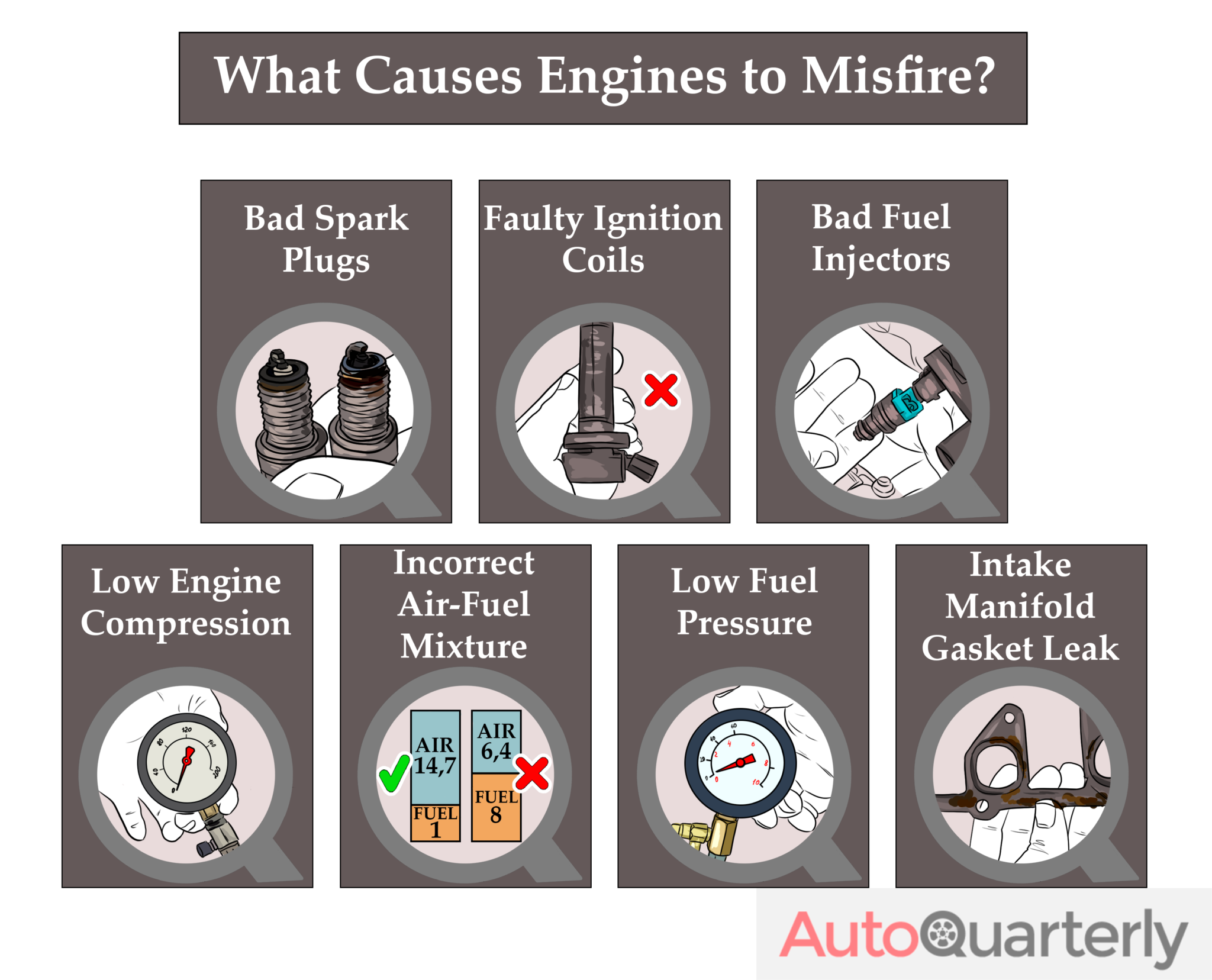
One cylinder repeatedly fails to produce normal power. Common causes include a bad spark plug, weak ignition coil, faulty injector, local air leak, or low compression.
Multiple-cylinder misfire
Two or more cylinders fail to produce normal power. Possible causes include low fuel pressure, an intake leak, incorrect valve timing, poor fuel quality, or a shared electrical problem.
Intermittent misfire
The engine misfires only under certain conditions, such as cold starts, heavy acceleration, high engine speed, or hot operation.
Common Symptoms of a Cylinder Misfire
The most common sign is an uneven engine idle. The steering wheel, seats, or body may shake while the vehicle is stopped. During acceleration, the engine may hesitate or feel as if it briefly loses power. Some drivers also notice a sudden change in exhaust sound.
A misfire can affect fuel economy because unburned fuel and incomplete combustion reduce engine efficiency. A strong fuel smell from the exhaust may also appear. In some cases, the engine may stall or become difficult to start.
Rough idle
The engine shakes or runs unevenly when the vehicle is stopped.
Poor acceleration
The vehicle hesitates or struggles when you press the accelerator.
Check engine light
The warning light may remain on or flash when the computer detects a serious misfire.
Unusual exhaust smell
Unburned fuel may create a strong gasoline smell from the exhaust.
Reduced fuel economy
Incomplete combustion can increase fuel use and reduce engine efficiency.
Understand the Misfire Trouble Codes
Start your diagnosis by reading the diagnostic trouble codes stored in the engine control module. These codes help identify whether the computer has detected a problem in one cylinder or several cylinders. They also provide a useful direction for further testing.
The P0300 code means random or multiple cylinder misfire detected. Codes P0301, P0302, P0303, and P0304 identify detected misfires in cylinders 1, 2, 3, and 4. The same numbering pattern continues for engines with more cylinders.
For example, a P0302 code means the computer detected a misfire associated with cylinder 2. It does not automatically mean cylinder 2 has a bad spark plug. A faulty injector, wiring problem, air leak, or mechanical failure can produce the same code.
Cylinder numbering also varies between engine designs. The front of the engine, bank 1, and cylinder 1 do not have the same location on every vehicle. Always check the manufacturer’s service information before removing parts or testing a specific cylinder.
P0300
Random or multiple cylinder misfire detected. Check misfire counters, fuel pressure, intake leaks, ignition systems, and engine timing.
P0301
Cylinder 1 misfire detected. Inspect the cylinder 1 spark plug, ignition coil, injector, wiring, and compression.
P0302
Cylinder 2 misfire detected. Follow the same diagnostic process for the correct cylinder location.
P0303 and P0304
Misfires detected in cylinders 3 and 4. Check the related ignition, fuel, air, and mechanical systems.
Why a Trouble Code Does Not Identify the Failed Part
The engine computer detects a result, not always the exact reason behind it. For example, a cylinder that produces weak power may have poor spark or insufficient fuel. It may also have low compression because of a leaking valve.
Replacing parts based only on the code can waste money. The better approach is to use the code to select the correct cylinder, then test the systems that allow that cylinder to produce power.
Use the code as a starting point
Confirm which cylinder is affected and check for related trouble codes.
Follow test results
Replace a component only when inspection or testing supports that decision.
Step 1: Check the Vehicle With an OBD-II Scanner
An OBD-II scanner is one of the most useful tools for cylinder misfire diagnosis. It connects to the vehicle’s diagnostic port and reads information stored by the engine computer. Many affordable scanners can read basic trouble codes, while more advanced tools can display live engine data and individual cylinder misfire counts.
Before clearing any code, record every stored, pending, and available permanent trouble code. Also save the freeze-frame data. This information records important conditions from the time a fault was detected, such as engine speed, engine load, coolant temperature, and vehicle speed.
These details can help explain when the misfire happens. A problem recorded during cold idle may need a different test from one recorded during heavy acceleration. If you erase the codes or disconnect the battery too early, you may lose useful diagnostic information.
Source: t1aauto.com
Connect the scanner
Find the OBD-II diagnostic connector, usually under the dashboard near the driver’s area. Connect a compatible scan tool and follow its instructions.
Read all trouble codes
Record the P0300 or P030X code and any related ignition, fuel, sensor, or air mixture codes.
Save freeze-frame data
Record engine speed, load, coolant temperature, and other available information.
Check live misfire data
Look for individual cylinder misfire counters if your scan tool and vehicle support this feature.
Reproduce the original condition safely
Determine whether the fault occurs at idle, during a cold start, or under load. Do not perform aggressive driving with an active severe misfire.
How to Read Misfire Counters
Misfire counters show how often the computer detects irregular combustion in individual cylinders. A counter that rises quickly on one cylinder can help narrow the problem to that cylinder. If several counters rise together, investigate shared systems such as fuel delivery, intake air, and engine timing.
Not every basic OBD-II scanner provides individual misfire counts. Some vehicles need manufacturer-specific diagnostic software. The available data and menu names also vary by model and engine control system.
Compare the counters under the same operating conditions. A single number without engine speed, load, and temperature may not tell the full story.
One counter keeps increasing
Focus on the ignition, injector, wiring, and mechanical condition of that cylinder.
Several counters increase
Investigate common causes such as low fuel pressure, intake leaks, and camshaft timing.
Step 2: Inspect the Ignition System
The ignition system is a sensible place to start when one gasoline engine cylinder misfires. A spark plug needs to create a strong spark at the correct time. The ignition coil supplies the electrical energy needed for that spark.
A worn spark plug may have excessive electrode wear or an incorrect gap. Oil, fuel, and carbon deposits can also affect its performance. A damaged coil or coil boot may fail to deliver reliable spark, especially when engine load increases.
Begin with a visual inspection before buying replacement parts. Check the spark plug, coil housing, electrical connector, and wiring for visible damage. Look for oil or water inside the spark plug well because contamination can affect the coil boot and electrical connection.
Source: youtube.com
Worn spark plug
A worn electrode or incorrect gap can make ignition unreliable and cause a cylinder misfire.
Fouled spark plug
Oil, fuel, or carbon deposits can interfere with normal spark formation.
Weak ignition coil
A failing coil may produce an intermittent spark, particularly under higher cylinder pressure.
Damaged coil boot
Cracks or electrical tracking can allow spark energy to escape before reaching the plug.
Loose electrical connection
A damaged connector, poor terminal contact, or broken wire can interrupt coil operation.
Perform a Spark Plug Inspection
Switch off the engine and allow it to cool before removing a spark plug. Follow the vehicle’s service instructions and use the correct spark plug socket. Compare the removed plug with the manufacturer’s recommended type and condition.
Check the electrode for wear, damage, and deposits. Look at the ceramic insulator for cracks or unusual marks. A plug covered in wet fuel may indicate that the cylinder is not burning its mixture, while oily deposits may point toward an oil entry problem.
Check the spark plug gap against the correct specification for that engine. Do not assume that every replacement plug has the correct gap straight from the box. Some fine-wire plugs can be damaged by improper adjustment.
Dry black deposits
May indicate carbon fouling, weak ignition, or an overly rich mixture.
Wet fuel deposits
May indicate that fuel enters the cylinder without normal combustion.
Oily deposits
May suggest oil entering the combustion chamber or spark plug area.
Cracked insulator
Can allow electrical leakage and cause an unstable spark.
Use a Coil Swap Test
A coil swap test can help identify a failing ignition coil on engines with interchangeable individual coils. First, identify the affected cylinder from the trouble code and confirm the correct coil location. With the ignition switched off, move its coil to a known good cylinder according to the service procedure.
After the swap, use the scanner to check whether the misfire moves to the other cylinder under comparable operating conditions. If the original cylinder stops misfiring and the other cylinder begins misfiring, the moved coil becomes a strong suspect.
If the misfire stays on the original cylinder, the coil is less likely to be the cause. Continue with the spark plug, wiring, injector, air supply, and compression checks. Swap only one component at a time so the results remain clear.
Misfire follows the coil
The coil or its boot is a likely source. Confirm its condition and electrical operation before replacement.
Misfire stays on the same cylinder
Continue testing other components and the wiring for that cylinder.
Misfire becomes inconsistent
Check connector fit, coil seating, wiring movement, and the operating conditions that trigger the fault.
Step 3: Check Fuel Delivery and Air Supply
A cylinder needs the correct fuel supply and air mixture to produce normal power. If the injector does not deliver enough fuel, combustion may become weak or unstable. Excess fuel can also cause a misfire by making the mixture too rich for reliable ignition.
Start by checking for fuel-related trouble codes and abnormal fuel trim readings. Positive fuel trims can suggest that the engine computer is adding fuel to correct a lean condition. Negative trims can suggest that it is removing fuel to correct a rich condition. These readings need to be interpreted with engine speed, load, bank, and manufacturer specifications.
A misfire affecting several cylinders may point toward a shared fuel delivery problem. Low fuel pressure, a restricted fuel supply, or an inaccurate airflow reading can affect more than one cylinder. A local intake leak or faulty injector may affect one cylinder more than the others.
Fuel injector failure
A clogged, leaking, or electrically faulty injector may deliver too little or too much fuel.
Low fuel pressure
A weak pump, restricted filter, or fuel pressure control problem can affect engine operation.
Vacuum leak
Unmetered air entering the intake can create a lean mixture and unstable combustion.
MAF or MAP sensor problem
Incorrect airflow or manifold pressure information can affect fuel calculations.
PCV or intake hose problem
A damaged hose or faulty valve can introduce unwanted air into the engine.
Test the Fuel Injector
A fuel injector must receive the correct electrical command and deliver the correct amount of fuel. A technician can check injector control, electrical connections, and injector operation. A noid light or suitable oscilloscope can help check whether an injector receives a command, but an electrical pulse alone does not prove that the injector flows correctly.
An injector balance test can help compare the fuel delivery of individual injectors. During this test, a controlled injector pulse is applied and the resulting fuel pressure drop is measured. An unusually small or large pressure drop may point toward a restricted or leaking injector.
Some modern engines use direct fuel injection systems with very high fuel pressure. Do not loosen high-pressure fuel lines or attempt injector removal without the correct service procedure and equipment. These systems can cause serious injury.
Weak or missing injector command
Check the wiring, connector, power supply, and engine computer control circuit.
Unequal injector flow
A restricted or damaged injector may need professional cleaning, testing, or replacement.
Leaking injector
Excess fuel may cause a rich condition, difficult starting, or a misfire after the vehicle sits.
Check for Intake and Vacuum Leaks
A vacuum leak allows air to enter the engine without being measured correctly by the air metering system. This can create a lean mixture and cause rough idle or misfires. Common leak points include intake manifold gaskets, cracked vacuum hoses, PCV connections, and damaged intake boots.
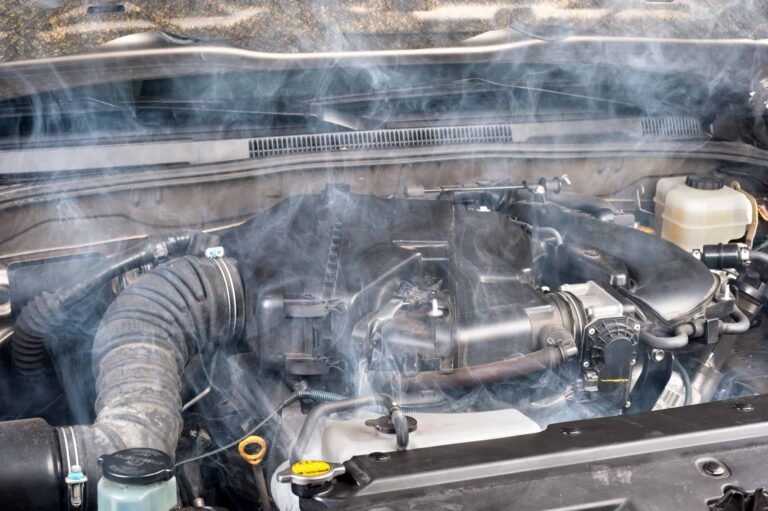
A smoke test is a useful way to locate many intake leaks. A technician introduces approved diagnostic smoke into the intake system and looks for smoke escaping from damaged areas. This method can reveal leaks that are difficult to see during a normal visual inspection.
Avoid spraying gasoline, starting fluid, or other flammable products around a running engine to search for leaks. Hot exhaust parts, electrical sparks, and moving components create serious hazards. Use a proper smoke test or another approved diagnostic method.
Leak near one intake runner
May affect one cylinder more than the others.
Large intake leak
May cause several cylinders to run lean and produce unstable idle.
Faulty PCV valve
Can create unwanted airflow and disturb normal engine operation.
Step 4: Perform a Compression Test
A compression test checks whether each cylinder can build pressure during the compression stroke. It becomes especially useful when the ignition and fuel systems appear to work correctly but the misfire remains. Low compression can prevent a cylinder from producing normal power even when its spark plug and injector are functioning.
The test uses a compression gauge connected to the spark plug opening. The engine is cranked according to the manufacturer’s procedure, and the gauge records the pressure produced by each cylinder. Compare all cylinders under the same test conditions.
There is no single compression pressure that applies to every gasoline engine. Engine design, compression ratio, temperature, altitude, cranking speed, and test method can affect the reading. Use the manufacturer’s specifications for both the minimum acceptable pressure and the allowed difference between cylinders.
Low compression on one cylinder
May indicate a leaking valve, worn piston rings, damaged cylinder wall, or another local mechanical problem.
Low compression on two nearby cylinders
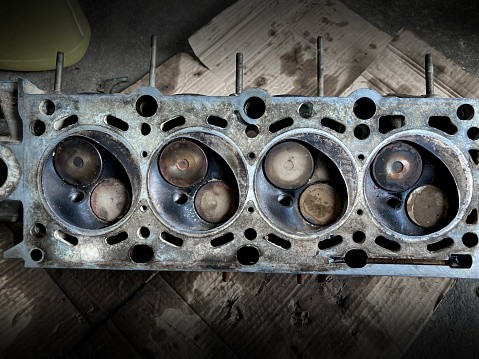
Can suggest a head gasket leak between cylinders, although further testing is needed.
Low compression across several cylinders
May indicate an incorrect test setup, low cranking speed, incorrect valve timing, or widespread engine wear.
Normal compression readings
Make major compression loss less likely, but do not rule out every mechanical or valve timing problem.
How to Perform a Compression Test Safely
A compression test requires the correct gauge and engine-specific procedure. The engine may need to reach a specified temperature, and the fuel and ignition systems must be disabled using the approved method. Remove the spark plugs as directed and make sure the battery has enough power to maintain consistent cranking speed.
Test each cylinder in the same way and record every result. Follow the manufacturer’s instructions for throttle position and the number of compression strokes. Do not compare a reading taken with a cold engine to one taken with a fully warm engine and treat the difference as a confirmed fault.
If you are unfamiliar with engine testing, have a qualified technician perform the procedure. Incorrect handling can create electrical, fuel, and mechanical hazards. Modern direct-injection systems may also need special steps to prevent unintended fuel delivery.
Use the correct gauge
Choose a compression tester with the correct fitting and pressure range for the engine.
Keep test conditions consistent
Use the same engine temperature, cranking method, and test procedure for every cylinder.
Compare against factory specifications
Do not use a universal PSI figure to decide whether an engine is healthy.
Perform a Cylinder Leak-Down Test
A cylinder leak-down test helps explain why a cylinder has low compression. It uses regulated compressed air to pressurize the cylinder while the piston is positioned at top dead center on its compression stroke. The tester measures how much air escapes from the cylinder.
The location of escaping air helps identify the possible fault. Air heard at the intake may indicate a leaking intake valve. Air escaping through the exhaust can suggest an exhaust valve problem. Air heard through the crankcase may point toward piston ring or cylinder wear.
Bubbles in the cooling system may suggest a head gasket leak, cylinder head crack, or another path between the combustion chamber and cooling passages. These results require further confirmation before an engine is taken apart.
The crankshaft can move suddenly when compressed air enters a cylinder that is not correctly positioned. A leak-down test therefore requires proper equipment, a secure engine position, and suitable experience. A professional technician is the safer choice for this test.
Air from the intake
Possible intake valve leakage or valve seating damage.
Air from the exhaust
Possible exhaust valve leakage or damage.
Air from the crankcase
Possible worn piston rings, damaged piston, or cylinder wall wear.
Bubbles in the coolant
Possible head gasket failure or a crack in an engine component.
Step 5: Check Engine Timing and Internal Components
If the ignition, fuel, air, and compression tests do not explain the misfire, investigate engine timing and internal components. The crankshaft and camshaft must remain correctly synchronized for the valves to open and close at the proper time. Incorrect timing can reduce cylinder filling and affect combustion.
A stretched timing chain, worn belt, damaged tensioner, or incorrect camshaft position can create engine performance problems. Some engines also use variable valve timing systems that adjust camshaft position during operation. A fault in these systems may cause misfires, rough idle, and poor acceleration.
Internal engine parts can also fail. A burnt valve may allow compression to escape, while a weak or broken valve spring can prevent proper valve operation. A worn camshaft lobe or damaged lifter may affect how much air enters or leaves a cylinder.
Timing chain or belt problem
Incorrect valve timing can reduce engine performance and cause misfires across one or more cylinders.
Burnt or bent valve
A valve that cannot seal correctly may allow compression to escape.
Broken valve spring
A damaged spring can prevent the valve from operating as designed.
Worn camshaft or lifter
Reduced valve movement can affect cylinder airflow and combustion.
Variable valve timing fault
Incorrect camshaft adjustment may cause rough running and multiple misfire codes.
Use Scan Data to Check Camshaft Timing
A capable scan tool may display desired and actual camshaft positions. Comparing these values can help identify a variable valve timing problem. The readings must be checked at the correct engine speed, temperature, and operating conditions.
A difference between desired and actual timing does not automatically prove that the timing chain has failed. Oil pressure, oil condition, control solenoids, wiring, and camshaft sensors can also affect system operation. Follow the vehicle’s diagnostic procedure before removing timing components.
Check engine oil
Verify the oil level and use the correct grade because some variable valve timing systems depend on proper oil flow.
Check related trouble codes
Look for camshaft position, crankshaft position, and variable valve timing codes.
Verify mechanical timing
Use the manufacturer’s timing marks and inspection procedure when scan data indicates a possible mechanical timing problem.
Common Misfire Patterns and What They Mean
The conditions under which a misfire happens can help narrow the diagnosis. A problem that appears only during cold starts may have a different cause from one that appears during heavy acceleration. The pattern is useful evidence, but it is not proof of a failed part.
Compare the symptoms with scan data and test results. If the same cylinder keeps misfiring, focus on its individual components first. If several cylinders misfire together, investigate systems that supply air, fuel, timing, or electrical power to multiple cylinders.
Misfire on one cylinder
Check that cylinder’s spark plug, ignition coil, injector, electrical wiring, intake runner, and compression.
Investigate injector leakage, valve sealing, intake valve deposits, coolant entry, and other temperature-related problems.
Misfire during acceleration
Check ignition performance under load, fuel pressure and volume, injector operation, and mechanical condition.
Misfire after the engine warms up
Inspect heat-sensitive wiring, ignition coils, sensors, and components that change behavior with temperature.
Misfire at idle
Look for vacuum leaks, PCV faults, dirty intake components, ignition problems, and cylinder sealing issues.
How to Diagnose a P0300 Random Misfire
A P0300 code means the computer has detected misfires across multiple cylinders or cannot reliably identify one affected cylinder under the current conditions. Start by checking live misfire counters to see whether one cylinder has a much higher count than the others.
If several cylinders show similar misfire activity, check for shared problems. These may include low fuel pressure, a vacuum leak, incorrect airflow readings, poor fuel quality, or incorrect valve timing. Related lean mixture codes can provide another useful clue.
Do not replace several ignition coils or injectors just because P0300 appears. Confirm which cylinders are affected and test the systems that could explain the pattern.
Check fuel pressure
Compare measured fuel pressure and delivery with the vehicle manufacturer’s specifications.
Inspect the intake system
Look for damaged hoses, intake leaks, and PCV system problems.
Review fuel trims
Compare short-term and long-term fuel trims at idle and under suitable operating conditions.
Check engine timing
Investigate camshaft and crankshaft synchronization if other tests do not explain the fault.
Common Mistakes During Cylinder Misfire Diagnosis
A misfire can be frustrating because several different problems create similar symptoms. Replacing parts without testing may temporarily change the symptoms without fixing the real cause. A careful process saves time and reduces unnecessary repair costs.
The most useful habit is to make one change at a time and confirm its effect. Keep the original codes and test results so you can compare the vehicle’s behavior before and after a repair.
Replacing the spark plug immediately
A bad plug is common, but an injector, coil, wiring fault, or mechanical problem can produce the same code.
Replacing every ignition coil
Test the affected coil and its electrical circuit before replacing multiple parts.
Ignoring freeze-frame data
You may lose useful details about the engine conditions that caused the original misfire.
Clearing codes too early
Save all codes and available data before clearing them or disconnecting the battery.
Using incorrect compression limits
Always compare readings with the specifications for the exact engine.
Ignoring wiring and connectors
A loose terminal or damaged wire can create an intermittent problem that looks like a failed component.
Driving with a flashing warning light
A severe misfire can overheat the catalytic converter and cause expensive damage.
When to Stop Driving and Seek Professional Help
A flashing check engine light deserves immediate attention. It can indicate a misfire severe enough to overheat the catalytic converter. Unburned fuel entering the exhaust can raise converter temperatures and damage its internal material.
Reduce engine load and stop in a safe location. Follow the vehicle owner’s manual and arrange professional diagnosis. If the engine continues to shake, loses power, or the warning light keeps flashing, avoid driving it to a repair shop and consider towing.
A severely overheated catalytic converter can also create a fire risk. Avoid parking over dry grass, leaves, paper, or other flammable materials when the exhaust system may be extremely hot.
Professional help is also a good choice when a diagnosis requires high-pressure fuel testing, electrical waveform analysis, compression testing, leak-down testing, or internal engine inspection. These procedures need suitable tools and knowledge of the exact engine design.
Flashing check engine light
Stop driving as soon as it is safe and arrange prompt diagnosis.
Severe engine shaking
Avoid continued operation because the misfire may be damaging the exhaust system.
Strong gasoline smell
Have the vehicle checked for unburned fuel, injector leaks, or other fuel system problems.
Sudden loss of power
Do not continue a highway trip with an engine that cannot operate safely.
Low compression
Arrange further mechanical testing to identify the source of pressure loss.
How to Confirm the Misfire Repair
A repair is not complete simply because the engine starts running smoothly. Confirm that the original misfire has stopped and that the computer no longer detects the same fault. This final check helps prevent repeat visits and unnecessary part replacements.
After the repair, clear the stored codes only when the original information has been saved and the work is complete. Start the engine and check its idle quality. Use the scan tool to monitor misfire counters and look for pending codes.
If the original problem occurred during a cold start, repeat the check after the engine has cooled. If it appeared during acceleration, verify the repair under suitable and safe operating conditions. Do not force a severe misfire to return just to complete a test.
Some vehicles need a normal driving cycle before all OBD-II readiness monitors complete. A recently cleared computer may show incomplete monitors even when the repair is successful. Follow the manufacturer’s drive-cycle instructions and check the system again.
Source: gas-stationsnearme.com
Check engine idle
The engine should run smoothly without the original shaking or stumbling.
Review misfire counters
The affected cylinder should no longer show abnormal misfire activity under the same conditions.
Check for pending codes
Look for new or returning trouble codes after the repair.
Repeat the original test conditions
Confirm the repair under the cold, hot, idle, or load conditions that caused the fault.
Review readiness monitors
Allow the vehicle to complete its required drive cycle when diagnostic monitors have been reset.
Frequently Asked Questions
Q
Can I drive with a cylinder misfire?
Driving with a cylinder misfire is not recommended, especially when the engine shakes or loses power. A severe misfire can send unburned fuel into the exhaust and overheat the catalytic converter. If the check engine light flashes, reduce engine load, stop safely, and arrange service. Towing is the safer option if the misfire continues.
Q
Does a P0301 code mean I need a new spark plug?
No. P0301 means the engine computer detected a misfire in cylinder 1. A worn spark plug is one possible cause, but the ignition coil, injector, wiring, intake system, and compression can also be responsible. Inspect and test the affected components before buying replacement parts.
Q
Can a vacuum leak cause a single-cylinder misfire?
Yes. An intake manifold gasket leak near one cylinder can allow extra air into that cylinder and create a lean mixture. This may cause a cylinder-specific misfire, especially at idle. A smoke test can help locate the leak and confirm whether the intake system is responsible.
Q
Why does my engine misfire only when it is cold?
A cold-start misfire may come from a leaking injector, poor valve sealing, intake valve deposits, coolant entering a cylinder, or an ignition component that performs poorly when cold. Record the trouble codes and freeze-frame data, then check whether the misfire disappears as the engine warms up. A cold compression test or other engine-specific testing may be needed.
Q
What is the difference between a compression test and a leak-down test?
A compression test measures the pressure a cylinder builds while the engine cranks. It helps identify cylinders that produce less pressure than expected. A leak-down test introduces regulated compressed air into a stationary cylinder and measures how much air escapes. It can help locate leakage through the intake valve, exhaust valve, piston rings, or cooling system. Both tests provide useful information, but they answer different questions.
Q
Can new spark plugs still cause a cylinder misfire?
Yes. Incorrect spark plug type, wrong gap, improper installation, a cracked insulator, or incorrect tightening can cause problems. A damaged coil boot or loose electrical connector may also appear after plug replacement. Check the installation against the manufacturer’s specifications before assuming another engine component has failed.
✦ Wrapping Up
Conclusion
Cylinder misfire diagnosis is a step-by-step process. Start with the trouble codes and freeze-frame data. Identify the affected cylinder, inspect the ignition system, and check fuel delivery and air supply. If those systems pass their tests, move on to compression, leak-down, and engine timing checks.
Avoid replacing parts based only on a P0300 or P030X code. The code identifies a detected misfire, not necessarily the failed component. Use scan data and test results to find the real cause. If the check engine light flashes or the engine runs very poorly, stop driving and arrange professional service.
A proper repair should restore smooth engine operation and stop the misfire counters from increasing. Confirm the result under the same conditions that caused the original problem. This final step helps ensure the engine is running correctly rather than simply hiding the warning light.
💡 Key Takeaway
Connect an OBD-II scanner, record the trouble codes and freeze-frame data, and identify the affected cylinder. Test the spark plug and ignition coil first, then check the injector, air supply, compression, and timing as needed. Confirm every repair with live scan data before considering the job complete.
About john Adword
John Adword has tested and reviewed car seat covers and interior accessories for 5 years, evaluating fit, material performance, and long-term wear across a range of vehicles and climates. His testing approach follows the same methodology used across car Reviewer Plus's product reviews — hands-on installation, real-world use, and comparison against manufacturer claims — with an ongoing focus on tracking new seat cover materials and cooling technology as they come to market.